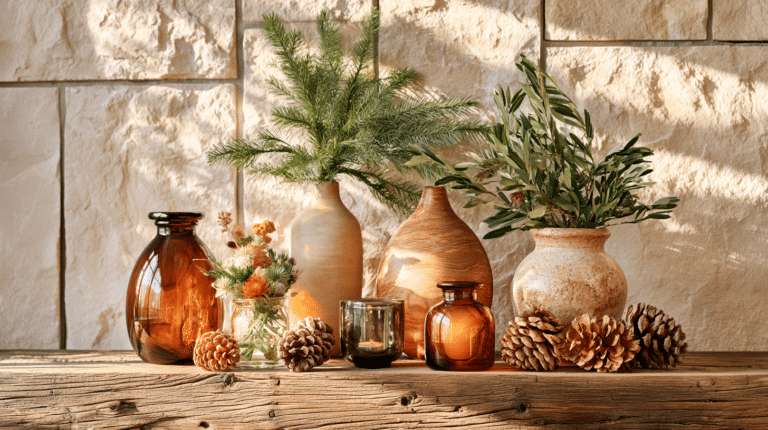
Why Your Coffee Table is Prime Holiday Real Estate
Your coffee table sits right in the center of your living room. It’s the first thing people see when they walk in. It’s where conversations happen, where drinks rest, where kids play games on Christmas morning.
If any surface in your home deserves the holiday treatment, it’s this one.
The beauty? You don’t need a design degree or a massive budget. You just need to understand a few simple principles that professional stylists use every single time.
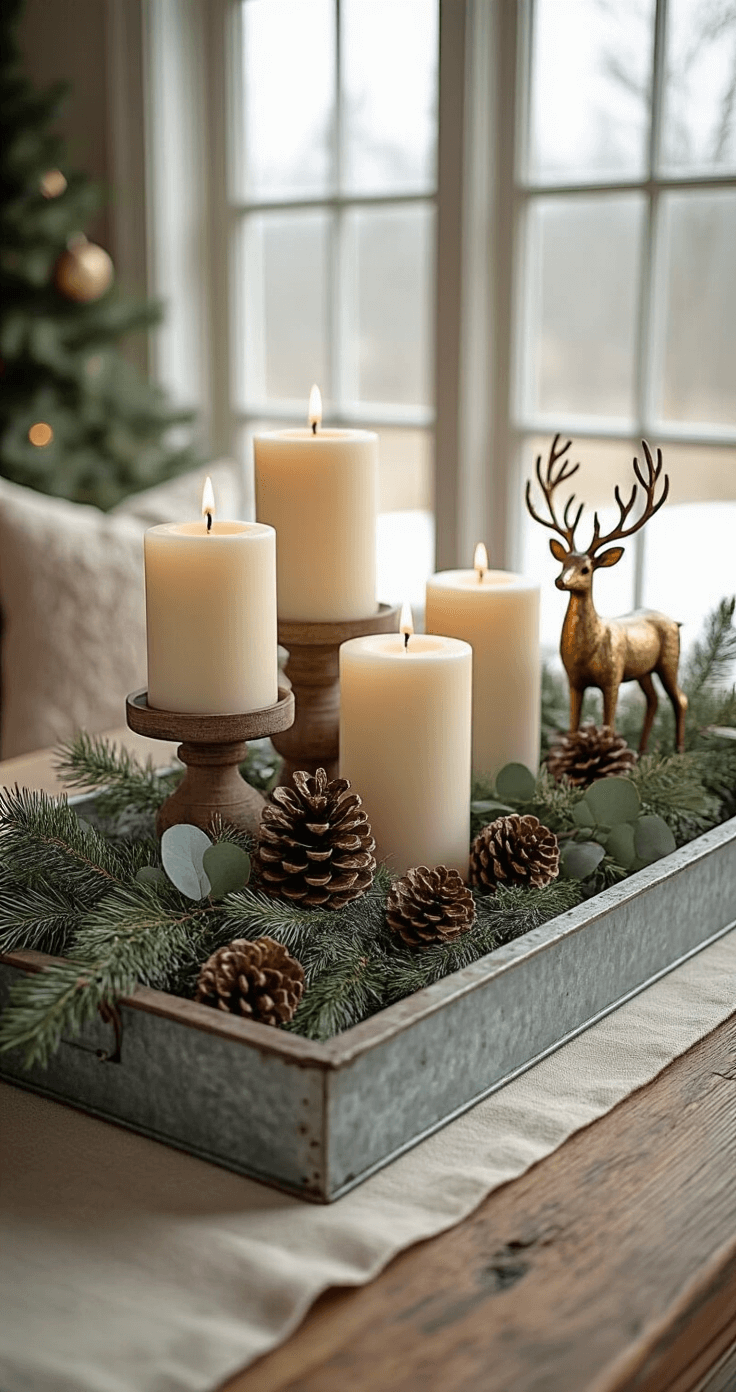
💡 Steal This Look
- Paint Color: Sherwin-Williams Accessible Beige SW 7036
- Furniture: rectangular oak coffee table with clean lines and lower shelf for storage
- Lighting: brass arc floor lamp with linen drum shade positioned behind the sofa
- Materials: worn leather, brushed brass, chunky knit wool, raw cedar, mercury glass
This is the surface where your mother-in-law will set down her eggnog and your nephew will knock over a candle with his elbow, so build your display with forgiveness built in—secure bases, low flames, and nothing too precious to shift aside.
The Secret Formula: Rule of Three (And Why It Actually Works)
Here’s what changed everything for me: the Rule of Three.
Odd numbers create visual interest. Even numbers look too balanced, too expected, too… boring.
When I style my Christmas coffee table, I work in threes:
- Three different heights
- Three main elements
- Three complementary colors (plus neutrals)
Here’s my go-to trio:
- One tall element (candle, mini tree, lantern)
- One medium element (decorative bowl, candle grouping, cloche)
- One low element (ornaments, pine cones, festive book stack)
This creates layers. Layers create depth. Depth creates that “wow, she knows what she’s doing” look.
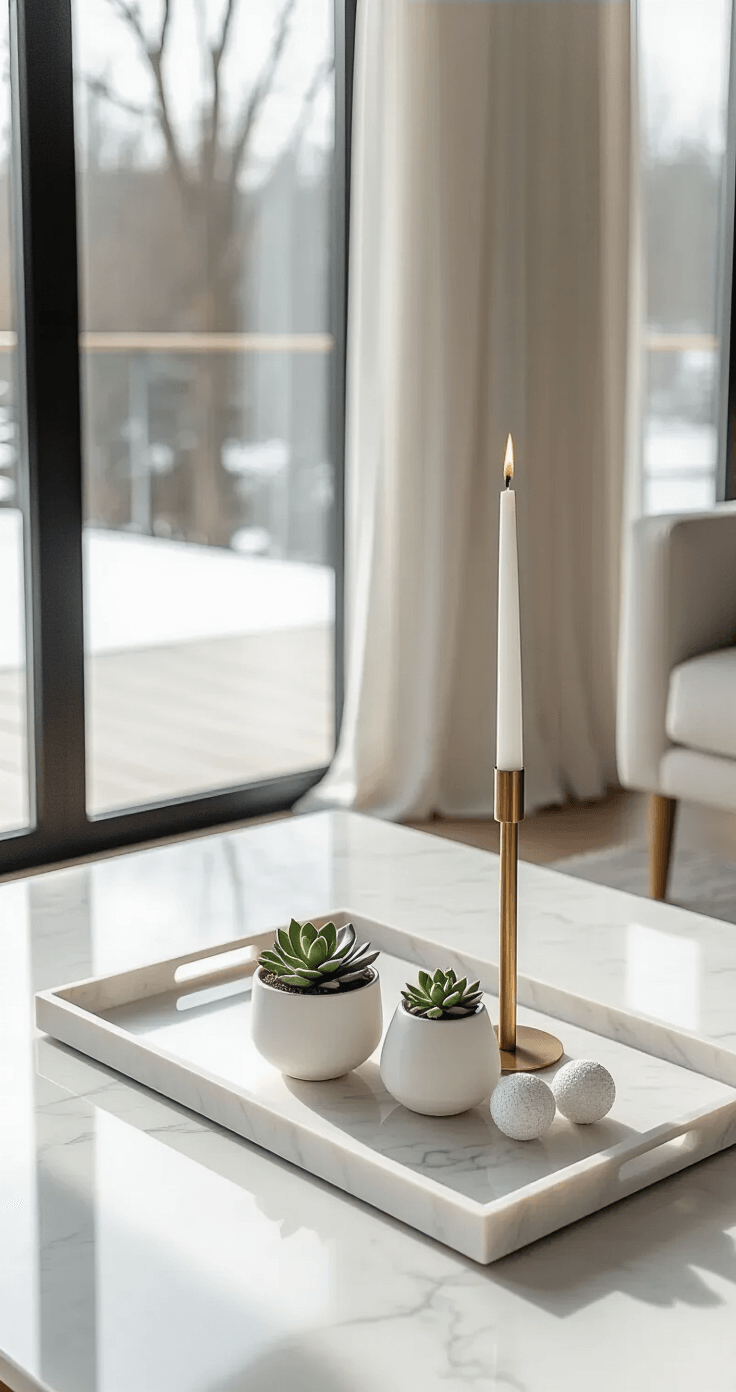
🌟 Steal This Look
- Paint Color: Benjamin Moore Chantilly Lace OC-65
- Furniture: round marble-topped coffee table with brass base
- Lighting: antique brass adjustable arm table lamp with linen shade
- Materials: polished marble, aged brass, velvet ribbon, frosted glass, natural pine
I learned this rule the hard way after years of symmetrically paired candles that felt flat in photos—once I embraced the intentional imbalance of three, my coffee table suddenly looked like something from a magazine spread instead of a department store display.
Start With Your Foundation (This is Non-Negotiable)
Every great coffee table Christmas display starts with a base.
I learned this the hard way after placing items directly on my table and watching the whole arrangement look scattered and chaotic.
Your foundation options:
- Large decorative tray (my personal favorite)
- Wooden cutting board or riser
- Runner or table cloth
- Round woven placemat
Why this matters: The foundation defines your space. It tells your eye exactly where to look. It makes random objects look like an intentional collection.
I use a rustic wooden tray that I picked up for $18. It’s been the backbone of every seasonal display I’ve created since.
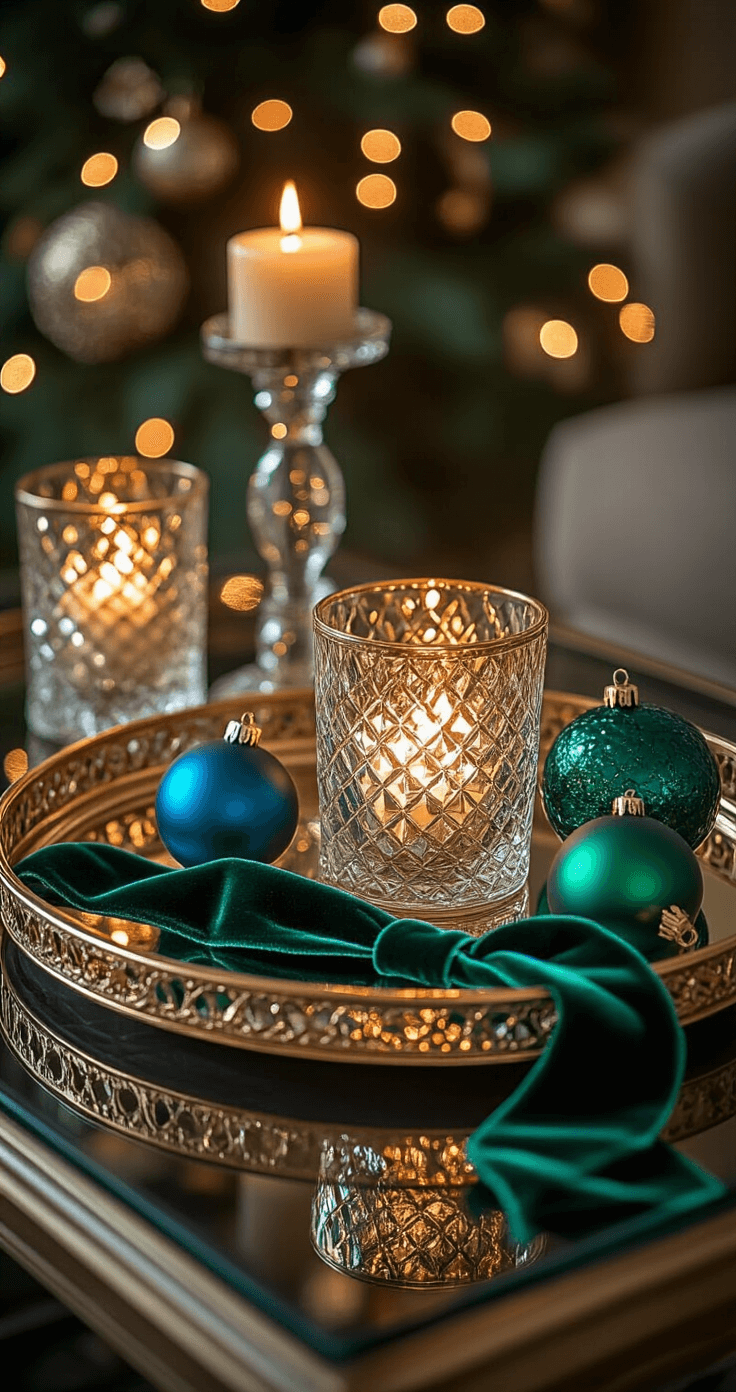
★ Steal This Look
- Paint Color: use Farrow & Ball brand. Match the ACTUAL wall color in the image. Format: Farrow & Ball ColorName CODE
- Furniture: distressed wood coffee table with turned legs, aged brass accent side table
- Lighting: vintage-inspired pharmacy floor lamp with warm amber glass shade
- Materials: reclaimed barn wood, hammered copper, hand-thrown ceramic, natural linen
I still reach for that same $18 tray every December morning, coffee in hand, because there’s something grounding about returning to a piece that’s witnessed so many holiday memories unfold.
The Five Essential Elements Every Christmas Coffee Table Needs
1. Greenery (Real or Faux—I Won’t Judge)
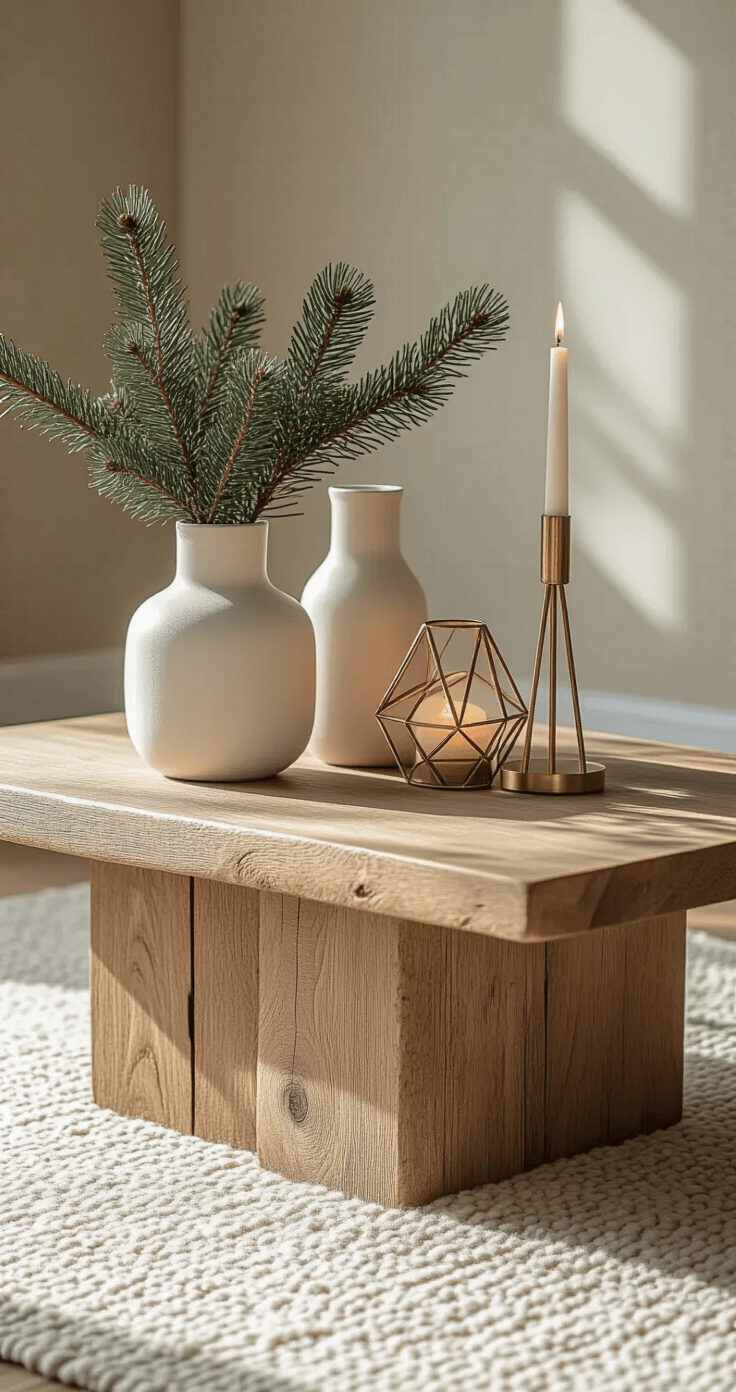
Nothing says Christmas faster than pine.
Save this article
Enter your email and we'll send it straight to your inbox.
Options that work beautifully:
- Mini faux Christmas wreath laid flat on your tray
- Scattered pine branches tucked around other elements
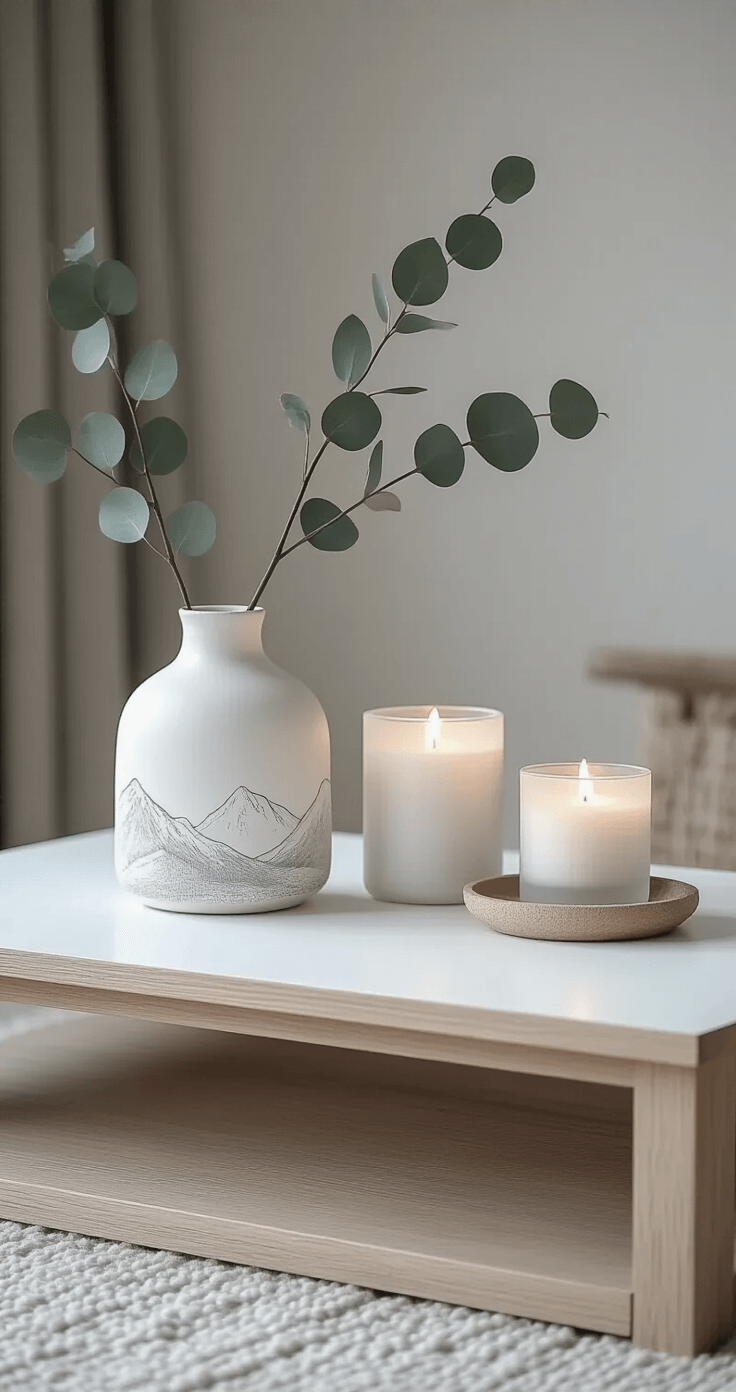
- Eucalyptus sprigs (more modern, equally festive)
- Juniper picks with those gorgeous blue berries
I buy one $12 bundle of faux pine from the craft store in early December. I snip it into smaller pieces and tuck them everywhere—around candles, behind books, draping over the tray edge.
Pro move: Mix real and faux. Real pine cones with faux branches. Real eucalyptus with faux juniper. Nobody can tell, and the real elements add that authentic scent.
2. Candles (Layer Those Heights)
Candles create instant ambiance. Christmas without candlelight feels flat.
My formula:
- One tall taper candle (10-12 inches)
- Two shorter pillar candles (4-6 inches)
- Or three mercury glass votives clustered together
Color psychology:
- White candles = elegant, timeless, work with any decor style
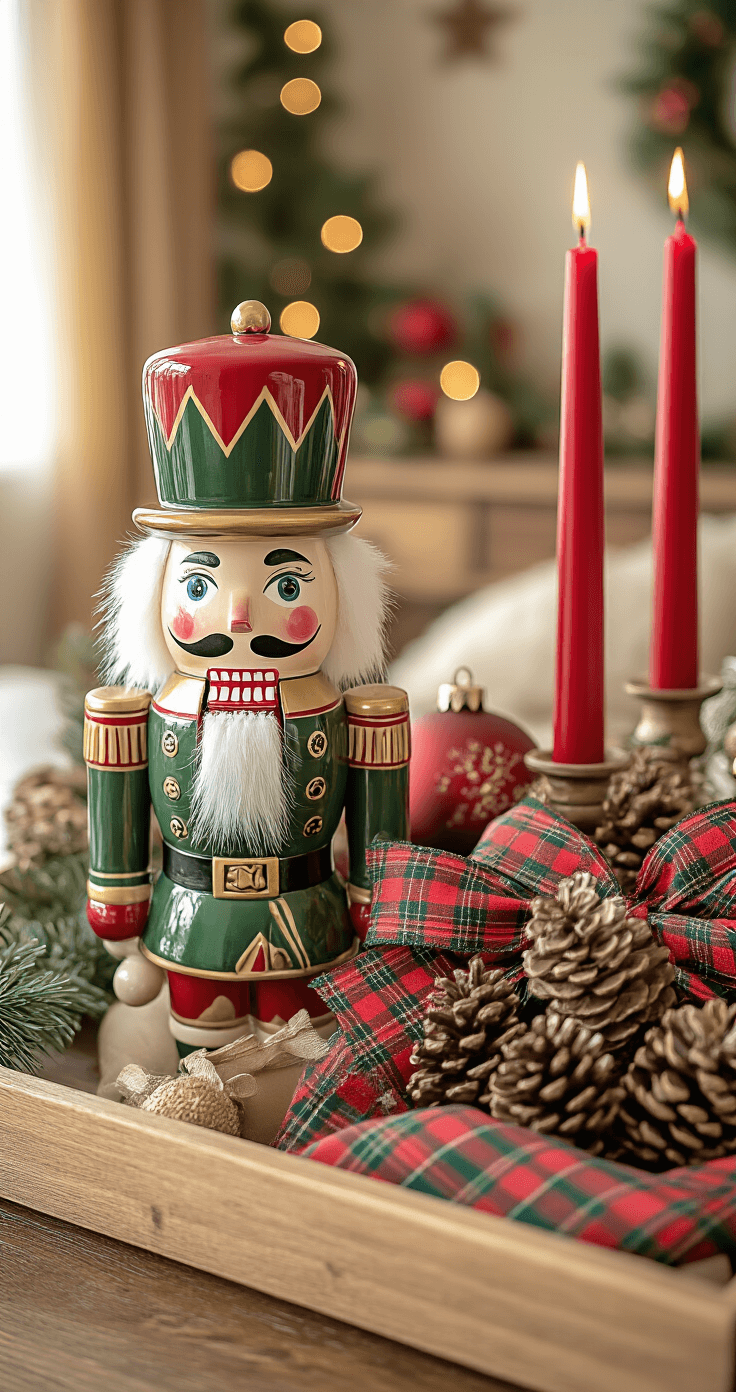
- Red candles = traditional, bold, Christmas nostalgia
- Gold candles = luxe, glamorous, pairs with metallics
I stick with white because they transition easily into January when I’m sick of red and green but not ready to pack away the cozy vibes.
3. One Statement Piece
This is your conversation starter. The thing that makes people lean in and say “Oh, where did you get that?”
Ideas that work:
- Vintage nutcracker
- Glass cloche with miniature Christmas scene inside
- Beautiful Christmas book with gorgeous cover
- Small ceramic Christmas tree (major nostalgia factor)
- Decorative lantern with LED candle inside
I rotate mine yearly. This year, I’m using a brass reindeer figurine I found at a thrift store for $4. Last year, it was a snow globe my grandmother gave me.
The key: it should spark joy (yes, I went there, Marie Kondo was right).
4. Texture Variation
This is where beginners mess up. They pick all glass, or all wood, or all metal.
You need contrast.
Winning combinations:
- Rough wood + smooth glass + shiny metal
★ Steal This Look
- Paint Color: use Behr brand. Match the ACTUAL wall color in the image. Format: Behr ColorName CODE
- Furniture: low-profile rectangular coffee table with natural wood finish and tapered legs
- Lighting: brass adjustable-arm table lamp with linen drum shade
- Materials: weathered oak, brushed brass, seeded glass, velvet, and preserved cedar garland
This is the room where you’ll linger over mulled wine at midnight, so every element should invite people to slow down and stay awhile.
✅ Get The Look
This post may contain affiliate links. Please see my disclosure policy for details.
Want to keep this one?
We'll email you the link so you can find it again later.