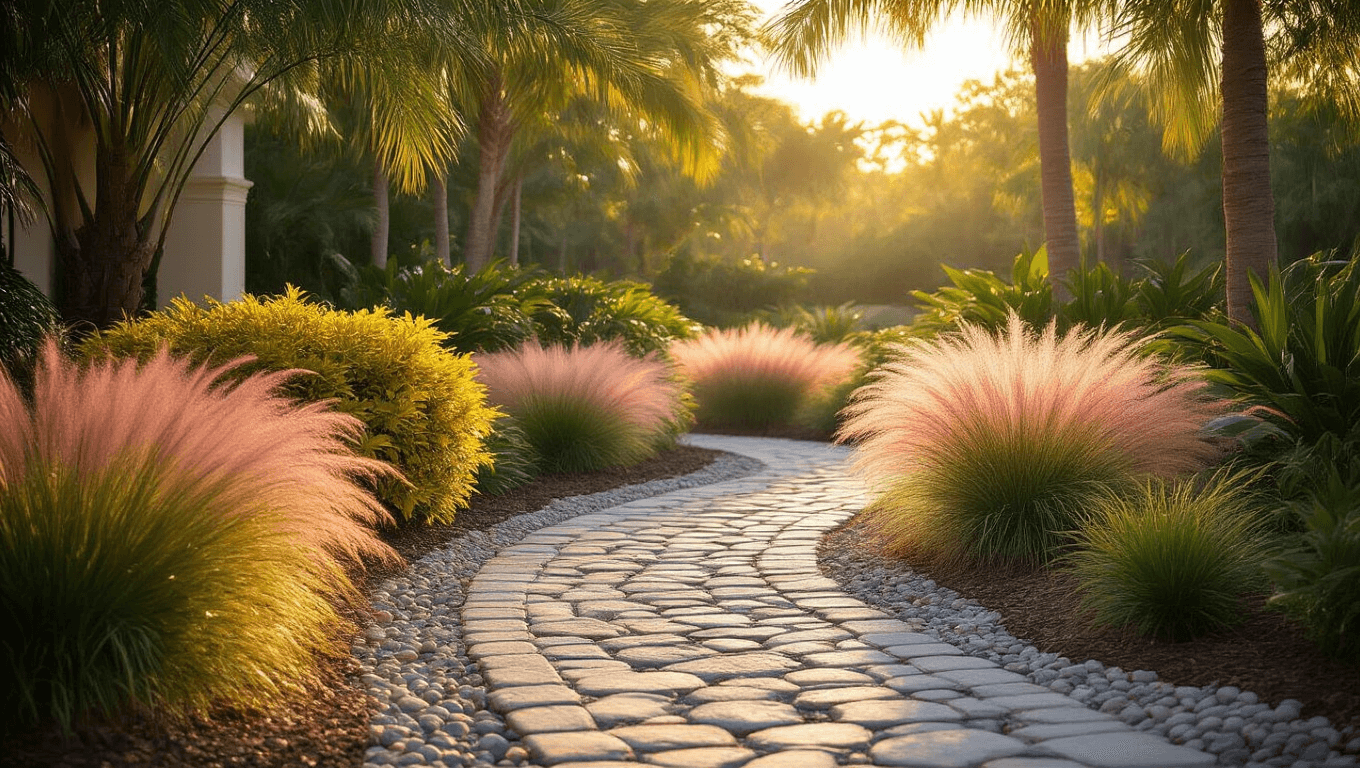
Florida Front Yard Landscaping: A Complete Design Guide for Tropical Curb Appeal
Contents
Florida front yard landscaping has challenged me for years, and I bet it’s testing your patience too.
You want that lush tropical look without spending every weekend sweating in the yard. You’re tired of plants that shrivel up after two weeks. You need something that survives Florida’s mood swings—from drought to deluge, blazing sun to surprise freezes.
I’ve learned the hard way that copying designs from gardening magazines doesn’t work here. Florida demands its own approach.
✎ Steal This Look
- Paint Color: Sherwin-Williams Rookwood Dark Green SW 2808
- Furniture: weathered teak Adirondack chair with Sunbrella canvas cushion in coral
- Lighting: Hinkley Lighting Atlantis low-voltage path light in bronze finish
- Materials: crushed shell pathway, coquina rock border, reclaimed coral stone pavers, woven sea grass matting
I killed three rounds of hydrangeas before accepting that Florida front yards demand plants that actually want to live here, not ones I wish would cooperate.
Why Florida Front Yards Are Different (And Why That Matters)
Florida’s climate isn’t just warm—it’s uniquely brutal on generic landscaping.
The challenges we face:
- Intense UV radiation that scorches traditional ornamentals
- Sandy soil that drains faster than a bathtub with no plug
- Humidity levels that encourage every fungus known to science
- Random cold snaps that kill your favorite tropical plants
- Water restrictions in many counties
- Salt spray if you’re coastal
I spent my first two years here replacing dead plants every season until I figured out the secret: work WITH Florida, not against it.
Quick Style Snapshot: What You’re Getting Into
Let me be straight with you about what this project involves.
Time commitment: Weekend warrior to month-long project, depending on your ambition
Budget range: $500 for basic native plantings to $5,000+ for full tropical paradise
Yard size: Works for tiny townhouse strips to sprawling suburban lots
Skill level needed: Beginner-friendly with native plants; intermediate for hardscaping
Maintenance after setup: Low to moderate (way less than traditional lawns)
Year-round appeal: Yes—this is Florida’s superpower
The best part? Once you nail the initial design, your yard practically takes care of itself.
The Foundation: Must-Have Plants That Actually Survive
Forget those delicate perennials from the garden center’s “just arrived” section.
These are the workhorses I rely on:
Gold Mound Duranta
This plant changed my landscaping game.
Bright chartreuse foliage that looks like permanent sunshine. Grows 2-4 feet tall without much fussing. Bonus lavender flowers appear when you’re not even trying. Handles full sun like a champ.
I planted three of these along my front walkway, and neighbors still stop to ask what they are. No fertilizer, minimal water once established, zero drama.
Muhly Grass (The Show-Stopper)
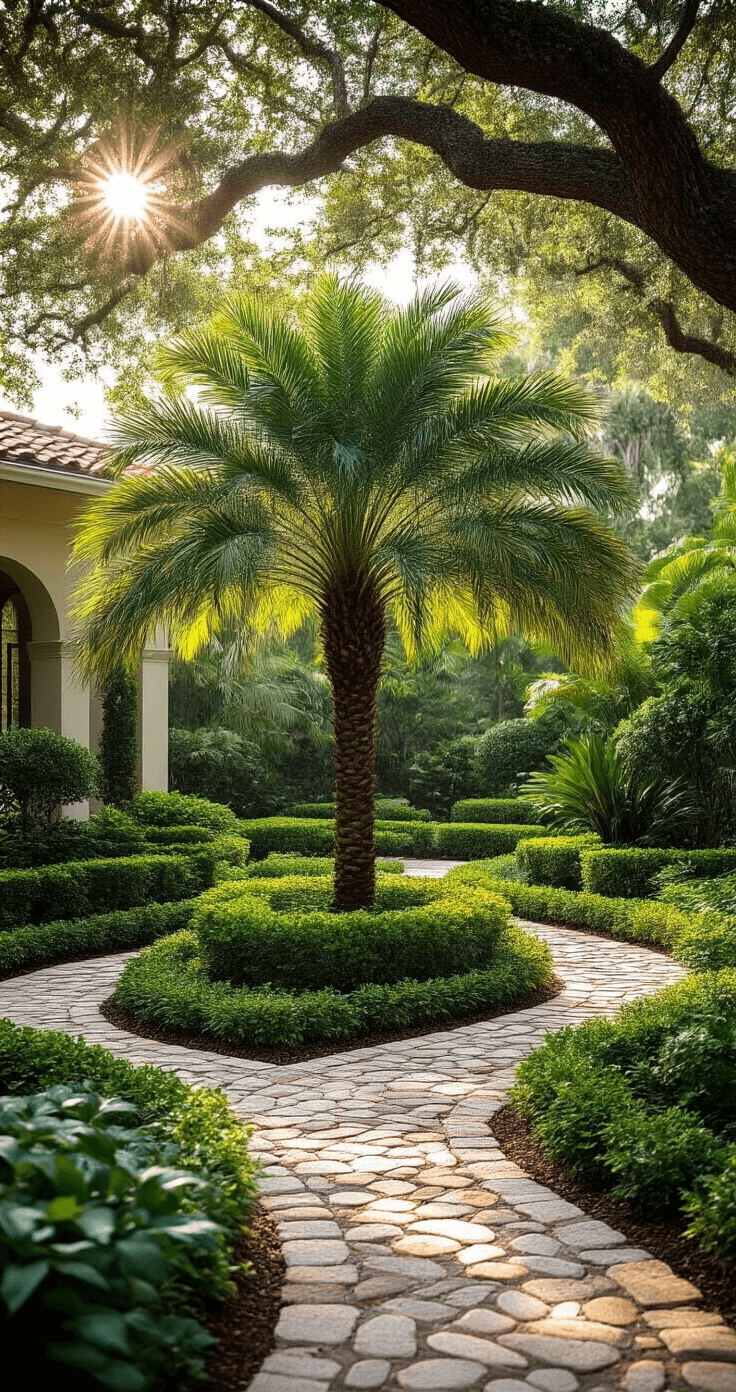
Muhly grass is my secret weapon for effortless beauty.
Soft texture that moves with every breeze. Explodes into clouds of pink flowers every fall. Spreads to about 4 feet wide. Needs almost nothing from you.
Last October, my front yard looked like something from a resort, and all I did was plant some ornamental grass two years ago.
Crotons (Use With Caution)
These give you that tropical punch of color.
Six feet tall at maturity. Leaves in wild combinations of red, yellow, orange, and green. The catch: they can overwhelm your design fast.
My rule: one grouping maximum, balanced with plenty of calming greenery. Think of crotons as the accent pillow, not the entire couch.
Azaleas for Shade
If you’ve got tree coverage, azaleas are non-negotiable.
Year-round green structure. Spring blooms in whites, pinks, and corals. Thrives in the dappled shade where grass gives up.
I planted mine under my oak trees where I’d given up on grass. Best decision ever—they’ve been going strong for five years with basically zero input from me.
Beautyberry (The Native Star)
This native shrub is criminally underused.
Grows to 6 feet tall. Pink summer flowers. Stunning purple berries in fall that birds go crazy for. Zero maintenance required.
I watch cardinals and mockingbirds feast on mine every autumn while I drink coffee on the porch. That’s the kind of landscaping I can get behind.
Walter’s Viburnum
Versatile doesn’t begin to describe this plant.
Use it as a specimen shrub, privacy hedge, or small tree. Glossy green leaves catch the light beautifully. Spring blooms add white flowers without being fussy. Native to Florida, so it’s bulletproof once established.
I’ve used these to create a living fence along my property line. They’ve filled in perfectly and require trimming maybe twice a year.
🎨 Steal This Look
- Paint Color: Behr Palm Breeze MQ3-25
- Furniture: weathered teak Adirondack chair with wide arms
- Lighting: solar-powered brass path lights with frosted glass domes
- Materials: crushed shell mulch, coral stone pavers, weathered driftwood accents
I’ve learned the hard way that Florida’s heat and humidity don’t forgive plant selection mistakes—these survivors let you actually enjoy your yard instead of nursing it back to health every season.
Hardscaping: The Bones That Make Everything Work
Plants alone won’t create that polished resort look.
You need structure:
Pathways That Guide the Eye
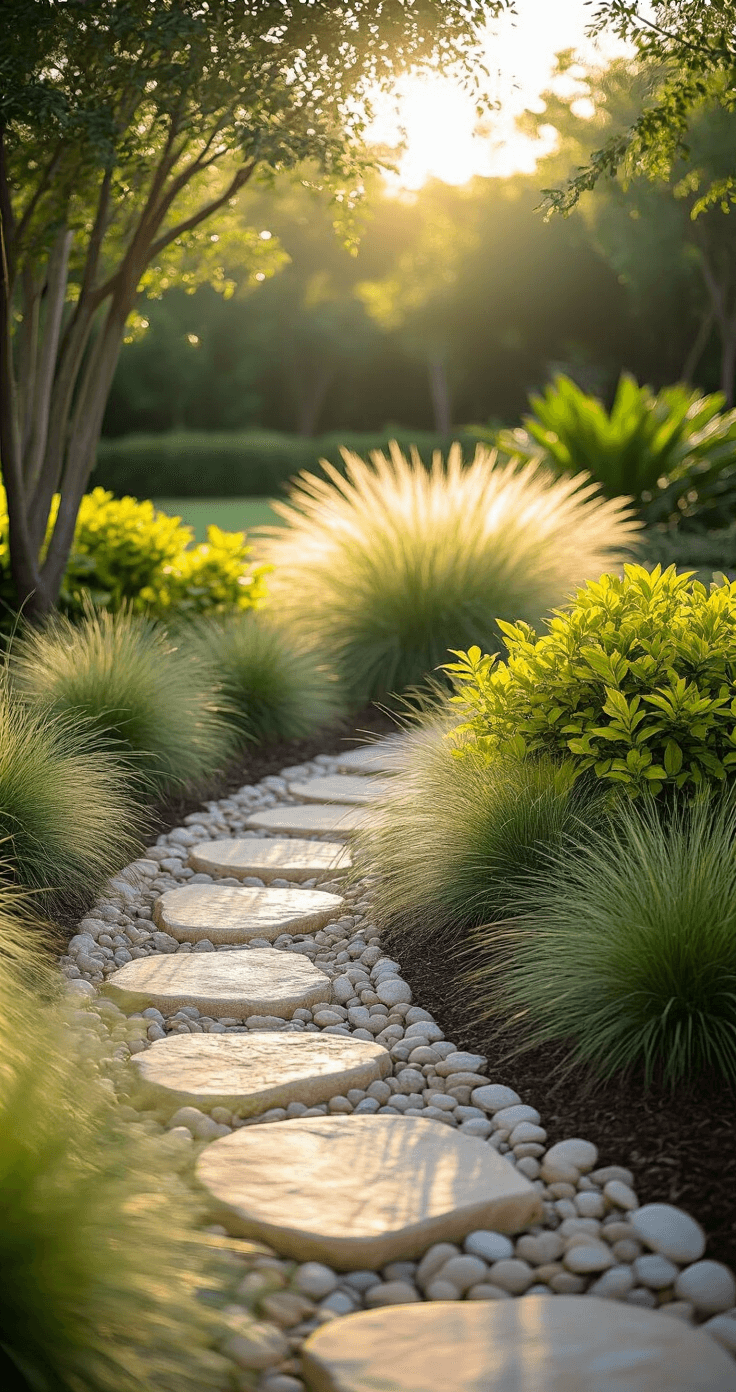
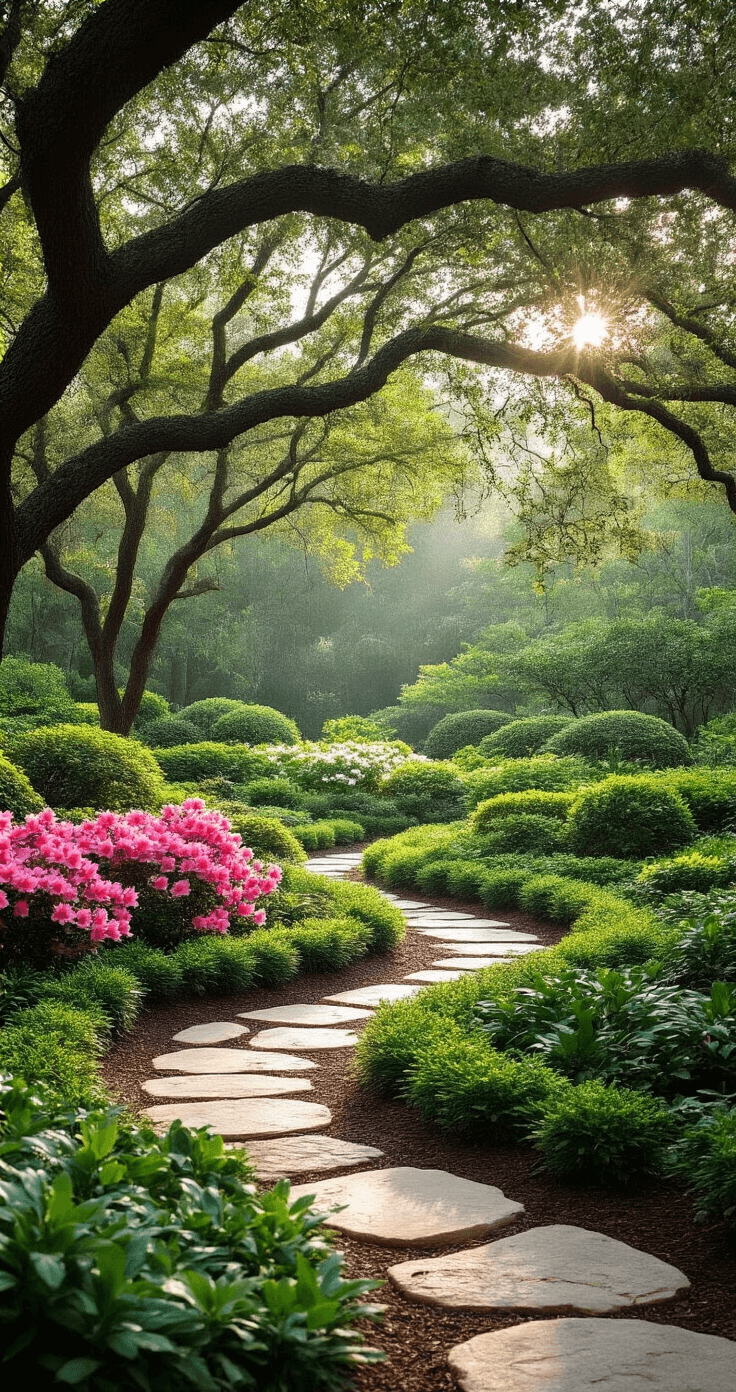
Rustic stone slabs for cottage vibes. Cobblestone for classic elegance. Sleek slate for modern aesthetics.
I installed a curved paver walkway from my driveway to front door, and it transformed the entire yard. Suddenly everything looked intentional instead of random.
The psychological trick: pathways tell visitors (and your own brain) that this space is designed, maintained, and valuable.
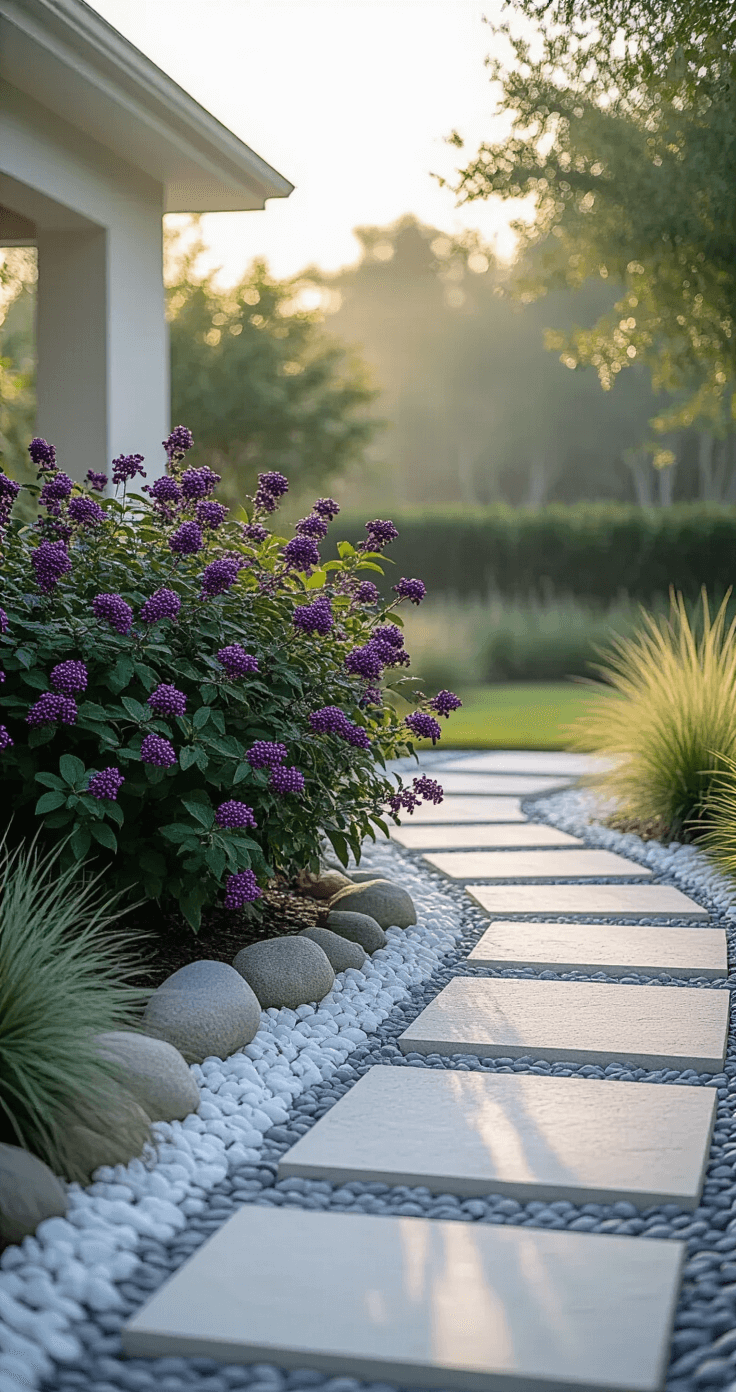
Strategic Stone and Pebbles
Beach pebbles where you walk barefoot. River rock around plant clusters. Crushed granite for modern minimalist sections.
These elements reduce the amount of mulch you need to replace and add textural interest. I use white beach pebbles around my front entrance—they stay cool underfoot and reflect light beautifully.
Groundcovers That Work Like Carpet
Asiatic Jasmine is your best friend in shade.
Fills in like actual carpet. Perfect under trees where grass dies. Evergreen year-round. Crowds out most weeds once established.
I planted this under my mature trees and haven’t touched those areas in three years except to trim edges occasionally.
Lily of the Nile for Easy Elegance
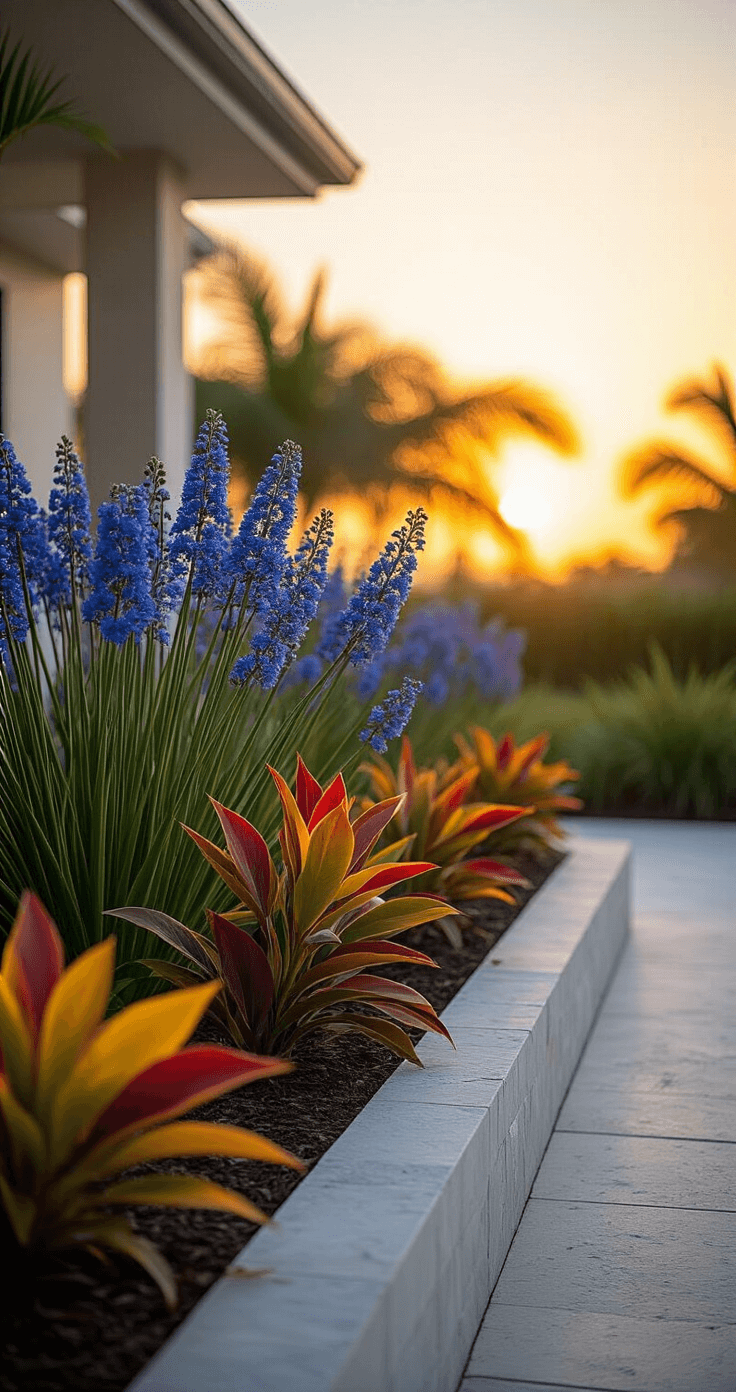
Group these together for instant sophistication.
Deep blue flower clusters on tall stalks. Evergreen foliage even when not blooming. Creates that lush tropical effect without tropical plant drama.
Five plants clustered near my mailbox create a focal point that requires nothing from me except enjoying it.
🌟 Steal This Look
- Paint Color: Valspar Garden Party 5003-4C
- Furniture: weathered teak Adirondack chairs with Sunbrella cushions
- Lighting: low-voltage brass path lights with frosted glass
- Materials: tumbled travertine pavers, Mexican beach pebbles, crushed coral rock, sealed limestone edging
I learned this the hard way after watching my first ‘straight as an arrow’ concrete walkway bake everything around it—hardscaping isn’t just about looks, it’s about how you actually move through your yard with a drink in hand at 6 PM.
This post may contain affiliate links. Please see my disclosure policy for details.