Your Fall Fireplace Mantel Isn’t Working—Let Me Show You Why
Fall fireplace mantel decor can transform your living room from forgettable to magazine-worthy in an afternoon.
I’ve styled hundreds of mantels over the years, and I’m going to be brutally honest with you: most people get this completely wrong.
They pile on pumpkins like they’re preparing for the apocalypse, jam in every orange thing they own, and wonder why it looks like a craft store exploded.
Let me save you from that disaster.
✎ Steal This Look
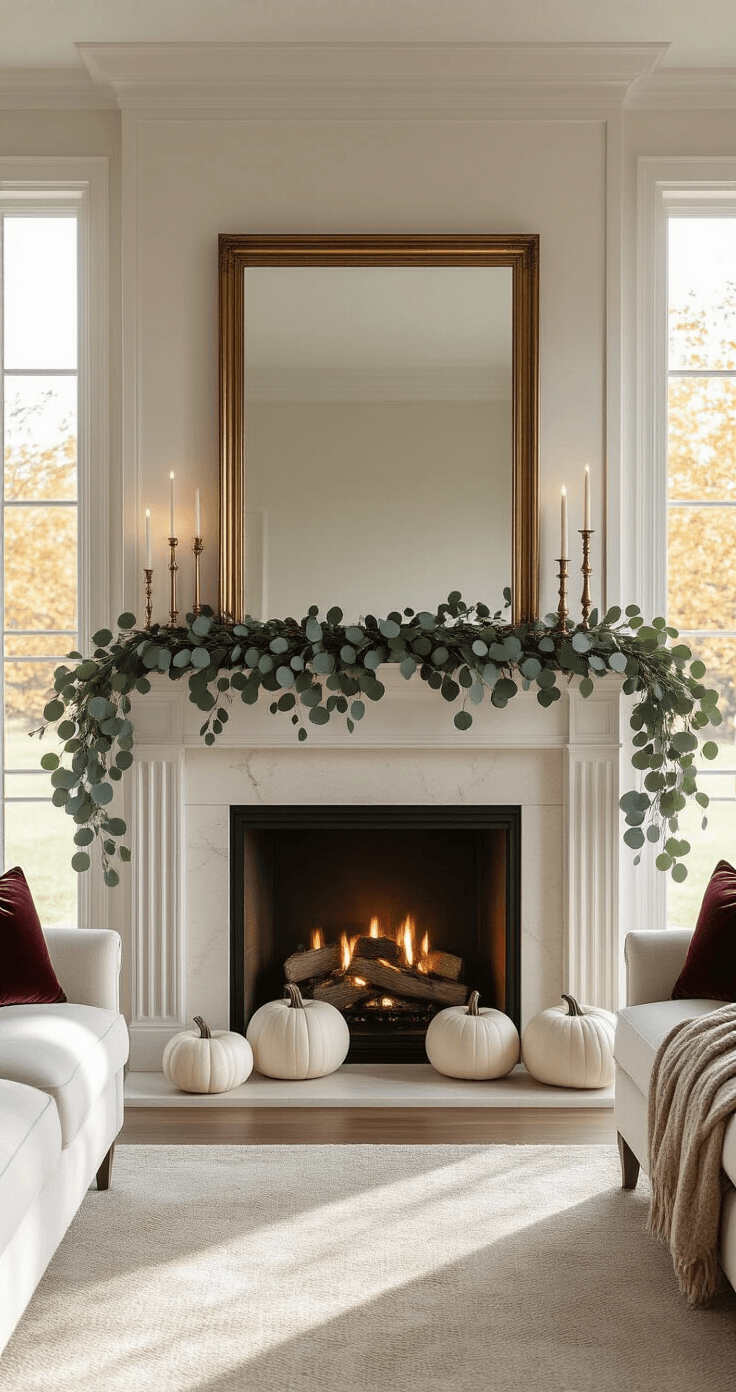
- Paint Color: Sherwin-Williams Accessible Beige SW 7036
- Furniture: slipcovered linen sofa in natural oatmeal, turned-leg wood coffee table with distressed black finish, vintage leather club chair
- Lighting: oversized iron lantern pendant with amber glass panels, paired with brass swing-arm sconces flanking the fireplace
- Materials: weathered barn wood, hand-thrown ceramics, raw linen, aged brass, hand-forged iron, dried botanicals
I learned this the hard way after my own mantel looked like a pumpkin patch had staged a coup—now I edit ruthlessly, and my living room finally feels like the grown-up space I wanted.
Why Your Mantel Looks Cluttered (And How to Fix It)
The biggest mistake I see?
No breathing room.
Your mantel needs space to exist. Every item fighting for attention creates visual chaos that makes people uncomfortable without knowing why.
Think of your mantel like a sentence—punctuation matters.
The Foundation Strategy
Start with one focal point above the mantel. Not three. Not a gallery wall. One.
I typically use:
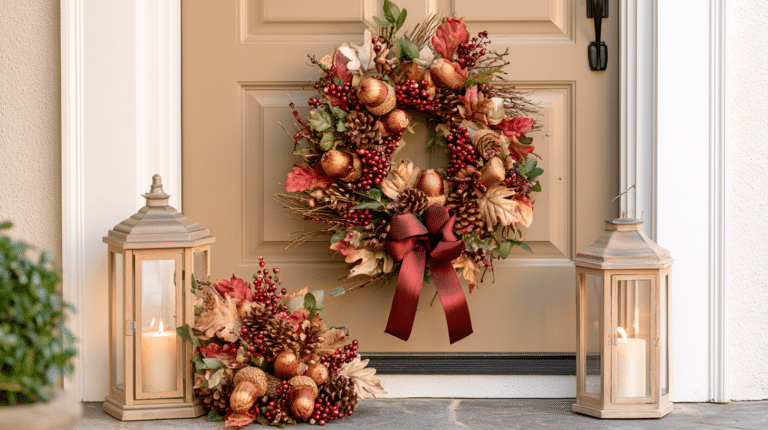
- A large fall wreath made from dried magnolia or wheat
- A substantial mirror that reflects light
- One oversized piece of seasonal art
Everything else supports this anchor.
Layer Like You Mean It
Now here’s where it gets interesting.
Real depth comes from intentional layering, not random stacking.
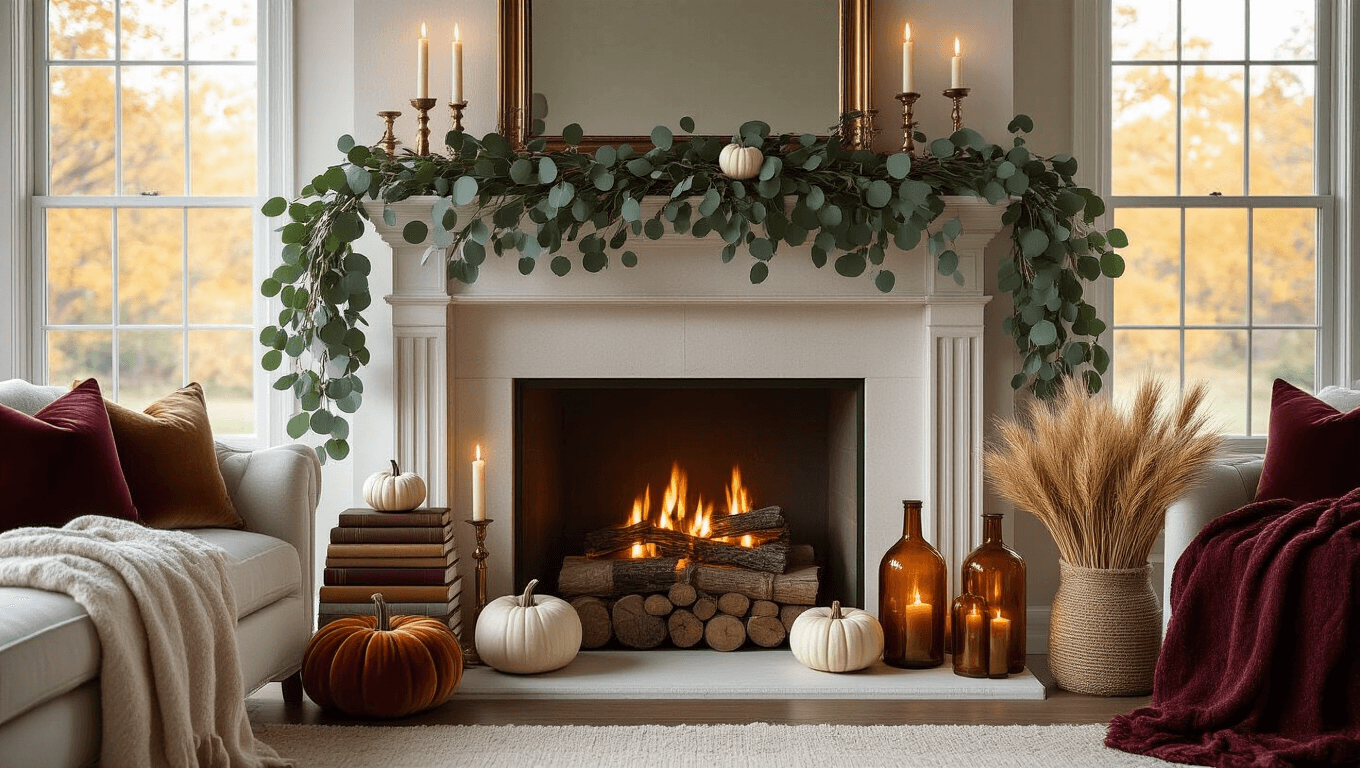
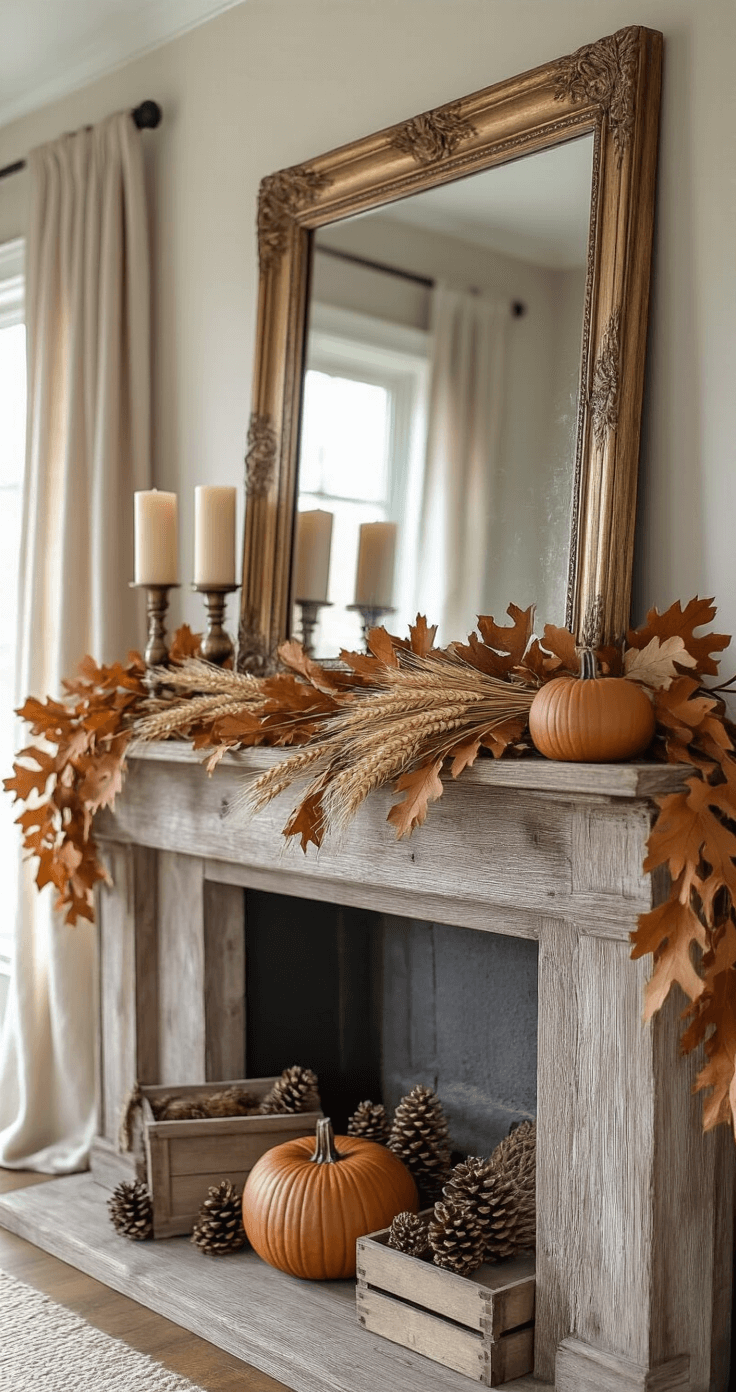
Place a fall garland along the mantel base. Let it drape naturally—forced symmetry looks stiff and uncomfortable.
Add height variation by stacking vintage books. Top them with a single velvet pumpkin.
This creates dimension that draws the eye through the entire composition.
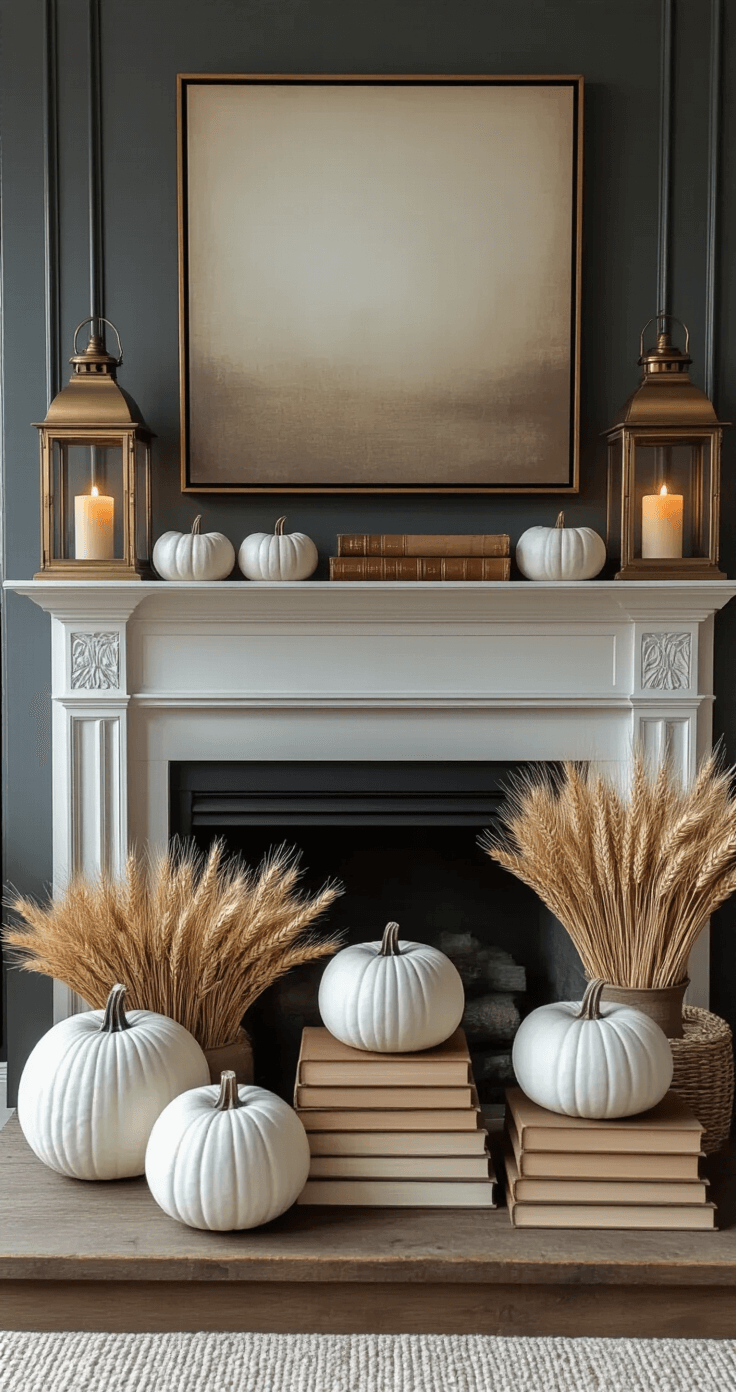
🎨 Steal This Look
- Paint Color: Benjamin Moore White Dove OC-17
- Furniture: reclaimed wood fireplace surround with simple shaker-style mantel shelf
- Lighting: brass swing-arm sconce flanking each side of the fireplace
- Materials: dried magnolia leaves, wheat stems, aged brass, raw linen, weathered wood
I learned this the hard way after years of over-styling every surface in my own home; the mantel that finally felt right was the one where I removed half the pieces and let the negative space do the talking.
🛒 Get The Look
The Colors That Actually Work Together
Forget everything Pinterest told you about orange explosions.
My go-to palette:
- Burnt orange (sparingly—it’s powerful)
- Deep burgundy
- Golden amber
- Cream and ivory
- Natural wood tones
- Brass and copper metallics
The secret? Cool undertones balance warm ones.
If your room has blue or gray elements, introduce amber and copper to bridge the temperature gap. If you’re working with beige walls, layer in deeper burgundies to prevent everything from washing out.
I learned this the hard way after creating a mantel so orange it looked like a traffic cone convention.
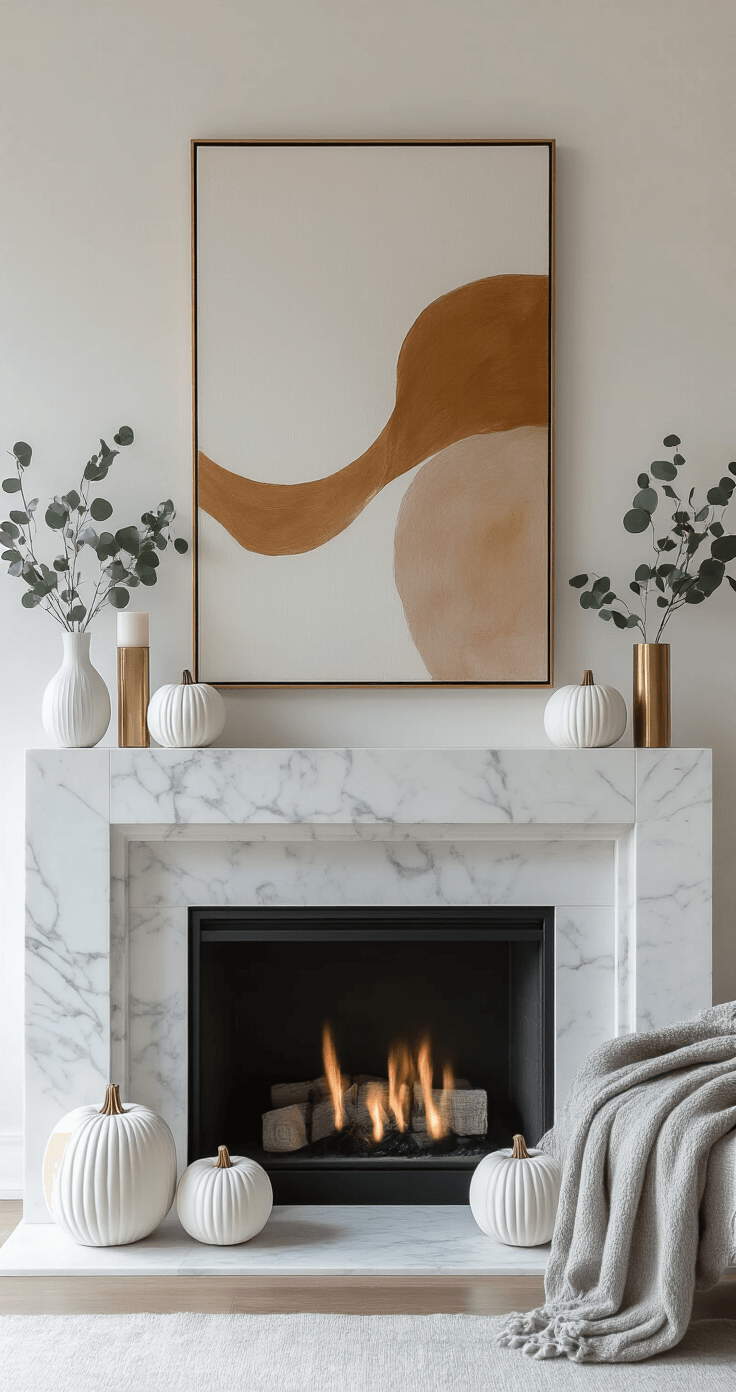
🏠 Steal This Look
- Paint Color: Farrow & Ball Charleston Gray 243
- Furniture: vintage oak mantel shelf with hand-hewn edges
- Lighting: schoolhouse-style brass pendant with amber glass shade
- Materials: raw linen, aged brass, terracotta, reclaimed wood, hammered copper
I once staged a mantel with three orange pumpkins, an orange throw, and orange candles—my husband asked if we were hosting a highway safety seminar. Now I treat burnt orange like saffron: precious, potent, and strictly rationed.
What You Actually Need (And What You Don’t)
Essential items that earn their keep:
Candles and Light Sources
Candlelight creates movement and warmth that dead objects can’t match.
Mix brass candlestick holders at varying heights. Add battery-operated candles in pumpkin holders for safety near kids or pets.
Place lanterns with LED candles at the ends for bookend interest.
Pumpkins (But Make Them Interesting)
Real pumpkins rot. Let’s be adults about this.
Velvet pumpkins in unexpected colors transform the entire aesthetic. White, gray, cognac, and deep plum create sophistication that orange plastic never will.
Group them in odd numbers: 3, 5, or 7. Our brains find odd-numbered groupings more visually satisfying.
Natural Elements
Dried wheat bundles, preserved oak leaves, and eucalyptus branches bring organic texture without the maintenance nightmare of fresh florals.
Pinecones scattered strategically add rustic authenticity.
What to skip:
- Cheap plastic anything
- Every pumpkin you’ve ever owned
- Signs with forced nostalgia phrases
- Anything that makes you say “this is so fall!”
If it screams its purpose, it’s probably too much.
My Step-by-Step Styling System
Clear everything off.
I’m serious. Every frame, every candle, every random object that’s lived there since 2019.
Clean the surface. You’re starting fresh.
Step 1: Install Your Focal Point
Hang your wreath or position your mirror first. This determines everything else.
Center it above the mantel. Not slightly left because you eyeballed it—actually centered.
Step 2: Drape Your Garland
Let it cascade naturally with gentle curves. Pin it if needed, but make those curves look effortless.
Nobody wants to see your engineering degree here.
Step 3: Position Your Light Sources
Place candles in clusters of 3. Vary the heights using candlesticks or platforms like stacked books.
String lights should weave through garland or drape loosely—not stretched tight like Christmas at a hardware store.
Step 4: Arrange Your Pumpkins and Gourds
Start with the largest piece slightly off-center. Add smaller pumpkins grouping to one side.
Balance this visual weight with a different element on the opposite side—maybe a tall brass candlestick or a cluster of lanterns.
Step 5: Fill Gaps Strategically
Add brass figures, amber glass bottles, small wooden boxes, or textured elements to fill obvious holes.
But here’s the critical part: leave some empty space.
Your mantel needs to breathe.
Step 6: Add Scent (The Forgotten Element)
Tuck dried orange slices near candles where heat releases their fragrance. Add cinnamon stick bundles tied with jute.
Scent creates emotional memory stronger than any visual element.
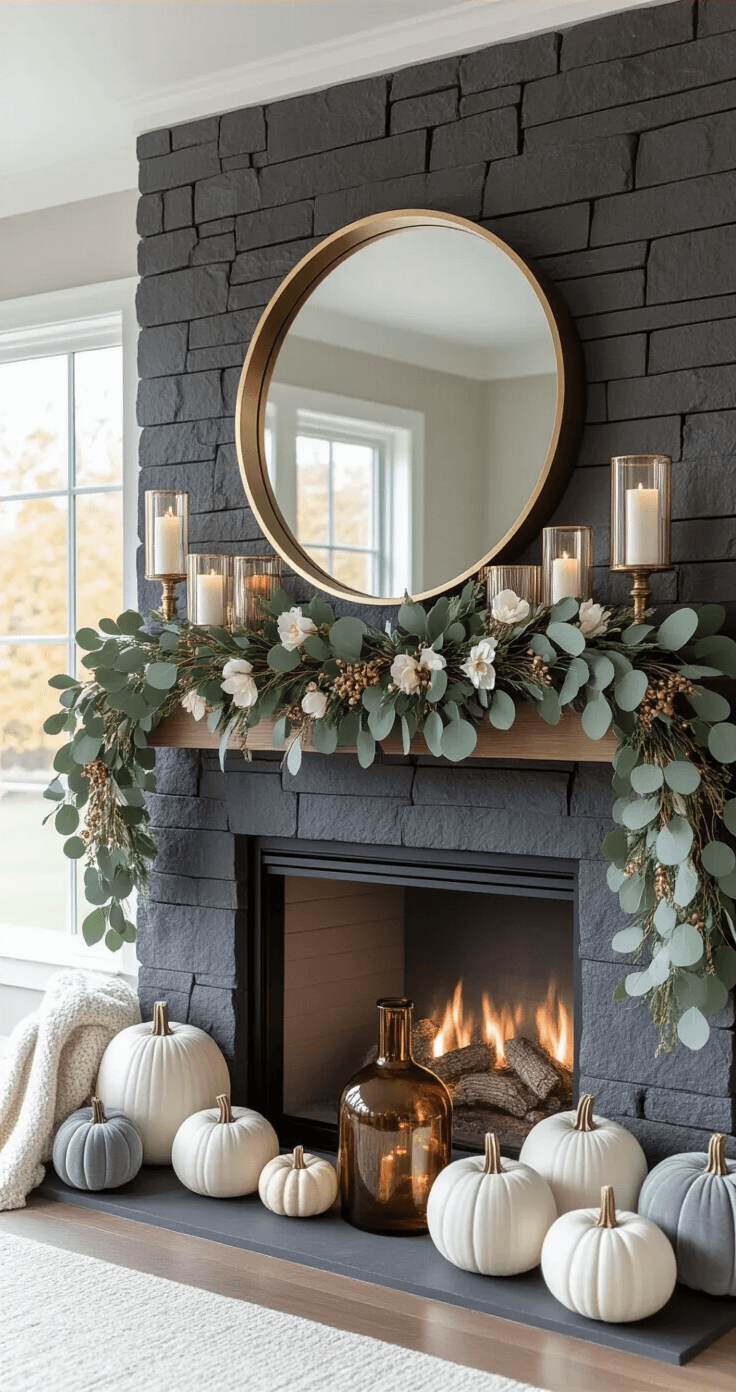
🖼 Steal This Look
- Paint Color: use Valspar brand. Match the ACTUAL wall color in the image. Format: Valspar ColorName CODE
- Furniture: specific furniture for this room
- Lighting: specific lighting fixture
- Materials: key textures and materials
1-2 sentences of human framing about this room
🛒 Get The Look
The Problems I’ve Seen a Thousand Times
“Everything looks
This post may contain affiliate links. Please see my disclosure policy for details.