Florida Homes Exterior: Your Complete Guide to Colors, Styles, and Climate-Smart Choices
Contents
Florida homes exterior design isn’t just about curb appeal—it’s about survival.
I learned this the hard way when I watched my neighbor’s gorgeous charcoal-painted house turn into a faded mess within two years. The Florida sun doesn’t care about your design dreams.
Why Your Exterior Paint Choice Actually Matters in Florida
Your home’s exterior faces a brutal daily assault. We’re talking relentless UV rays that could cook an egg, humidity that breeds mold faster than you can say “tropical paradise,” salt air that corrodes everything it touches, and hurricane-force winds that test every surface.
Here’s what you’re really up against:
- Temperature swings that make paint expand and contract daily
- Moisture levels that turn your walls into a petri dish
- Sun so intense it bleaches colors like they’re in a washing machine on steroids
- Salt spray if you’re anywhere near the coast (and let’s be honest, you probably are)
I’ve watched beautiful homes deteriorate because owners chose style over substance. Don’t be that person.
The Colors That Actually Work (And Won’t Make You Regret Everything)
Soft Whites and Warm Creams
These aren’t boring—they’re brilliant. Light colors reflect up to 80% of sunlight, which means your AC won’t work overtime and your paint won’t fade into some sad version of itself by next summer.
I painted my own home in a warm cream three years ago, and it still looks fresh. My electric bill dropped by about 15% that first summer.
Consider using exterior paint designed for Florida climates that includes UV inhibitors and mildew resistance.
Cool Grays and Soft Taupes
These give you sophistication without the heat absorption nightmare of darker colors. They hide dirt better than pure white but still keep your home cooler.
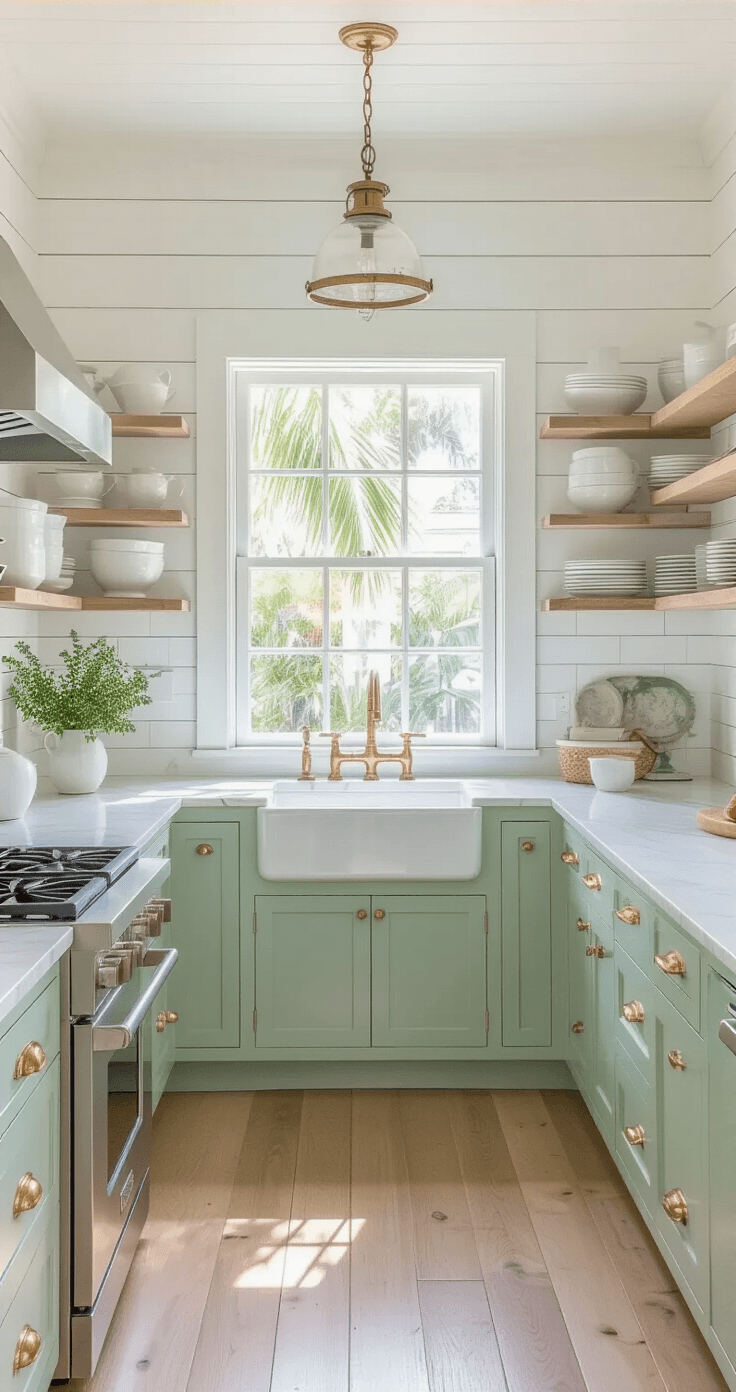
Pale Blues and Seafoam Greens
Nothing says “Florida coastal living” quite like these shades. They complement the natural environment and actually perform well under our punishing sun.
The key is going pale—not bold. Save the saturated colors for your accent door.
The Accent Colors That Pop Without Punishing You
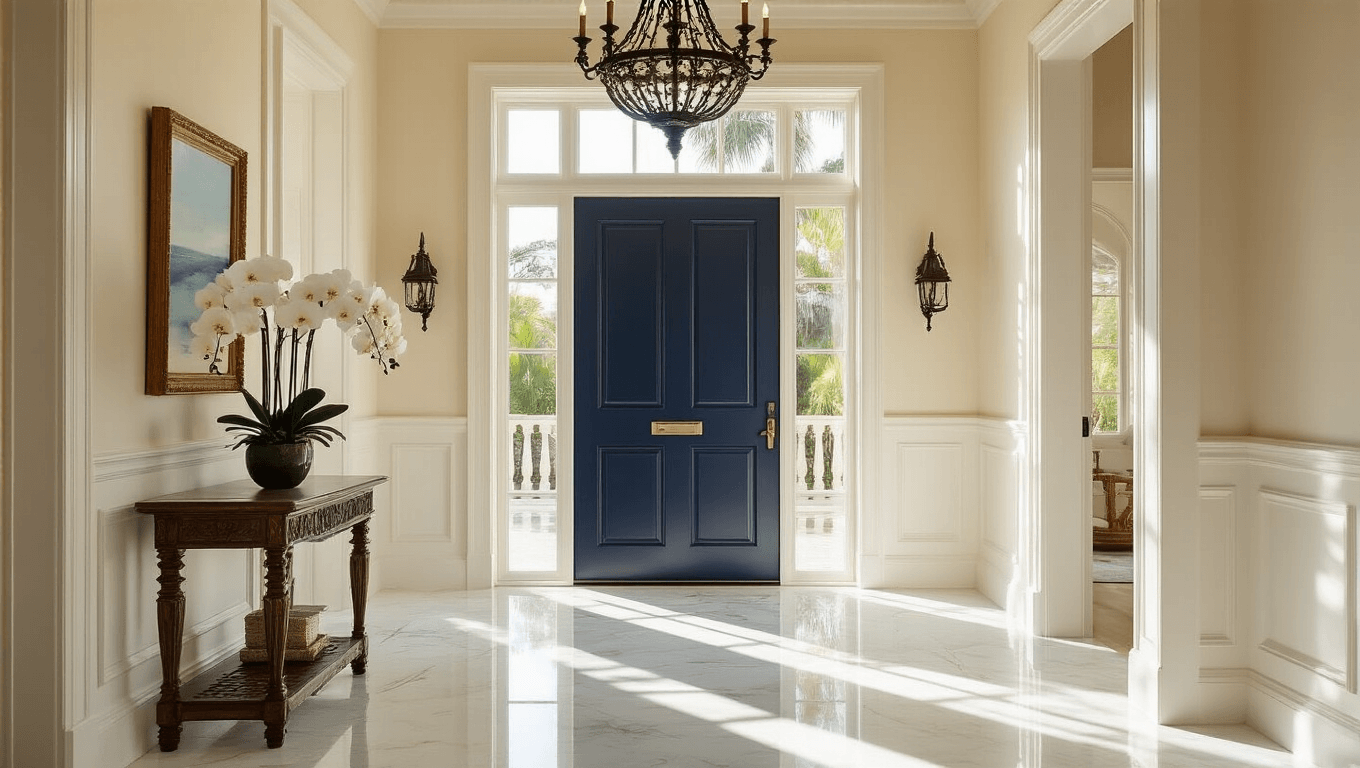
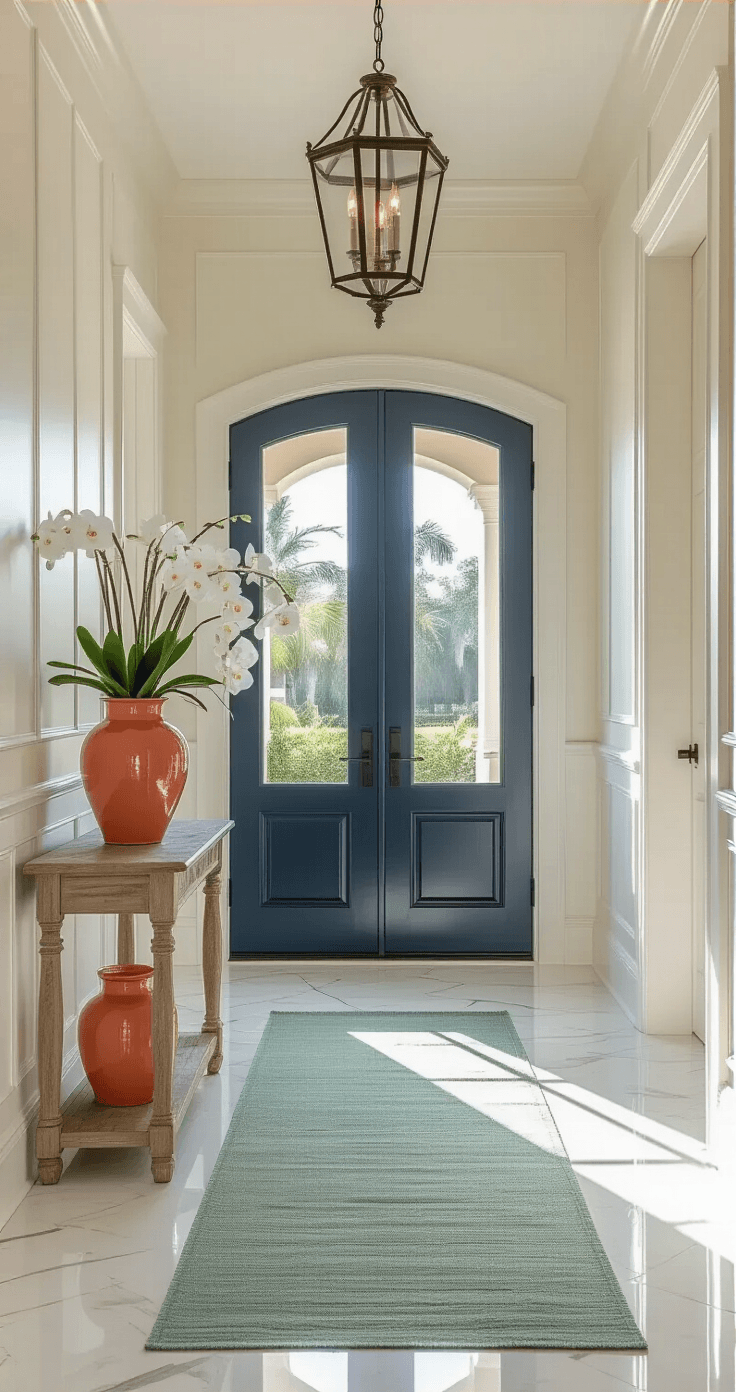
Navy Blue Doors and Shutters
This is my personal favorite accent choice. Navy reads as classic, coordinates with almost any main color, and holds up remarkably well in our climate when you use quality paint.
Pair it with traditional hurricane shutters for both function and style.
Coral and Terracotta Accents
These warm tones bring personality without overwhelming. Use them on your front door, window trim, or decorative elements.
I added a coral door to my beige exterior last year, and I still smile every time I pull into the driveway.
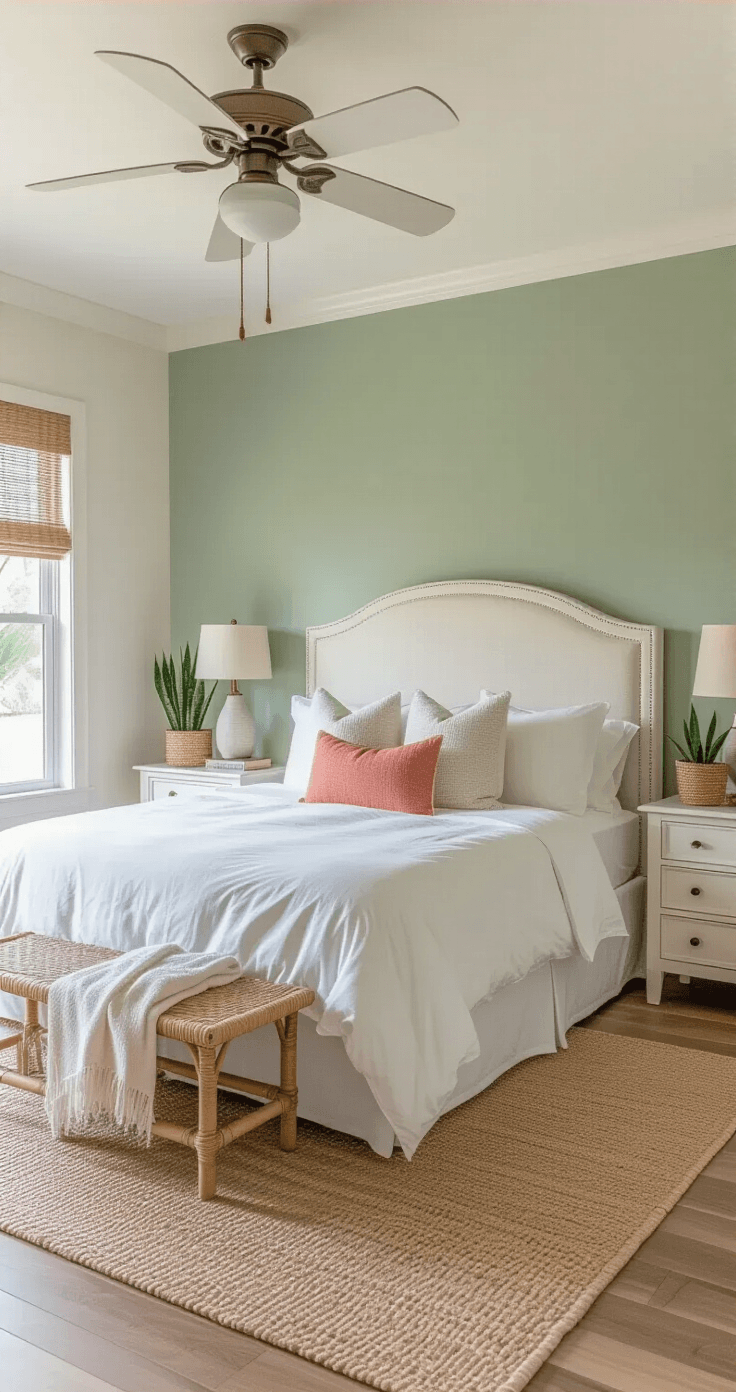
Sage Green Trim
This earthy tone works beautifully with warm neutrals and brings that relaxed, natural Florida vibe.
The Three-Color Formula That Never Fails
Stop overthinking this. Here’s the framework that works every single time:
Main Color (Walls/Siding): Light neutral—cream, white, pale gray, soft beige
Trim Color (Windows, Fascia, Columns): Crisp white or slightly darker/lighter version of your main color
Accent Color (Door, Shutters, Details): Navy, coral, sage, or soft aqua
Winning Combinations I’ve Seen Work:
- Warm white + bright white trim + navy door
- Pale gray + white trim + coral door and shutters
- Soft beige + cream trim + sage green door
- Coastal blue-gray + white trim + aqua door
Test your colors first. Buy sample sizes and paint large sections (at least 2×2 feet) on different sides of your house. Watch them throughout the day as the light changes. What looks perfect at 8 AM might look completely different at 4 PM.
Materials That Can Handle Florida’s Attitude
Stucco
This is the champion of Florida exteriors for good reason. It breathes, resists moisture, and holds paint well when properly sealed.
The texture also hides minor imperfections and creates beautiful shadow play in our strong sunlight.
Fiber Cement Siding
If you want the look of wood without the maintenance nightmare, this is your answer. It won’t rot, warp, or attract termites (which is basically a miracle in Florida).
Install fiber cement siding with proper ventilation behind it to prevent moisture buildup.
Metal Roofing
I resisted this for years because I thought it looked too industrial. I was wrong.
Modern metal roofs come in gorgeous colors, reflect heat like nobody’s business, and last 50+ years. They also handle hurricanes better than almost any other roofing material.
Consider metal roofing panels in light colors for maximum energy efficiency.
Architectural Styles That Make Sense Here
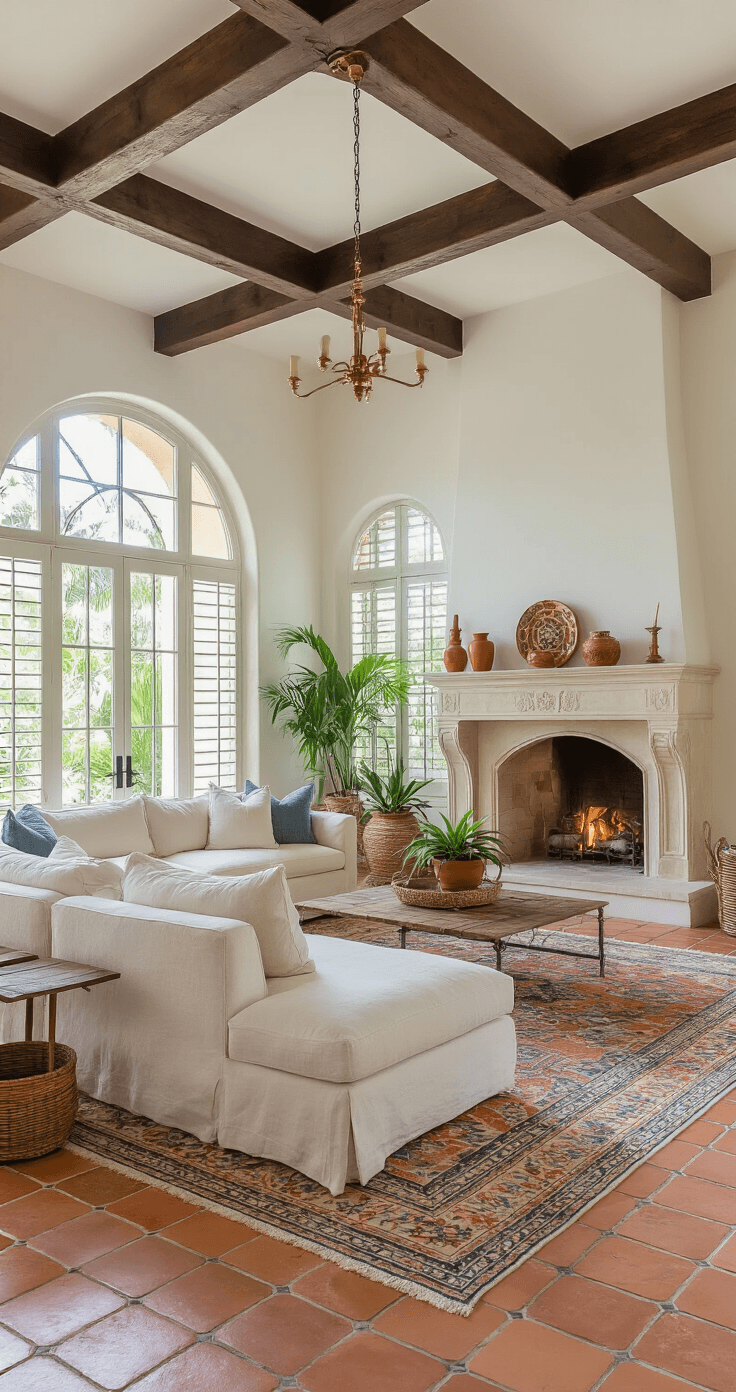
Mediterranean Revival
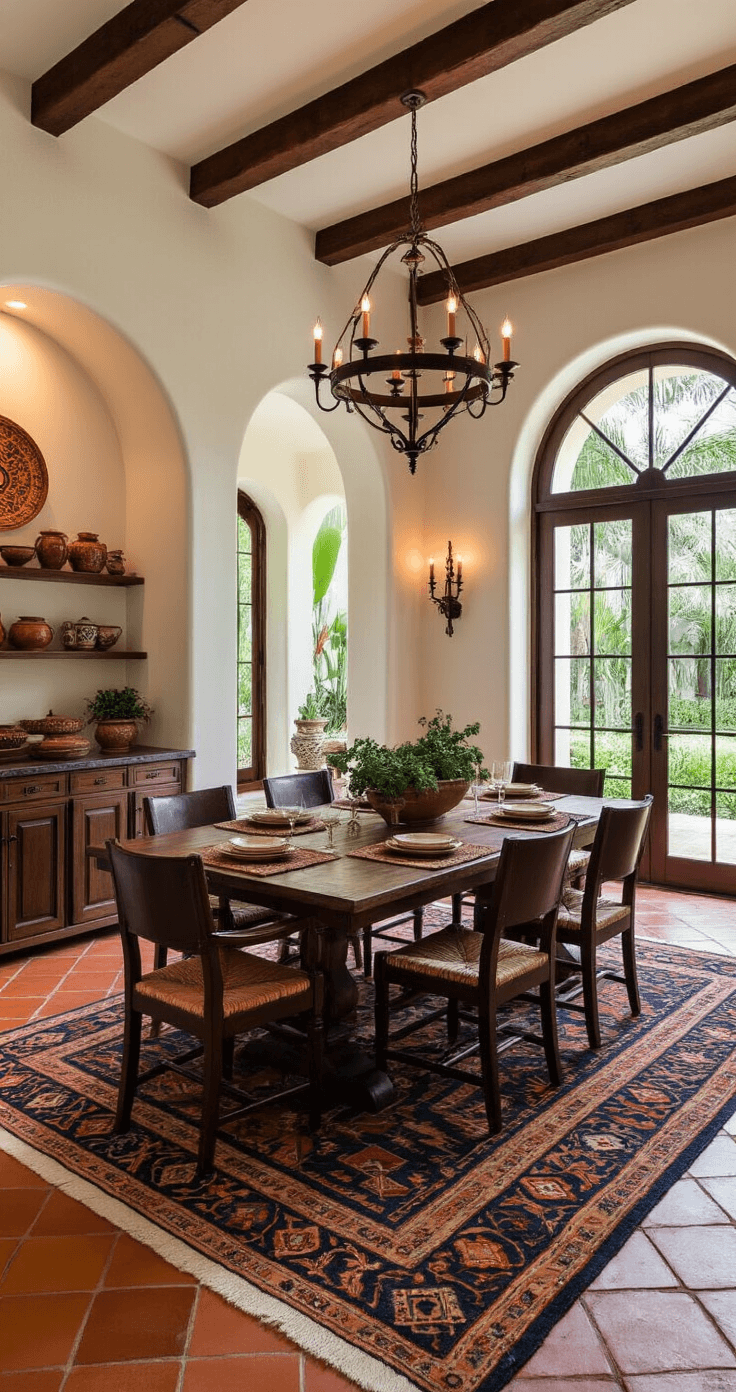
Low-pitched tile roofs, stucco walls, arched openings, and wrought iron details. This style evolved specifically for hot climates, which means it actually works in Florida instead of fighting against it.
Colors that work: Warm whites, sandy beiges, soft yellows, with terracotta accents
This post may contain affiliate links. Please see my disclosure policy for details.