Why Vintage Florida Decor Makes Spaces Feel Alive
Here’s what nobody tells you about coastal design: most of it feels fake. You’ve seen those spaces plastered with “BEACH” signs and shells glued to everything. They scream trying too hard.
Old Florida decor is different because it evolved naturally over decades. It’s what happened when people lived in Florida before air conditioning, before everything was designed by committee, when homes had to breathe and furniture had to withstand humidity.
The result?
- Spaces that feel collected, not purchased
- Rooms that stay cool visually even when temperatures spike
- A lived-in comfort that makes guests actually relax
- An aesthetic that photographs beautifully without looking staged
I’ve styled seven rooms in this aesthetic over the past three years, and every single one has that magic quality where people walk in and immediately exhale.

The Core Elements That Make It Work
Let me break down what actually creates authentic Vintage Florida style.
Colors That Transport You
Forget about those aggressive coastal blues that assault your eyeballs. Old Florida colors are softer, faded by sun and time:
Primary palette:
- Seafoam green (like looking through shallow water)
- Pale turquoise (faded pool tiles from 1962)
- Coral that’s closer to salmon than neon
- Sandy beige (actual sand, not builder beige)
- Butter yellow (citrus groves at dawn)
How to use them:
Start with cream or soft white walls. Always. This isn’t negotiable. Then add your colors through accessories and furniture.
I painted my living room walls in a warm cream and added seafoam through throw pillows with tropical patterns, a coral vintage ceramic lamp, and butter yellow in a woven area rug. The space breathes.
Materials That Tell Stories
This is where texture becomes your best friend.
Essential materials:
- Weathered wood (cypress, pine, reclaimed barn wood)
- Wicker and rattan (the real stuff, not plastic pretenders)
- Bamboo accents
- Natural linen and cotton
- Rough-hewn driftwood
- Hand-painted ceramics
Mix at least four different textures in every space.
I learned this the hard way after creating a room that looked flat in photos until I added rattan baskets, a chunky driftwood piece, and linen curtains to contrast with my smooth painted walls. The difference was staggering.
Save this article
Enter your email and we'll send it straight to your inbox.
Building Your Vintage Florida Foundation
Start with furniture that anchors the entire look.
The Non-Negotiable Pieces
You need at least three of these:
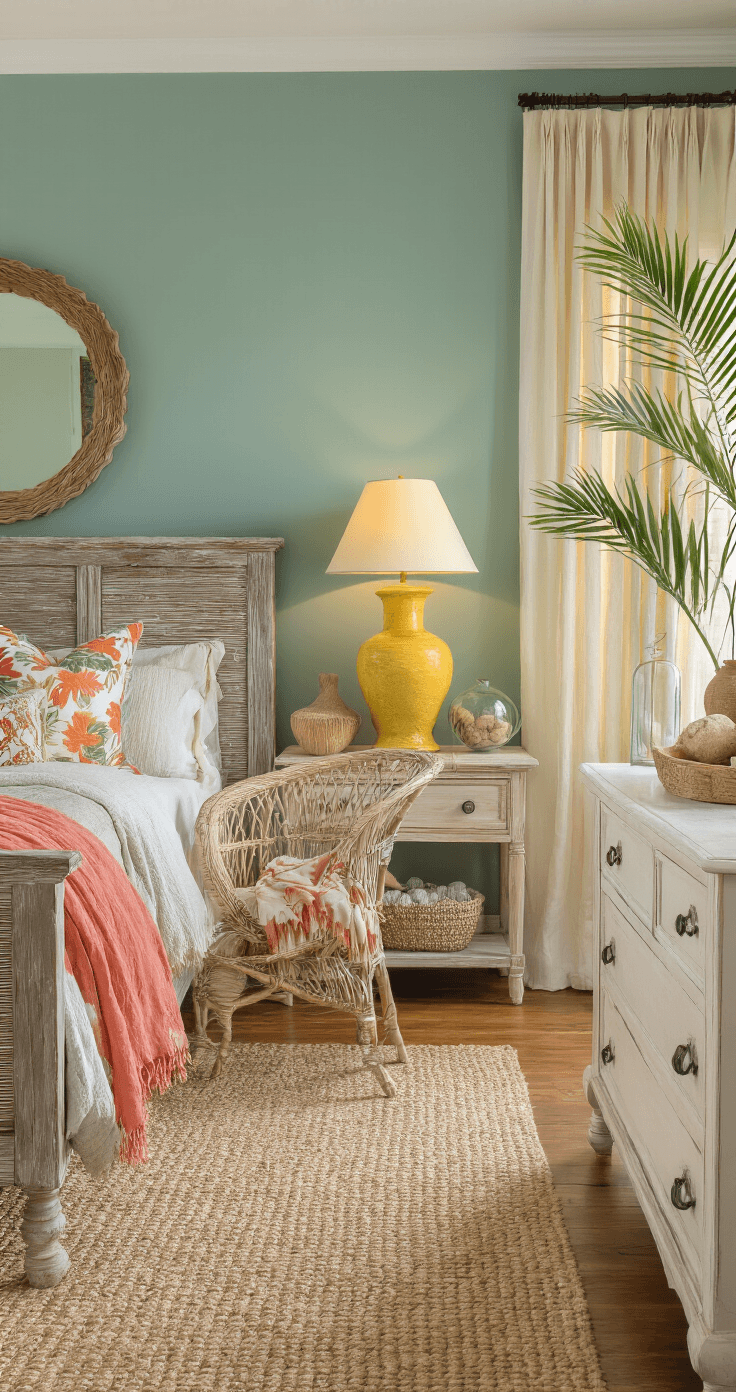
- Wicker or rattan seating
- Hunt vintage shops for authentic pieces
- Look for natural aging, not distressed-on-purpose finishes
- A vintage rattan armchair becomes an instant focal point
- Weathered wood coffee table
- Should look like it survived a few hurricanes
- Imperfections are features, not flaws
- Bonus points if it’s actually reclaimed
- Mid-century coastal sofa
- Simple lines, low profile
- Slipcover in natural fabric (cream, sand, pale blue)
- Comfort matters more than perfection
- Open shelving in distressed wood
- Displays your collections
- Adds vertical interest
- Keeps the space from feeling closed-in
I found my coffee table at an estate sale for $75. It was beaten up, water-stained, and absolutely perfect. My design-school friend told me to refinish it. I ignored her completely. That table has more character than anything pristine could ever achieve.
The Art of Accessorizing Without Overdoing It
This is where most people crash and burn. They get excited and suddenly their space looks like a beach gift shop exploded.
Here’s my system:
The Rule of Purposeful Placement
Every accessory needs a job:
- Functional beauty: Baskets that actually store things, lamps that provide real light
- Visual anchors: Larger pieces that ground your eye (substantial pottery, oversized artwork)
- Conversation starters: Unique vintage finds with stories
What Actually Works
Wall art and displays:
- Vintage Florida maps (Everglades, Keys, citrus routes)
- Botanical prints of palm species and tropical plants
- Weathered wood-framed mirrors
- Gallery walls with mismatched frames in consistent colors
I created a gallery wall using five vintage Florida maps I bought for $30 total from online estate sales. Framed them in weathered white frames of different sizes. The asymmetry makes it interesting. The consistency of subject and frame color makes it cohesive.
Textile layers:
- Natural fiber rugs (jute, seagrass, sisal)
- Throw pillows in botanical patterns (palm fronds, monstera leaves)
- Linen curtains that filter light softly
- Cotton throws in complementary colors
Collected coastal elements:
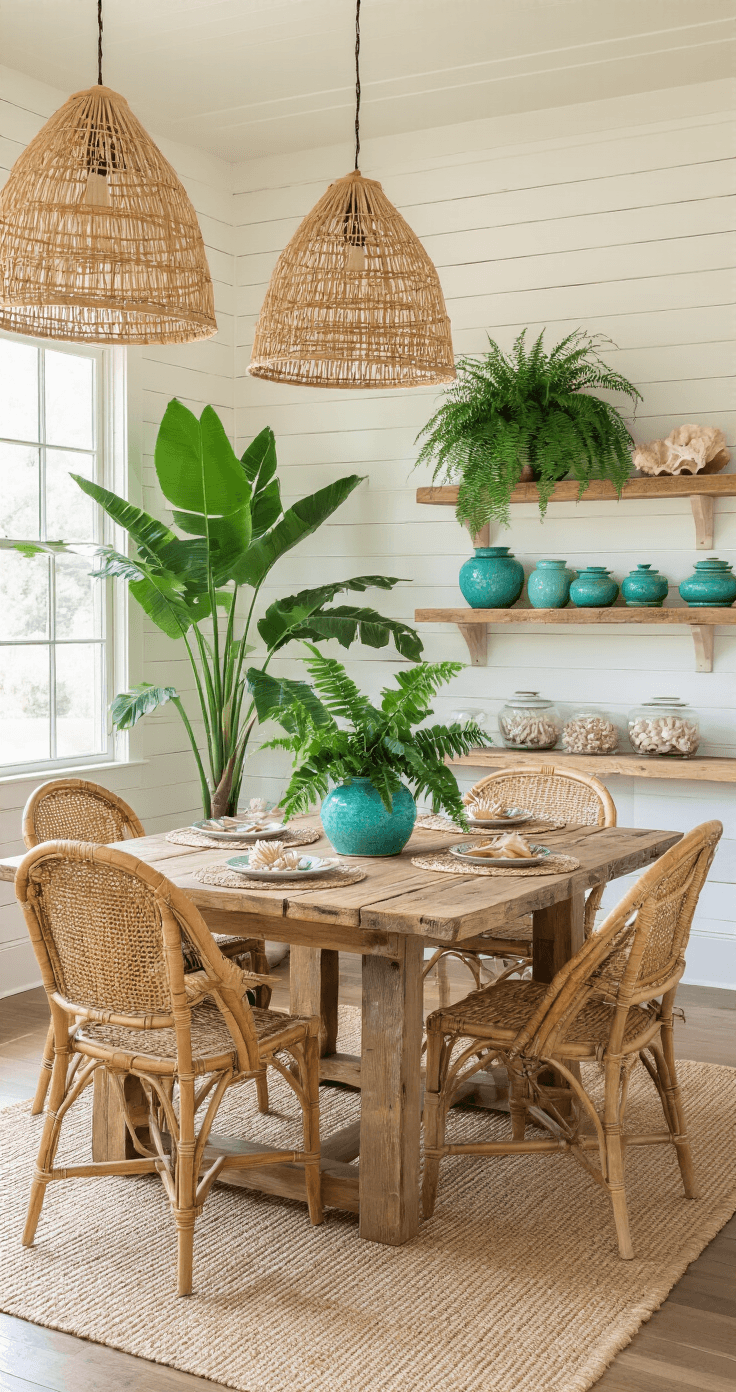
- Shells in glass vessels (not glued to things)
- Coral pieces displayed like sculpture
- Driftwood in tall vases or as standalone art
- Vintage glass floats if you can
This post may contain affiliate links. Please see my disclosure policy for details.
Want to keep this one?
We'll email you the link so you can find it again later.