Florida Kitchen Design: How I Transformed My Space Into a Coastal Paradise
Contents
- Florida Kitchen Design: How I Transformed My Space Into a Coastal Paradise
- Why Your Florida Kitchen Needs Special Attention
- The Reality Check: What Makes Florida Kitchens Different
- Coastal-Inspired Color Palettes That Actually Work
- Materials That Stand Up to Florida’s Brutal Climate
- The Open-Concept Layout: Florida’s Kitchen Philosophy
Florida kitchen design isn’t just about slapping some palm tree wallpaper on your walls and calling it tropical.
I learned this the hard way when I first moved to Tampa and tried to recreate my cramped New York galley kitchen in a state where humidity laughs at cheap materials and salt air corrodes everything faster than you can say “hurricane season.”
Your kitchen in Florida needs to work differently than kitchens anywhere else in the country, and I’m going to show you exactly how to make that happen.

Why Your Florida Kitchen Needs Special Attention
Living in Florida means your kitchen faces challenges that would make a Minnesota kitchen designer weep.
The humidity here doesn’t just exist—it attacks.
I’ve watched cabinet doors warp, seen hardware rust within months, and witnessed grout turn into a science experiment.
But here’s the thing: once you understand what Florida throws at your kitchen, you can design a space that not only survives but actually thrives in this climate.
The Reality Check: What Makes Florida Kitchens Different
Climate factors you can’t ignore:
- Humidity levels that hover between “tropical rainforest” and “living inside someone’s mouth”
- Salt air that corrodes metal faster than you’d believe possible
- Intense UV rays that fade colors and damage materials
- Temperature swings that make materials expand and contract
- Hurricane threats that require specific building codes
I remember my neighbor who installed gorgeous but completely inappropriate wooden cabinets without proper sealing.
Within six months, they looked like they’d aged twenty years.
She ended up spending twice as much to replace them with moisture-resistant cabinets that could actually handle Florida’s aggressive climate.
Coastal-Inspired Color Palettes That Actually Work
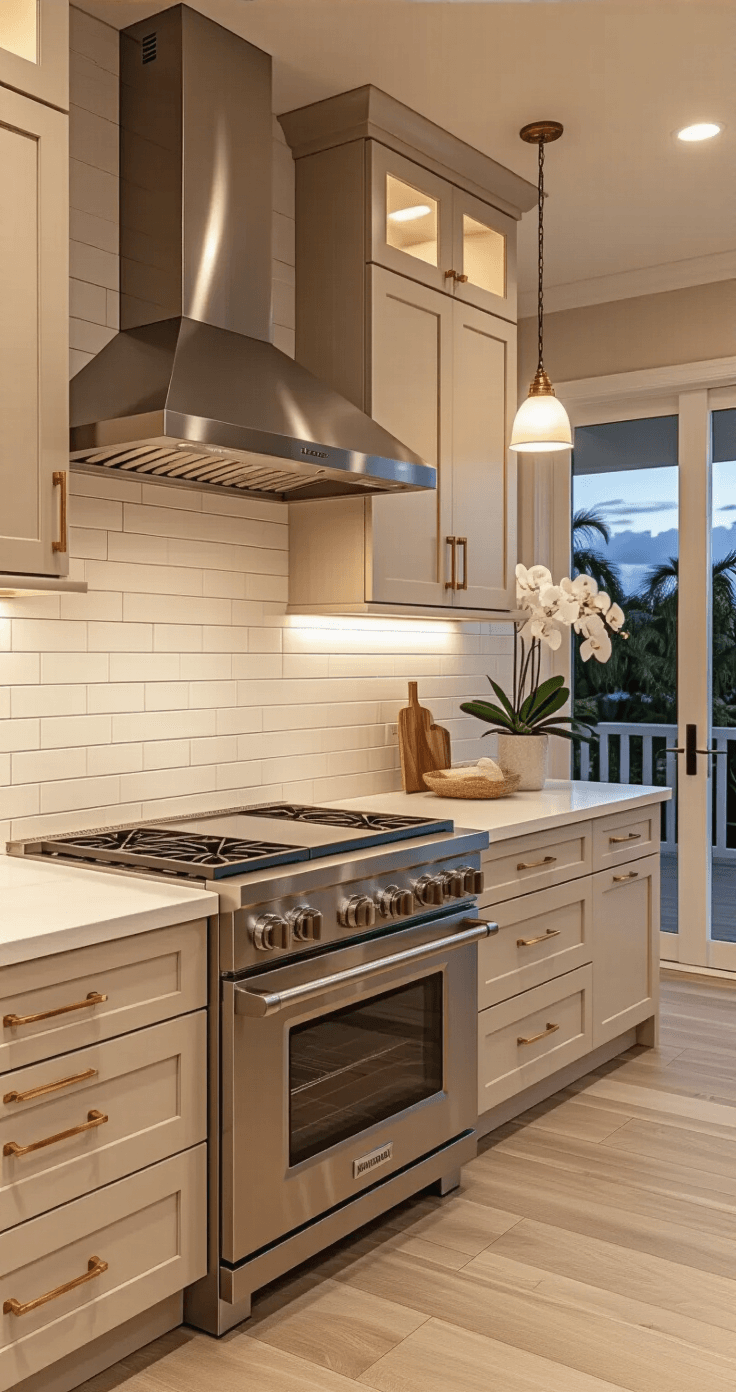
Florida kitchen design thrives on colors that mirror our surroundings, but you need to be strategic about this.
Forget the dark, moody kitchens you see on Pinterest—they absorb heat and make your AC work overtime.
Colors that work beautifully in Florida kitchens:
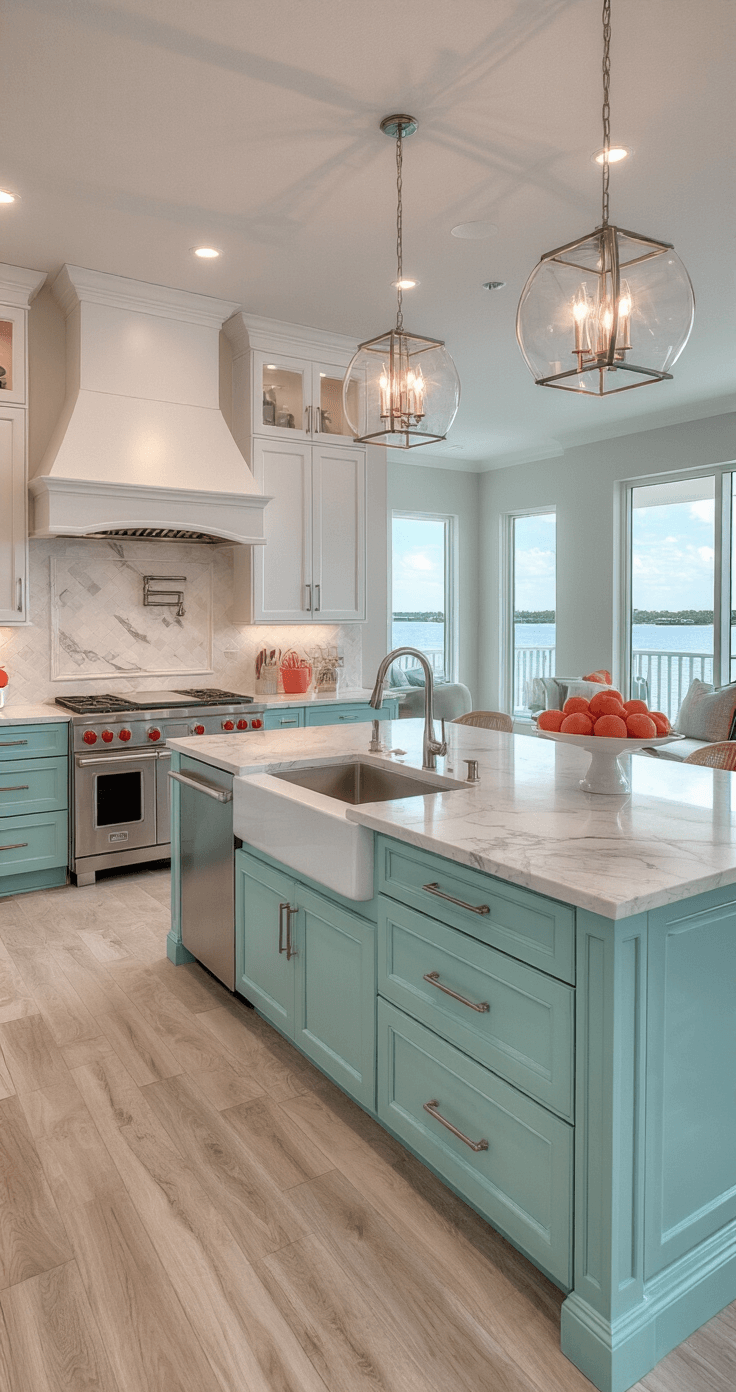
- Soft blues and aquas – They reflect natural light and keep the space feeling cool
- Seafoam greens – Perfect for creating that coastal vibe without going full tourist trap
- Warm sand tones – These neutrals hide the inevitable beach sand that gets tracked inside
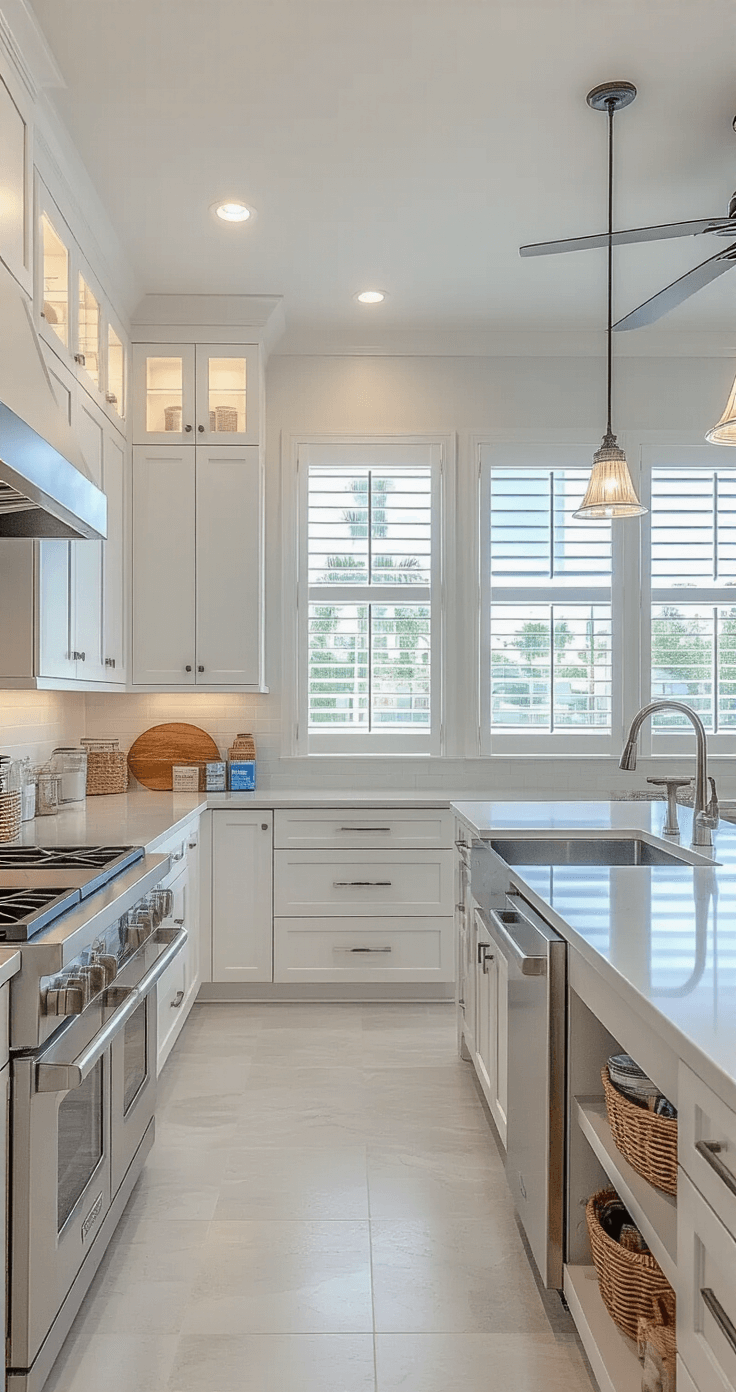
- Crisp whites – Classic, reflective, and they make spaces feel larger
- Coral accents – Use sparingly for pops of color that won’t overwhelm
I painted my kitchen in a soft seafoam color three years ago, and it still makes me smile every morning.
The color doesn’t just look good—it actually makes the space feel cooler, which matters when your electric bill rivals your mortgage payment during summer.
Materials That Stand Up to Florida’s Brutal Climate
This is where most people mess up their Florida kitchen design.
They choose materials based on looks alone, then wonder why everything falls apart.
Countertops That Can Take the Heat
Quartz countertops are your best friend in Florida.
I switched from granite to light-colored quartz countertops two years ago, and the difference is remarkable.
- Non-porous surface resists humidity and bacteria
- Doesn’t require sealing like granite or marble
- Light colors reflect heat instead of absorbing it
- Incredibly durable against everyday wear
Avoid dark countertops unless you enjoy living in a sauna and watching water spots appear constantly.
Cabinetry That Won’t Warp or Rot
The cabinet situation in Florida is serious business.
Traditional wood cabinets can work, but only if they’re properly sealed and you’re committed to maintenance.
Better options for Florida kitchens:
- Marine-grade plywood cabinets – Built to withstand moisture like boat interiors
- Thermofoil cabinets – The vinyl coating protects against humidity damage
- Stainless steel cabinets – Expensive but practically indestructible
- Properly sealed hardwood – If you must have traditional wood, seal it religiously
I went with white thermofoil cabinets because they’re virtually maintenance-free and haven’t shown a single sign of warping despite three hurricane seasons.
Flooring That Survives Everything
Your Florida kitchen floor needs to handle water, humidity, sand, dropped ice cubes, and the occasional hurricane flood.
Flooring materials ranked by Florida performance:
- Porcelain or ceramic tile – The gold standard for Florida kitchens
- Luxury vinyl plank (LVP) – Waterproof and surprisingly durable
- Sealed concrete – Modern look, incredibly tough
- Engineered hardwood – Better than solid wood but still risky in coastal areas
I installed large-format porcelain floor tiles in a light gray color.
They’re cool underfoot, hide dirt beautifully, and I’ve never worried about water damage even when my dishwasher leaked.
The Open-Concept Layout: Florida’s Kitchen Philosophy
Florida kitchen design practically demands open-concept layouts.
This isn’t just about following trends—it’s about survival.
When you’re running your AC constantly, you can’t afford to have walled-off spaces that trap heat and block airflow.
My kitchen flows directly into my dining area and living room, which connects to my lanai through sliding glass doors.
Benefits I’ve experienced with open-concept:
- Better air circulation means lower cooling costs
- Natural light floods the entire space
- Easy entertaining (because Floridians entertain constantly)
- The kitchen doesn’t feel like a hot box while cooking
- Visual connection to outdoor spaces
If you can’t do a full open-concept renovation, at least consider widening doorways or adding a pass-through window.

This post may contain affiliate links. Please see my disclosure policy for details.