Florida’s State Seal and Flag: Everything You Need to Know About These Iconic Symbols
Contents
- Florida’s State Seal and Flag: Everything You Need to Know About These Iconic Symbols
- What’s Actually On Florida’s State Seal?
- Why Florida Had To Fix Its Own State Seal
- Breaking Down Each Symbol (And Why It Matters)
- The Florida Flag: More Than Just A Seal On White Fabric
- When The Flag Became Official
- Rules About Using The State Seal (Yes, There Are Rules)
Florida’s state seal and flag tell stories that most people walk right past every single day.
I’ve stood in countless government buildings, stared at these symbols hanging on walls, and wondered what half those images actually meant.
You’re not alone if you’ve squinted at the state seal trying to figure out what’s happening in that circular design.

What’s Actually On Florida’s State Seal?
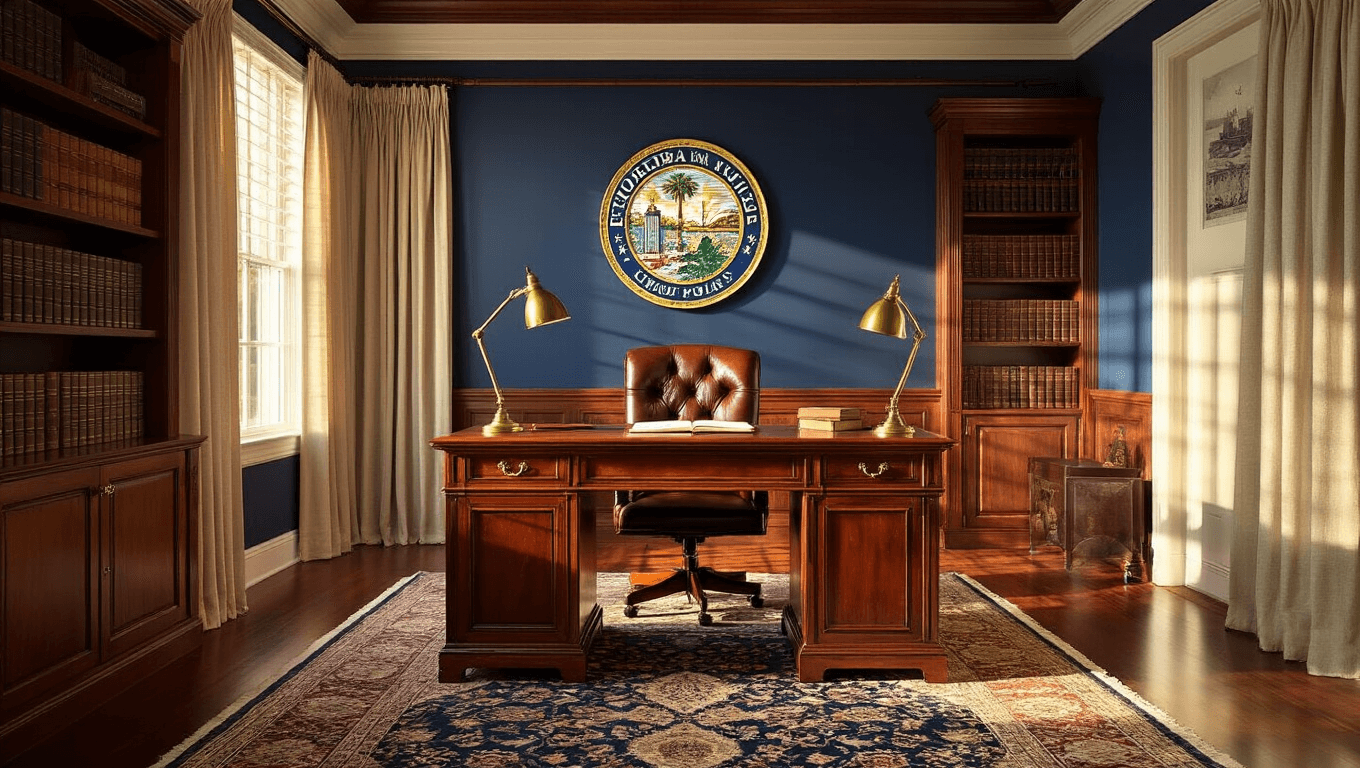
The Great Seal of the State of Florida isn’t just some random artwork someone threw together during lunch break.
It’s a carefully designed symbol that got a major facelift in 1985 because, honestly, the previous version had some embarrassing mistakes.
Here’s what you’ll see when you look at the current seal:
- A Seminole Indian woman scattering flowers in the foreground (finally getting Florida’s actual indigenous people right)
- A sabal palm tree standing tall (our official state tree since 1953)
- A steamboat cruising on the water (because Florida’s waterways were everything back in the day)
- Sun rays beaming over distant highland (that Florida sunshine we all know and love or curse, depending on the month)
- The words “Great Seal of the State of Florida: In God We Trust” wrapping around the entire scene
I remember the first time I actually studied this seal properly.
I was decorating my home office with Florida state flag decor and realized I had no clue what I was looking at.

Why Florida Had To Fix Its Own State Seal
Here’s where things get fascinating.
The 1985 revision wasn’t just a touch-up job.
It was Florida essentially admitting, “Yeah, we’ve been getting this wrong for decades.”
The major corrections included:
Wrong Indian, Wrong Tree, Wrong Boat
The original seal featured a Plains Indian woman, which makes about as much sense as putting a cactus on Maine’s seal.
Florida’s indigenous people were Seminoles, not Plains Indians.
They fixed that.
The cocoa palm got the boot in favor of the sabal palm, which became our state tree in 1953.
Someone finally noticed we’d been featuring the wrong tree for years.
The steamboat design got more accurate too.
The previous version looked like something a kid might sketch after hearing about steamboats but never actually seeing one.
I’ve seen this attention to historical accuracy reflected in quality Florida historical prints that people use for home decor now.

Breaking Down Each Symbol (And Why It Matters)
The Seminole Woman Scattering Flowers
This isn’t just decorative fluff.
The Seminole woman represents Florida’s indigenous heritage and the state’s connection to its original inhabitants.
She’s scattering flowers, which symbolizes beauty and natural abundance.
Every time I pass Native American art pieces in home stores, I think about how this single figure on our seal represents such a complex and often painful history.
The Sabal Palm Tree
Florida’s official state tree since 1953 stands as a symbol of resilience.
These palms survive hurricanes, salt spray, and brutal summer heat.
If you’ve ever tried keeping artificial palm trees looking decent in your home, you know even the fake ones command respect.
The Steamboat
This represents Florida’s maritime heritage and the importance of waterways to the state’s development.
Before highways and interstates, steamboats were Florida’s lifeline.
They moved people, goods, and ideas up and down our rivers and along our coasts.
The Sunshine and Highland
Those rays aren’t just pretty.
They represent Florida’s climate, which let’s be honest, is basically our entire tourism economy.
The distant highland represents the promise of prosperity and growth.

The Florida Flag: More Than Just A Seal On White Fabric
The Florida flag features that state seal smack in the middle of a white background.
But here’s the kicker: those red diagonal bars crossing from corner to corner weren’t part of the original design.
The Red Cross Addition
Governor Francis Fleming suggested adding the red cross in the late 1890s.
Why?
Because a plain white flag with just a seal in the middle looked exactly like a flag of truce when it hung limp on a windless day.
Imagine trying to display state pride and accidentally looking like you’re surrendering.
Not a great look.
The red diagonal cross solved that problem instantly.
It also made the flag more visually striking, which matters when you’re trying to stand out among 49 other state flags.
I’ve got outdoor flags and banners on my porch, and trust me, the ones with bold colors and strong geometric shapes get noticed.
When The Flag Became Official
The current flag design became official in 1900.
That’s over 120 years of the same basic design, which is actually pretty remarkable.
Most states have tweaked their flags multiple times.
Florida got it right on the second try and stuck with it.
Rules About Using The State Seal (Yes, There Are Rules)
The Department of State isn’t messing around with the Great Seal.
They hold exclusive authority over its use and display.
Commercial use is straight
This post may contain affiliate links. Please see my disclosure policy for details.