Important Notice: The Florida Museum of Natural History is currently closed for expansion until fall 2026, but this gives you the perfect opportunity to plan the ultimate butterfly experience.
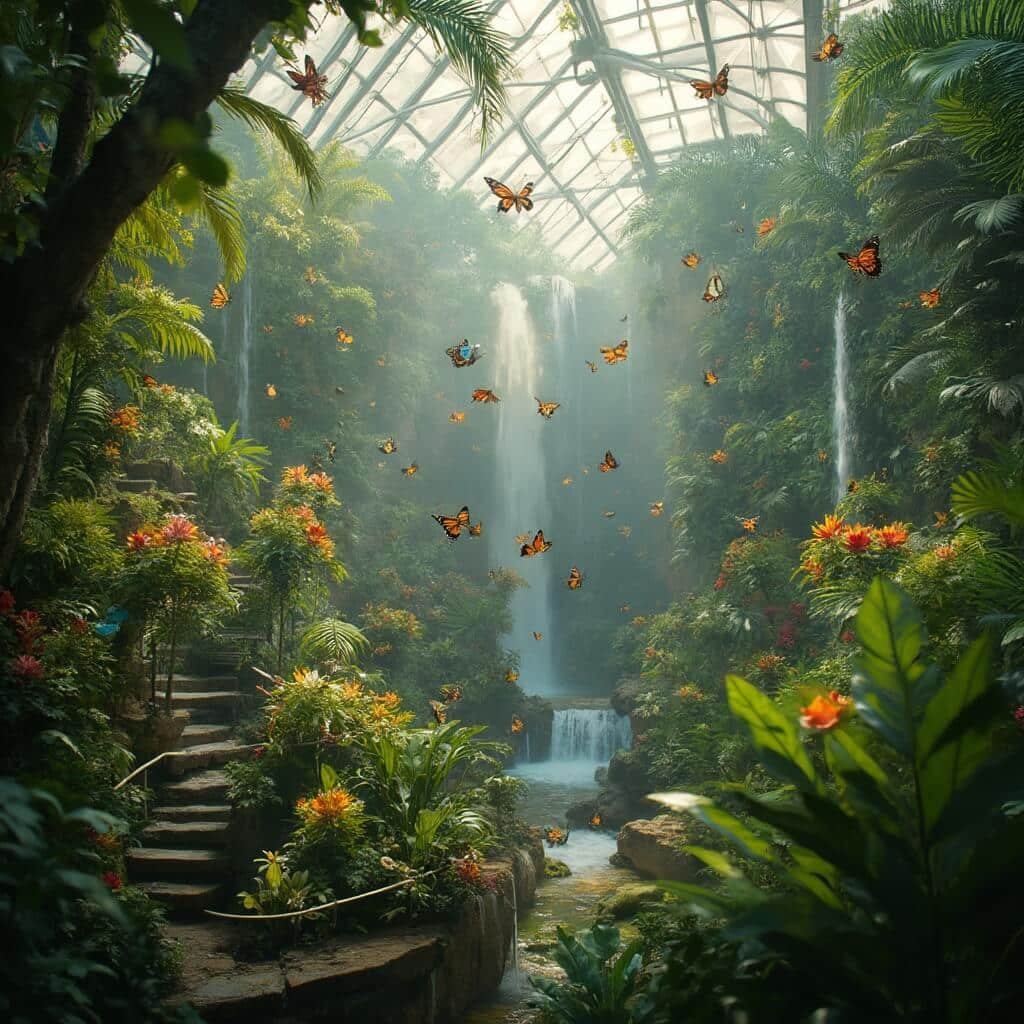
Picture this: you’re standing in a 6,400-square-foot tropical paradise where over 50 species of butterflies flutter freely around you, occasionally landing on your shoulder whilst you listen to the gentle cascade of waterfalls.
This isn’t some Disney fever dream – it’s the Butterfly Rainforest at the Florida Museum of Natural History in Gainesville.
I’ve visited countless butterfly exhibits across the country, but nothing quite prepared me for my first morning at this particular rainforest exhibit.
What Makes This Living Ecosystem Unlike Any Other Butterfly Exhibit
Contents
- What Makes This Living Ecosystem Unlike Any Other Butterfly Exhibit
- The Real Cost of Butterfly Paradise (And How to Save Money)
- When the Crowds Disappear: Secret Timing for the Perfect Visit
- How Long Should You Really Plan to Stay?
- The Secret Show Most Visitors Never See
- What Nobody Tells You About Dressing for Butterfly Success
- The Butterfly Interactions You Can’t Get Anywhere Else
- The Hidden Ecosystem Most People Walk Right Past
- Navigation Secrets for the University of Florida Campus
- Photography Strategies That Actually Work
- Accessibility and Special Needs Considerations
- Educational Value Beyond the Instagram Moment
- Making the Most of Museum Membership
- Final Preparation Checklist for Your Perfect Visit
The Butterfly Rainforest isn’t your typical glass-case museum display.
It’s a fully functioning tropical ecosystem housed within the University of Florida campus at 3215 Hull Road.
Here’s what sets it apart from other butterfly attractions:
- Living, breathing habitat – not just pretty displays
- Free-flying butterflies that interact with visitors naturally
- Multi-species environment featuring birds, turtles, and fish alongside butterflies
- Year-round tropical climate maintained at optimal conditions
- Educational rearing lab where you witness the complete butterfly lifecycle
The facility combines serious scientific research with public education in a way that feels magical rather than academic.
When I first walked through those humid glass doors, the temperature shift immediately transported me from Florida’s campus to what felt like a Costa Rican cloud forest.
The Real Cost of Butterfly Paradise (And How to Save Money)
Let’s talk numbers because nobody likes surprise expenses.
Standard admission prices:
- Adults (18+): $14.00
- Florida residents: $12.00 (bring your ID!)
- Seniors (60+): $12.00
- Children (3-17): $7.00
- Children 2 and under: Free
- UF students/faculty/staff: Free with valid ID
- Active military/veterans: Discounted rates available
Money-saving insider tip: If you’re planning multiple visits or live locally, museum membership pays for itself quickly and includes free admission.
The separate ticketed admission exists because maintaining a living tropical ecosystem requires specialised care that goes far beyond typical museum exhibits.
Think about it – they’re keeping dozens of butterfly species alive and thriving in Florida’s climate year-round.
When the Crowds Disappear: Secret Timing for the Perfect Visit
Here’s what most travel guides won’t tell you about timing your Butterfly Rainforest visit.
The golden window: 10:00 AM – 11:30 AM on weekdays
During my Tuesday morning visit last year, I practically had the entire rainforest to myself for the first hour.
The butterflies were incredibly active after their morning warm-up, and the natural lighting created perfect photography conditions.
Why early morning visits win:
- Butterflies are most active after warming up
- School groups typically arrive after 11:30 AM
- Natural lighting enhances photography
- Peaceful atmosphere for observation
Avoid these times like a tourist trap:
- Saturday afternoons (busiest period)
- Weekend mornings after 11 AM
- Any time during school field trip season
Monday is your secret weapon – it’s consistently the quietest day of the week.
Late afternoons after 3 PM offer another sweet spot when crowds thin out, though butterfly activity may be slightly reduced.
How Long Should You Really Plan to Stay?
Most visitors spend 45 minutes to 1.5 hours in the rainforest itself.
But here’s the thing – rushing through defeats the entire purpose.
For casual visitors: Plan 1 hour minimum
For photographers: Allow 1.5-2 hours
For families with children: Budget 1.5 hours (kids get mesmerised)
For nature enthusiasts: 2 hours lets you truly observe behaviour patterns
The beauty lies in slowing down and letting the experience unfold naturally.
I’ve seen people race through in 20 minutes, snapping quick photos, and they miss the real magic – watching a Blue Morpho’s feeding behaviour or witnessing a butterfly emerge from its chrysalis.
The Secret Show Most Visitors Never See
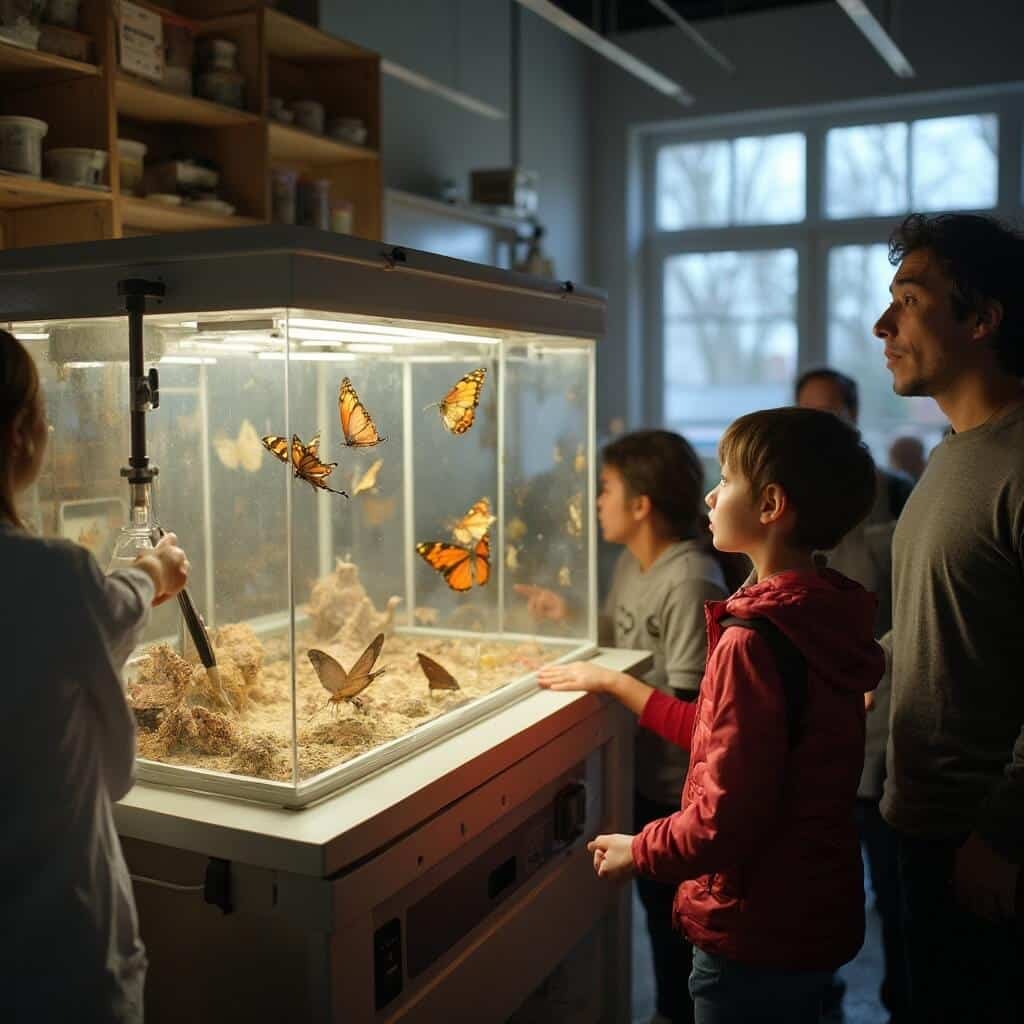
Hidden away from the main exhibit area sits the Rearing Lab – and it’s absolutely fascinating.
Daily butterfly releases happen at:
- Monday-Friday: 2:00 PM
- Saturday-Sunday: 2:00 PM, 3:00 PM, and 4:00 PM
These “Butterfly Spotlight” events offer something special – you’re witnessing butterflies taking their very first flight.
The butterflies arrive from farms worldwide in chrysalis stage, then emerge in the dedicated emergence chamber.
Watching a Zebra Longwing take its maiden flight whilst a keeper explains its lifecycle creates one of those unexpectedly profound moments that stick with you.
Pro tip: The rearing lab viewing area gets crowded during releases, so arrive 10 minutes early to secure a good spot.
What Nobody Tells You About Dressing for Butterfly Success
The Butterfly Rainforest maintains tropical conditions year-round – think warm, humid air that carries the scent of exotic blooms.
Wear this:
- Light, breathable cotton or linen fabrics
- Comfortable walking shoes with good grip
- Layers you can easily remove
Skip this:
- Heavy fabrics that trap heat
- Brand new shoes (humid conditions can feel different)
- Dark colours if you want butterfly interactions (they prefer brighter hues)
Temperature shock reality check: You’ll transition from Florida’s air-conditioned spaces into tropical humidity, then back to climate control when exploring other museum areas.
I learned this lesson the hard way during a July visit when I wore jeans and a cotton jumper – within minutes, I was uncomfortably warm and slightly foggy-lensed.
The experience improves dramatically when you’re physically comfortable enough to focus on the butterflies rather than your clothing choices.
Now that you understand what makes this butterfly exhibit extraordinary and how to time your visit perfectly, let’s dive into the specific features and experiences that await you inside this tropical paradise.
For more Florida adventures, explore the Big Cypress National Preserve or see the wild monkeys at Silver Springs.
👇Find The Cheapest Flights To Anywhere Here👇
The Butterfly Interactions You Can’t Get Anywhere Else
Here’s what happens when butterflies decide you’re worthy of their attention.
During my third visit to the rainforest, a Zebra Longwing landed on my camera lens whilst I was photographing a Julia butterfly feeding on nearby pentas flowers.
For nearly ten minutes, this elegant black-and-yellow striped beauty used my equipment as its personal perch, occasionally flexing its wings in the humid breeze.
The butterfly landing experience depends on several factors:
- Your clothing colours (bright flower patterns work surprisingly well)
- How still you remain (sudden movements send them flying)
- The nectar sources available that day
- Individual butterfly personalities (yes, they have them)
Species you’re most likely to encounter up close:
- Blue Morpho with its iridescent wings spanning nearly 6 inches
- Orange Tiger Longwing with distinctive black spotted patterns
- Zebra Longwing (Florida’s state butterfly)
- Julia butterflies in brilliant orange
- Various Swallowtail species
The key insight most visitors miss: butterflies aren’t performing for you – they’re living their natural lives whilst you observe.
This perspective shift transforms your experience from expectation-based disappointment to genuine wonder at whatever interactions naturally occur.
The Hidden Ecosystem Most People Walk Right Past
Beyond the butterflies, this rainforest houses an intricate web of tropical life that creates authentic ecosystem dynamics.
The supporting cast includes:
- Colorful birds that help with seed dispersal
- Freshwater turtles maintaining aquatic balance
- Tropical fish species in naturalistic water features
- Hundreds of plant species providing nectar, shelter, and breeding grounds
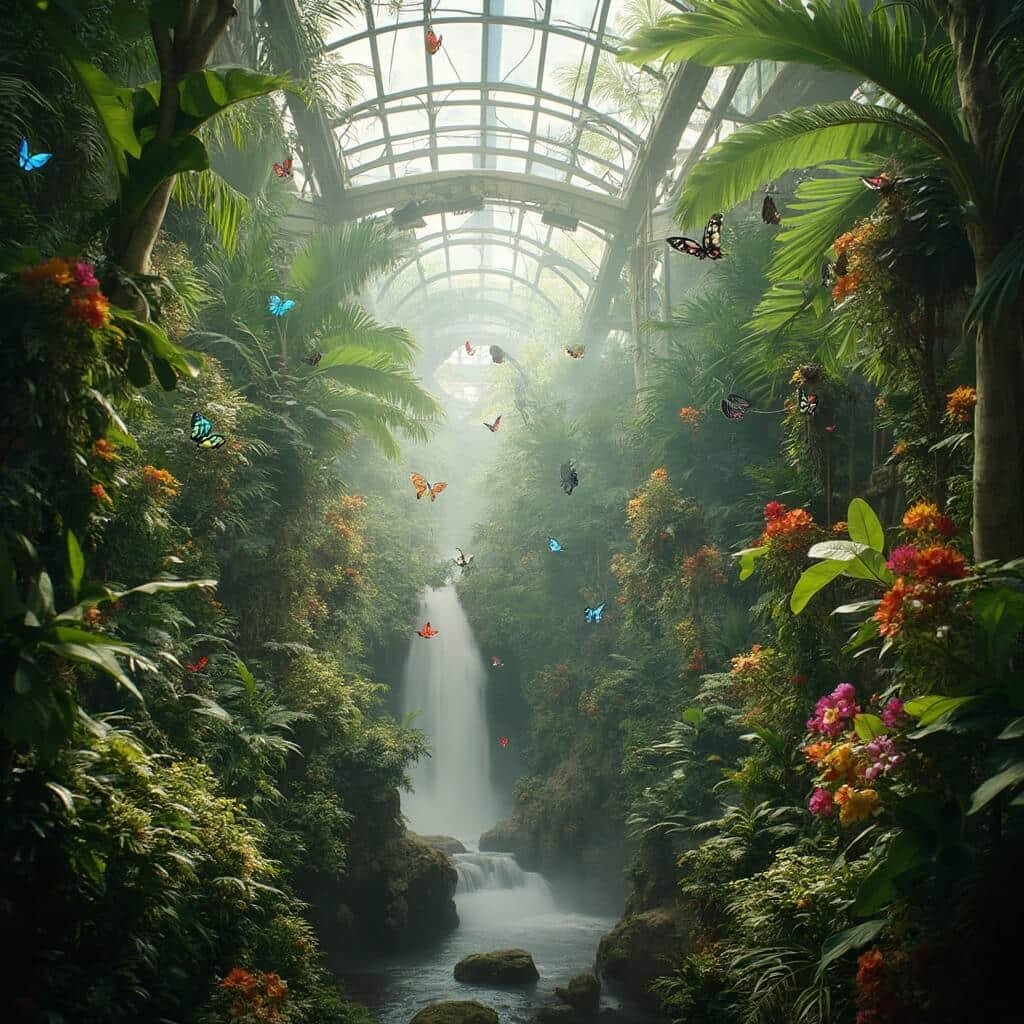
The cascading waterfall isn’t just aesthetic – it maintains humidity levels and creates microclimates that different species prefer.
I once spent twenty minutes watching a small bird systematically work through butterfly feeding stations, demonstrating the complex relationships that make this ecosystem function.
Plant species worth seeking out:
- Pentas flowers (butterfly magnets)
- Ixora with clusters of tiny blooms
- Firebush attracting both butterflies and birds
- Native Florida coontie plants
The educational value emerges naturally when you start noticing these connections rather than focusing solely on butterfly photo opportunities.
Getting to the Butterfly Rainforest involves more than just punching an address into GPS.
The campus reality check:
- Use Exit 384 off the highway system
- 3215 Hull Road puts you in the right general area
- Campus parking requires strategy during academic sessions
- Walking distances can surprise first-time visitors
Parking insider knowledge:
- Arrive before 10 AM for easier parking access
- Weekday parking fills up when classes are in session
- Weekend parking is generally more accessible
- Some lots require permits – check signage carefully
Campus navigation tips:
- Download the UF campus map app beforehand
- Allow extra time for walking from parking areas
- The museum building is well-marked once you’re on foot
- Ask any student for directions – they’re typically helpful
The University of Florida campus spans thousands of acres, so treating this like a typical museum visit in a shopping center sets you up for frustration.
Plan for the campus experience rather than fighting it.
Photography Strategies That Actually Work
Butterfly photography in humid, controlled environments requires different techniques than outdoor shooting.
Camera settings for success:
- Higher ISO to accommodate movement and lower light
- Faster shutter speeds to freeze wing motion
- Continuous autofocus for tracking moving subjects
- Spot metering to handle varied lighting conditions
Composition techniques that work:
- Focus on wing patterns rather than trying to capture entire butterflies
- Use the tropical plants as natural framing elements
- Capture feeding behavior rather than just posed shots
- Include environmental context showing the rainforest setting
The humidity factor:
- Lens fogging happens when transitioning between climates
- Bring lens cloths for frequent cleaning
- Allow equipment to acclimate before serious shooting
- Consider weather sealing if you’re using professional gear
Behavioral photography opportunities:
- Butterflies feeding on nectar sources
- Wing-drying behavior after emerging
- Territorial interactions between species
- Resting positions that show wing undersides
The most memorable shots often happen during quiet observation moments rather than aggressive photo-hunting sessions.
Accessibility and Special Needs Considerations
The Florida Museum takes accessibility seriously, but tropical environments present unique challenges.
Wheelchair accessibility features:
- Generally accessible pathways throughout the rainforest
- Small handicap scooters can navigate the space
- Viewing areas designed for multiple heights
- Rest areas strategically placed
Special considerations:
- Humid conditions may affect some medical equipment
- Temperature changes can impact certain medications
- Narrow pathways in some areas require advance planning
- Emergency exits are clearly marked but limited
Sensory experience modifications:
- The environment can overwhelm sensitive individuals
- Sound levels include constant water features and climate control
- Lighting varies throughout the space
- Scent intensity from tropical flowers
Planning recommendations:
- Contact museum staff at (352) 846-2000 for specific needs discussions
- Visit during less crowded weekday mornings for easier navigation
- Bring any necessary medical supplies for humid conditions
- Plan shorter visits initially to gauge comfort levels
The museum staff genuinely wants everyone to enjoy this experience and will work with visitors to address specific accessibility needs.
Educational Value Beyond the Instagram Moment
The Butterfly Rainforest succeeds as both entertainment and a legitimate educational experience.
Scientific concepts demonstrated:
- Complete metamorphosis lifecycle observation
- Ecosystem interdependence through living examples
- Tropical biodiversity in controlled environments
- Conservation challenges facing butterfly species worldwide
Research connections:
- University of Florida ongoing butterfly research
- Breeding program contributions to species preservation
- Climate impact studies using butterfly populations
- Plant-pollinator relationship documentation
Educational program offerings:
- School group programs during academic years
- Adult education workshops periodically
- Volunteer opportunities for deeper involvement
- Research collaboration possibilities for students
The facility balances public engagement with serious scientific work in ways that enhance rather than diminish either mission.
You’re witnessing real research in action, not just a pretty display designed for tourism.
Making the Most of Museum Membership
If you live within driving distance of Gainesville, membership mathematics work in your favor.
Membership benefits include:
- Free admission to all special exhibits including Butterfly Rainforest
- Guest passes for visiting family and friends
- Priority registration for special events and programs
- Member-only preview events for new exhibits
Break-even calculation:
- Individual membership typically costs equivalent to 3-4 visits
- Family memberships pay for themselves with 2-3 family visits
- Reciprocal benefits at other natural history museums nationwide
Additional perks worth considering:
- Behind-the-scenes tour opportunities
- Volunteer engagement possibilities
- Research program updates and insider information
- Gift shop discounts for butterfly-themed purchases
Membership transforms occasional visits into regular engagement with ongoing research and conservation efforts.
Final Preparation Checklist for Your Perfect Visit
Before leaving home:
- Check Florida Museum of Natural History Official Website for current hours and any special conditions
- Verify admission prices and payment methods accepted
- Download campus maps and parking information
- Pack appropriate clothing for tropical conditions
Upon arrival:
- Allow extra time for campus navigation and parking
- Visit restrooms before entering (facilities inside are limited)
- Hydrate well before entering humid environment
- Set phone to silent mode for respectful observation
During your visit:
- Move slowly and deliberately to avoid startling butterflies
- Focus on observation before photography attempts
- Respect other visitors’ experiences in shared space
- Ask questions of staff members who are genuinely knowledgeable
After your experience:
- Allow time to decompress and process what you observed
- Visit other museum exhibits if time permits
- Share experiences responsibly on social media
- Consider volunteer opportunities if you felt deeply connected
The Butterfly Rainforest in Gainesville offers something increasingly rare – authentic connection with living natural systems in an accessible, educational environment.
When the facility reopens in fall 2026, you’ll have the perfect opportunity to experience this remarkable butterfly exhibit that combines scientific research with pure natural wonder.
For more visitor information, visit the Butterfly Rainforest Visitor Information page.
👇Ready To Book Your Trip?👇
This post may contain affiliate links. Please see my disclosure policy for details.