Florida Ranch Style Homes Exterior: Your Complete Design Guide
Florida ranch style homes exterior design has stolen my heart, and I’m about to show you exactly why this architectural gem deserves your attention.
You’re staring at your house right now, aren’t you? Maybe feeling like it’s missing something but can’t quite put your finger on it. Or perhaps you just bought a Florida ranch and have no clue where to start with the exterior.
I get it. I’ve been there, standing in my driveway with a notebook full of Pinterest screenshots wondering how the hell to pull off that perfect tropical-meets-classic look.
What Makes Florida Ranch Exteriors Different (And Why You Should Care)
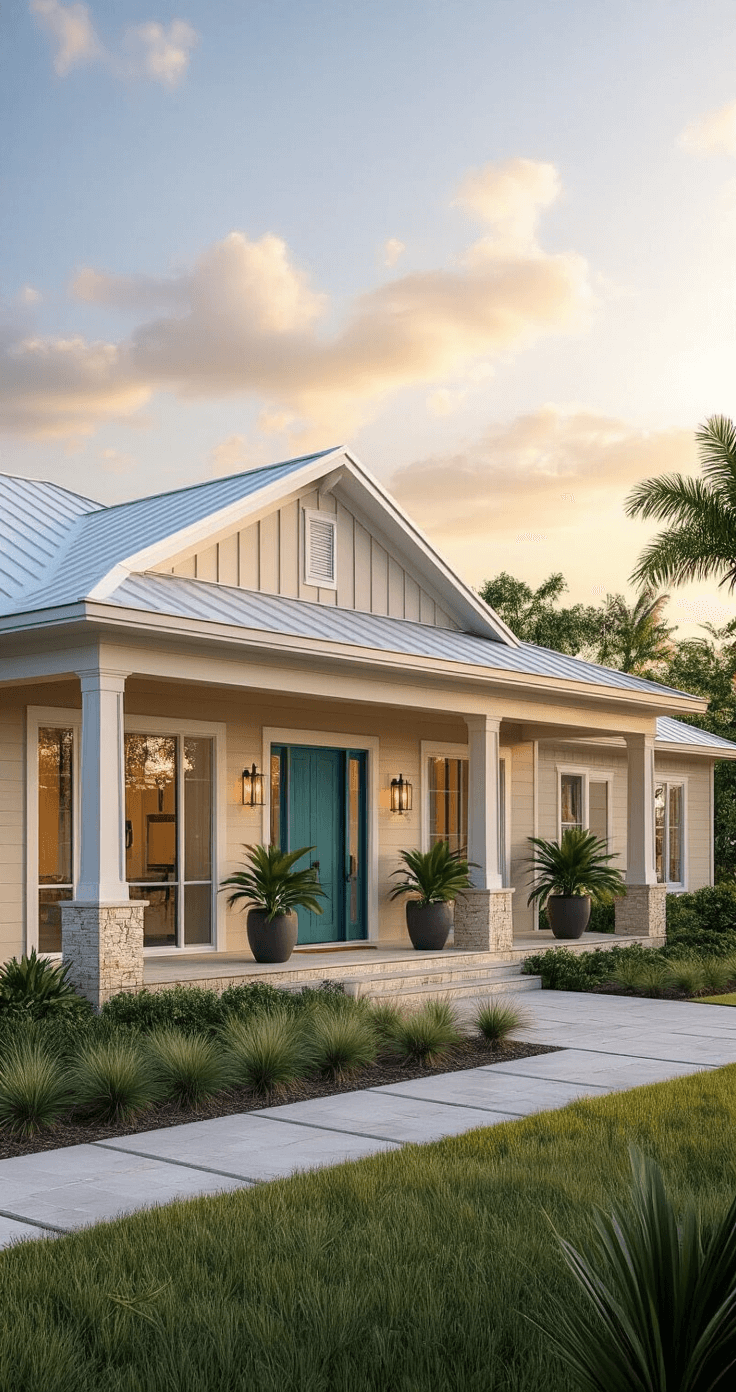
Florida ranch homes aren’t your typical suburban cookie-cutter situation. These beauties blend the clean, horizontal lines of classic ranch architecture with tropical flair that actually makes sense in the Sunshine State.
When I first moved to Florida, I thought ranch homes were boring. Boy, was I wrong.
The magic happens when traditional ranch simplicity meets palm trees and ocean breezes. It’s not trying too hard, it’s not flashy, but damn if it doesn’t look sophisticated.
Here’s what sets them apart:
- Single-story layouts that sprawl horizontally across the lot
- Massive windows that blur the line between inside and outside
- Low-pitched rooflines that handle tropical storms like champions
- Covered porches that become actual living spaces (not just decoration)
- Material choices that laugh in the face of humidity
The Foundation: Getting Your Base Right
Listen, you can plant all the palm trees you want, but if your fundamental exterior elements are off, you’re building a house of cards.
Start with your siding
I went with board and batten siding after seeing it on a neighbor’s renovation. The vertical grooves add depth that flat siding just can’t match. It creates shadows throughout the day that make your home look alive.
Color choices that actually work:
- Soft whites and creams (your safe base)
- Warm beiges that echo sandy beaches
- Pale blues and greens (go lighter than you think)
- Accent colors in coral, teal, or burnt orange
Here’s my mistake so you don’t repeat it: I initially painted my trim the same color as the siding. Everything washed out. Your trim needs contrast—not crazy contrast, but enough that windows and architectural details pop.
The roof situation
Metal roofing changed everything for me. Yes, it costs more upfront. Yes, it’s worth every penny.
Metal roofs handle Florida’s beating sun, torrential rains, and hurricane winds better than traditional shingles. Plus, they look clean and modern without being too contemporary. They complement the ranch aesthetic perfectly.
If metal isn’t in your budget right now, go with architectural shingles in neutral tones. Skip the dark colors unless you enjoy a 150-degree attic.
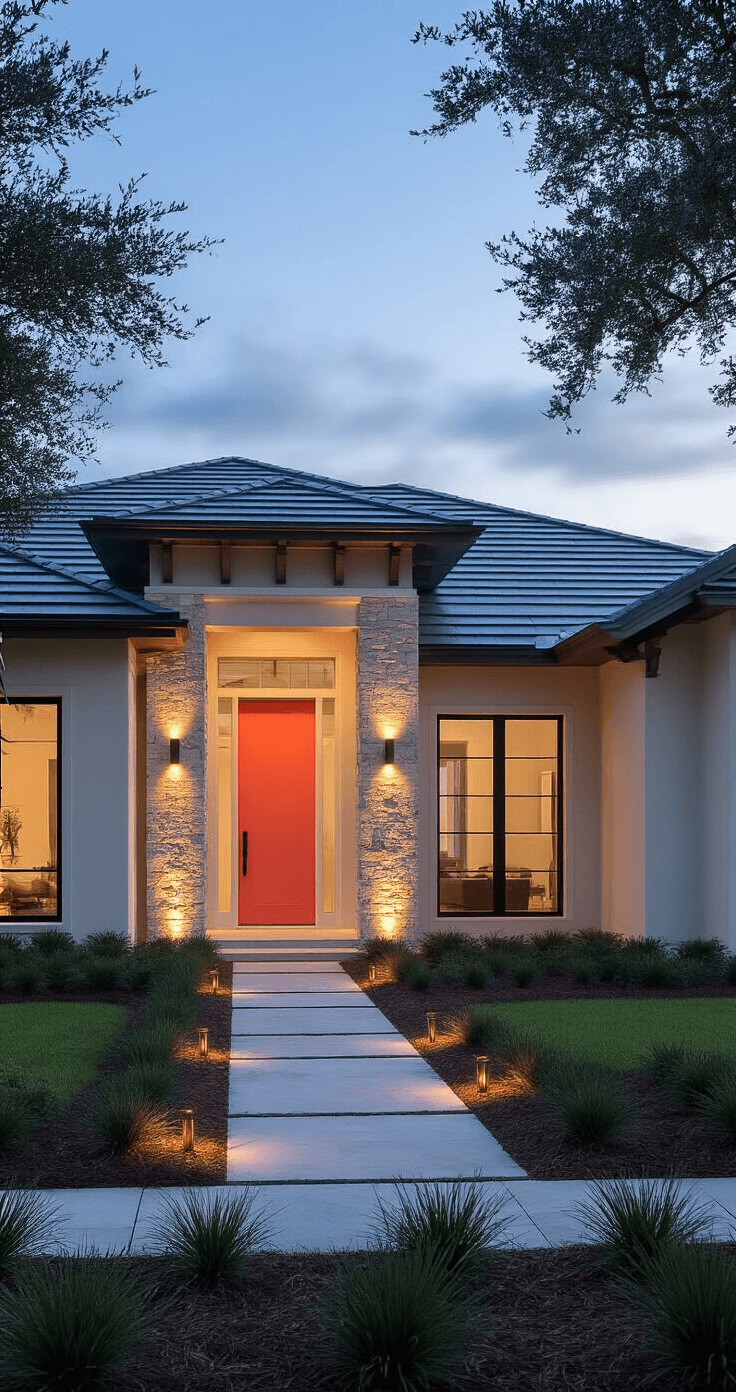
Windows: Your Secret Weapon
Expansive windows that flood interiors with natural light are the defining feature of Florida ranch homes.
I cannot stress this enough. Your windows make or break the entire look.
When we renovated, I replaced our small, dated windows with floor-to-ceiling units across the back of the house. The transformation was stupid dramatic. Our living room went from cave-like to gallery-worthy.
Window strategies that work:
- Corner windows that wrap around edges create stunning focal points
- Picture windows without grids for unobstructed views
- Sliding glass doors that completely open one wall to the outdoors
- Clerestory windows near the roofline for privacy with light
Frame your windows properly. I used contrasting trim in a warm white against my beige siding. The windows now look intentional, not like afterthoughts.
Keep window cleaning supplies handy. Florida’s combination of pollen, salt air, and afternoon thunderstorms means your beautiful windows get filthy fast.
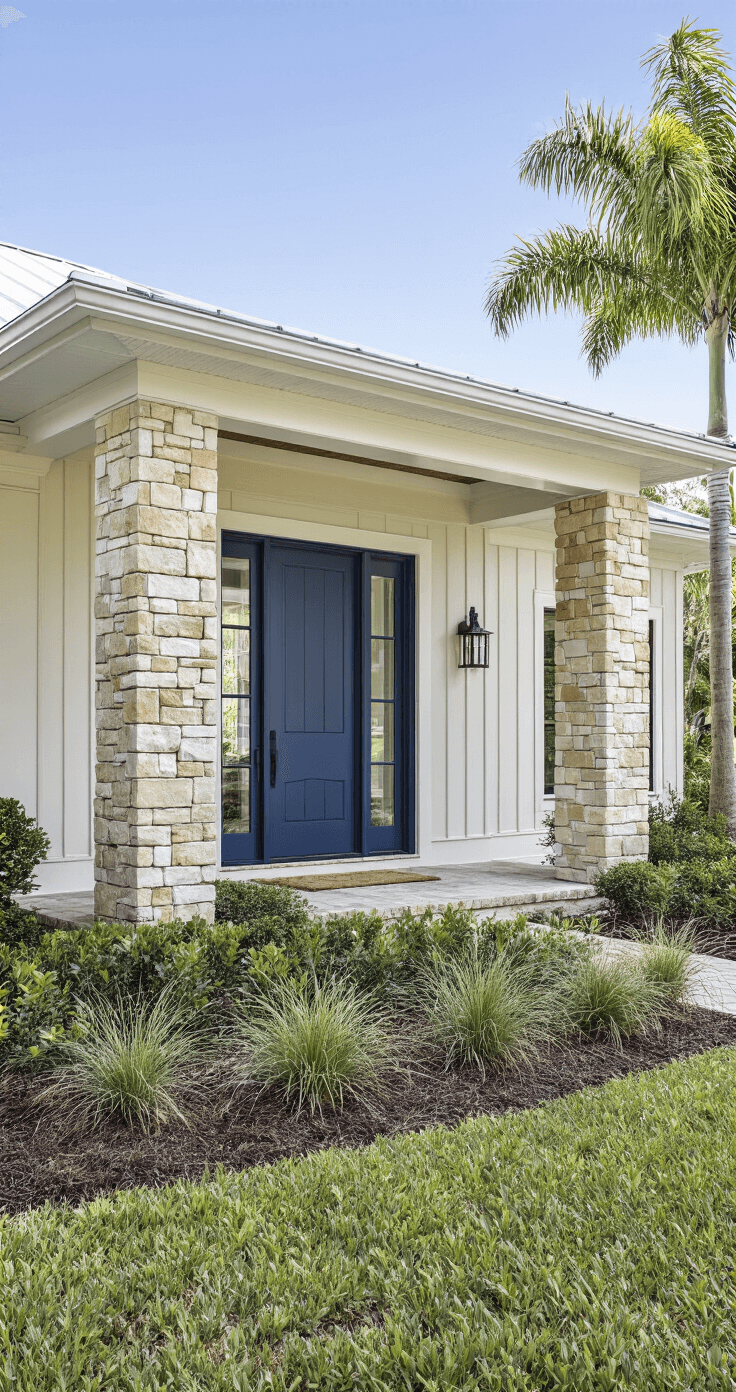
The Porch: Your Home’s Handshake
A welcoming front porch with simple pillars isn’t optional—it’s essential.
My porch was originally this sad little concrete slab with a metal awning. I extended it to wrap partially around the side, added square pillars with stone bases, and installed a tongue-and-groove ceiling.
The result? Neighbors actually stop to comment now.
Porch essentials:
- Depth matters: Go at least 8 feet deep so furniture doesn’t look crammed
- Ceiling treatment: Paint it sky blue (Southern tradition) or install wood planks
- Lighting: Exterior wall sconces flanking the door create balance
- Furniture: Keep it simple with clean-lined pieces in weather-resistant materials
I made the mistake of over-decorating initially. Six potted plants, two rocking chairs, a bench, a doormat, and various hanging baskets. It looked like a garden center exploded.
Pare it down. Two statement planters with tropical plants, seating for two, and good lighting. That’s it.
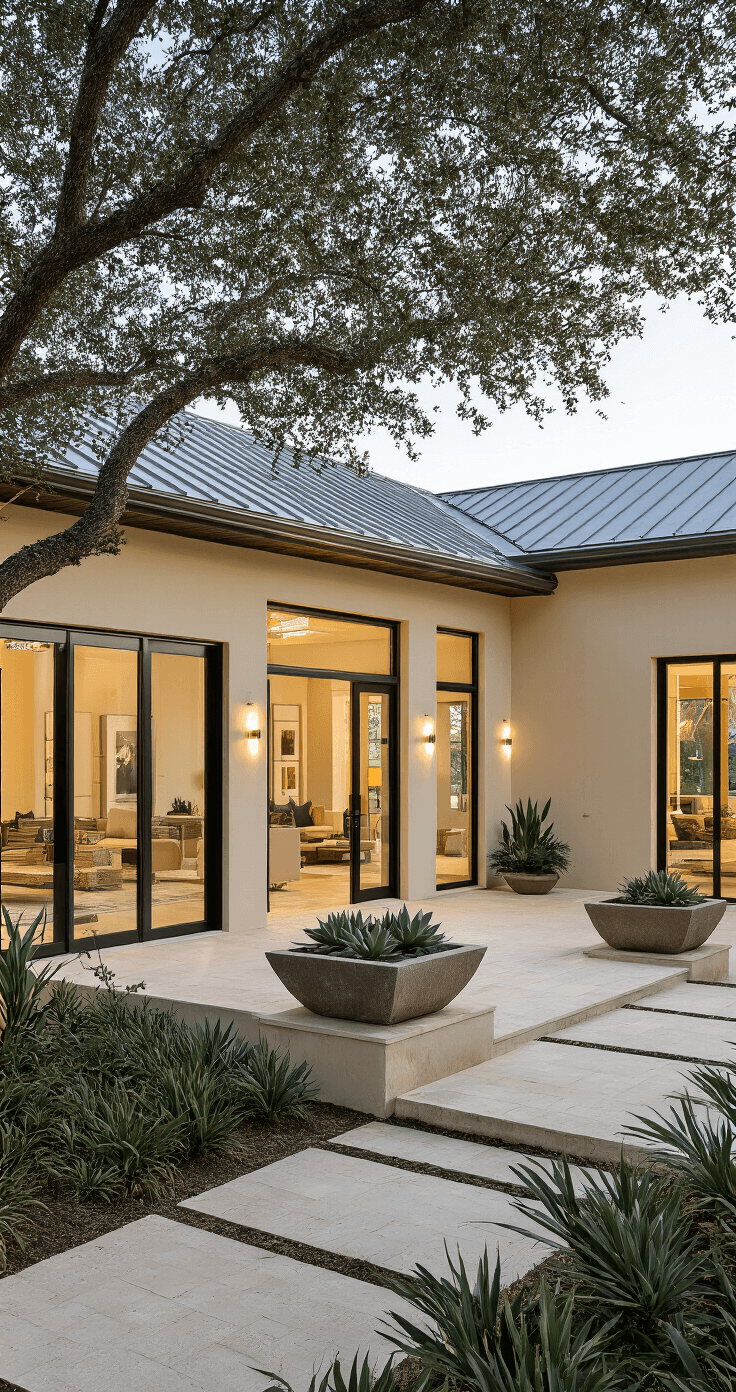
Stone and Wood Accents: Adding Texture Without Chaos
Natural materials like wood and stone accents bring warmth to what could otherwise feel stark.
I added stacked stone around my porch pillars and entry surround. The texture contrast against smooth siding creates visual interest without requiring maintenance.
Where to add stone:
- Column bases or wraps
- Entry surrounds or accent walls
- Outdoor fireplace features
- Retaining walls along the foundation
- Mailbox posts (seriously, it looks better than you’d think)
Go with stone veneer panels rather than full stone. They’re lighter, easier to install, and cost a fraction of real stone. Nobody can tell the
✎ Steal This Look
- Paint Color: Sherwin-Williams Pure White SW 7005
- Furniture: weathered teak Adirondack chairs with Sunbrella canvas cushions
- Lighting: brass and seeded glass exterior sconces with coastal patina finish
- Materials: crushed coral stone veneer, cypress wood ceiling beams, galvanized metal roofing accents, and crushed shell driveway
I spent three summers testing paint samples on my own ranch before committing, and that patience saved me from a blinding white that would have felt sterile instead of serene.
This post may contain affiliate links. Please see my disclosure policy for details.