Get ready to fall in love with the most soothing, soul-nurturing kitchen trend that’s taking the design world by storm! Wabi sabi kitchens celebrate the beauty of imperfection, natural materials, and that irresistible lived-in warmth we all crave. Whether you’re dreaming of rustic stone sinks, gorgeous wooden shelves styled with handmade ceramics, or the softest lighting that makes every morning feel like a cozy retreat, these 27 stunning ideas will have you itching to transform your space. Let’s dive into the world of calm, grounded beauty that proves simple really is spectacular!
1. IKEA Wood Cabinets That Create a Calm Natural Kitchen
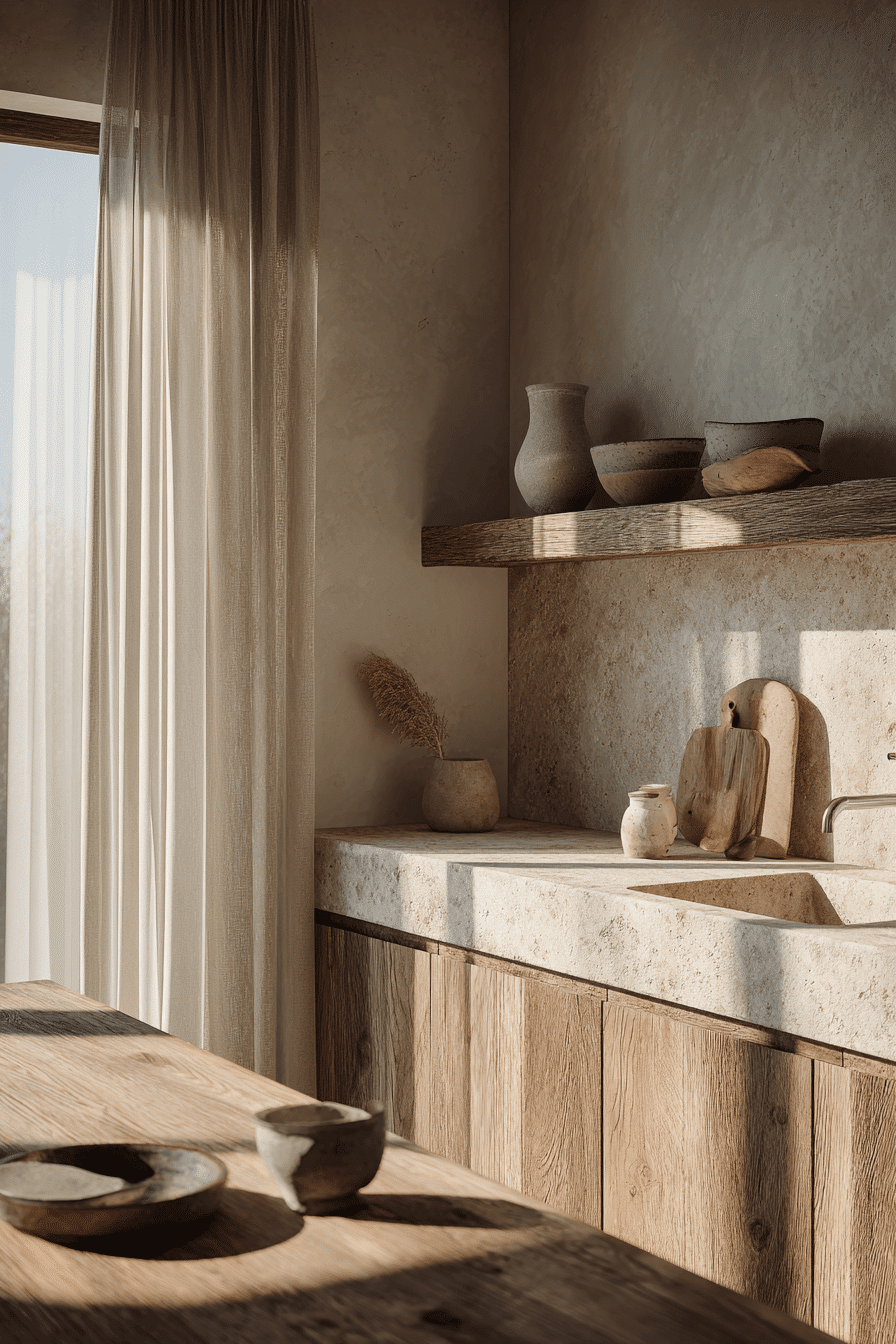
Design a peaceful space by combining natural wood cabinetry with simple stone surfaces for a beautifully balanced wabi sabi kitchen. Affordable systems like IKEA can be elevated with warm wood finishes that highlight organic textures. Keep styling minimal to let the materials shine. Create your calm, grounded kitchen today.
🎨 Steal This Look
- Paint Color: Sherwin-Williams Accessible Beige SW 7036
- Furniture: IKEA BODBYN base cabinets with oak veneer fronts paired with a live-edge oak dining table
- Lighting: recessed ceiling spots with warm 2700K bulbs, supplemented by natural daylight through sheer linen curtains
- Materials: travertine or limestone countertops, limewash plaster walls, reclaimed oak shelving, hand-thrown ceramic vessels
This kitchen feels like a slow Sunday morning—there’s permission here to let things be slightly imperfect, to use the same cutting board until it’s scarred with memory.
👑 Get The Look
2. Styling Ideas with Handmade Ceramics for a Cozy Kitchen
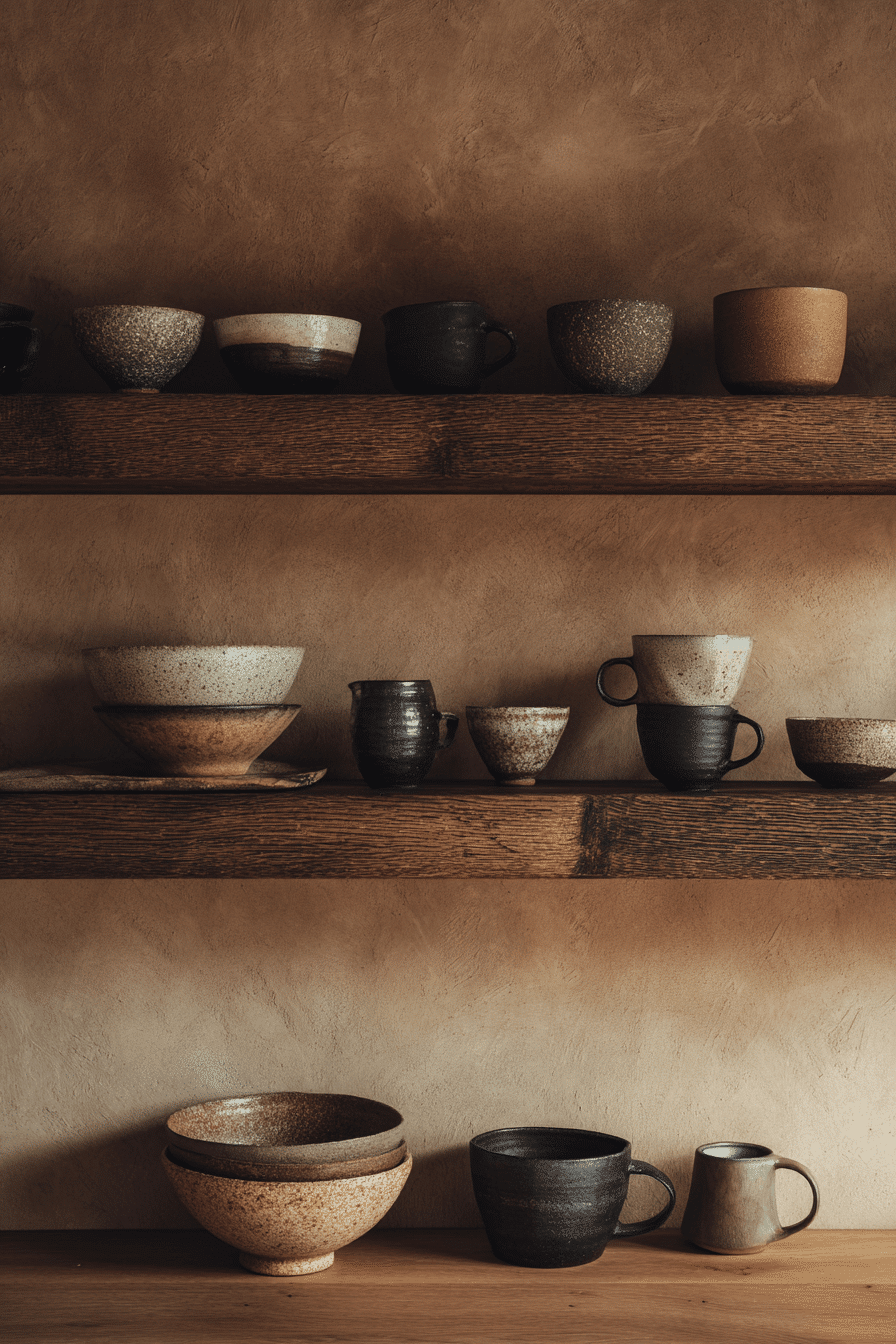
A wabi sabi kitchen comes to life through meaningful, handcrafted pieces that feel personal and intentional. Soft-toned ceramics with organic shapes add warmth and quiet beauty when displayed on open shelves. The result feels curated without effort. Start styling your shelves and bring this serene look into your home.
🖼 Steal This Look
- Paint Color: Benjamin Moore Smoked Tan 913
- Furniture: thick live-edge floating shelves in dark walnut or reclaimed oak, 2-3 inches thick with visible grain and hand-hewn texture
- Lighting: narrow beam adjustable track lighting or picture lights positioned to graze the wall from the left, creating dramatic shadow play on textured surfaces
- Materials: raw plaster or limewash wall finish, unglazed stoneware ceramics with visible clay flecks, matte black pottery, speckled ochre and warm brown earth tones
This is the kitchen that slows your morning down—reaching for a mug that fits your hand exactly, feeling the slight wobble of a handmade rim against your lips.
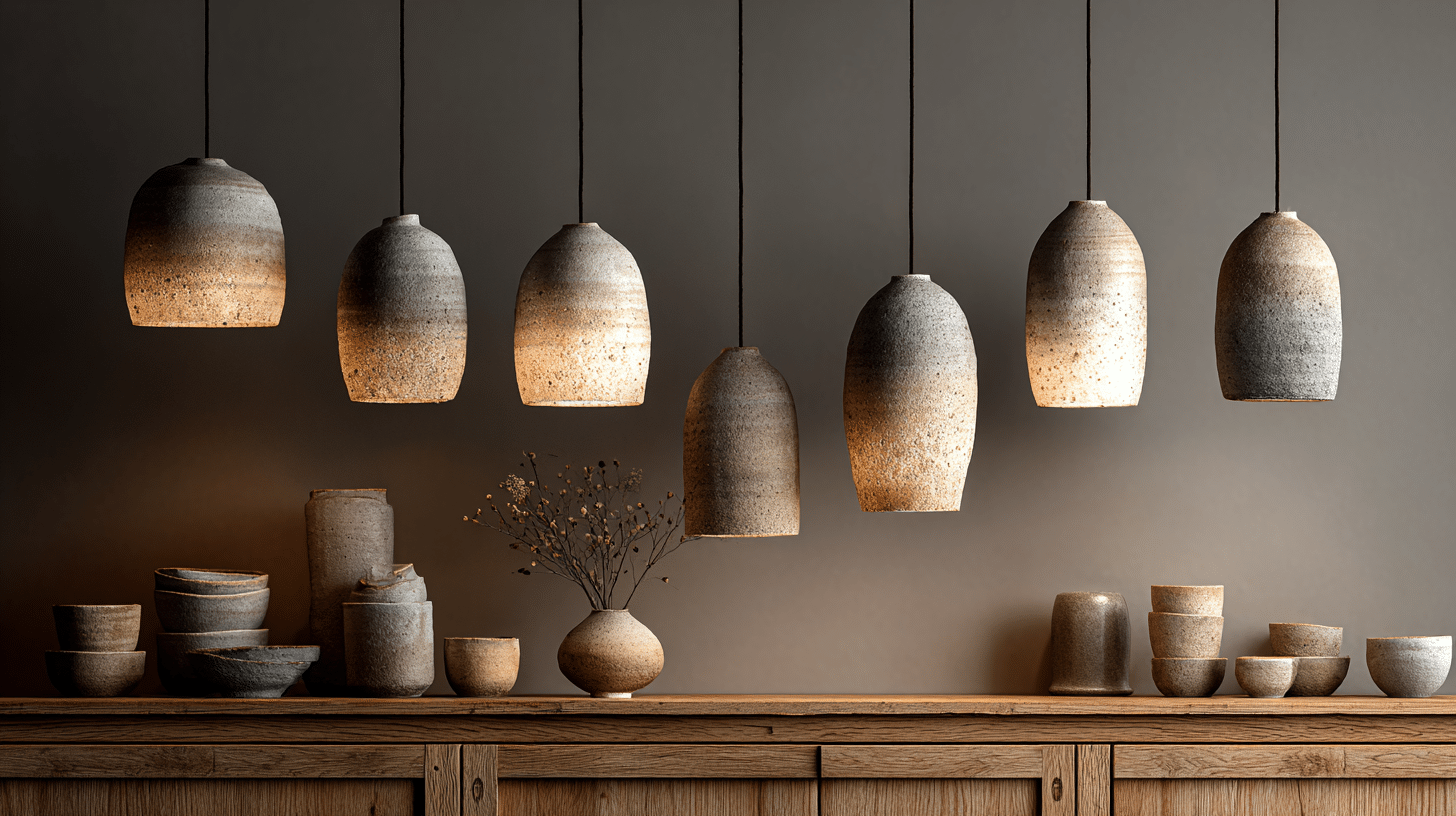
3. Soft Lighting Ideas Inspired by Sculptural Paper Lamps
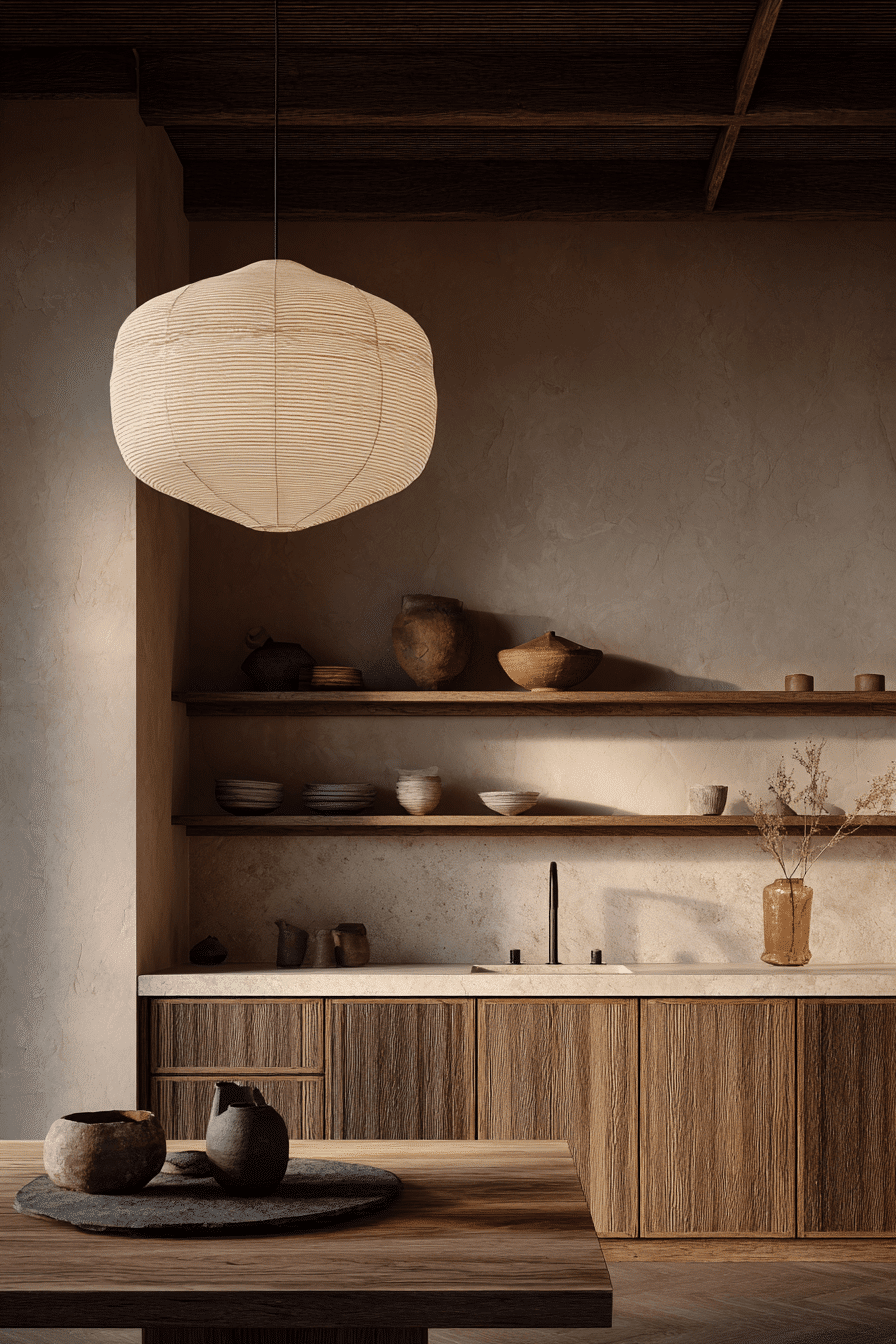
Soft, sculptural lighting instantly sets the mood in a wabi sabi kitchen. Paper-inspired lamps with organic forms create a gentle glow that feels calming and inviting. Paired with wood tones and neutral walls, the atmosphere becomes effortlessly cozy. Upgrade your lighting and transform your space today.
🏠 Steal This Look
- Paint Color: Farrow & Ball Stony Ground 211
- Furniture: floating oak open shelving with live edges and vertical grain oak base cabinets
- Lighting: oversized sculptural rice paper pendant with organic rounded form and visible ribbed texture
- Materials: raw lime plaster walls, reclaimed oak, hand-thrown ceramics, woven paper cord, unpolished stone countertops
This kitchen feels like a slow morning with good coffee—there’s permission here to let things be imperfect, to use the chipped bowl, to leave the wood unsealed.
4. Textured Wall Finishes That Warm Up Your Kitchen Space
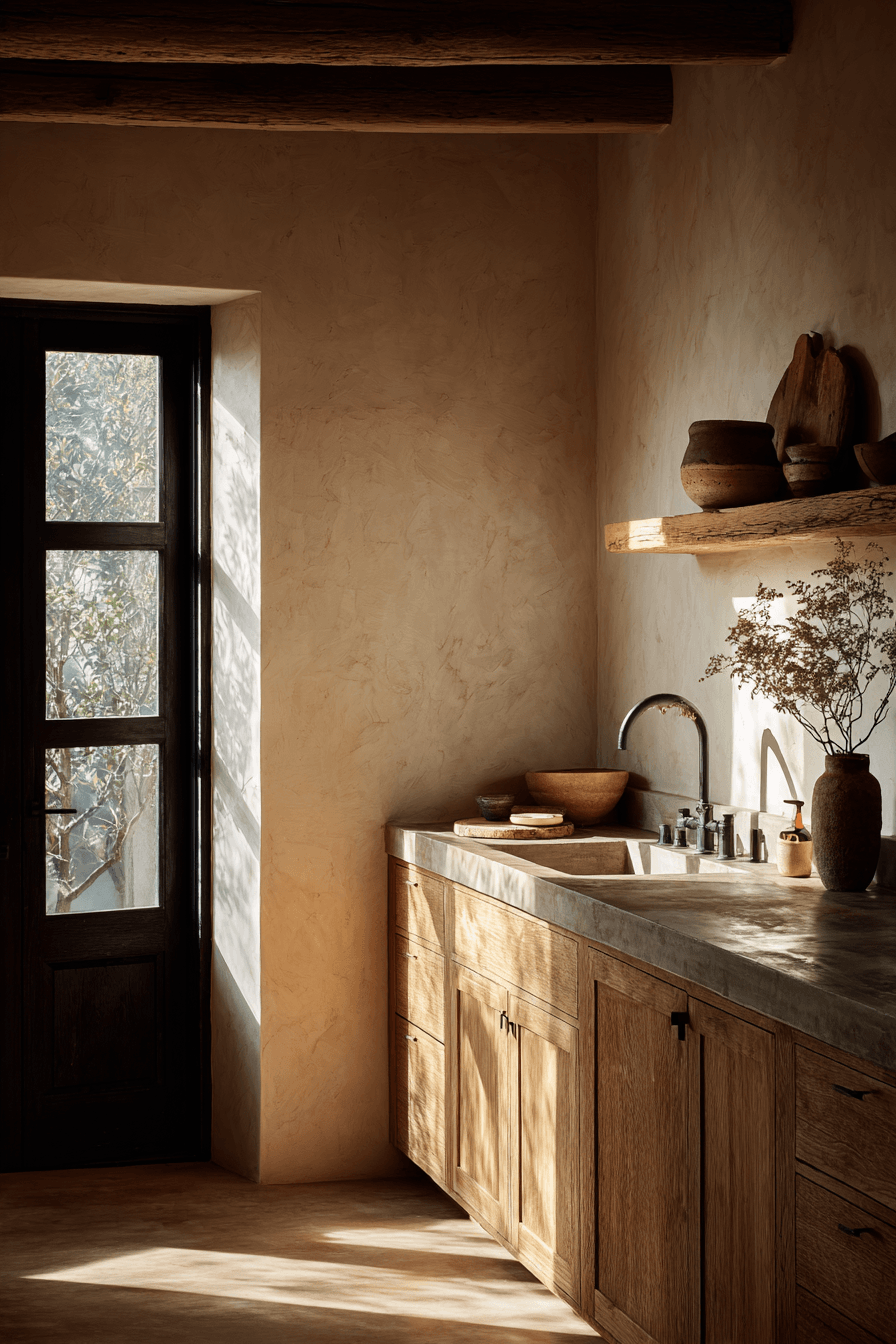
Add depth and subtle texture to your wabi sabi kitchen with softly finished walls that feel natural and lived-in. Limewash creates a warm, cloud-like effect that enhances the overall calmness of the space. The look is simple yet full of character. Refresh your walls and elevate your kitchen instantly.
💡 Steal This Look
- Paint Color: Behr Adobe Sand N260-3
- Furniture: light natural oak base cabinets with simple recessed panel doors and matte black bar pulls
- Lighting: exposed rough-hewn wooden ceiling beams with no additional fixtures—let natural light dominate
- Materials: limewash plaster walls, reclaimed oak shelving, terracotta pottery, concrete or stone countertops, dried botanicals
This kitchen feels like a slow Sunday morning with coffee, where the imperfect walls remind you that beauty lives in the worn and weathered.
🌊 Get The Look
5. Natural Stone Sinks That Add Rustic Beauty
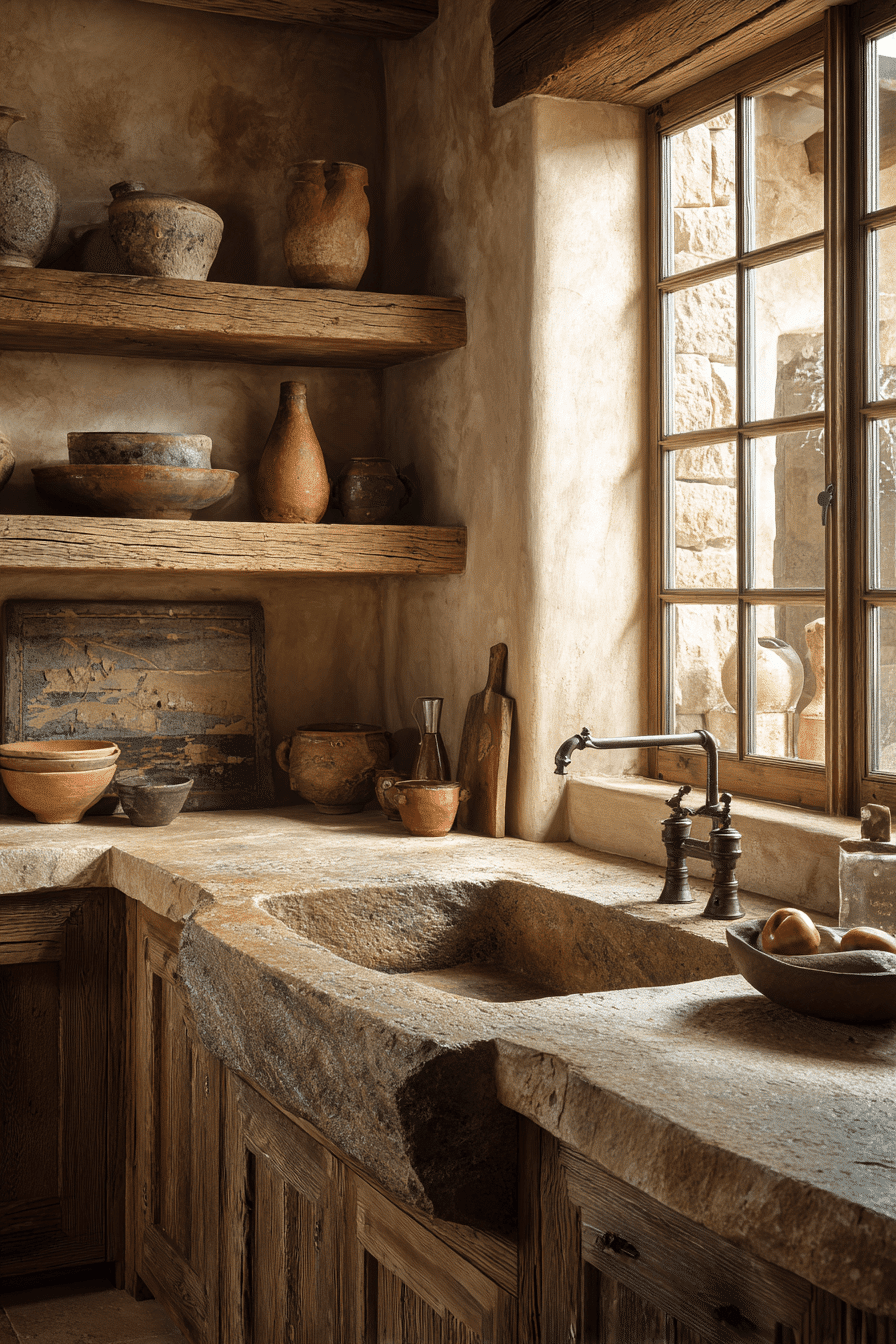
Bring raw beauty into your wabi sabi kitchen with a natural stone sink that feels both timeless and authentic. The imperfect textures and organic tones add depth while keeping the space grounded. It’s a feature that stands out without feeling overwhelming. Choose natural materials and upgrade your kitchen today.
🖼 Steal This Look
- Paint Color: Valspar Weathered Stone 5004-1B
- Furniture: thick reclaimed oak floating shelves with visible grain and hand-hewn edges
- Lighting: exposed wooden beam ceiling with natural window light as primary source
- Materials: rough-hewn limestone countertops, hand-carved stone sink basin, aged terracotta pottery, lime-washed plaster walls
This kitchen feels like it has stories baked into every surface—the kind of space where you slow down to knead bread by hand and actually notice the afternoon light shifting across stone.
6. Open Wooden Shelves Styled with Artisan Pieces
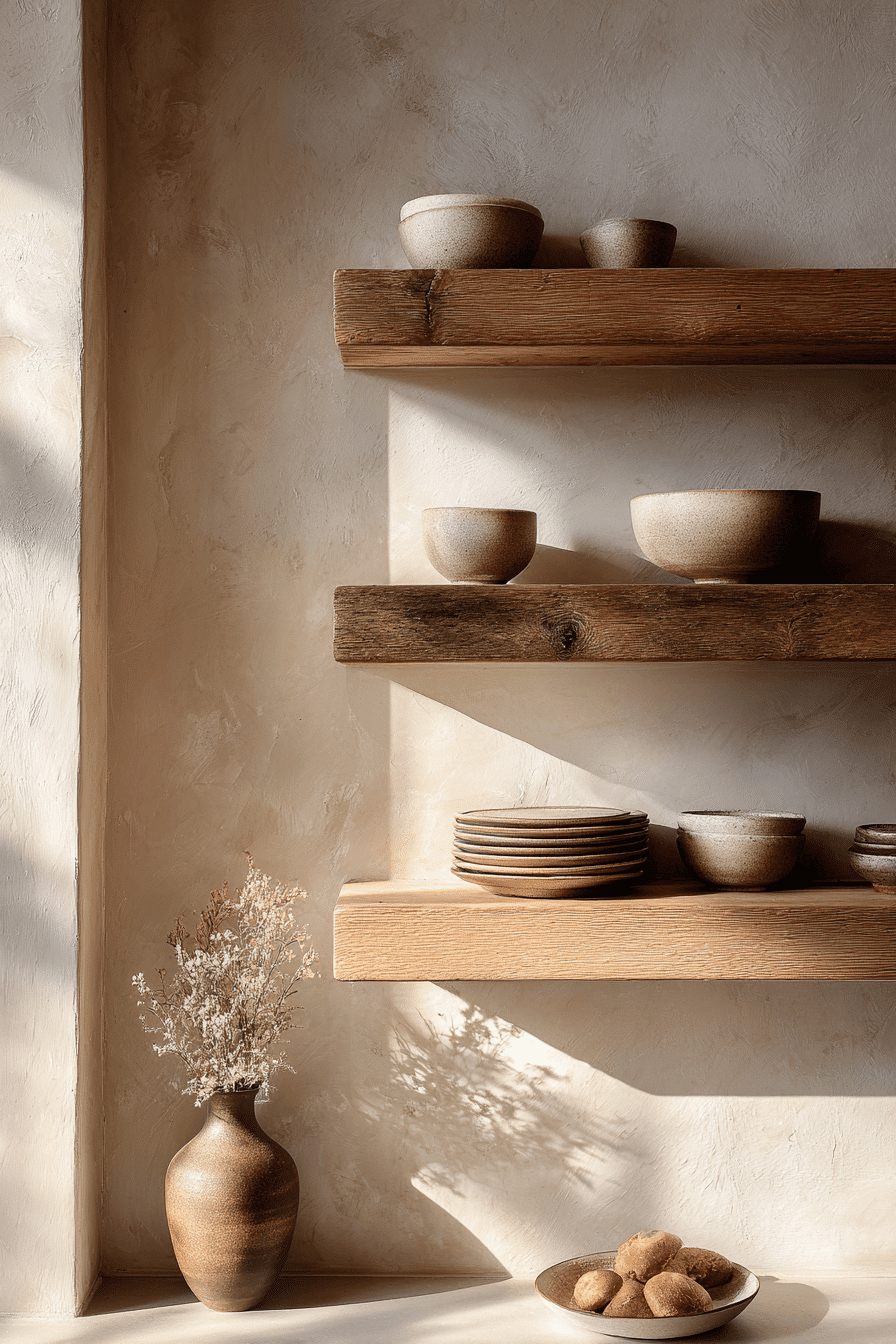
Open shelving made from warm wood brings both function and beauty into a wabi sabi kitchen. Display handmade ceramics and everyday essentials to create a relaxed, curated feel. The mix of textures adds quiet character. Style your shelves and transform your kitchen into a calm retreat.
🖼 Steal This Look
- Paint Color: PPG Stonehenge Greige PPG1001-2
- Furniture: thick live-edge floating shelves in reclaimed oak with visible knots and grain
- Lighting: no fixture needed—maximize natural window light with sheer linen panels
- Materials: hand-troweled lime plaster walls, unglazed stoneware ceramics, dried botanicals
This corner feels like morning light in a quiet cottage—it’s the kind of space that slows your breath down.
7. Neutral Color Ideas for a Calm and Grounded Kitchen
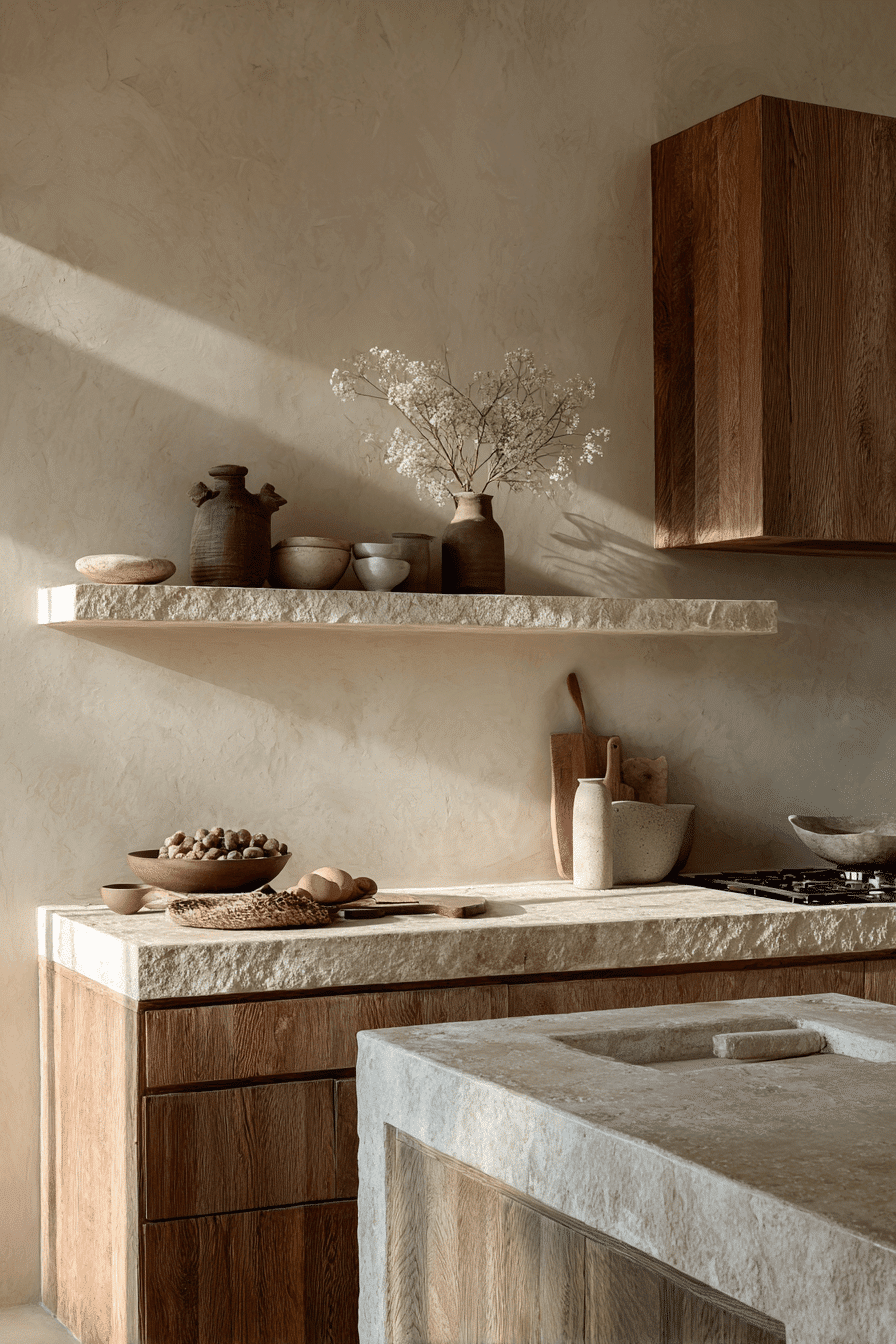
A soft, neutral color palette is key to creating a soothing wabi sabi kitchen. Shades like sand, beige, and warm white create a peaceful backdrop that allows natural materials to stand out. The overall feel is calm and inviting. Refresh your color palette and create a serene kitchen today.
★ Steal This Look
- Paint Color: Dunn-Edwards Whisper White DEW340
- Furniture: floating travertine shelf with chiseled edge, medium-tone oak base cabinets with visible grain
- Lighting: maximize natural daylight with unadorned windows—skip window treatments entirely
- Materials: rough-hewn travertine countertops, lime-washed plaster walls, hand-thrown terracotta pottery, dried botanicals
This kitchen feels like it has existed for decades, not decorated but accumulated—there’s permission here to use what you already own and let it age gracefully.
8. Wood Kitchen Islands That Feel Warm and Inviting
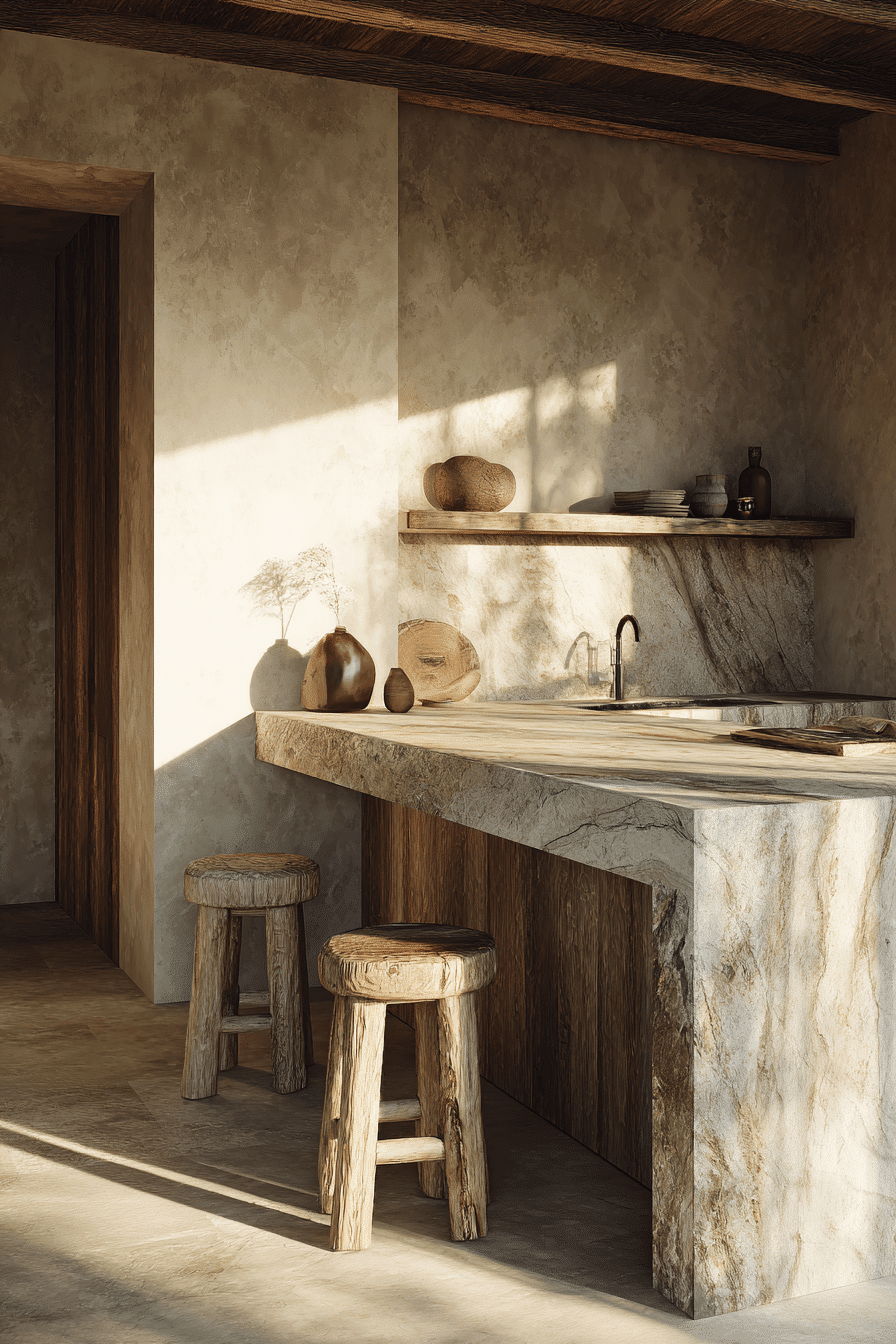
A solid wood island can anchor a wabi sabi kitchen with warmth and authenticity. Natural grain patterns and subtle imperfections add character that feels real and lived-in. It becomes the heart of the space where everything comes together. Add a wood island and elevate your kitchen design.
🖼 Steal This Look
- Paint Color: Clare Paint Seize the Gray CW-05
- Furniture: live-edge walnut kitchen island with waterfall edge, 72-inch length, matte oil finish
- Lighting: woven rattan pendant cluster, three-light, 14-inch diameter shades, blackened brass hardware
- Materials: quarter-sawn white oak, hand-troweled plaster, unglazed terracotta, raw linen
This is the island where you’ll lean against the edge with morning coffee, where the wood darkens in the spots you touch most—let it age with you.
9. Japandi Inspired Kitchens That Feel Balanced and Modern
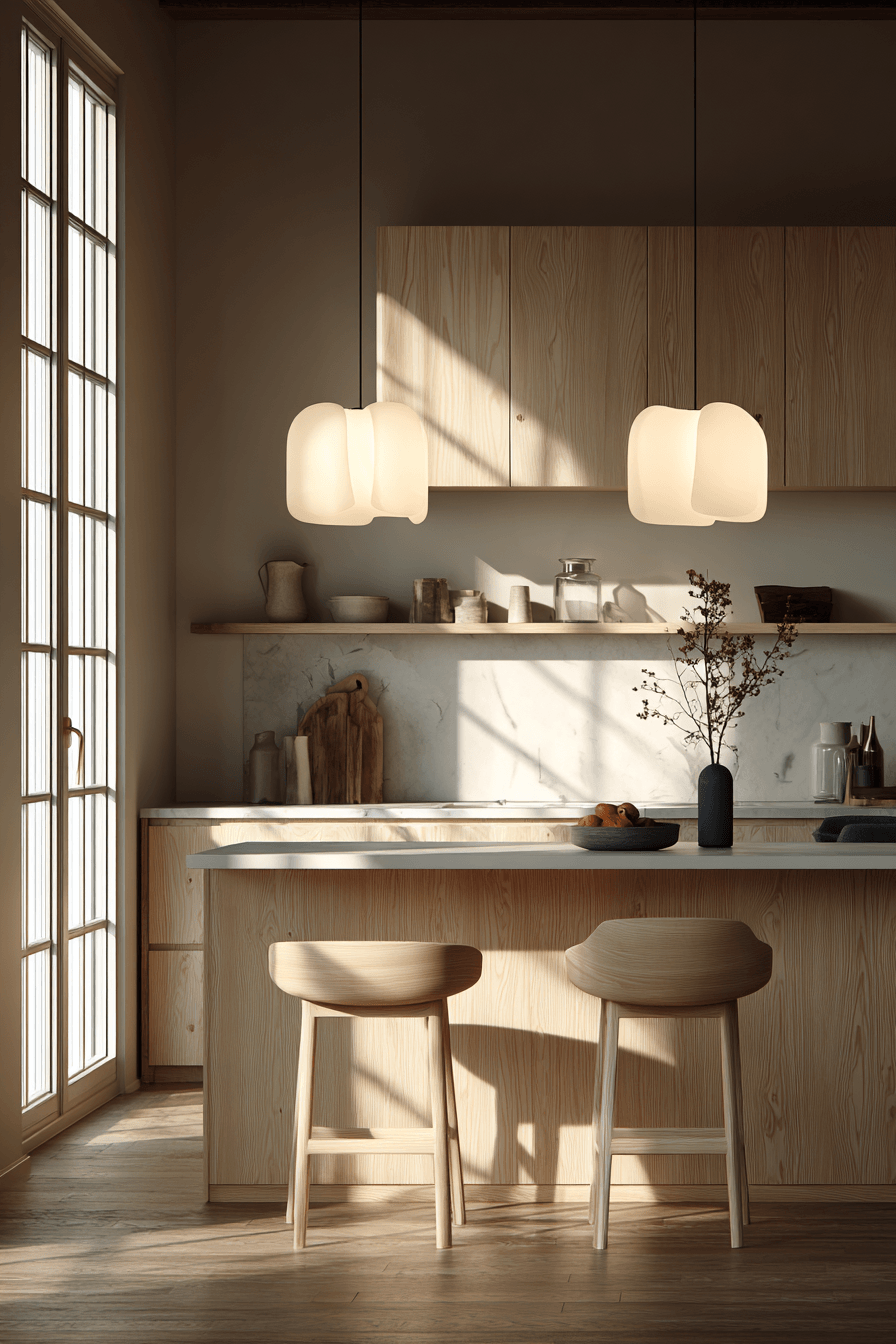
Blend simplicity and warmth by creating a wabi sabi kitchen with Japandi influence. Clean lines, soft tones, and natural materials create a balanced and calming environment. The result feels modern yet deeply cozy. Embrace this style and transform your kitchen today.
🎨 Steal This Look
- Paint Color: Fine Paints of Europe Silhouette 7502-4
- Furniture: light ash wood bar stools with curved organic seats and tapered legs
- Lighting: pair of frosted white glass globe pendants with soft rounded sculptural shapes
- Materials: vertical grain white oak cabinetry, honed marble backsplash, matte black ceramics, dried botanicals
This kitchen feels like a deep breath at golden hour—it’s the kind of space that makes Monday morning coffee feel like a ritual worth slowing down for.
10. Linen Curtain Ideas for a Soft Relaxed Look
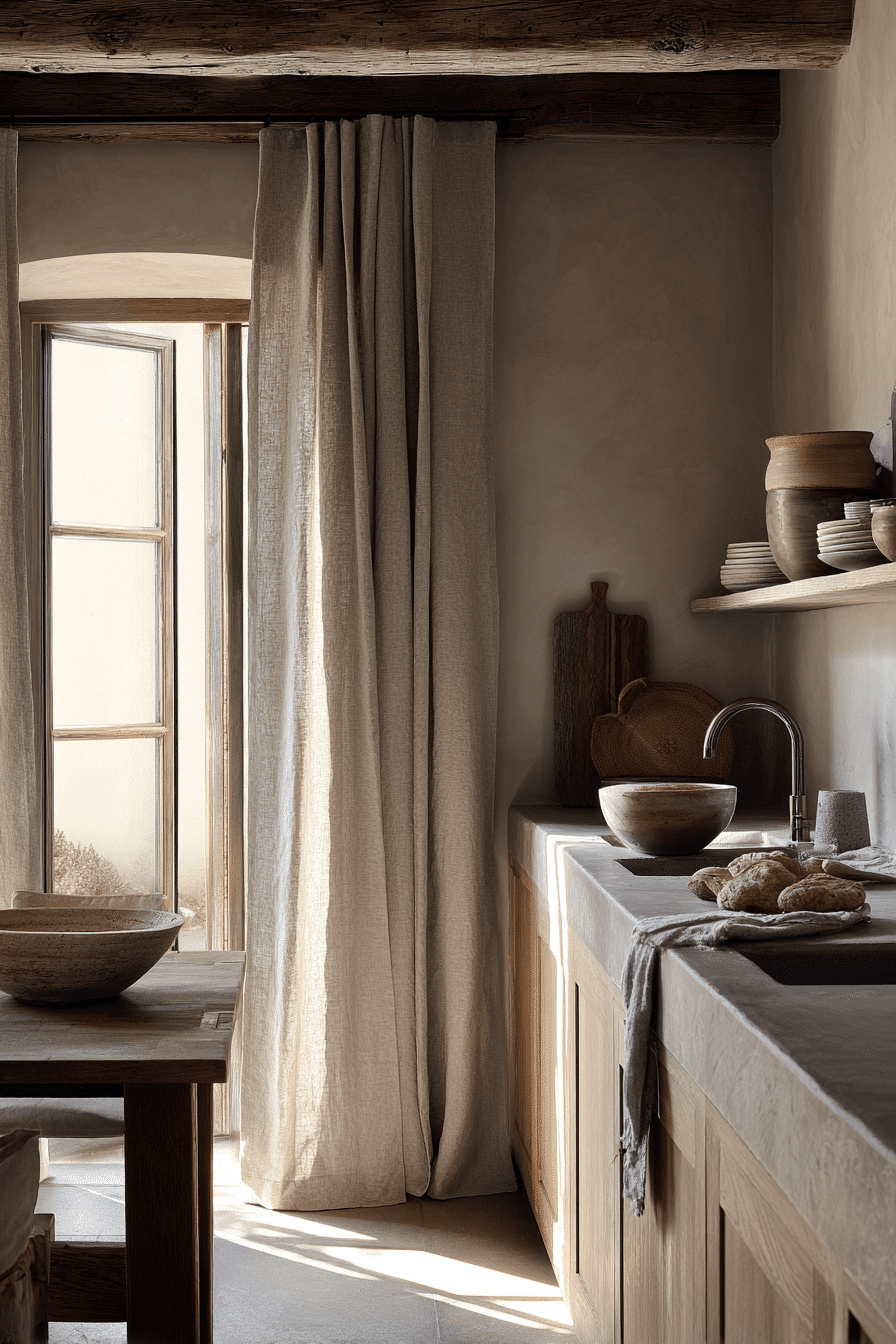
Linen curtains add softness and movement to a wabi sabi kitchen, bringing in a relaxed and natural texture. Their slightly imperfect drape enhances the effortless aesthetic. Paired with warm tones, the space feels light and airy. Add linen details and refresh your kitchen atmosphere today.
✎ Steal This Look
- Paint Color: Backdrop Dried Lavender 0081
- Furniture: raw-edge oak kitchen island with visible grain knots
- Lighting: oversized woven rattan pendant with asymmetrical silhouette
- Materials: unbleached Belgian linen, reclaimed wood, unglazed terracotta, hand-thrown ceramics
There’s something deeply calming about watching morning light filter through sheer linen; it turns an ordinary kitchen window into a daily meditation on impermanence and beauty.
11. Clay Tile Backsplashes That Add Subtle Texture
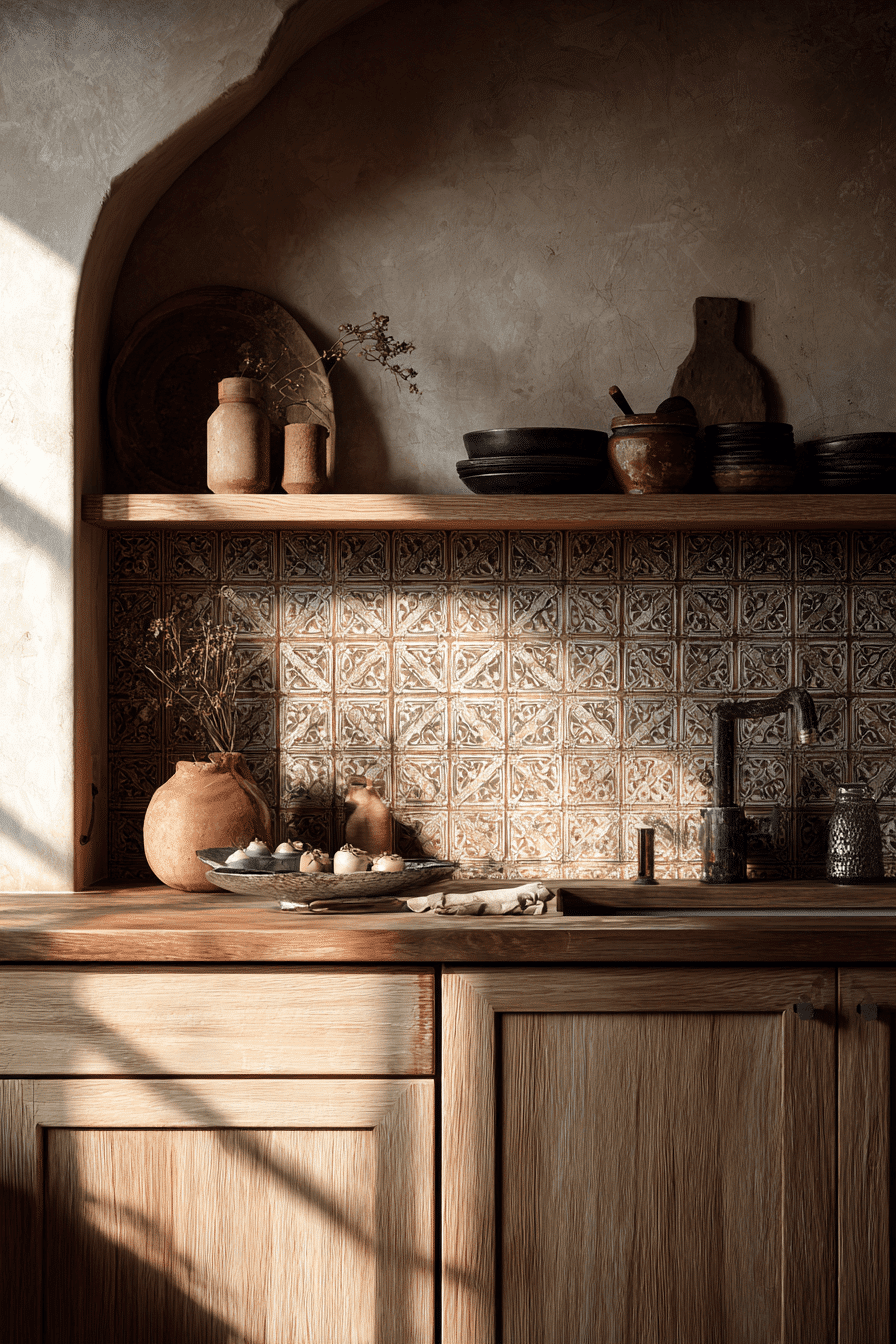
Clay tile backsplashes introduce earthy texture into a wabi sabi kitchen with subtle variation and warmth. Handmade finishes create a sense of authenticity while keeping the design simple. It’s a small detail that makes a big impact. Update your backsplash and elevate your space now.
💡 Steal This Look
- Paint Color: Sherwin-Williams Accessible Beige SW 7036
- Furniture: light ash frame-and-panel base cabinets with matching wood countertop
- Lighting: arched niche with integrated shelf lighting to highlight ceramics
- Materials: hand-pressed ornate clay tiles, lime-washed plaster walls, raw terracotta vessels, dried botanicals
This kitchen feels like it has been lived in for generations, where every crack in the plaster and uneven tile edge tells a story worth keeping.
12. Minimal Decor Ideas for a Calm and Intentional Space
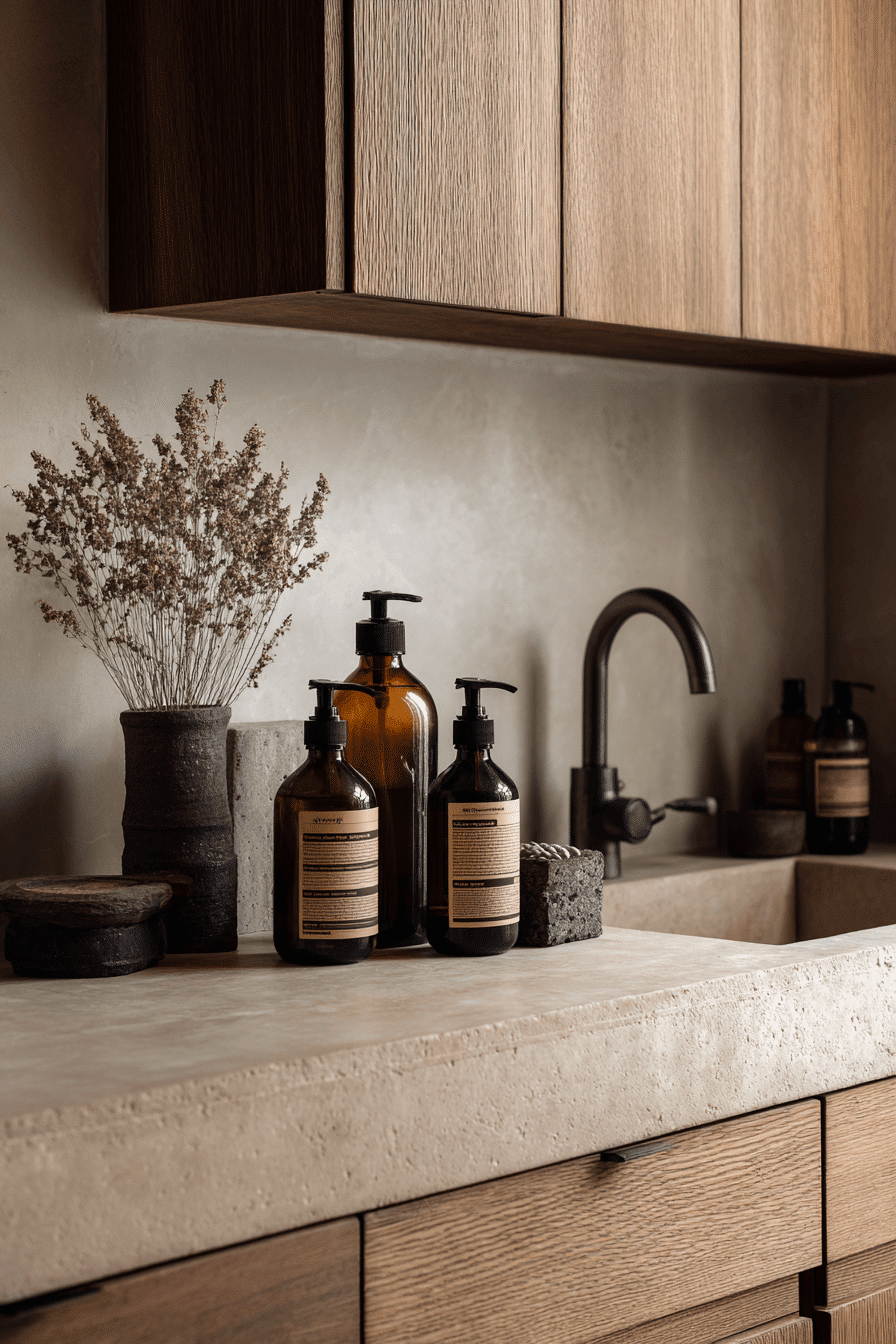
Keep your wabi sabi kitchen calm and intentional with minimalist decor that feels thoughtful and refined. Simple containers and subtle details add quiet luxury without clutter. Every piece has a purpose. Simplify your styling and create a more peaceful kitchen today.
💡 Steal This Look
- Paint Color: Benjamin Moore White Dove OC-17
- Furniture: open reclaimed wood shelving with visible grain and live edges
- Lighting: single oversized linen pendant with raw brass hardware
- Materials: unglazed ceramic, raw linen, weathered oak, hand-thrown pottery
This is the kitchen that slows your morning down—where you actually notice the steam rising from your tea because nothing else is competing for your attention.
13. Concrete Countertops with a Raw Modern Edge
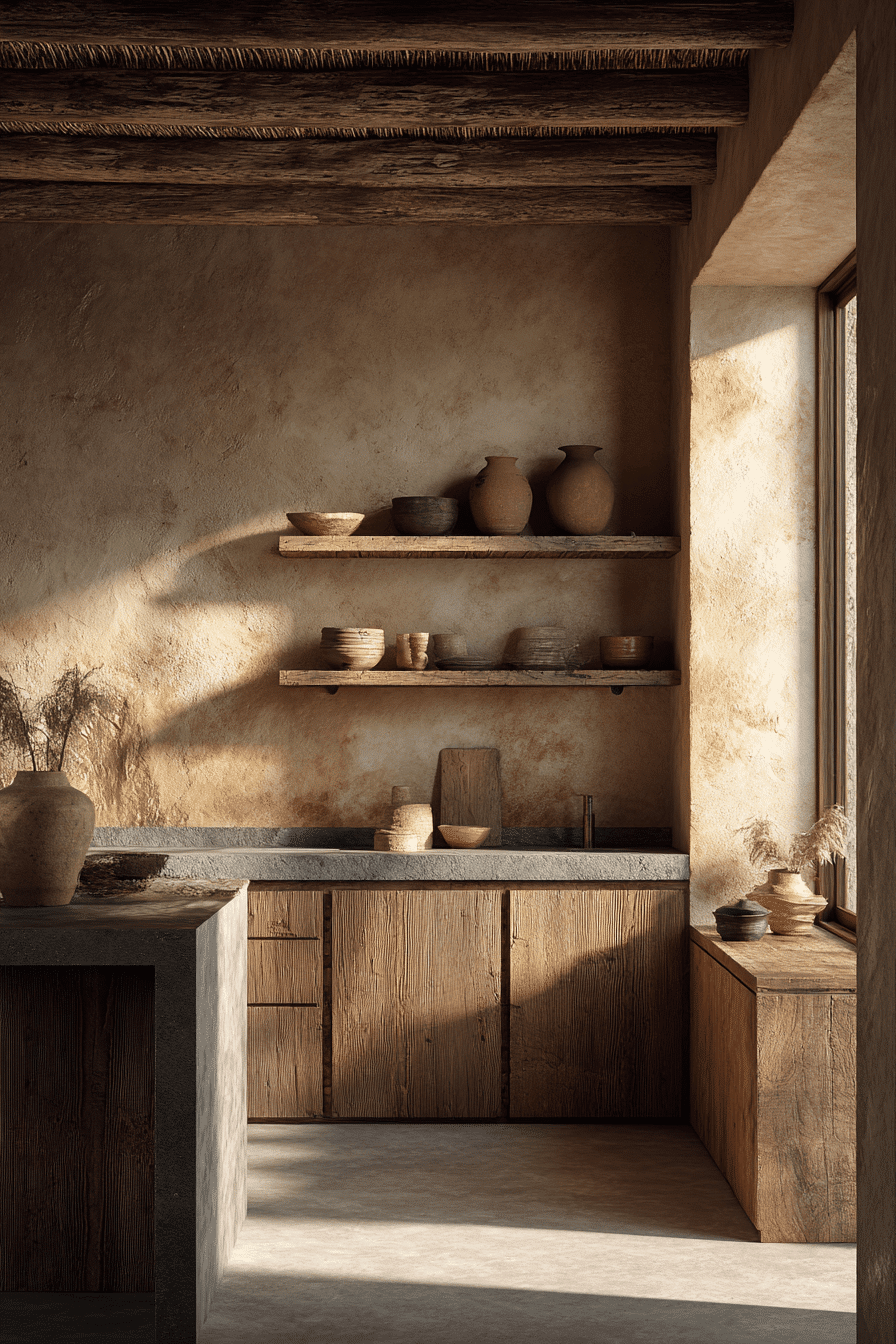
Concrete countertops bring a raw, understated beauty to a wabi sabi kitchen. Their natural imperfections and soft texture create depth while maintaining a minimalist feel. It’s a modern yet grounded choice. Upgrade your surfaces and transform your kitchen today.
💡 Steal This Look
- Paint Color: Farrow & Ball Jitney No. 293
- Furniture: reclaimed wood lower cabinets with vertical slat detailing and floating open shelving with rough-hewn brackets
- Lighting: no artificial lighting needed—maximize natural light with sheer linen window treatments
- Materials: raw concrete countertops, lime-washed plaster walls, weathered ceiling beams with rope wrap, terracotta and unglazed ceramic vessels
This kitchen feels like it has always been here—there’s something deeply grounding about cooking in a space that honors imperfection rather than fighting it.
14. Vintage Wooden Stools That Add Character and Warmth
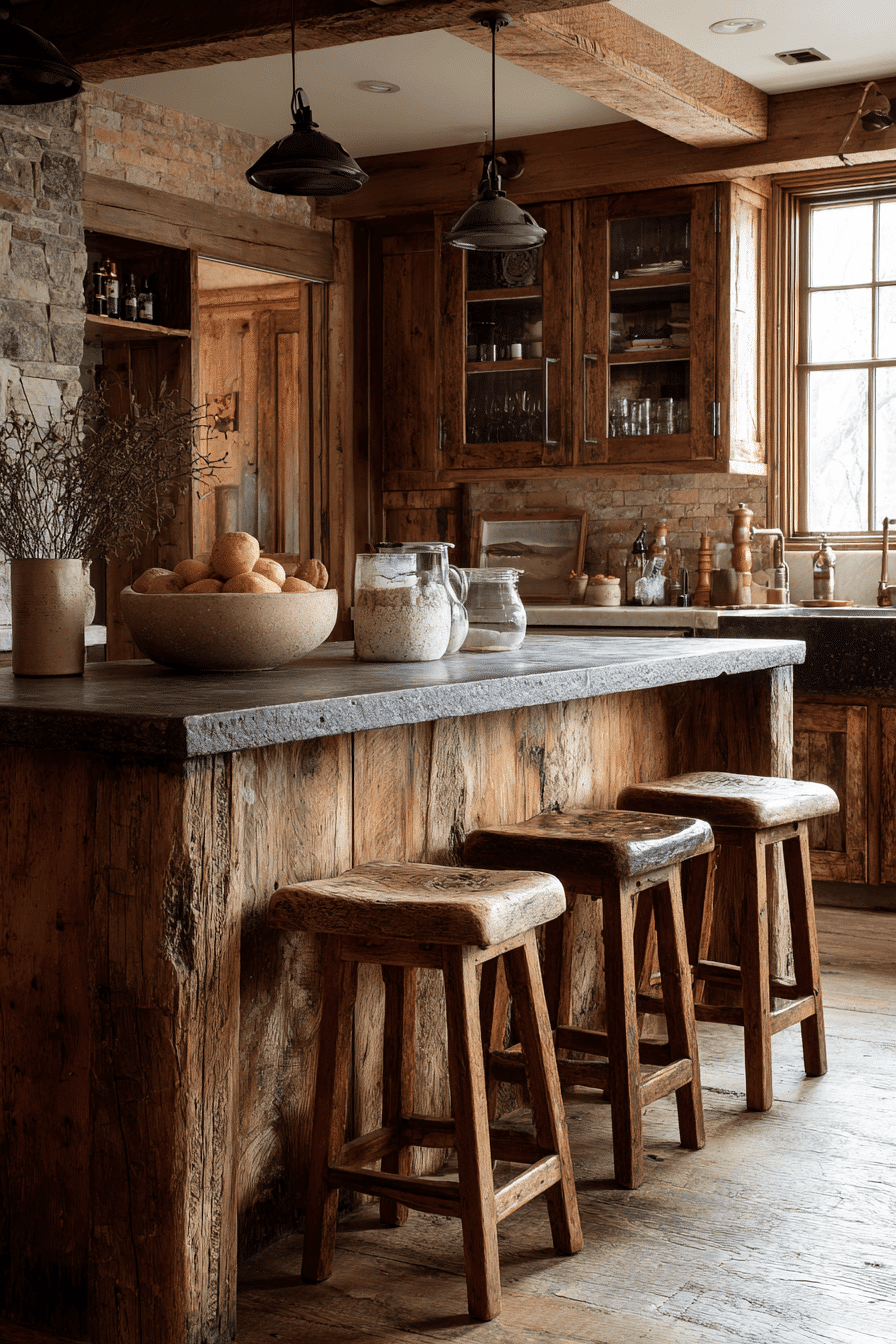
Vintage wooden stools add instant character to a wabi sabi kitchen with their worn textures and rich history. Each piece tells a story and brings warmth into the space. Paired with simple materials, they feel effortlessly stylish. Add vintage seating and give your kitchen new life.
✎ Steal This Look
- Paint Color: Behr Swiss Coffee 12
- Furniture: weathered reclaimed wood bar stools with woven rush seats
- Lighting: black metal dome pendant lights with aged patina finish
- Materials: reclaimed barn wood, raw concrete countertops, natural stone, woven rush, vintage pottery
There’s something grounding about seating that creaks a little and shows its age—it invites people to actually sit and stay awhile.
Save this article
Enter your email and we'll send it straight to your inbox.
15. Stoneware Displays That Feel Curated and Natural
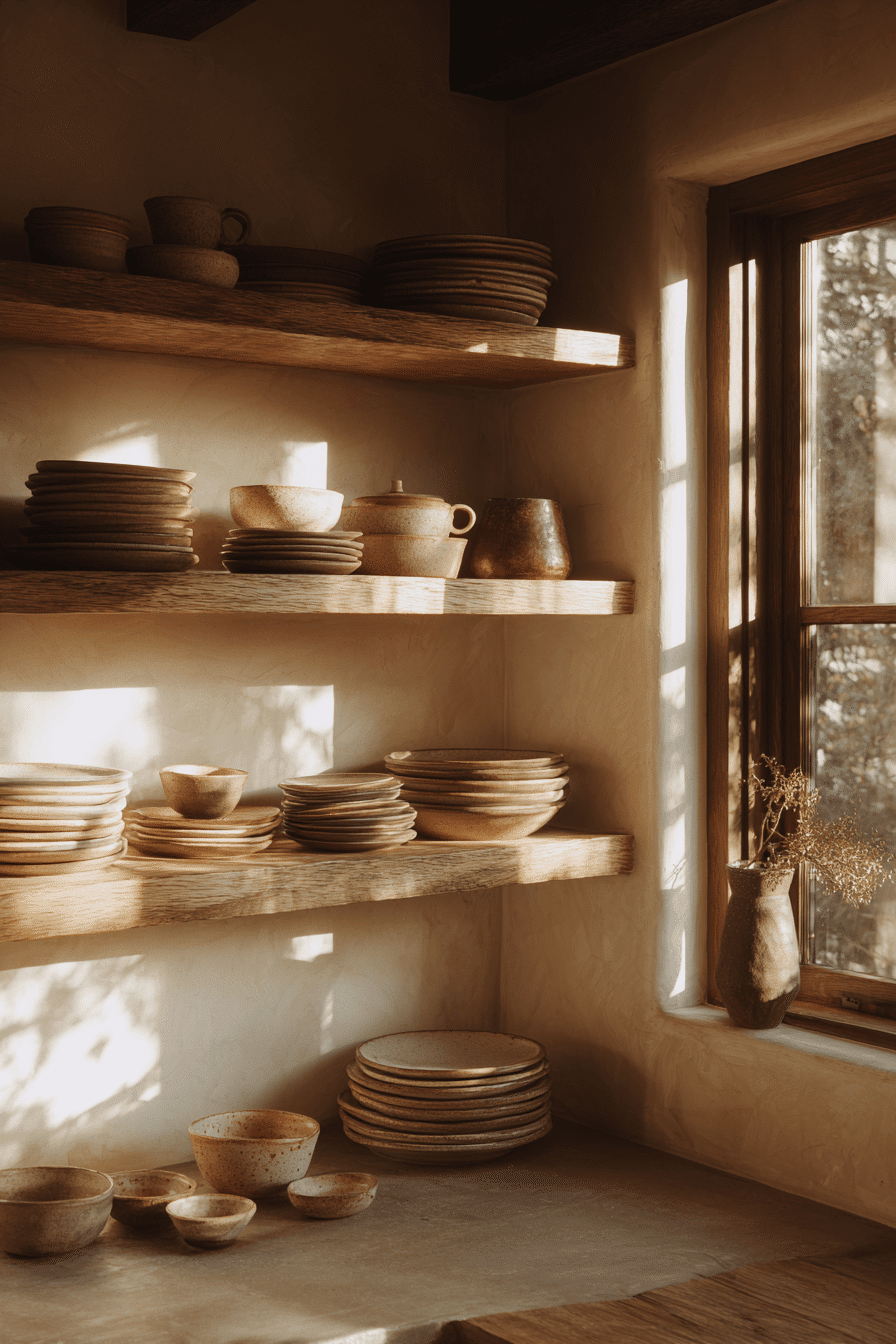
Displaying stoneware creates a beautiful focal point in a wabi sabi kitchen while adding texture and warmth. Earthy tones and handmade finishes bring a sense of craftsmanship into the space. It feels curated yet relaxed. Start styling your collection and elevate your kitchen today.
🌟 Steal This Look
- Paint Color: Valspar Cream in My Coffee 3003-10C
- Furniture: thick floating wood shelves in light oak with live edges
- Lighting: natural daylight through wood-framed casement windows
- Materials: raw oak, speckled stoneware, unglazed terracotta, dried botanicals
This corner feels like a quiet morning ritual waiting to happen—there’s something deeply grounding about reaching for a bowl that carries the fingerprints of its maker.
16. Oak Cabinets That Bring Soft Warmth to Your Kitchen
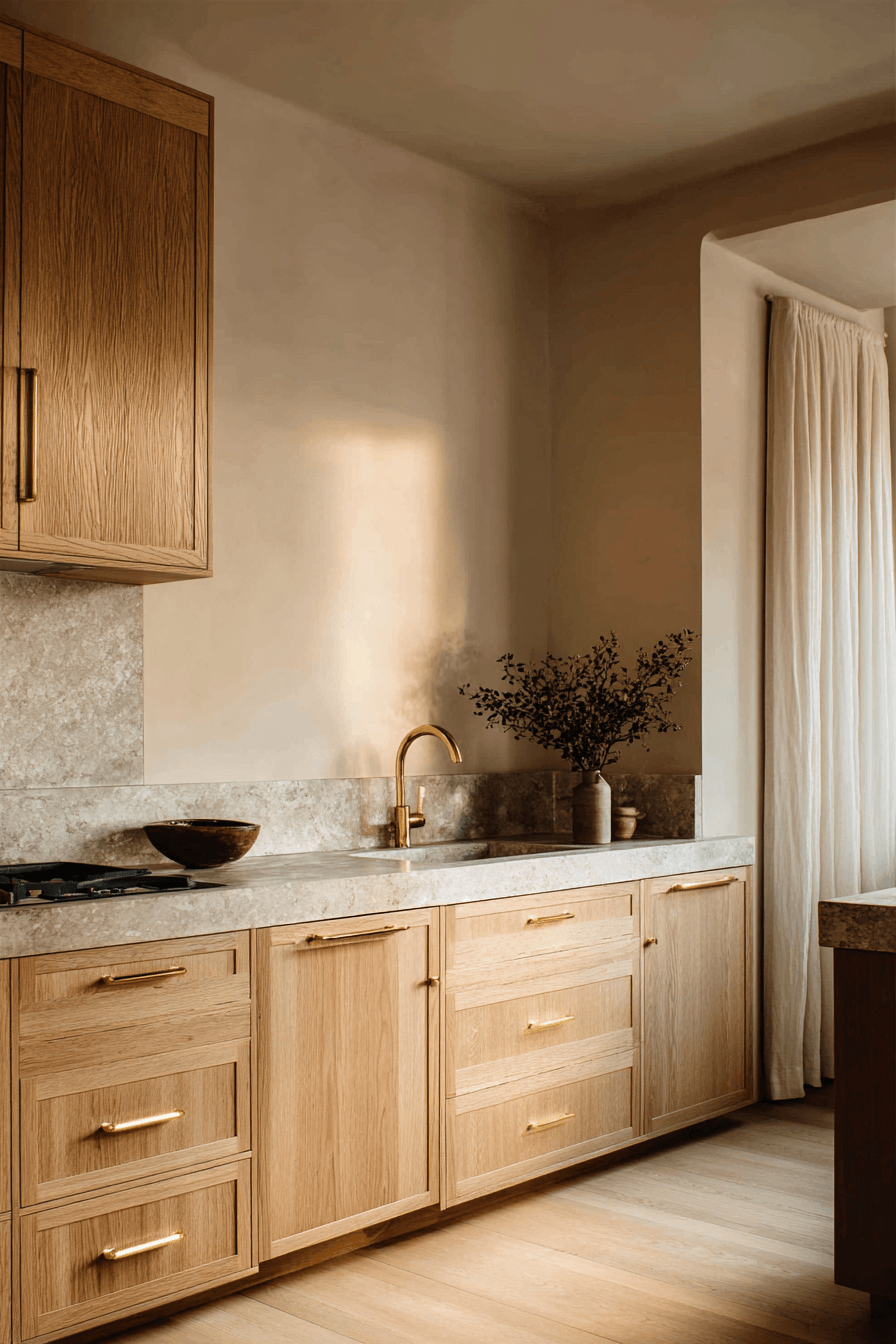
Oak cabinetry brings soft warmth and natural beauty into a wabi sabi kitchen with its subtle grain and light tones. Paired with stone and minimal hardware, the look feels balanced and serene. It’s timeless without feeling heavy. Choose oak finishes and refresh your kitchen today.
🖼 Steal This Look
- Paint Color: PPG Swiss Coffee PPG1075-1
- Furniture: Shaker-style white oak kitchen cabinets with recessed panel doors and brass bar pulls
- Lighting: Recessed can lights with warm 2700K bulbs plus natural light from sheer linen curtains
- Materials: Honed Carrara marble countertops, tumbled limestone backsplash, live-edge white oak, unglazed ceramic vessels
This kitchen feels like a deep breath—it’s the kind of space where you actually want to slow down and hand-wash your dishes just to feel the warm water and watch the light shift.
17. Handmade Pendant Lights with Organic Shapes
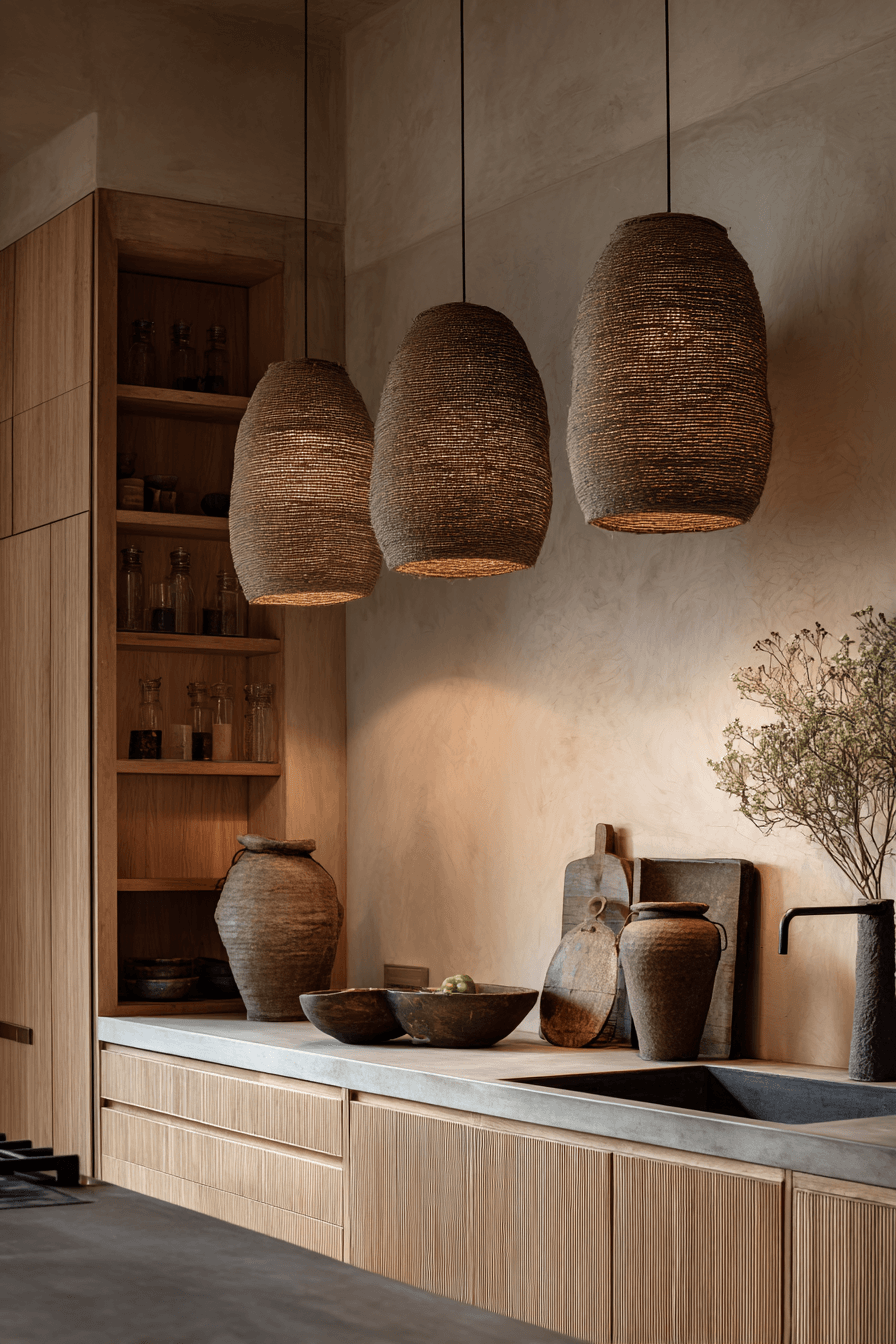
Handcrafted pendant lights add sculptural interest to a wabi sabi kitchen while maintaining a soft, organic feel. Their imperfect shapes and matte textures create warmth without overpowering the space. It’s a subtle but impactful detail. Upgrade your lighting and enhance your kitchen today.
★ Steal This Look
- Paint Color: Dunn-Edwards Warm Stone DET626
- Furniture: fluted oak base cabinets with open upper shelving
- Lighting: three organic pod-shaped jute-wrapped pendants at staggered heights
- Materials: textured lime plaster, natural oak, handwoven rope, aged terracotta, concrete countertops
There’s something quietly grounding about cooking beneath these rope pendants—they feel like lanterns from another era, turning everyday meal prep into a ritual worth slowing down for.
18. Beige and Sand Tones That Create a Peaceful Kitchen
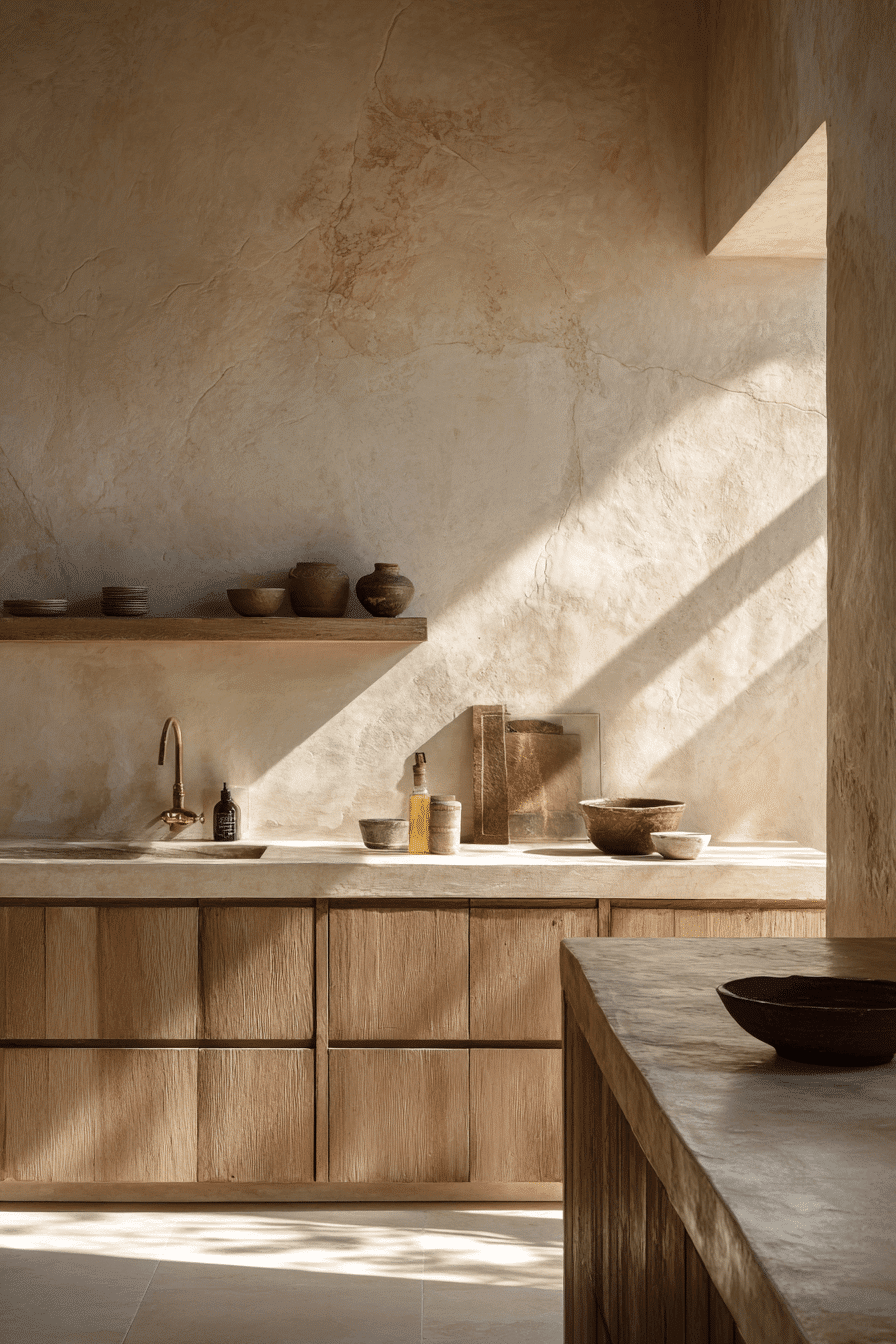
Soft beige and sand tones create a peaceful foundation for a wabi sabi kitchen that feels warm and inviting. These colors reflect light gently and pair beautifully with natural materials. The result is calming and effortless. Refresh your palette and transform your kitchen now.
✎ Steal This Look
- Paint Color: Clare Paint Whipped CL 101
- Furniture: light oak base cabinets with grid-pattern recessed panel doors and floating open shelving
- Lighting: clerestory window or high rectangular window opening to maximize natural daylight beams
- Materials: raw plaster walls, unfilled travertine or limestone countertops, hand-thrown ceramic vessels, aged wood
This kitchen feels like a quiet exhale—it’s the kind of space that makes you want to slow down and actually notice your morning coffee.
19. Open Pantry Shelving with Natural Woven Storage
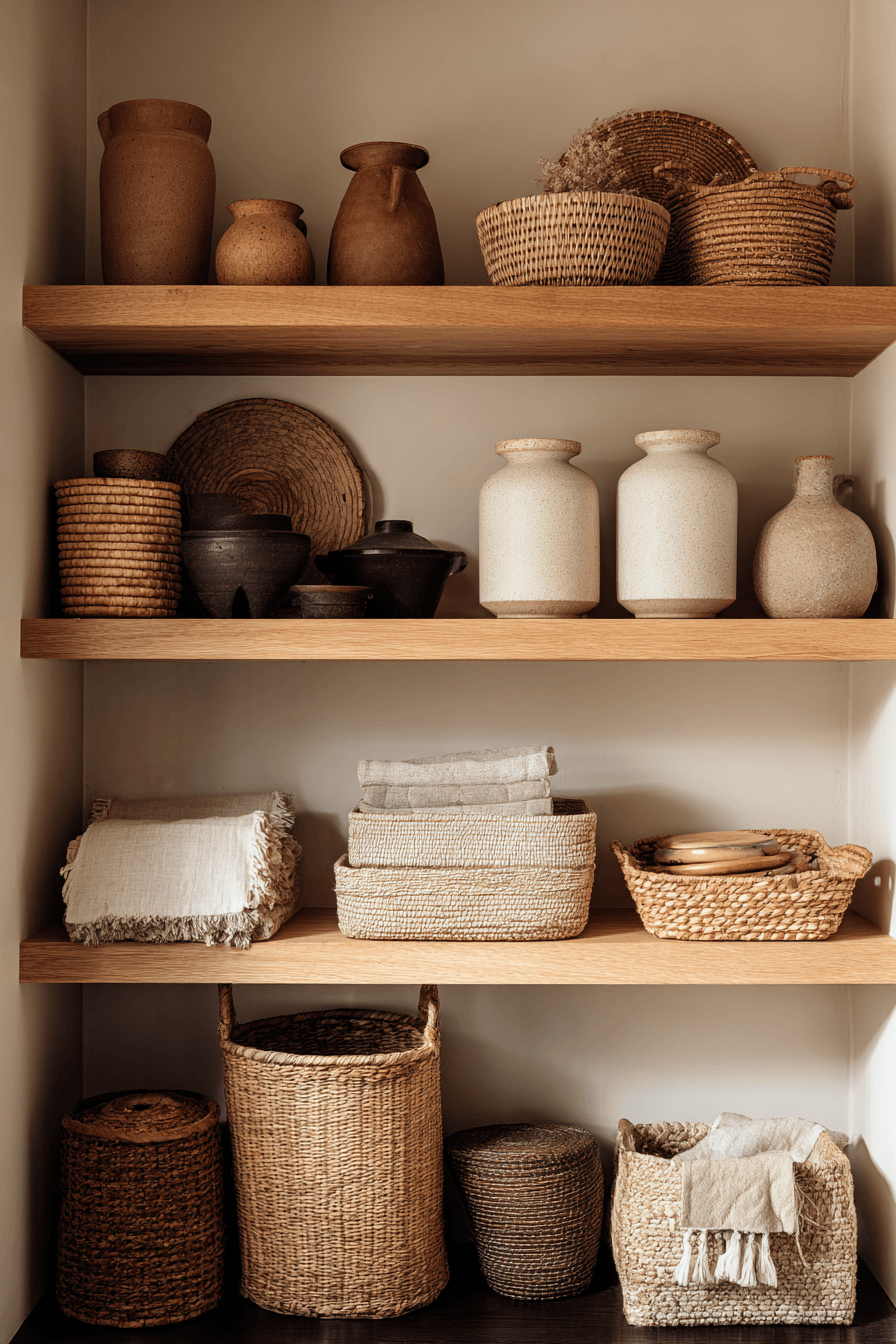
Open pantry shelving keeps a wabi sabi kitchen both practical and visually calming. Natural woven baskets add texture while helping maintain an organized, relaxed feel. It’s storage that looks beautiful. Update your pantry and simplify your space today.
🖼 Steal This Look
- Paint Color: Fine Paints of Europe Hollandlac Warm Taupe W1002
- Furniture: thick floating oak shelves with visible grain and rounded front edges
- Lighting: recessed ceiling spots with warm 2700K dimming capability
- Materials: handwoven seagrass, unglazed terracotta, raw linen with frayed edges, dark burnished clay
This is the pantry that slows you down. You actually want to reach for that hand-thrown bowl because it feels like something a person made, not something a machine stamped out.
20. Travertine Surfaces That Feel Timeless and Organic
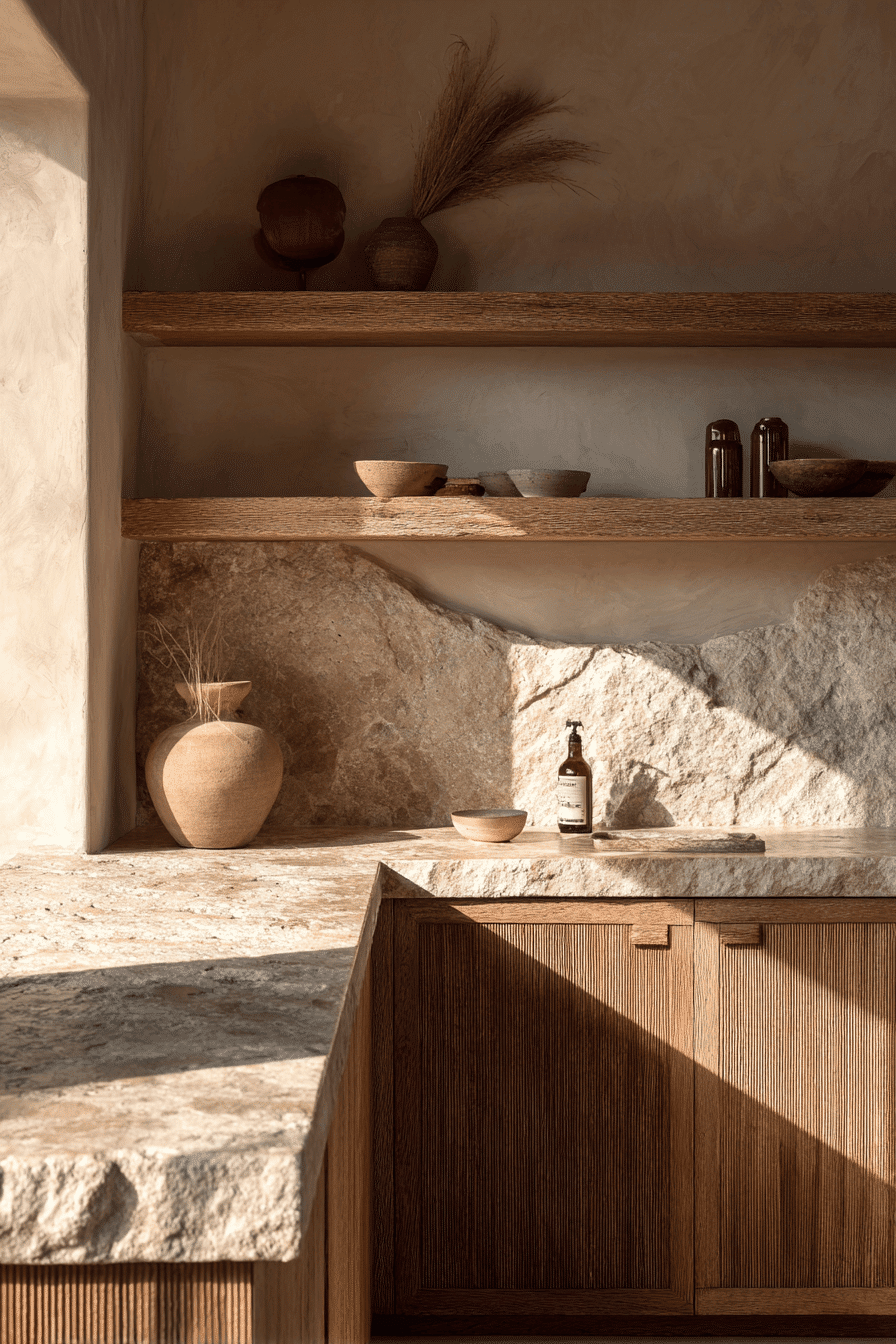
Travertine surfaces bring timeless texture into a wabi sabi kitchen with their soft tones and natural variation. The stone feels both elegant and grounded, creating a warm atmosphere. It’s a perfect blend of beauty and simplicity. Add travertine and elevate your kitchen design.
🌟 Steal This Look
- Paint Color: Backdrop Sandcastle 0010
- Furniture: fluted oak base cabinets with integrated wood pulls
- Lighting: recessed or hidden LED strip lighting above floating shelves
- Materials: honed travertine countertops with chiseled edge, rough lime plaster walls, white oak shelving
This kitchen feels like it has always been here, quietly settling into itself—there’s permission in that to stop chasing perfection and start collecting pieces with soul.
21. Minimalist Faucets That Keep Your Kitchen Clean and Simple
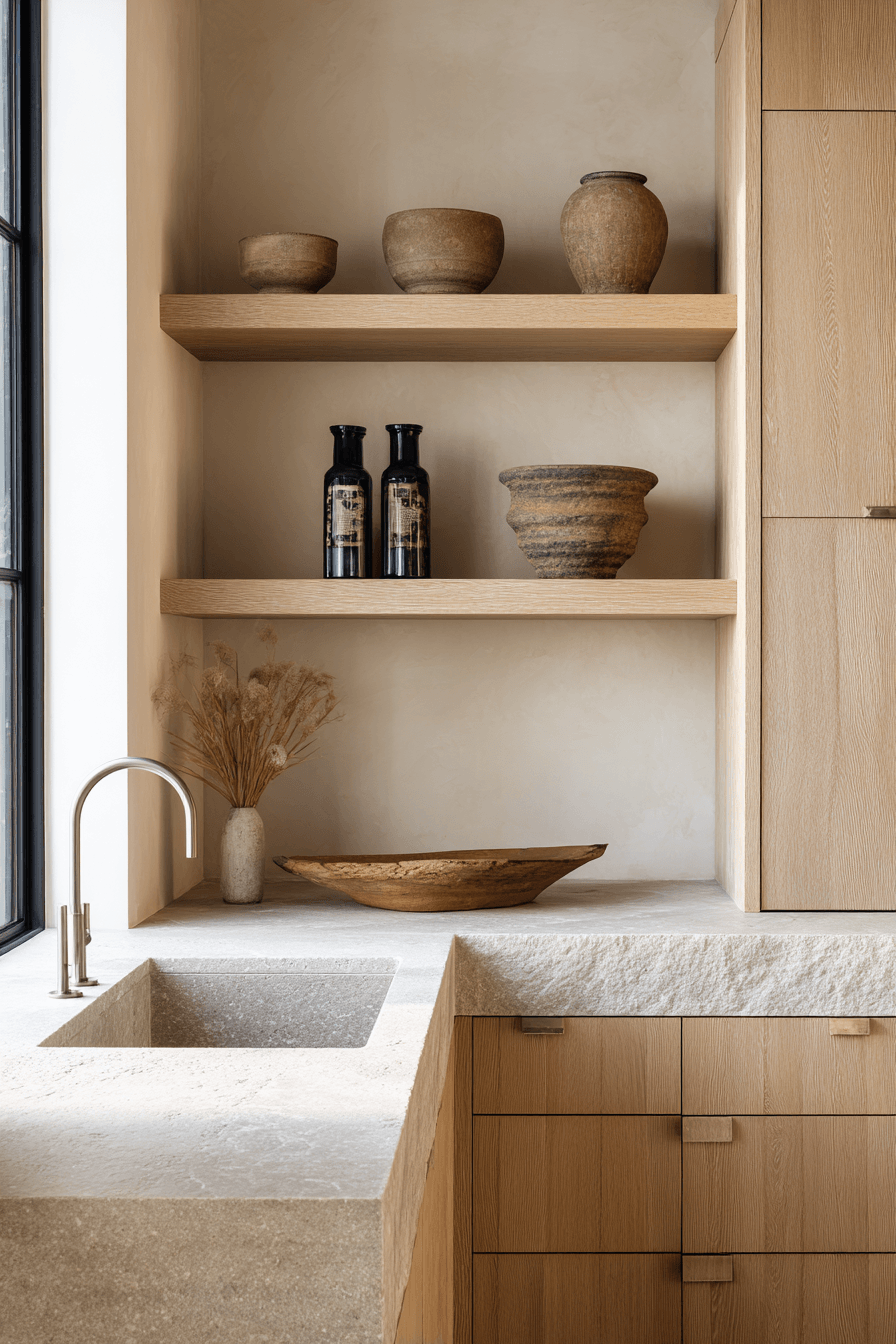
Minimalist faucets keep a wabi sabi kitchen feeling clean and uncluttered while adding a refined touch. Simple forms blend seamlessly with wood and stone materials. The look is subtle yet sophisticated. Upgrade your fixtures and refine your kitchen today.
🎨 Steal This Look
- Paint Color: Sherwin-Williams Accessible Beige SW 7036
- Furniture: floating oak open shelving with integrated niche
- Lighting: natural window light with no visible fixtures
- Materials: limestone countertop, white oak cabinetry, unglazed ceramic vessels, dried botanicals
This corner proves restraint is the ultimate luxury—every object earns its place, and the faucet’s quiet curve feels like a exhale.
22. Wood Cutting Boards That Double as Decor
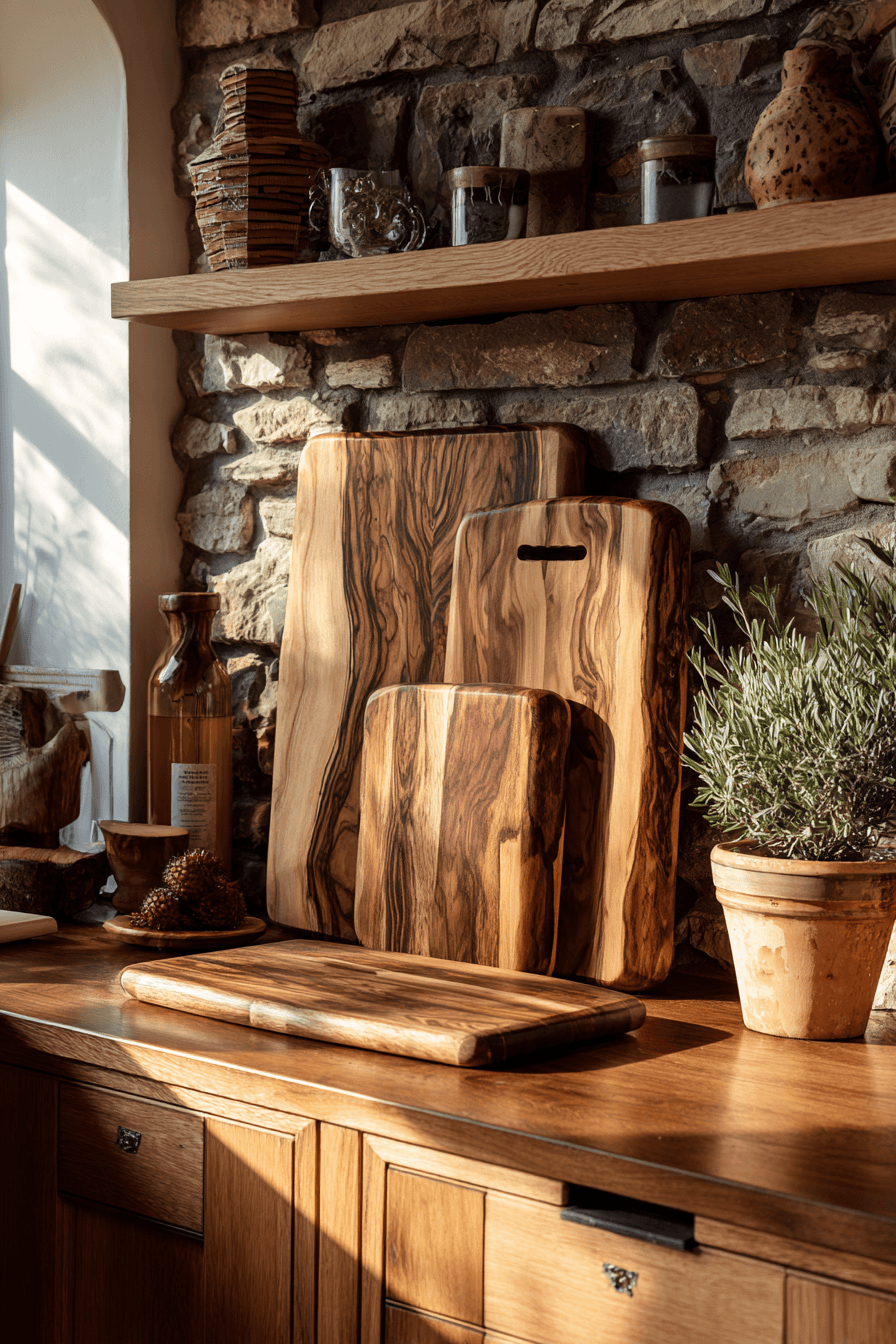
Wooden cutting boards can double as decor in a wabi sabi kitchen, adding warmth and organic texture. Lean them against the wall or display them on shelves for a relaxed look. The natural grain brings life into the space. Style your boards and enhance your kitchen today.
★ Steal This Look
- Paint Color: Benjamin Moore Swiss Coffee OC-45
- Furniture: medium-toned oak cabinet with recessed panel doors and natural wood countertop
- Lighting: natural sunlight from large window with warm directional shadows
- Materials: exposed stone masonry, zebrano wood grain cutting boards, terracotta, cork, live-edge oak floating shelf
This corner feels like a morning ritual waiting to happen—sunlight hitting that grain, herbs within arm’s reach, everything purposeful yet unhurried.
23. Aged Brass Hardware That Adds Subtle Warmth
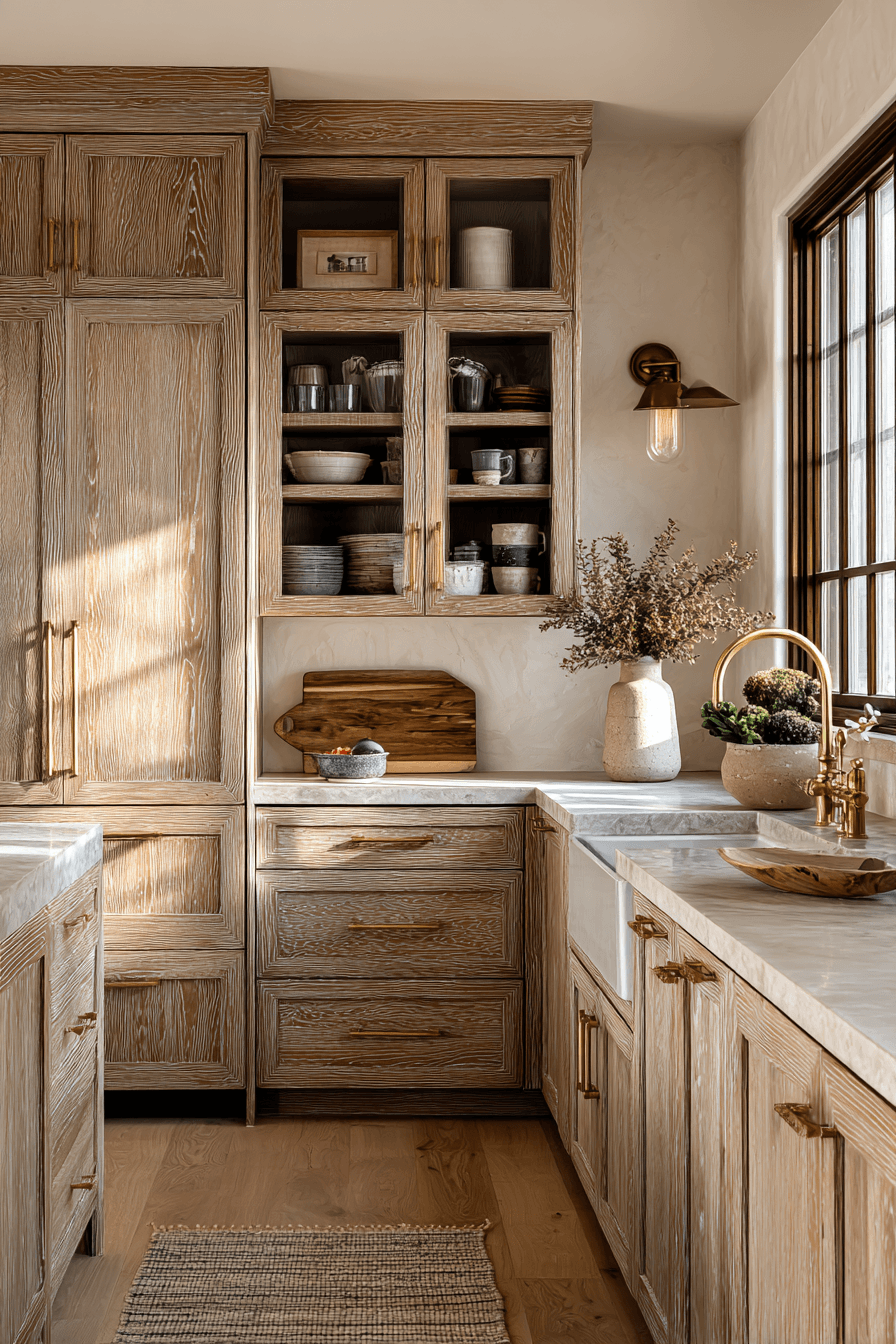
Aged brass hardware adds soft warmth to a wabi sabi kitchen while developing a beautiful patina over time. These subtle details create depth and authenticity without feeling flashy. It’s an easy upgrade with lasting impact. Swap your hardware and elevate your kitchen today.
💡 Steal This Look
- Paint Color: Farrow & Ball Off-White No. 3
- Furniture: cerused oak pantry cabinet with glass-front upper doors
- Lighting: brass dome wall sconce with exposed Edison bulb
- Materials: honed marble countertops, handwoven jute runner, unglazed ceramic vessels, live-edge wood cutting boards
This kitchen feels lived-in from day one, like it inherited decades of Sunday mornings. The brass has already begun its quiet journey toward patina.
24. Mediterranean Inspired Kitchens with Natural Materials
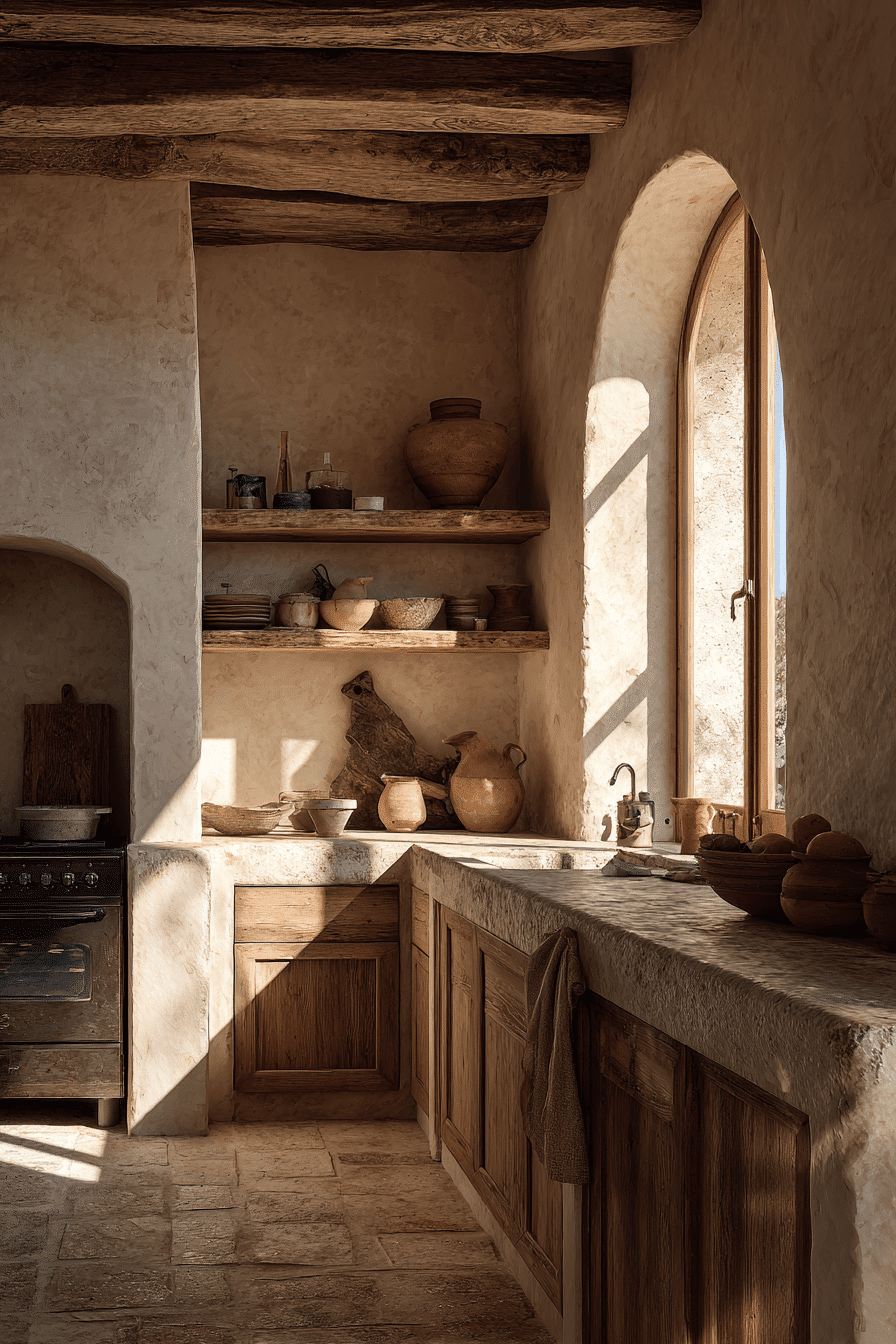
Bring a sun-washed feel into your wabi sabi kitchen by blending Mediterranean influences with natural materials. Plaster textures, warm tones, and wood finishes create a relaxed, inviting atmosphere. The space feels timeless and lived-in. Try this style and transform your kitchen today.
🎨 Steal This Look
- Paint Color: Behr Adobe Sand S240-3
- Furniture: thick floating wood shelves with live edges, rustic oak base cabinets with simple panel doors
- Lighting: arched window as primary light source, supplement with aged brass wall sconce
- Materials: textured lime plaster walls, rough-hewn ceiling beams, tumbled stone countertops, terracotta pottery, woven natural fibers
This kitchen feels like it has hosted generations of slow Sunday lunches—there’s permission here to let things chip, stain, and soften with use rather than fight the aging process.
25. Unfinished Wood Cabinets for a Raw Organic Look
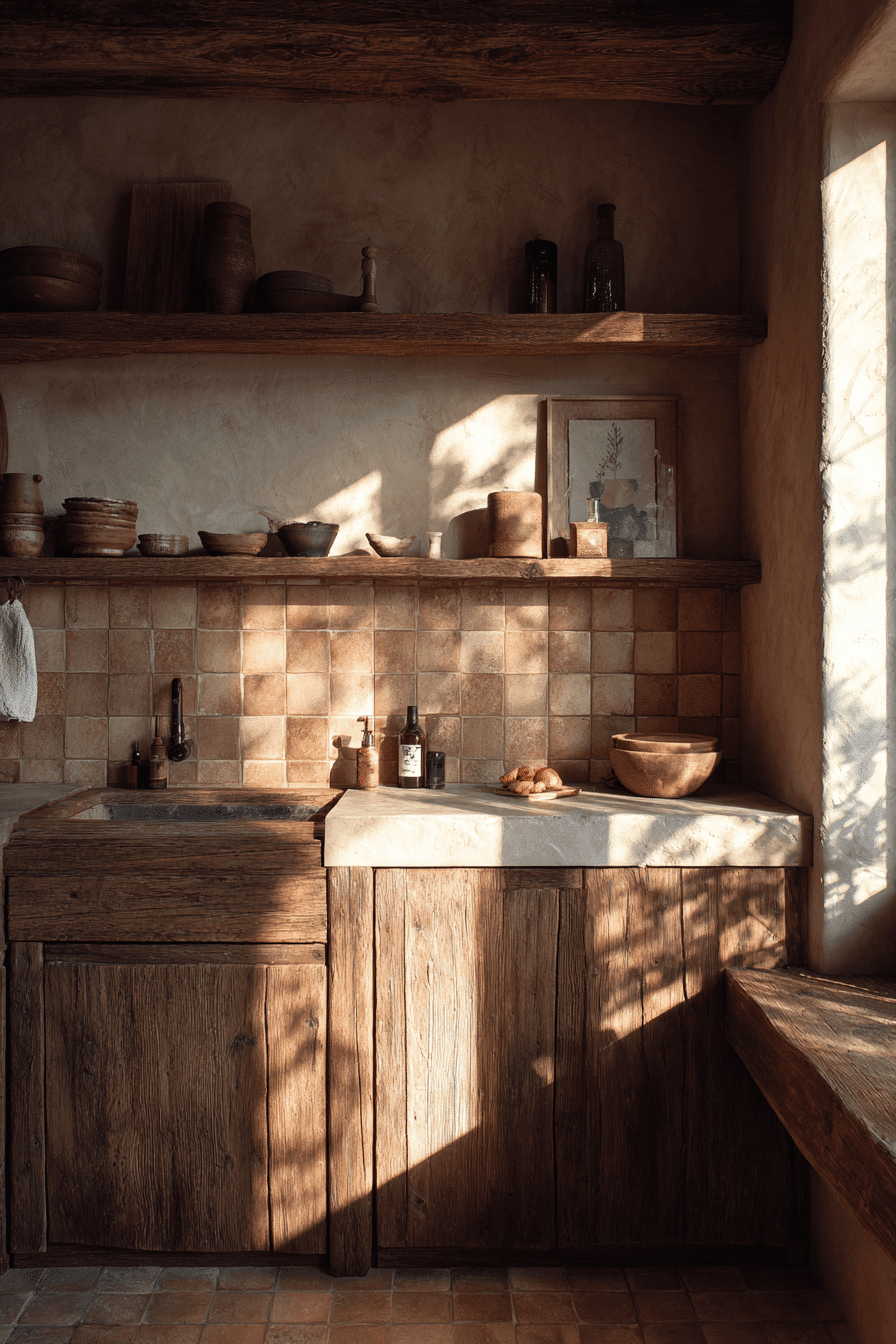
Unfinished wood cabinetry highlights the raw beauty of materials in a wabi sabi kitchen. Visible grain and natural texture create an honest, organic look that feels calming and real. It’s simplicity at its best. Embrace this approach and refresh your kitchen today.
★ Steal This Look
- Paint Color: Valspar Frappe V138-3
- Furniture: reclaimed oak floating shelves with live edges, rough-hewn base cabinets with visible grain and hand-planed texture
- Lighting: no artificial fixture needed—maximize existing window with sheer linen shade for filtered natural light
- Materials: raw oak, lime-washed plaster, hand-pressed terracotta zellige tiles, unfilled travertine countertop
This kitchen feels like someone’s grandmother actually cooked here for decades—the wood has darkened where hands touched, and nothing matches on purpose. That’s the soul you’re chasing.
26. Simple Tea Corners That Bring Calm into Your Kitchen
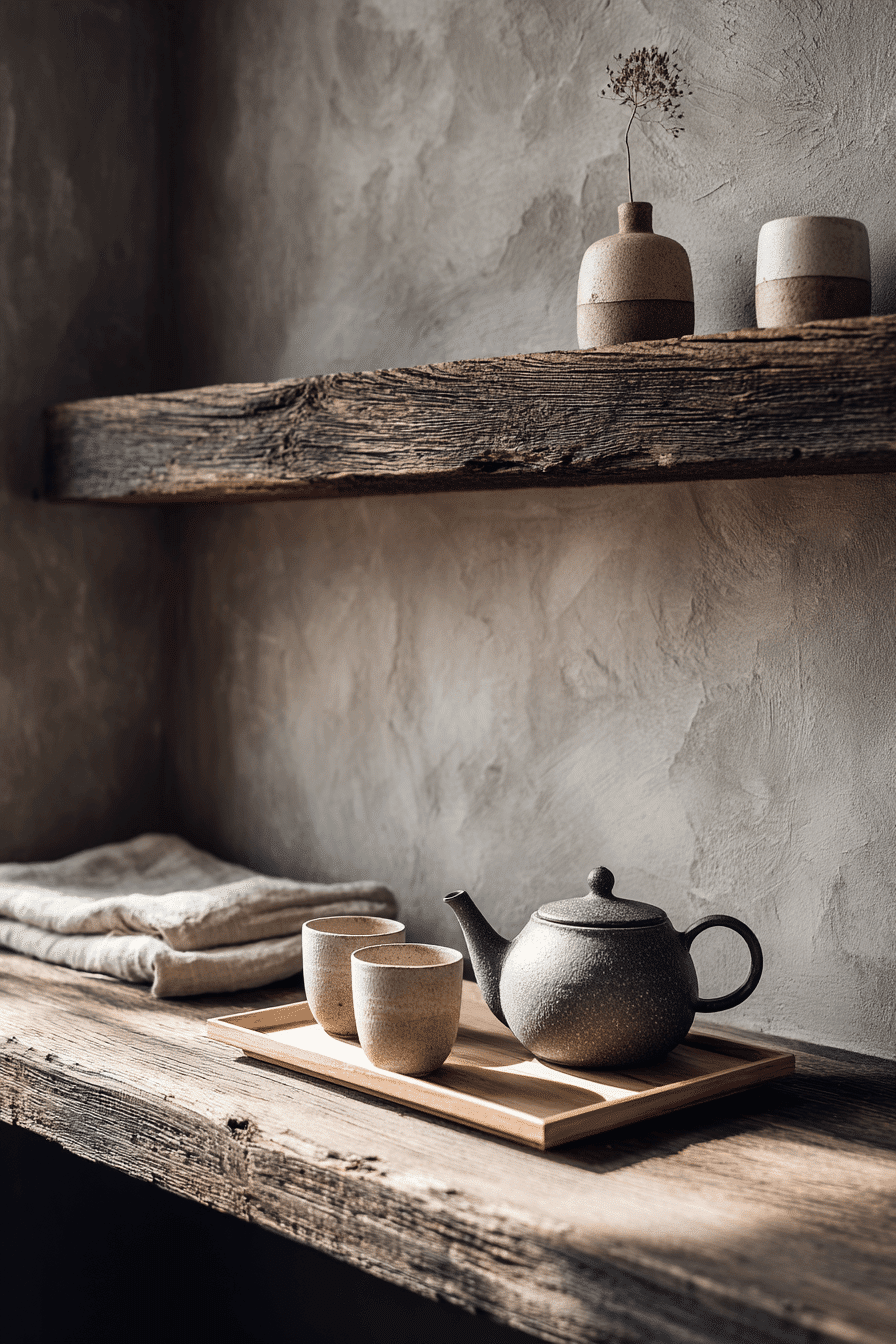
Create a peaceful moment in your wabi sabi kitchen with a simple tea corner designed for slow living. Display handcrafted cups and teapots while keeping the space uncluttered. It becomes a quiet ritual within your home. Set up your tea space and bring calm into your kitchen today.
🎨 Steal This Look
- Paint Color: PPG Weathered Stone PPG1009-3
- Furniture: reclaimed barn wood floating shelves with live edges and visible grain
- Lighting: soft natural daylight from nearby window with no artificial fixture visible
- Materials: hand-troweled plaster walls, aged oak or pine with oxidized patina, unglazed stoneware ceramics, raw linen, cork and clay vessels
This corner feels like a breath you didn’t know you needed—it’s the kind of space that makes you actually want to slow down for tea instead of grabbing coffee on the run.
27. Soft Lighting Ideas for a Relaxed and Peaceful Space
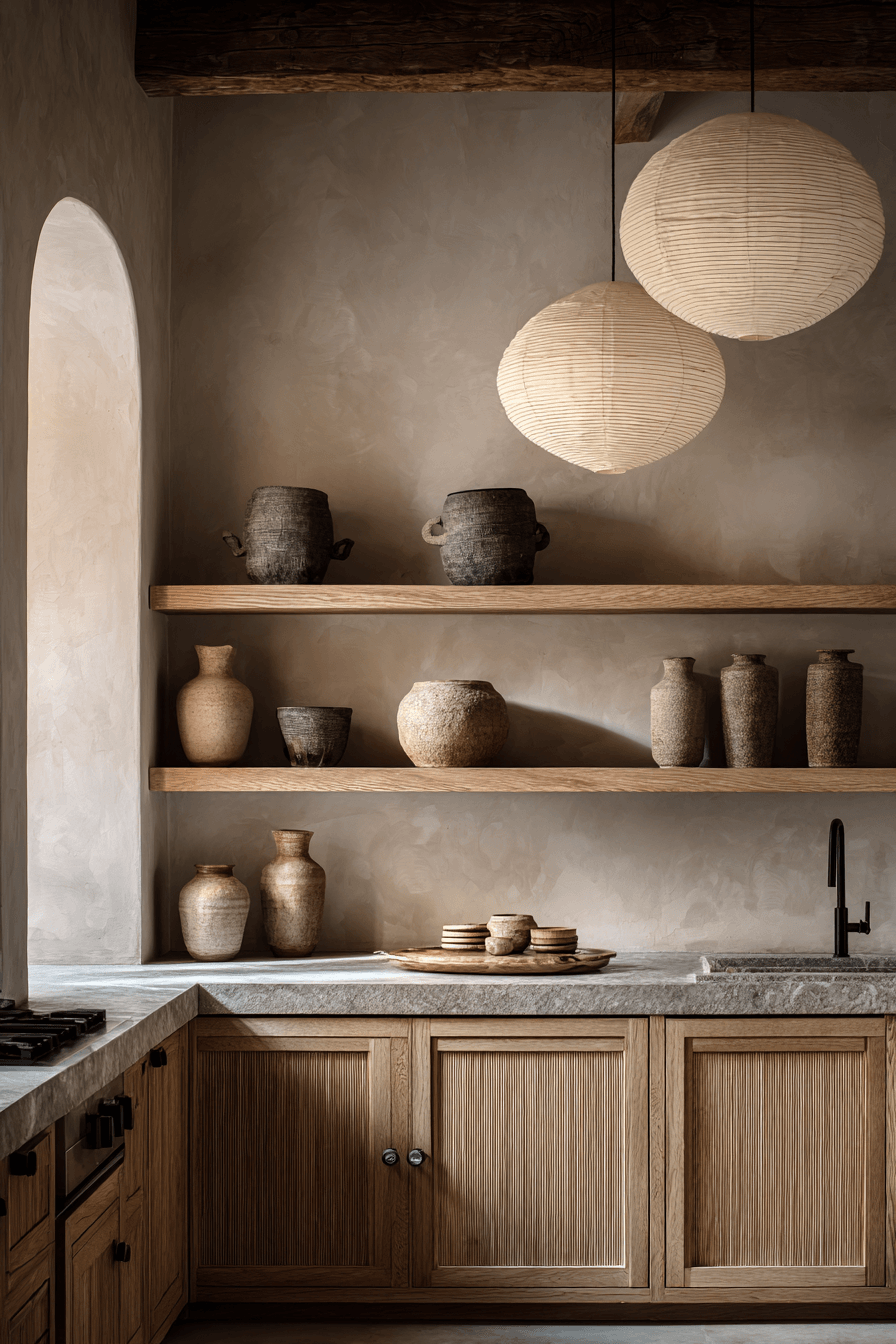
Soft, diffused lighting completes the atmosphere of a wabi sabi kitchen by creating a gentle and relaxing glow. Paper-inspired lanterns add an airy, sculptural touch that feels timeless. The space becomes warm and tranquil. Add soft lighting and transform your kitchen today.
A wabi-sabi kitchen invites you to slow down and appreciate the quiet beauty found in simplicity, natural materials, and imperfection. By embracing organic textures, muted tones, and a sense of authenticity, you create a space that feels both grounding and timeless. In the end, it’s not about perfection, but about crafting a kitchen that feels warm, lived-in, and deeply at peace.
✎ Steal This Look
- Paint Color: Dunn-Edwards Warm Stone DE6216
- Furniture: floating oak open shelving with live edge, ribbed white oak base cabinets with oil-rubbed bronze knobs
- Lighting: pair of oversized Akari-style rice paper globe pendants in 24″ and 18″ diameters
- Materials: lime-washed plaster walls, honed limestone countertops, hand-thrown ceramic vessels in varying earth tones, reclaimed wood ceiling beam
This kitchen feels like a deep exhale. The paper globes don’t just light the room—they become gentle presences, like moons you can live beneath while you sip tea and ignore the dishes.
This post may contain affiliate links. Please see my disclosure policy for details.
Want to keep this one?
We'll email you the link so you can find it again later.