Primitive Easter Decor: Creating a Rustic, Handcrafted Holiday Haven
Primitive Easter decor celebrates rustic charm through natural materials, vintage linens, and handcrafted touches—and honestly, it’s the antidote to all that shiny, plastic nonsense cluttering up stores every spring.
I’m done with those gaudy pastel bunnies that look like they escaped from a candy factory. You know the ones I’m talking about. The oversized plastic eggs. The neon-bright everything. The manufactured “cute” that has zero soul.
Last year, I walked into my sister’s house on Easter Sunday and nearly needed sunglasses—her dining room looked like a Peeps explosion had occurred. That’s when I decided to strip everything back and go primitive for my own Easter setup.
Best. Decision. Ever.
What Makes Primitive Easter Decor Different (And Why You’ll Actually Love It)
Here’s what I discovered: primitive decor isn’t about being fancy or Instagram-perfect.
It’s about embracing imperfection. It’s about celebrating handmade over mass-produced. It’s about creating warmth instead of showiness.
Think of your grandmother’s farmhouse, not a department store display.
The beauty lives in the worn edges of an old wooden crate. The charm comes from slightly crooked hand-stitching on vintage linens. The magic happens when you can actually feel the history in what you’re decorating with.
The core philosophy? Authenticity beats perfection every single time.
The Non-Negotiable Materials for Authentic Primitive Easter Style
Let me break down exactly what you need—and what you definitely don’t.
Natural Textures Are Your Foundation:
- Woven baskets in various sizes (I’ve collected mine from thrift stores over the years)
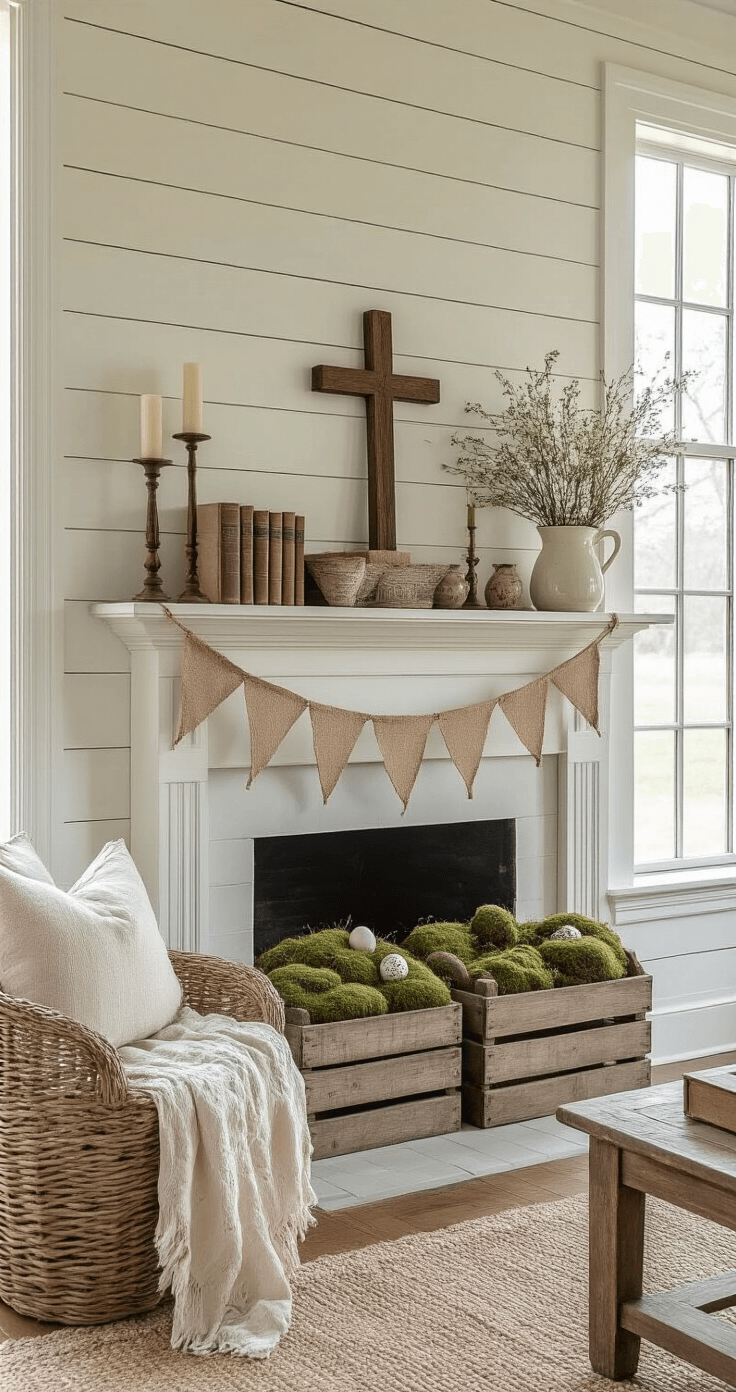
- Wooden crates and boxes with that beautiful weathered finish
- Burlap everything—runners, ribbons, wrapping material
- Natural twine and jute (ditch the synthetic stuff)
I found three perfect wooden crates at a flea market for $12 total. They had dirt in the corners. A few rusty nail heads showing. Absolutely perfect.
Vintage Linens Bring the Soul:
- Flour sack towels with their thin, worn-soft texture
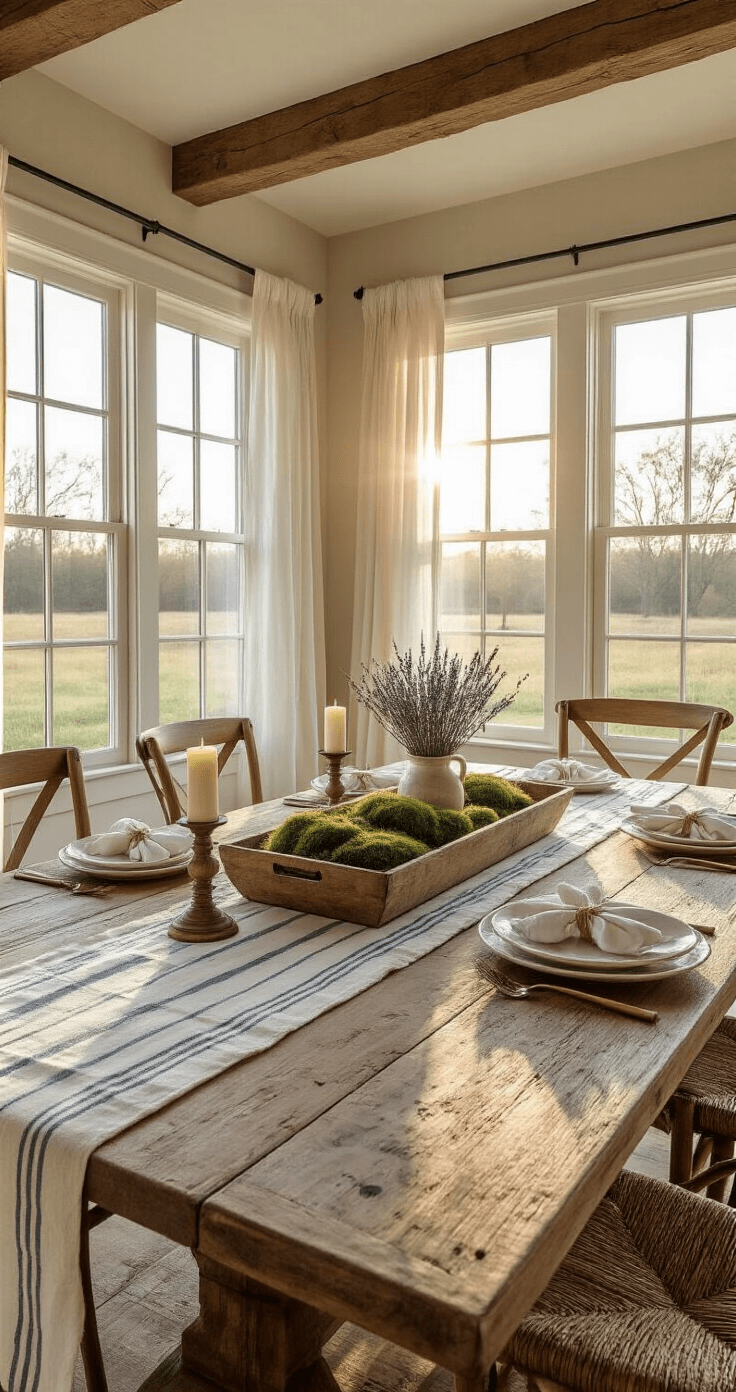
- Grain sack table runners with those gorgeous stripes
- Hand-stitched doilies (even if they’re slightly yellowed—especially if they’re slightly yellowed)
- Old embroidered napkins your aunt was going to throw out
Don’t stress if there’s a stain or a tiny hole. That’s character. That’s history. That’s exactly what makes primitive decor work.
The Color Palette That Actually Matters:
Forget the rainbow. Your primitive Easter palette should revolve around:
- Creamy whites and aged ivories (not bright white—that’s too modern)
- Soft, dusty blues like a washed-out spring sky
- Muted sage greens that look like they’ve been sitting in sunshine for years
- Pale, buttery yellows (think candlelight, not highlighter)
- Natural wood tones in all their varied glory
I painted a set of wooden eggs last spring. Mixed my acrylics with a touch of brown to dull them down. Added some light distressing with sandpaper. They looked like they’d been sitting in someone’s farmhouse for decades.
Cost me maybe $8 for the whole project.
The Signature Accents That Scream “Primitive Easter”
These are the pieces that transform generic spring decor into something with actual character.
Moss-Covered Magic:
Save this article
Enter your email and we'll send it straight to your inbox.
I’m obsessed with moss-covered nests. You can buy artificial moss for cheap, or if you’re lucky enough to live somewhere with actual moss, carefully harvest small pieces.
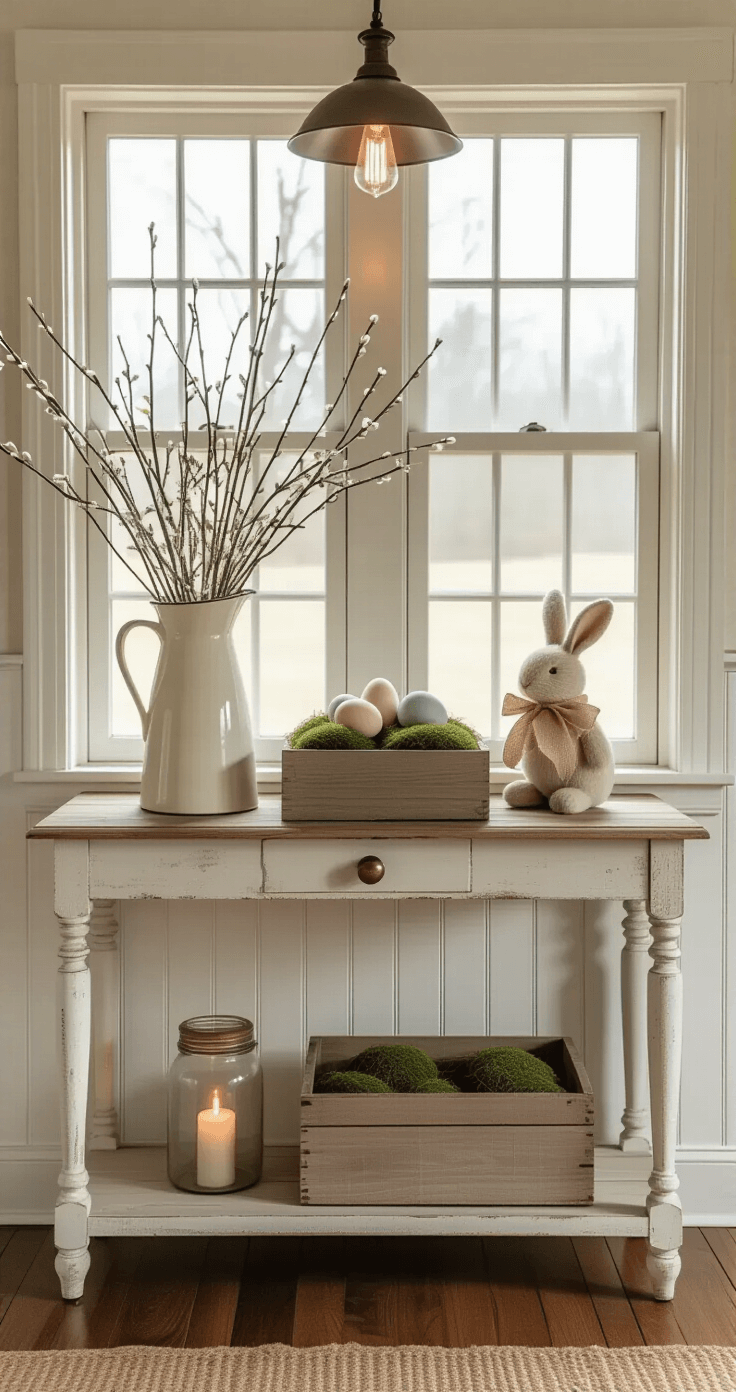
Fill them with speckled eggs. Tuck them into corners of shelves. Cluster three together as a centerpiece. The texture contrast between fuzzy moss and smooth eggs is chef’s kiss.

Hand-Painted Wooden Eggs:
This is where you get to play. Buy plain wooden eggs from craft stores (usually sold in packs of 6-12). Then paint them in those muted colors I mentioned.
Add simple patterns if you want:
- Tiny dots
- Wavy lines
- Cross-hatching
- Simple flowers
I cannot draw to save my life, but even my wonky flowers looked charming on these eggs. Imperfection is the whole point.
Primitive Bunny Art and Signage:
Look for distressed wooden signs with phrases like:
- “He is risen”
- “Welcome Spring”
- “Easter Blessings”
The key word here is distressed. New-looking signs with perfect lettering defeat the purpose. You want:
- Chipped paint
- Uneven edges
- Slightly faded letters
- Wood grain showing through
Wildflowers and Natural Elements:
Forget those perfect florist arrangements. Grab:
- Pussy willows from your yard (or a neighbor who won’t miss them)
- Dried lavender bunches
- Simple wildflowers from the farmer’s market
- Branches with interesting shapes
Stick them in rustic pitchers. Old stoneware crocks. Vintage mason jars wrapped with burlap.
I found an old cream pitcher at an estate sale for $3—it’s now my go-to Easter flower holder. Has a crack running down one side. Couldn’t care less. It’s gorgeous.
Creating Statement Pieces Without Spending a Fortune
You don’t need a huge budget to create focal points that make people stop and stare.
The Showstopping Centerpiece:
🎨 Steal This Look
- Paint Color: Sherwin-Williams Accessible Beige SW 7036
- Furniture: distressed farmhouse dining table with turned legs, mismatched ladder-back chairs in varying wood tones
- Lighting: galvanized metal pendant with Edison bulb, aged zinc finish
- Materials: raw burlap, hand-loomed cotton grain sacks, weathered barn wood, hand-dyed muslin, rusted tin
There’s something deeply satisfying about Easter decor that looks like it could have been pulled from your grandmother’s attic rather than a big-box store clearance bin; it invites people to slow down and actually notice the details.
This post may contain affiliate links. Please see my disclosure policy for details.
Want to keep this one?
We'll email you the link so you can find it again later.