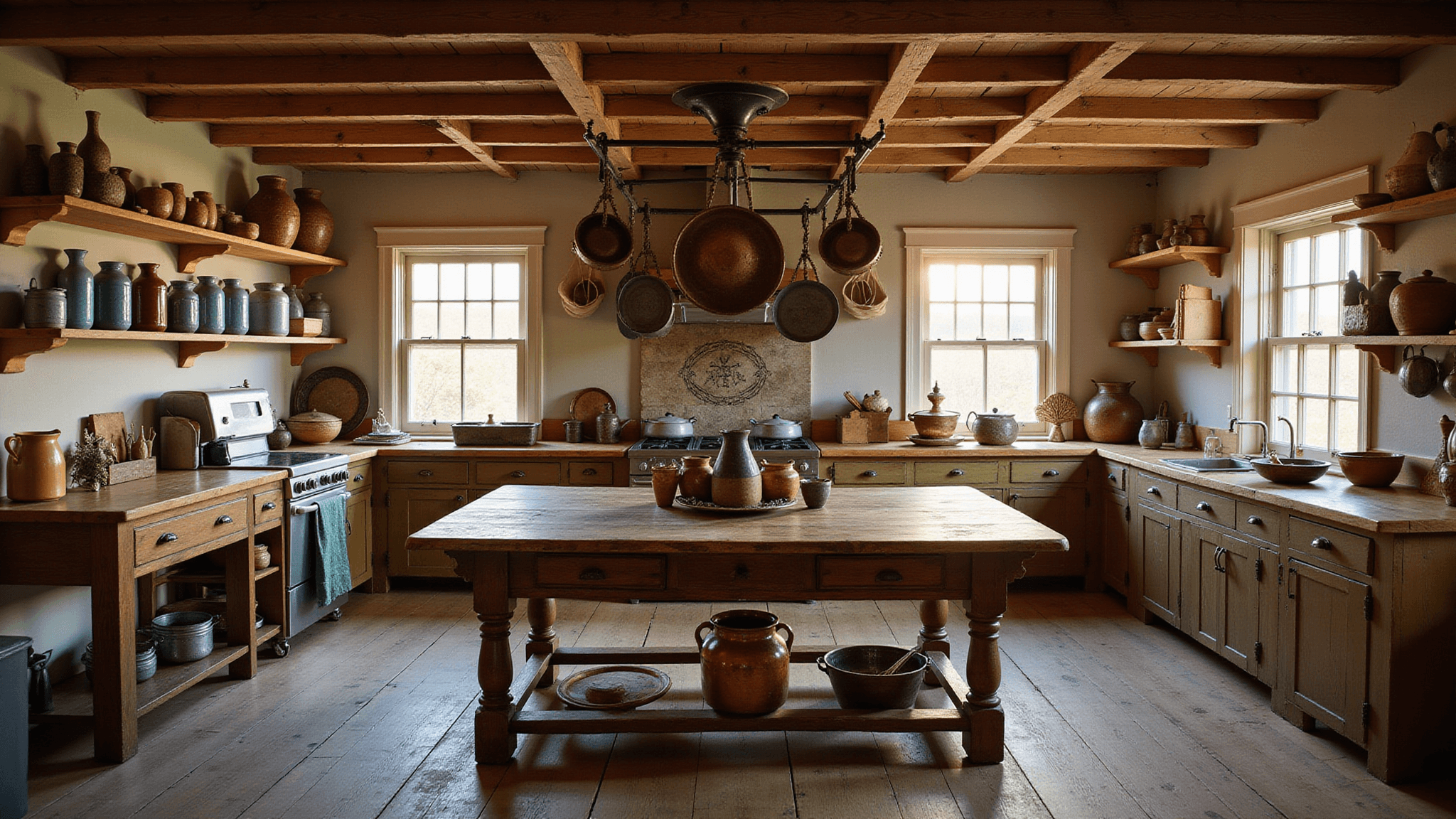
Primitive Kitchen Style Guide
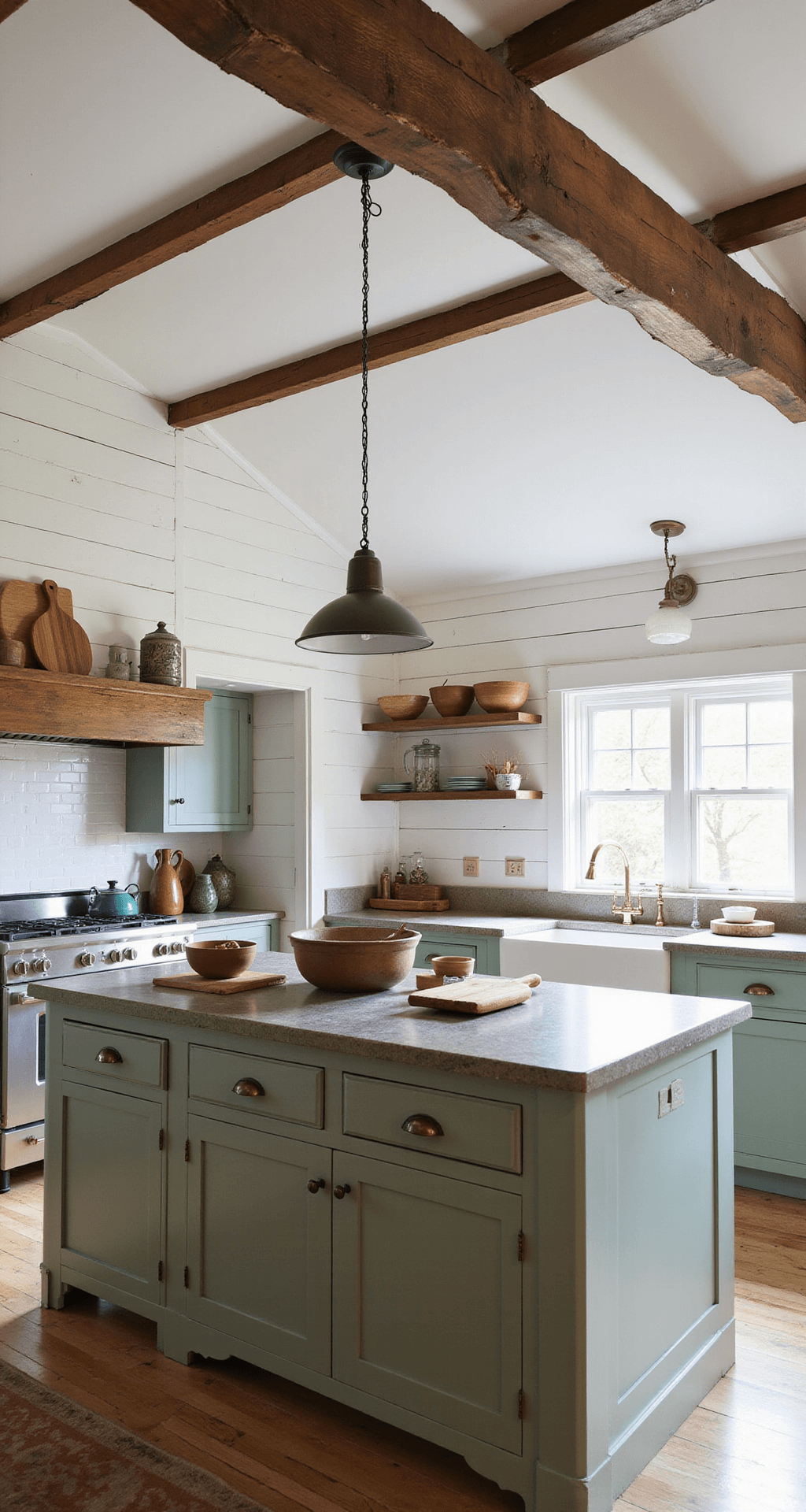
A primitive kitchen uses distressed wood, vintage kitchenware, and warm earthy colors to recreate an early American farmhouse feel. It relies on collected, worn pieces rather than a matched set.
What Defines the Style
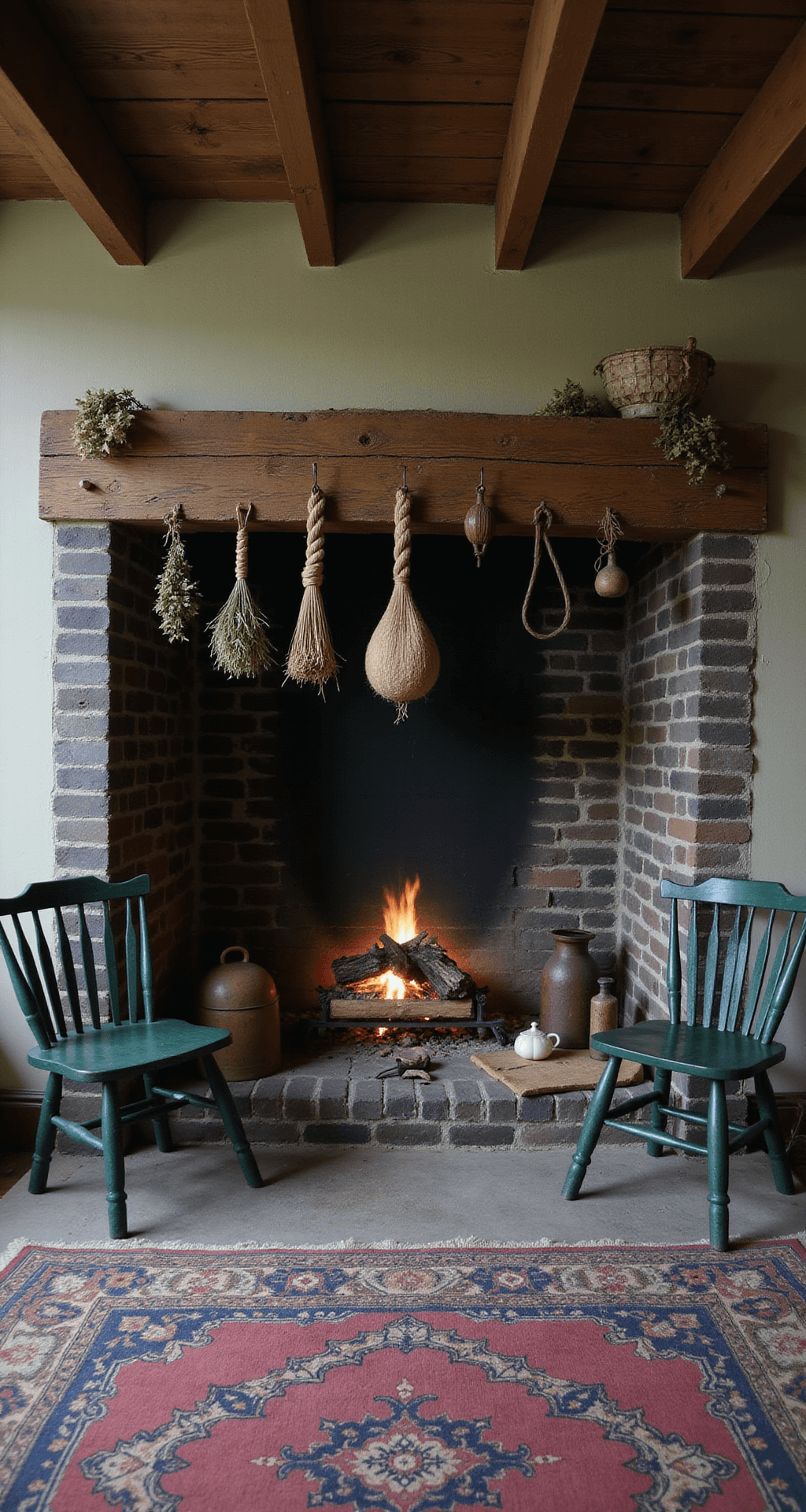
Primitive style is built on handmade details, warm earthy tones, and worn materials. The aim is a rustic, lived-in kitchen rather than a polished modern one.
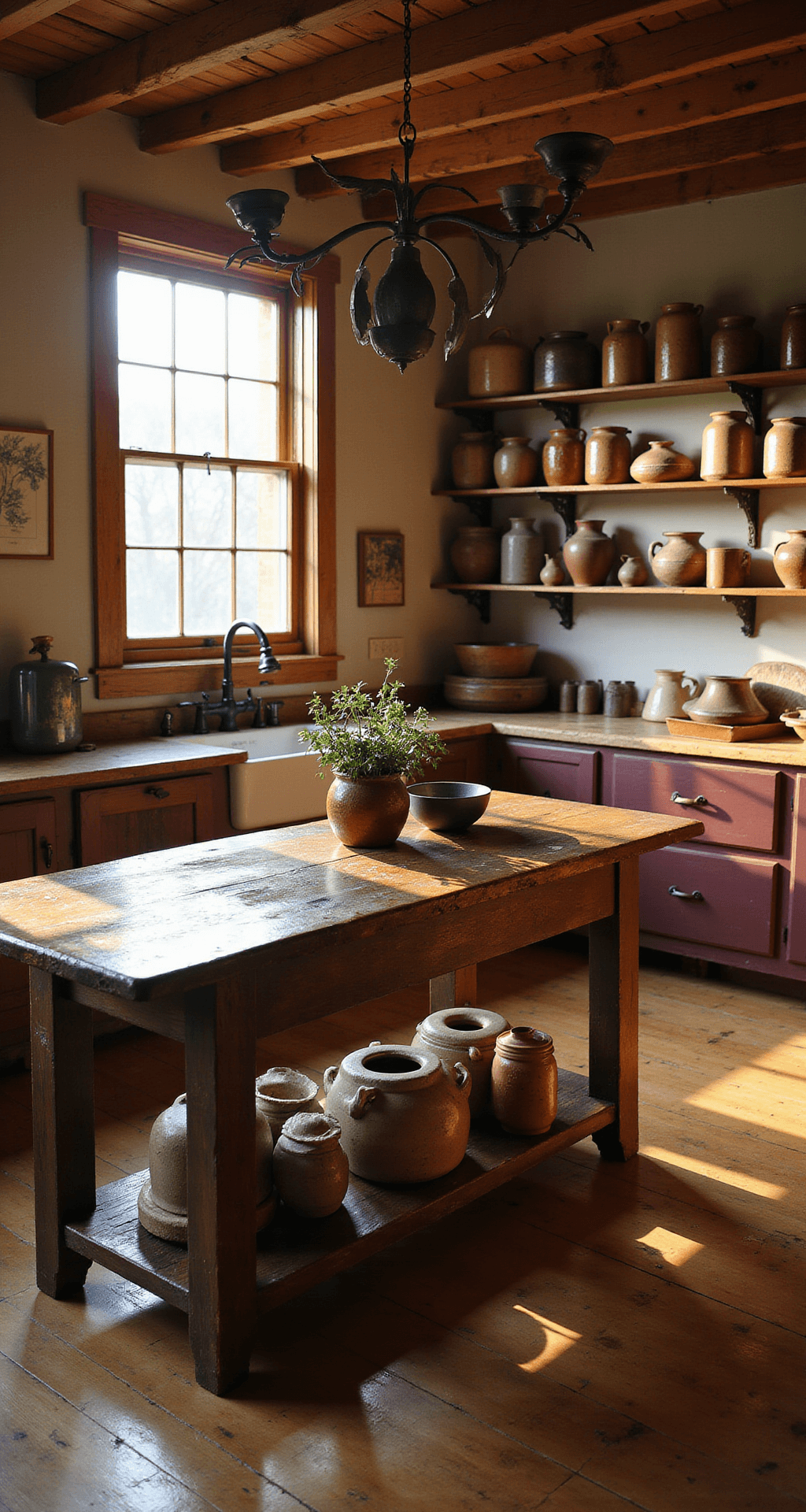
Key Style Characteristics
Color Palette
- Warm, rich browns
- Deep reds and burgundies
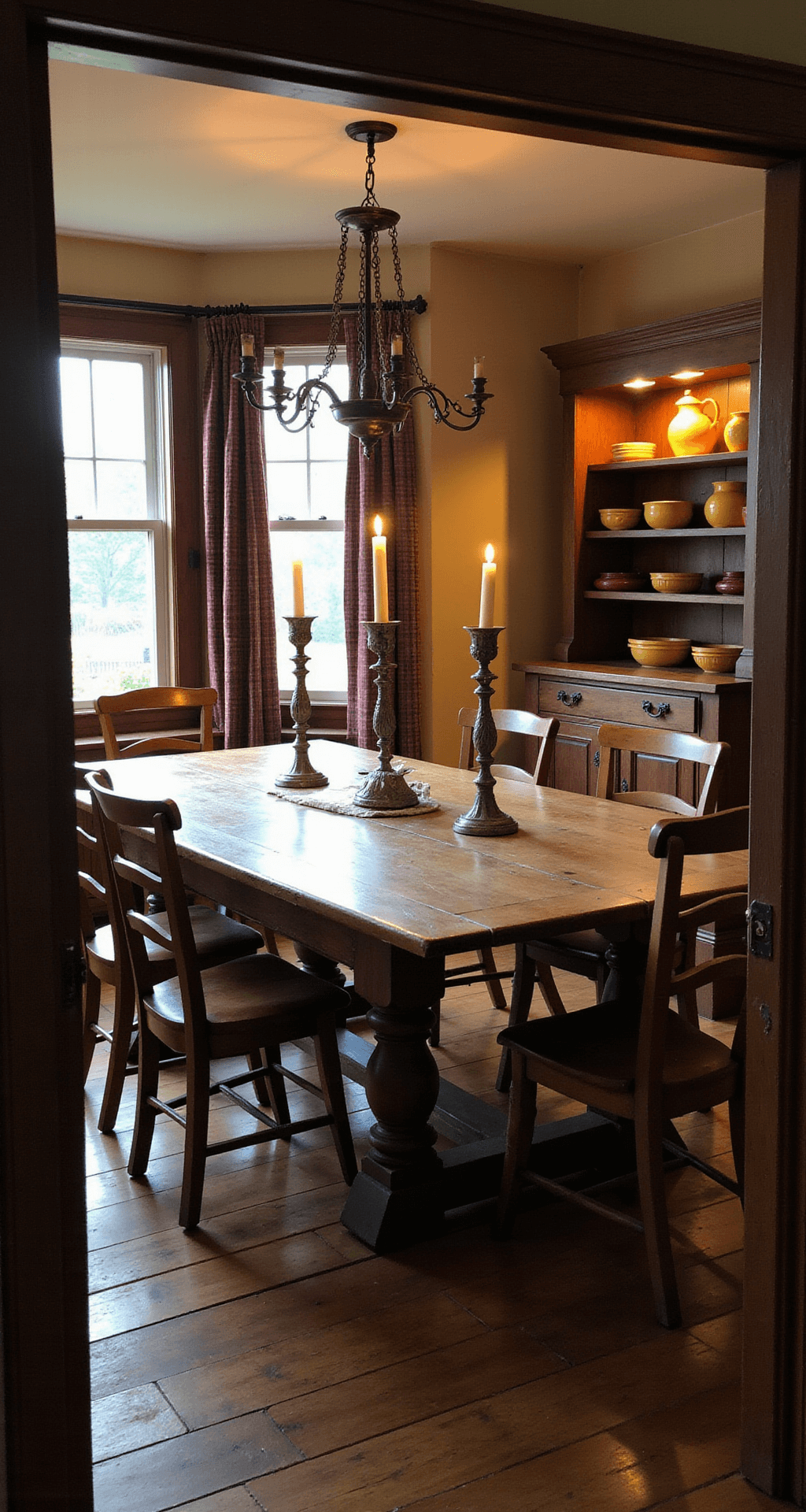
- Mustard and muted golds
- Forest greens
- Soft, inviting earth tones
Core Design Elements
- Distressed wood furniture
- Vintage kitchenware
- Hand-crafted textiles
- Functional yet beautiful accessories
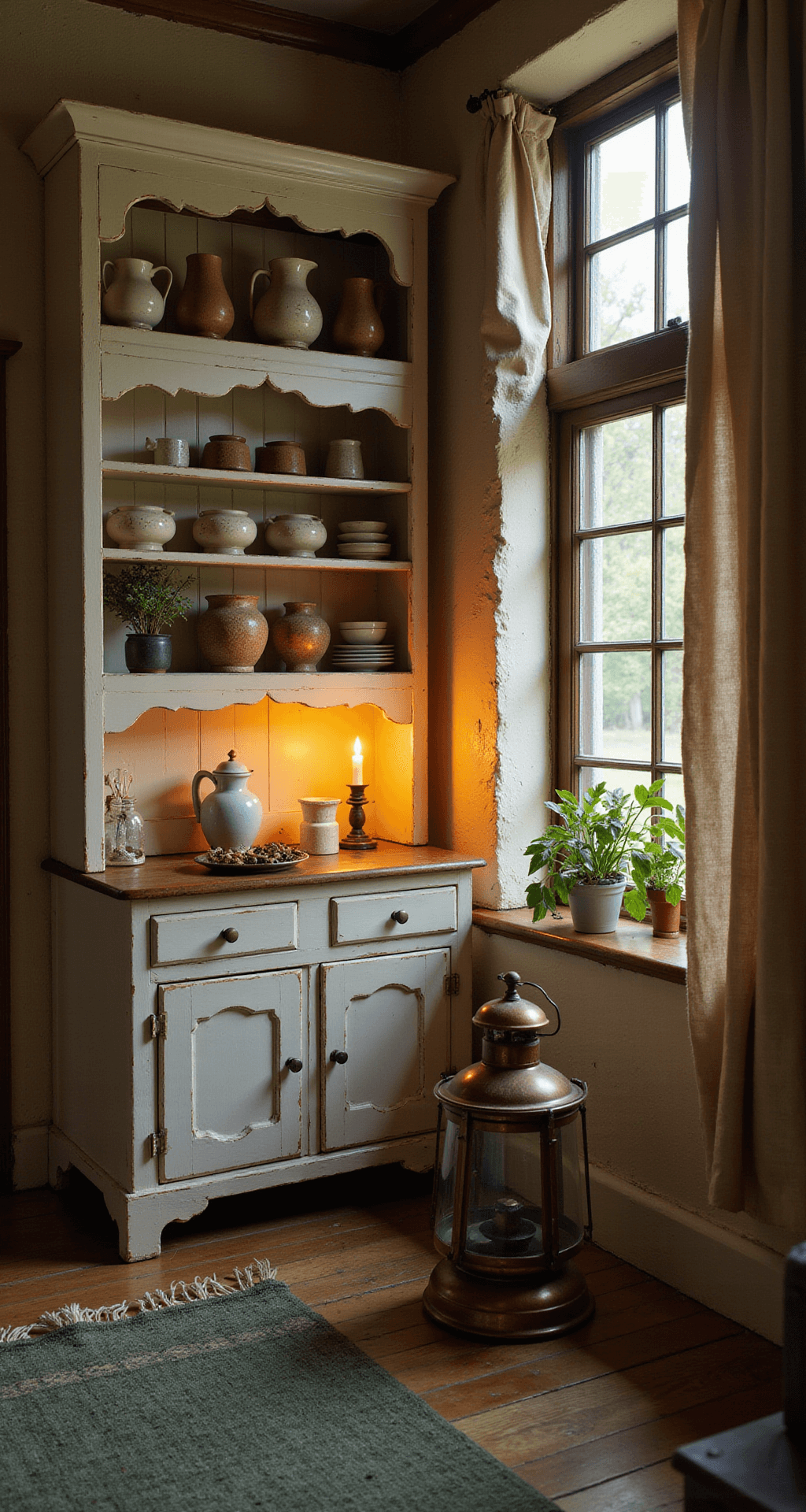
Your Primitive Kitchen Styling Toolkit
Essential Props
- Wooden bowls
- Stoneware jars
- Tin containers
- Vintage textiles
- Mason jars
- Antique utensils
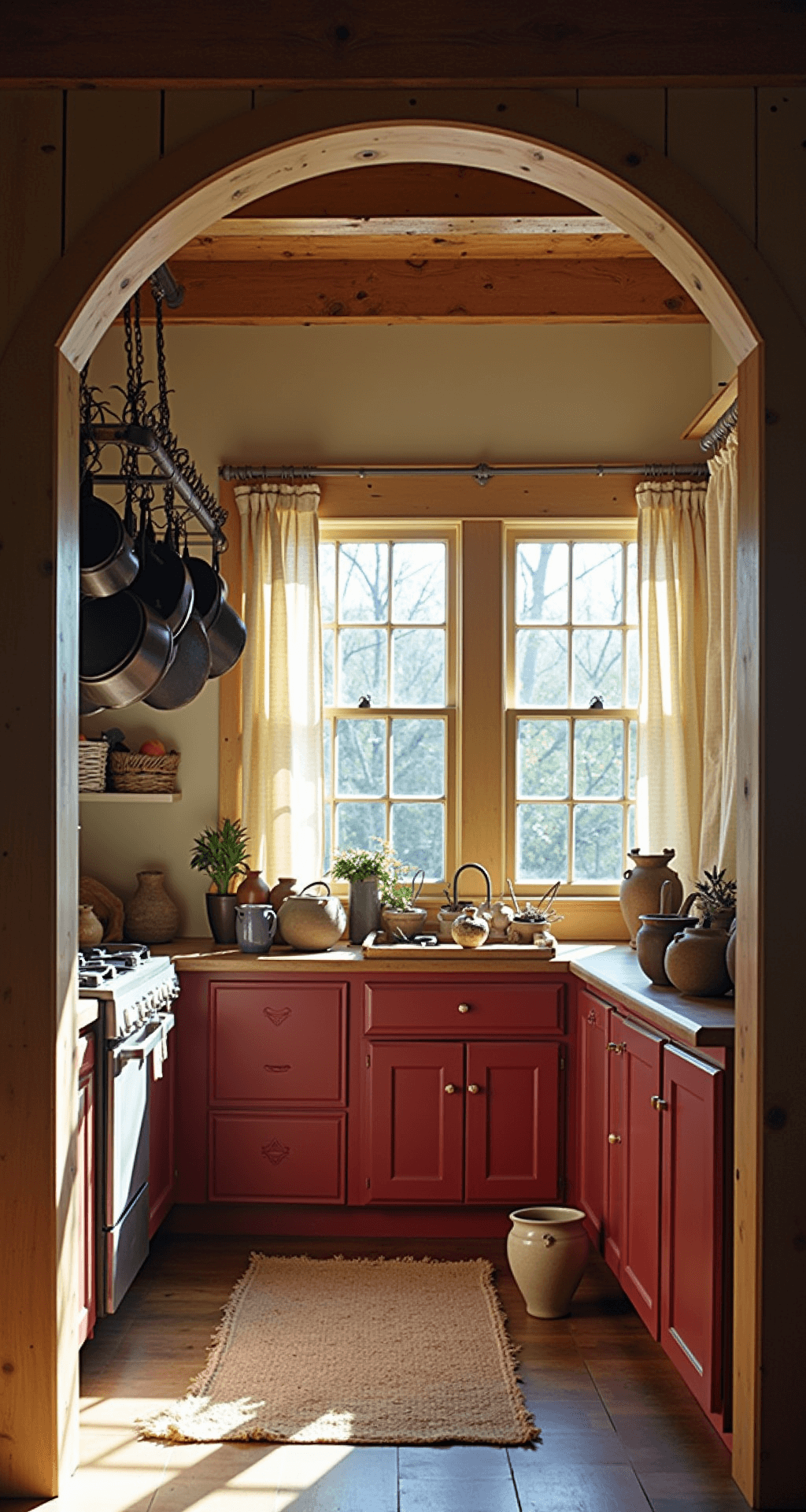
Step-by-Step Styling Process
1. Clear the Modern Clutter
- Remove sleek, contemporary items
- Start from a clean, empty surface
2. Set the Foundation
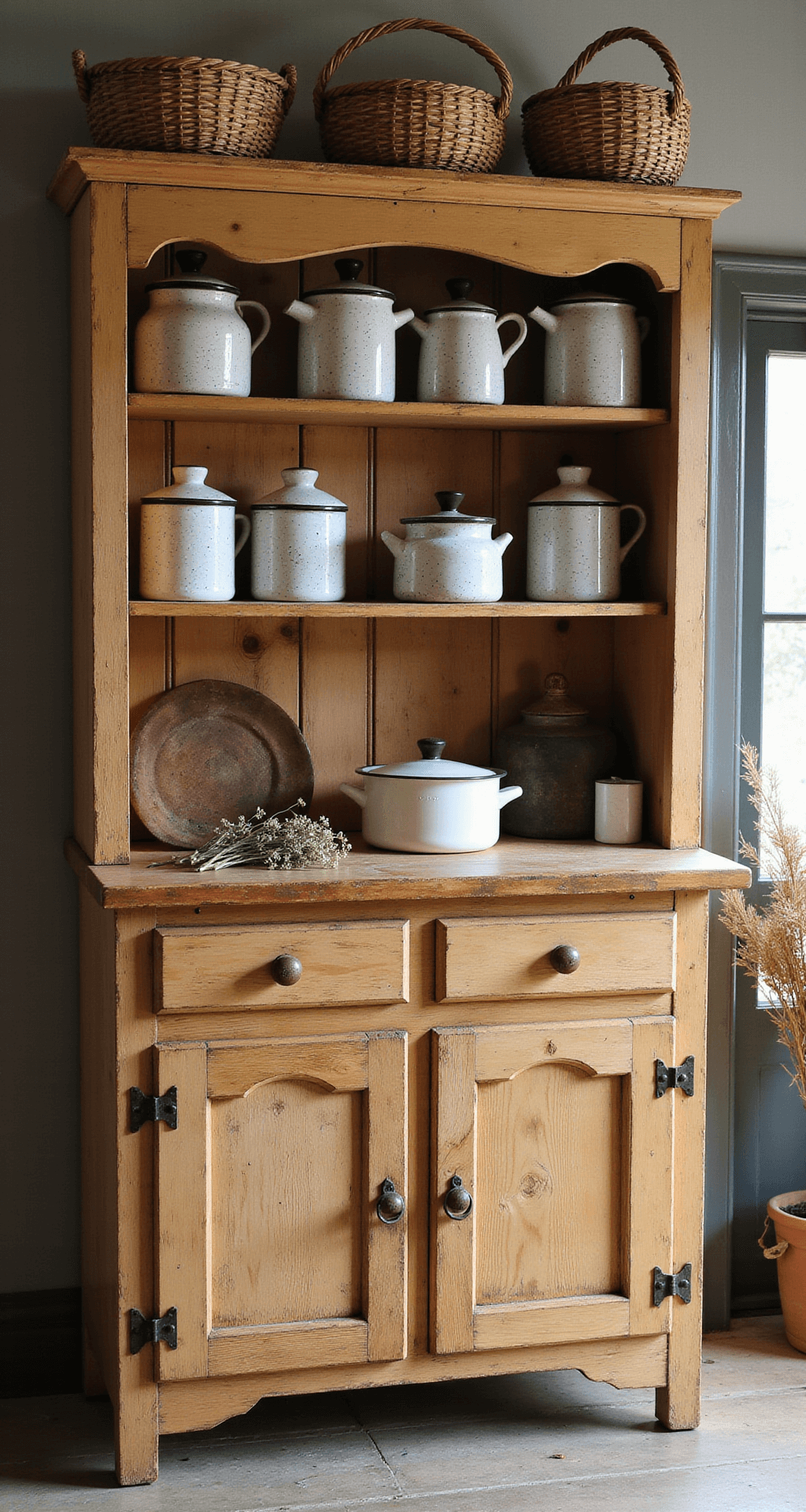
- Choose a focal point (vintage cupboard, wooden table)
- Layer textures: wood, metal, woven fabrics
3. Accessorize with Purpose
- Group items in threes
- Use functional decor (trays, baskets)
- Add seasonal touches (autumn wreaths, spring wildflowers)
Save this article
Enter your email and we'll send it straight to your inbox.
Budget-Friendly Primitive Kitchen Tricks
Thrifty Styling Hacks
- Hunt thrift stores for vintage pieces
- DIY distress wooden items
- Use family heirlooms
- Mix high and low-cost accessories
Common Styling Mistakes to Avoid
- Don’t Overcrowd: Primitive style needs open space
- Keep Colors Consistent: Stick to warm, earthy tones
- Prioritize Authenticity: Choose pieces with real history
Seasonal Styling Variations
- Fall: Add pumpkins, deep burgundy accents
- Winter: Incorporate wreaths, cozy textiles
- Spring: Lighter colors, fresh florals
- Summer: Lighter woods, more open feel
Getting Started
A primitive kitchen comes together from collected, worn pieces over time. Start with a focal item like a vintage cupboard, then build up warm textures and vintage kitchenware.
This post may contain affiliate links. Please see my disclosure policy for details.
Want to keep this one?
We'll email you the link so you can find it again later.