Why Most People Get Florida Decor Completely Wrong
You know what drives me absolutely mad?
Walking into a Florida home that looks like it belongs in a Minnesota suburb.
Here’s the thing—Florida decor isn’t about slapping a few seashells on a shelf and calling it coastal.
It’s about creating a space that makes you feel like you’re living in a resort, not visiting one.
The biggest mistakes I see:
- Overdoing the nautical theme (we get it, you live near water)
- Forgetting that Florida has personality beyond beaches
- Using heavy, dark furniture that makes rooms feel like caves
- Ignoring natural light like it’s your enemy
- Going so minimal that your home feels sterile
The Foundation: Light, Air, and Breathing Room
Let me tell you about my friend Sarah’s disaster.
She moved from Boston to Tampa and brought every piece of her dark wooden furniture with her.
Her living room felt like a Victorian library in the middle of summer.
We fixed it in one weekend.
Here’s what actually works:
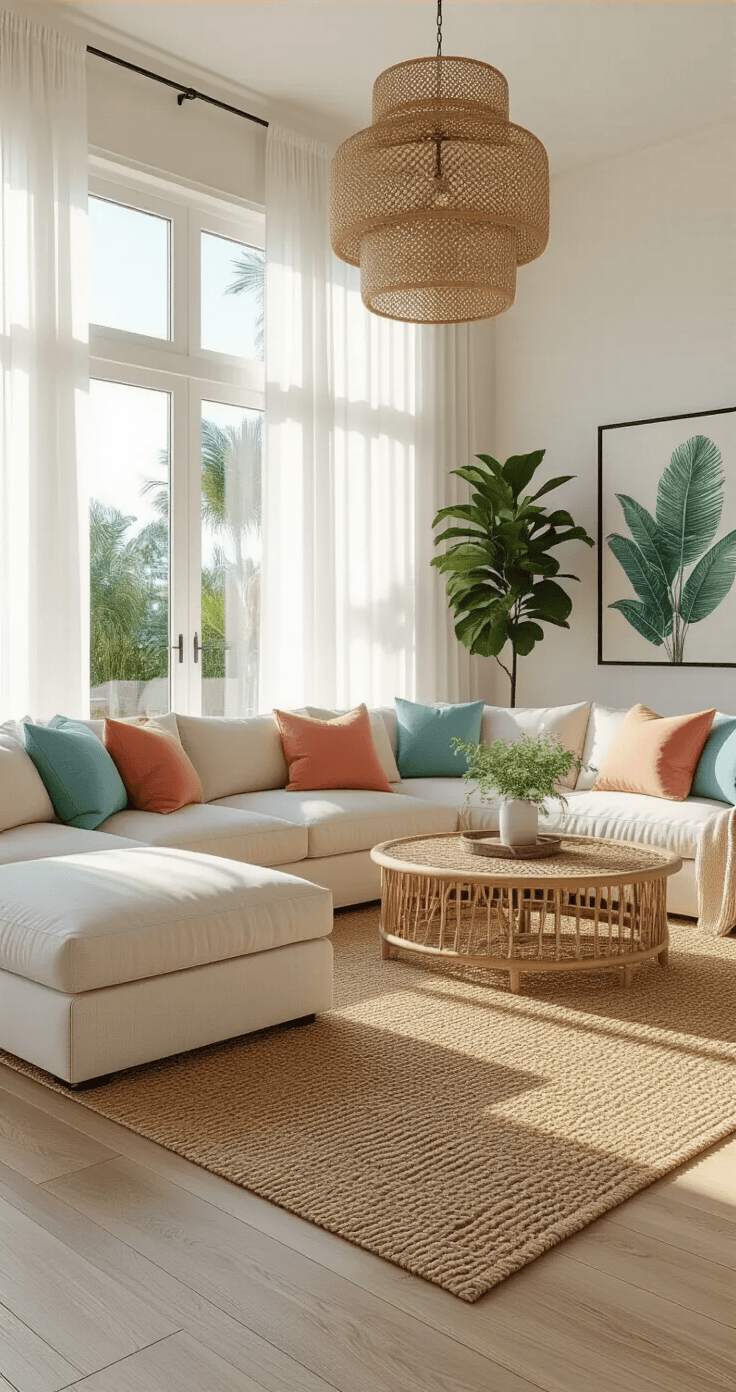
- Light-colored walls that reflect sunshine instead of absorbing it
- Furniture that doesn’t weigh down your space visually
- Window treatments that filter light without blocking it completely
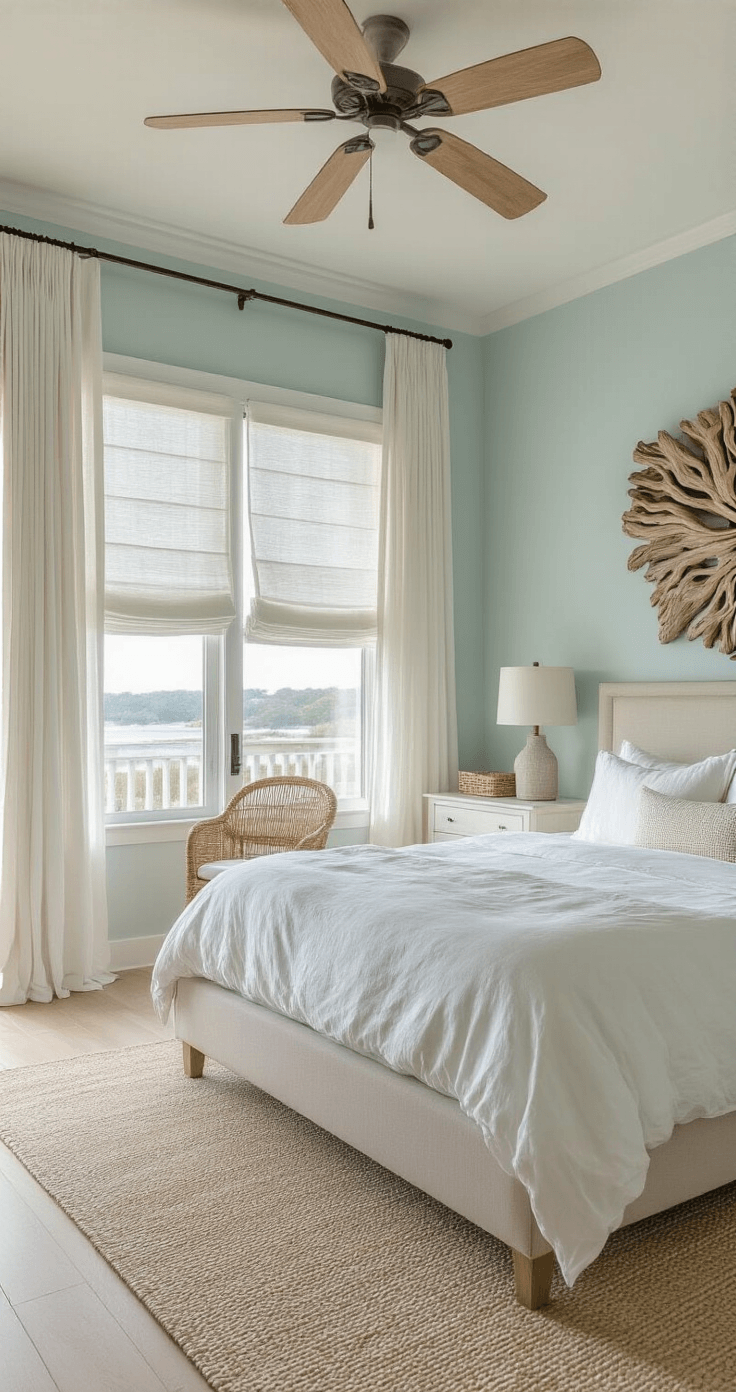
- Sheer white curtains that dance when the breeze hits them
- Open floor plans that let air flow through your home
The paint color alone changed everything for Sarah.
We went with a soft white with just a hint of warmth—not that stark hospital white that makes everything look cold.
Coastal Without the Clichés
I’m about to save you from making your home look like a tourist trap gift shop.
What to skip:
- Anchor everything (unless you actually own a boat)
- “Live, Laugh, Love” signs with seashells
- Fishing net wall hangings
- Excessive rope decor
- Anything that screams “I bought this at a beach souvenir shop”
What actually elevates your space:
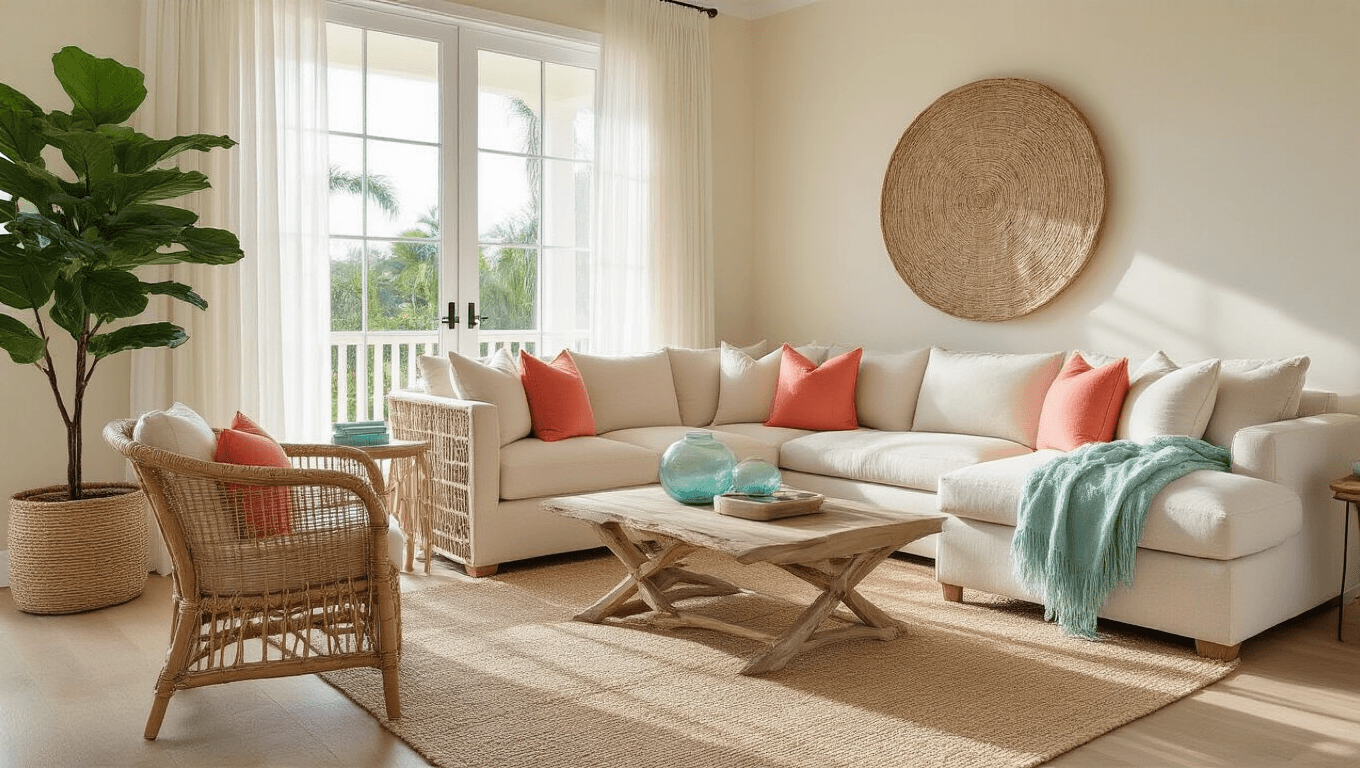
- Natural fiber rugs that add texture without screaming “beach”
- Rattan accent chairs that look expensive and feel coastal
- Driftwood pieces used sparingly as art
- Coral sculptures in unexpected places (real or faux, your choice)
- Sea glass colors in your accessories
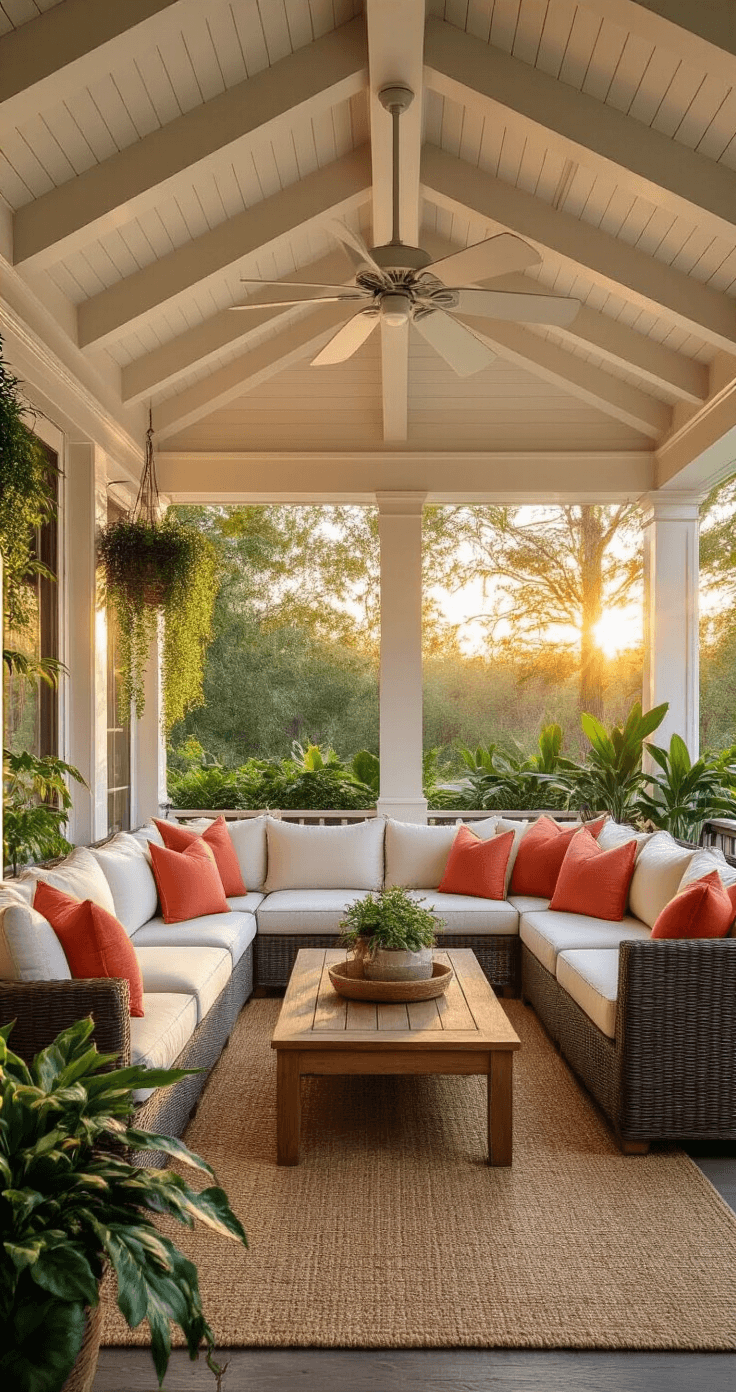
I learned this the hard way when I first decorated my screened porch.
I went full nautical and it looked like a TGI Friday’s had exploded in my backyard.
Now? A few carefully chosen pieces in ocean-inspired colors, natural materials, and suddenly people ask if I hired a designer.
The Color Palette That Never Fails
Forget what you think you know about Florida colors.
Pink flamingos everywhere? That’s Miami Vice, not timeless design.
Save this article
Enter your email and we'll send it straight to your inbox.
Colors that work year-round:
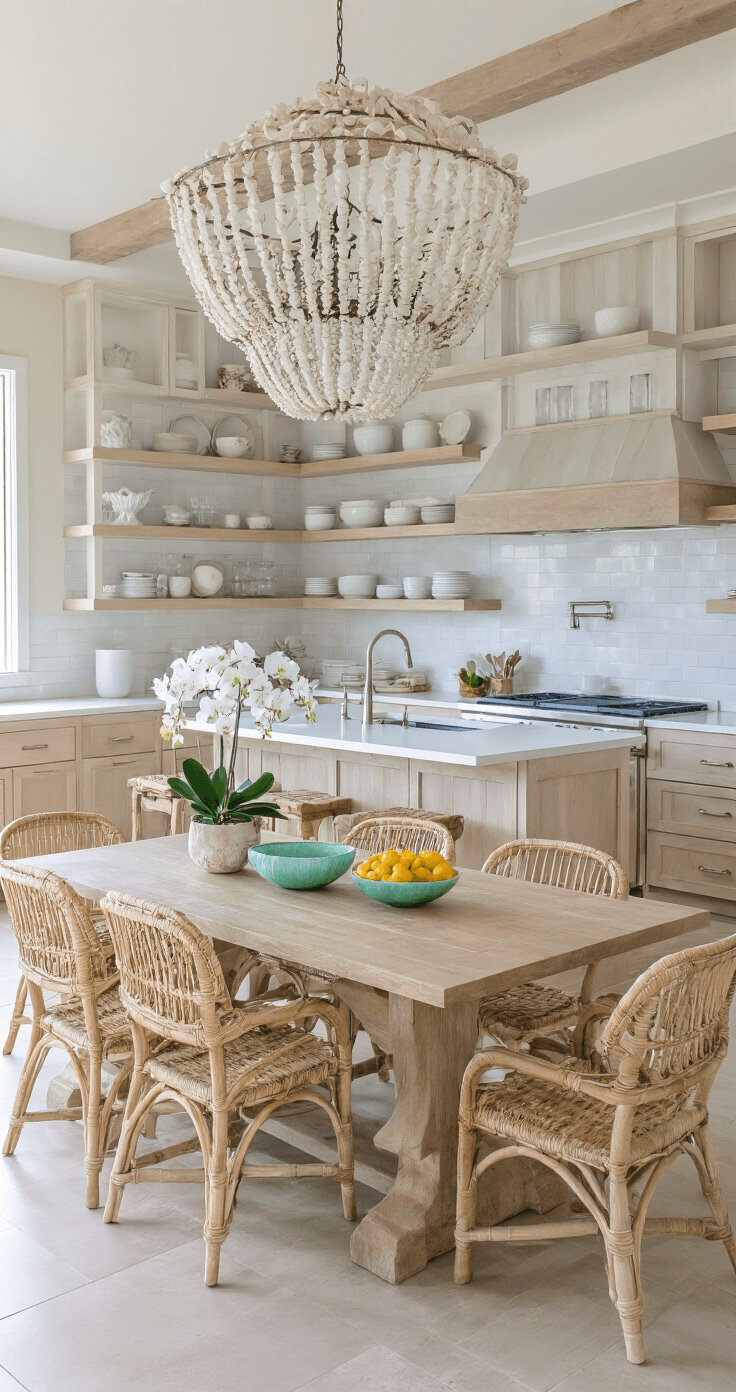
- Sandy beiges that ground everything
- Soft aquas that remind you of shallow water
- Crisp whites that never go out of style
- Coral accents (not neon, think muted and sophisticated)
- Palm green for life without the jungle vibe
- Sunset oranges in small doses
Here’s my rule: your wall color should be neutral, your furniture should be mostly neutral, and your personality comes through in accessories you can change.
I repaint my accent wall twice a year because I get bored.
Everything else stays put.
Tropical Elements Without Turning Your Home Into a Jungle
My neighbor went to HomeGoods once and bought every palm print they had.
Her living room looked like a Tommy Bahama store threw up.
The right way to add tropical touches:
- One statement piece of tropical wall art per room maximum
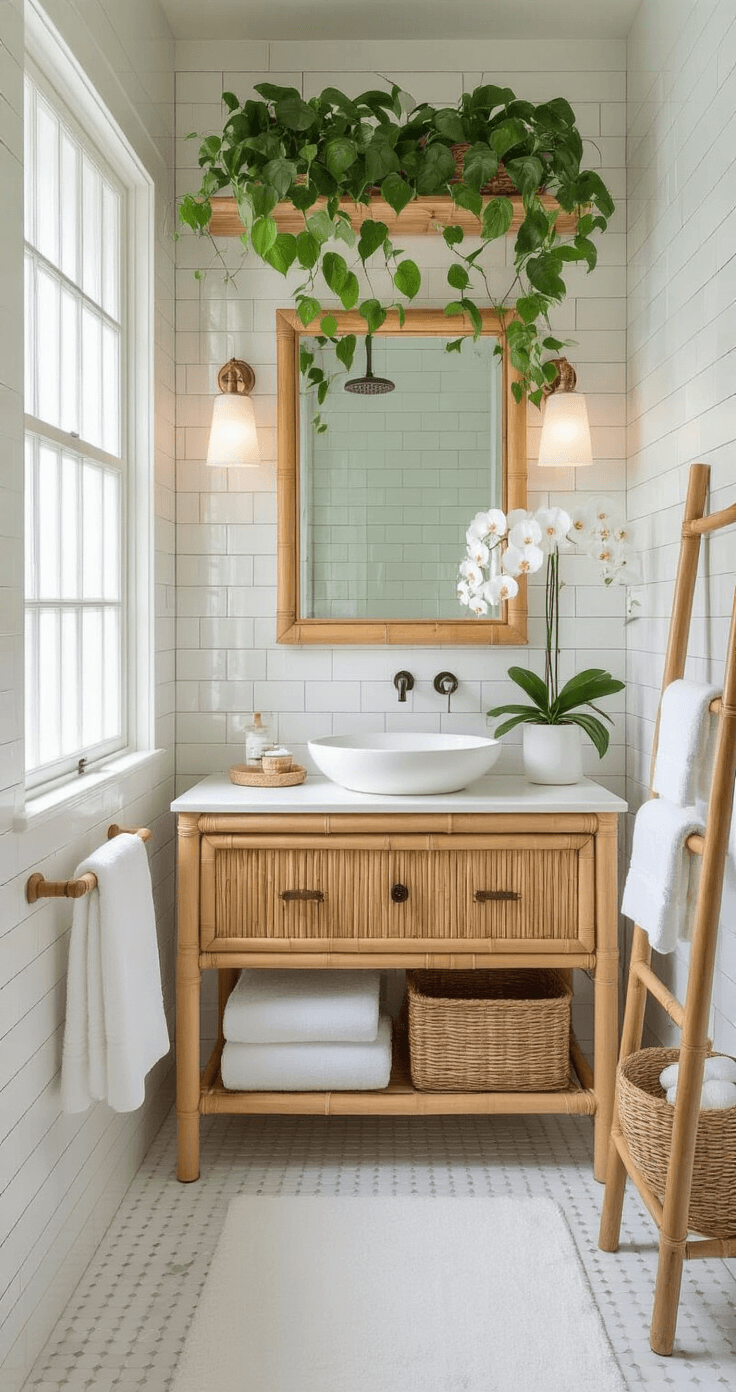
- Real plants instead of prints (they’re cheaper and actually improve air quality)
- Banana leaf patterns used as accent pillows, not upholstery
- Faux palm trees in corners where real plants struggle
- Botanical prints in black frames for sophistication
I keep a fiddle leaf fig in my living room and two bird of paradise plants on my lanai.
They’re alive, they’re dramatic, and they didn’t cost me $200 in patterned curtains I’ll hate in six months.
The key? Less is always more.
One gorgeous plant beats ten sad prints of plants.
Furniture That Survives Florida’s Mood Swings
Let’s talk about what Florida does to furniture.
The humidity laughs at your precious wood pieces.
The sun bleaches everything you put near windows.
The salt air corrodes metal faster than you’d believe.
Materials that actually survive:
- Teak for outdoor and indoor pieces (it’s practically indestructible)
- All-weather wicker that won’t fall apart in one season
- Aluminum frames with powder coating for lanai furniture
- Outdoor sectional sofas with UV-resistant fabric
- Concrete and stone pieces for side tables
Materials to avoid:
- Untreated wood (it’ll warp faster than you can say “humidity”)
- Cheap wicker that’s actually plastic painted brown
- Wrought iron without proper coating
- Fabric that isn’t specifically rated for outdoor or high-humidity use
I made the mistake
This post may contain affiliate links. Please see my disclosure policy for details.
Want to keep this one?
We'll email you the link so you can find it again later.