Why a Dark Bedroom
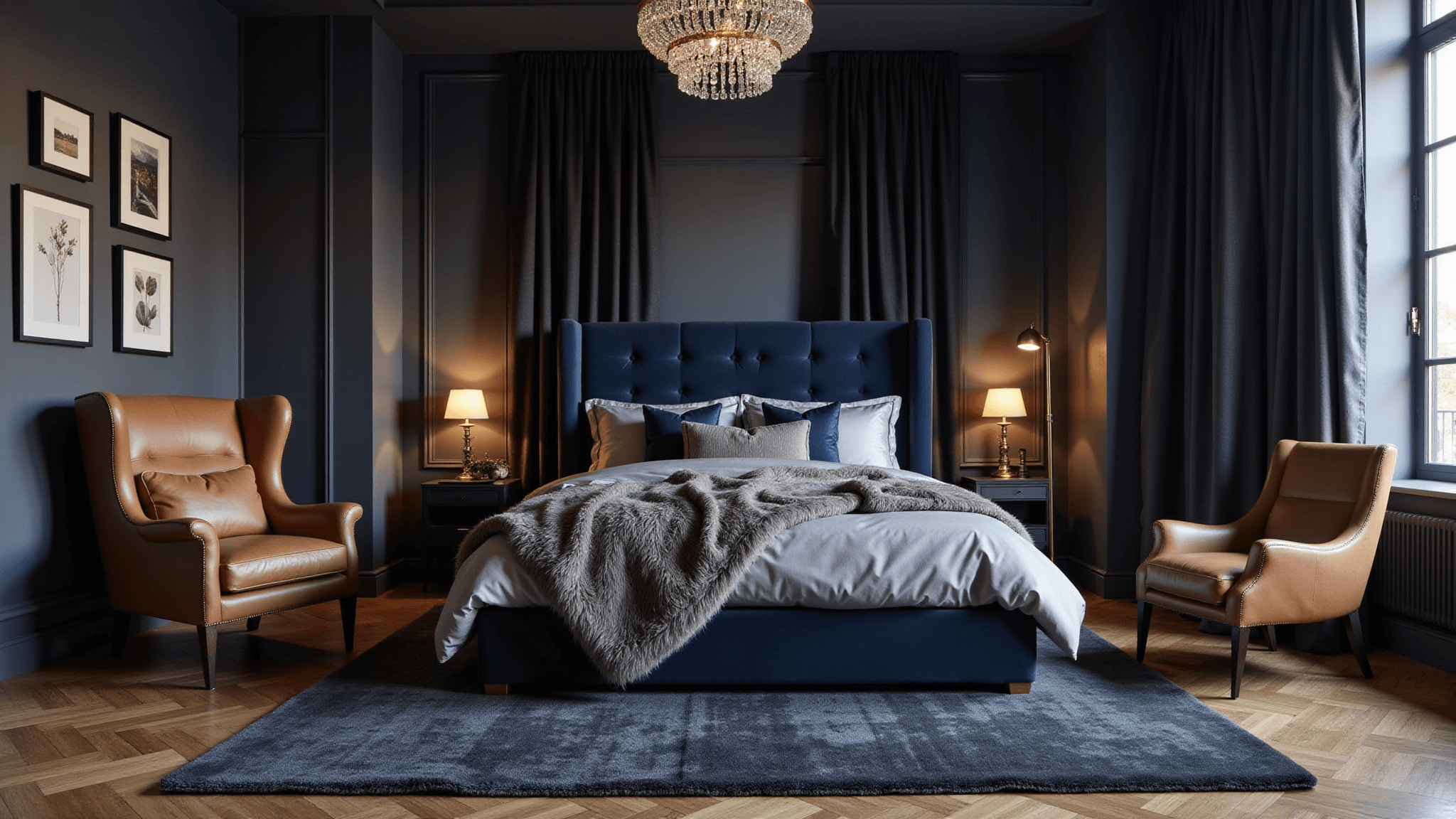
A dark bedroom uses deep wall colors and layered texture to make the room feel enclosed and restful. It works best where you can add warm lighting and some contrast, so the space reads as intimate rather than flat. The choices below keep a dark room from feeling like a cave.
- Creating an enclosed, restful feel
- Reducing visual noise
- Giving the room a grounded, calm look
Choosing a Dark Palette
Not all dark rooms are created equal. Your palette can include:
- Deep Charcoal: Sophisticated and neutral
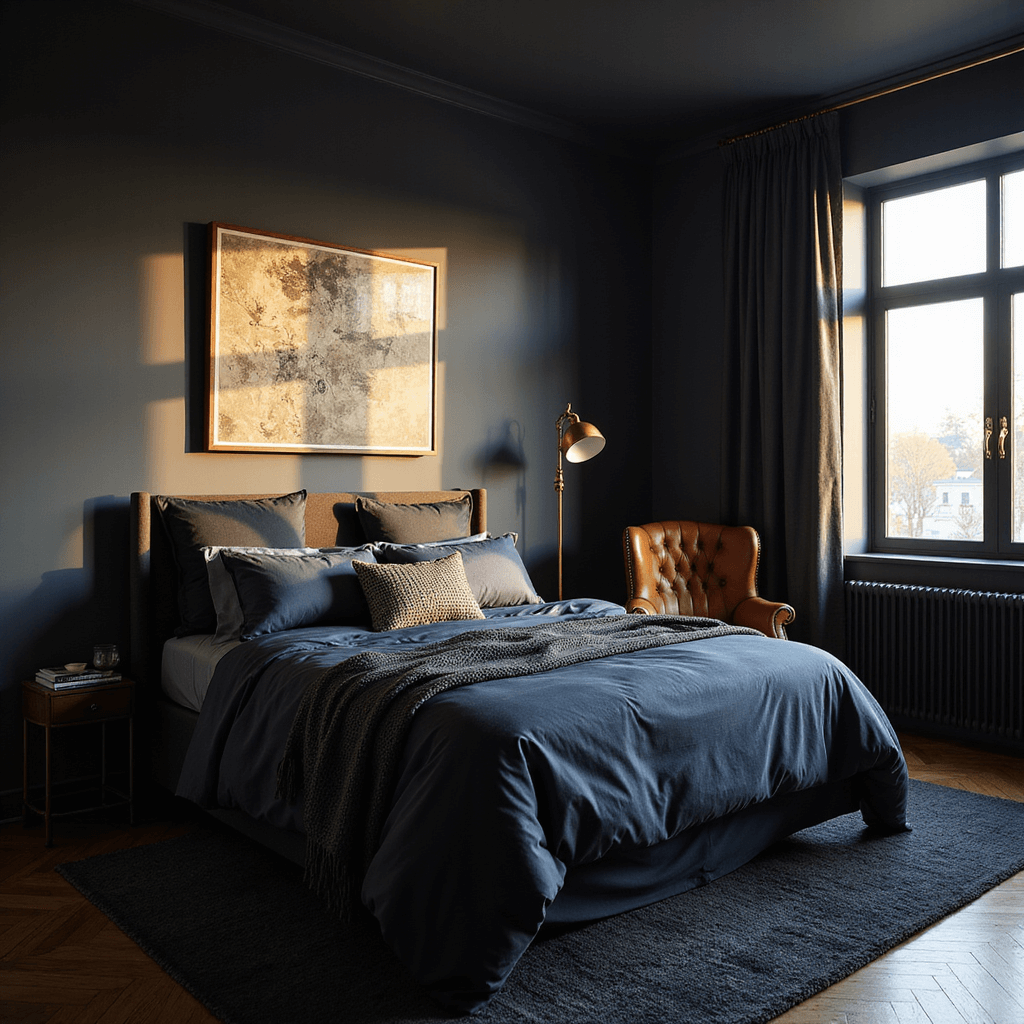
- Navy Blue: Calming and classic
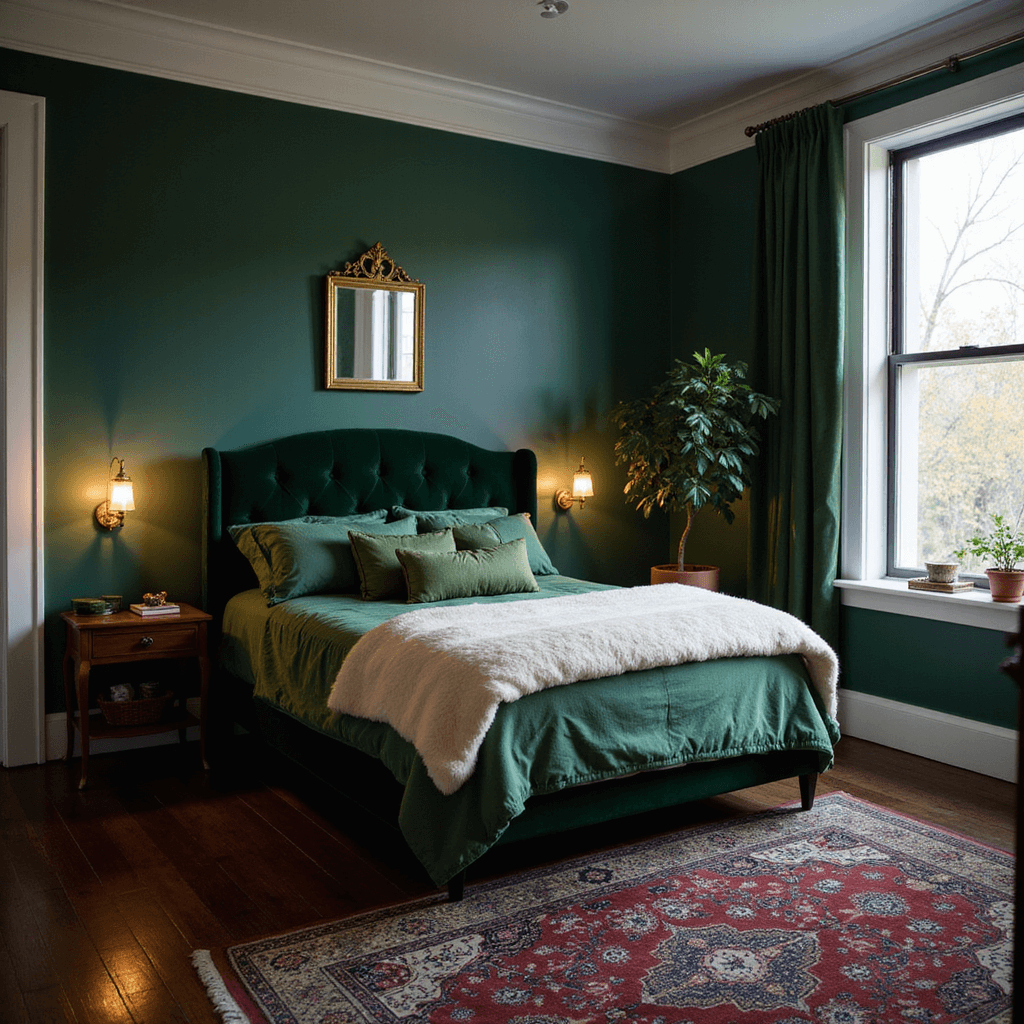
- Forest Green: Natural and grounding
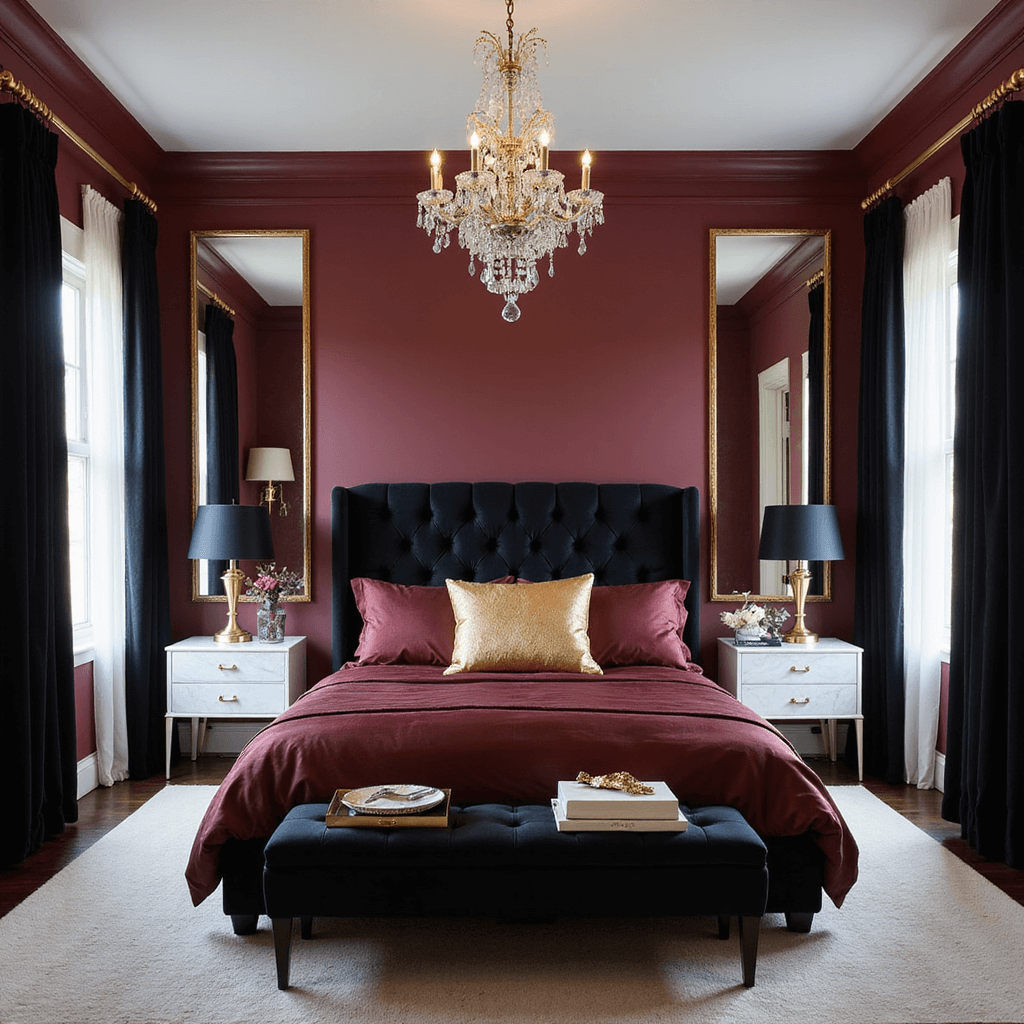
- Burgundy: Rich and dramatic
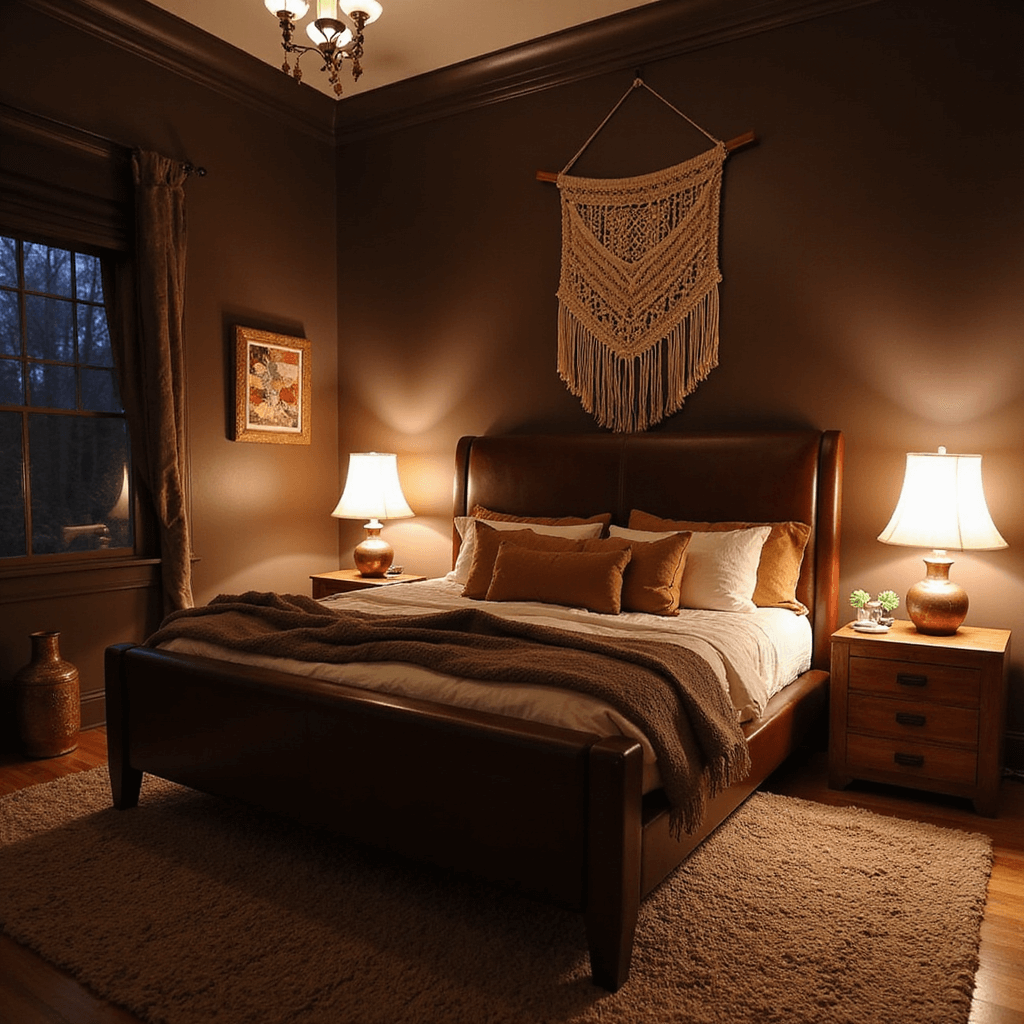
- Chocolate Brown: Warm and inviting
Texture
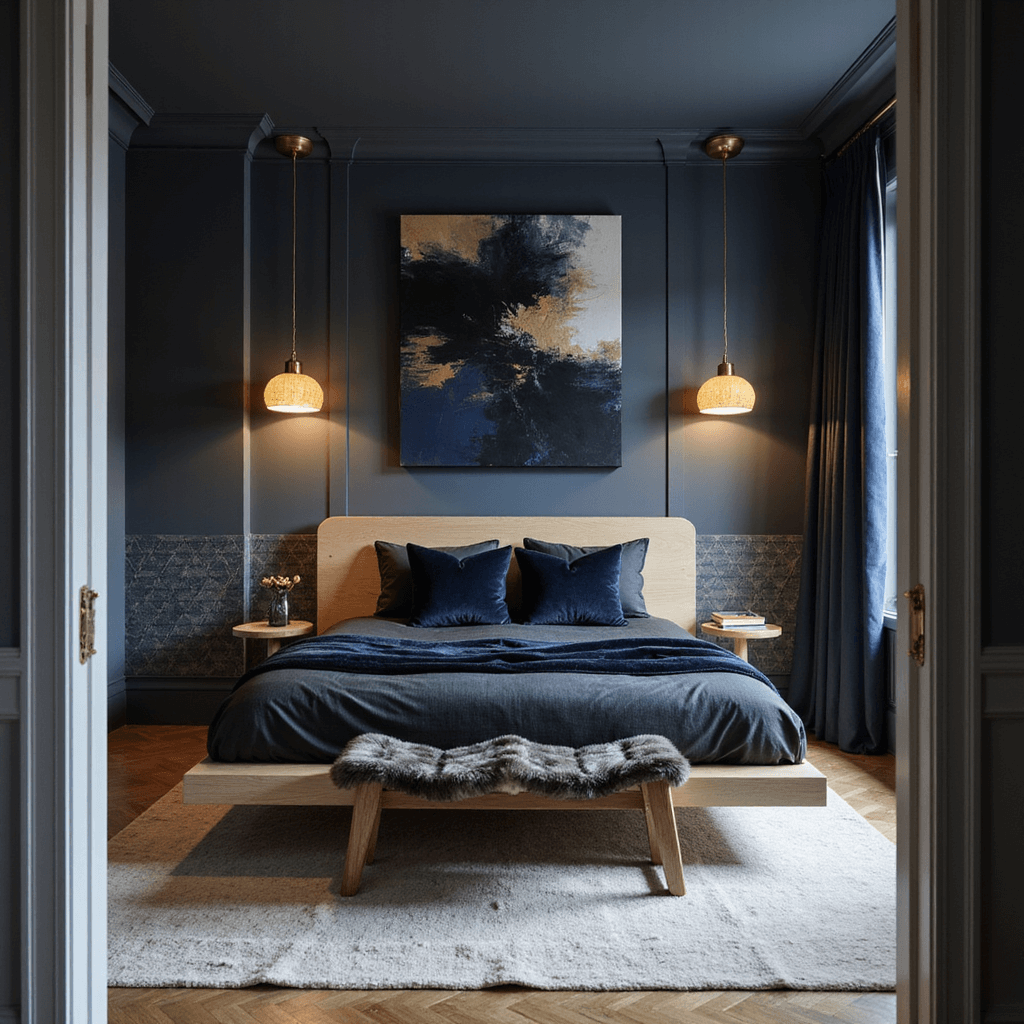
Texture prevents dark rooms from feeling flat. Mix and match:
- Velvet throw pillows
- Faux fur blankets
- Leather accent chairs
- Chunky knit throws
- Silk or satin bedding
Lighting
Lighting is what keeps a dark bedroom usable. Some pointers:
- Use layered lighting (ambient, task, accent)
- Add metallic lamps for reflection
- Install dimmer switches
- Use warm-toned LED bulbs
- Incorporate candles for soft glow
Save this article
Enter your email and we'll send it straight to your inbox.
On a Budget
Want the look without breaking the bank?
- Paint an accent wall
- Thrift velvet pillows and throws
- Use affordable dark wallpaper
- Add metallic picture frames
- Invest in strategic lighting
Common Mistakes to Avoid
Dark bedroom pitfalls include:
- Overwhelming darkness (always add contrast)
- Ignoring lighting
- Skipping texture layers
- Forgetting personal touches
Styling Tips
- Balance is key
- Use 60-30-10 color rule (dominant, secondary, accent colors)
- Add greenery for life
- Include personal art pieces
- Mix modern and vintage elements
Maintenance and Care
Keep your dark bedroom looking fresh:
- Regular dusting
- Careful fabric cleaning
- Rotate accessories seasonally
- Update lighting periodically
Where to Start
A dark bedroom suits people who want the room to feel calm and enclosed rather than bright and open.
Tip: Start with one accent wall and a few textured pieces before committing the whole room. That lets you check how the color reads in your light before painting everything.
This post may contain affiliate links. Please see my disclosure policy for details.
Want to keep this one?
We'll email you the link so you can find it again later.