

How I Finally Figured Out Easter Table Decorating (Without Losing My Mind)
Contents
Easter table decorating used to stress me out every single year until I cracked the code.
You know that feeling when you want your table to look magazine-worthy but you’re staring at a pile of random pastel napkins wondering where to even start?
Yeah, I’ve been there.
The good news is that creating a stunning Easter table doesn’t require a design degree or emptying your bank account.
I’m going to walk you through exactly how I approach it now, and trust me, it’s way simpler than you think.
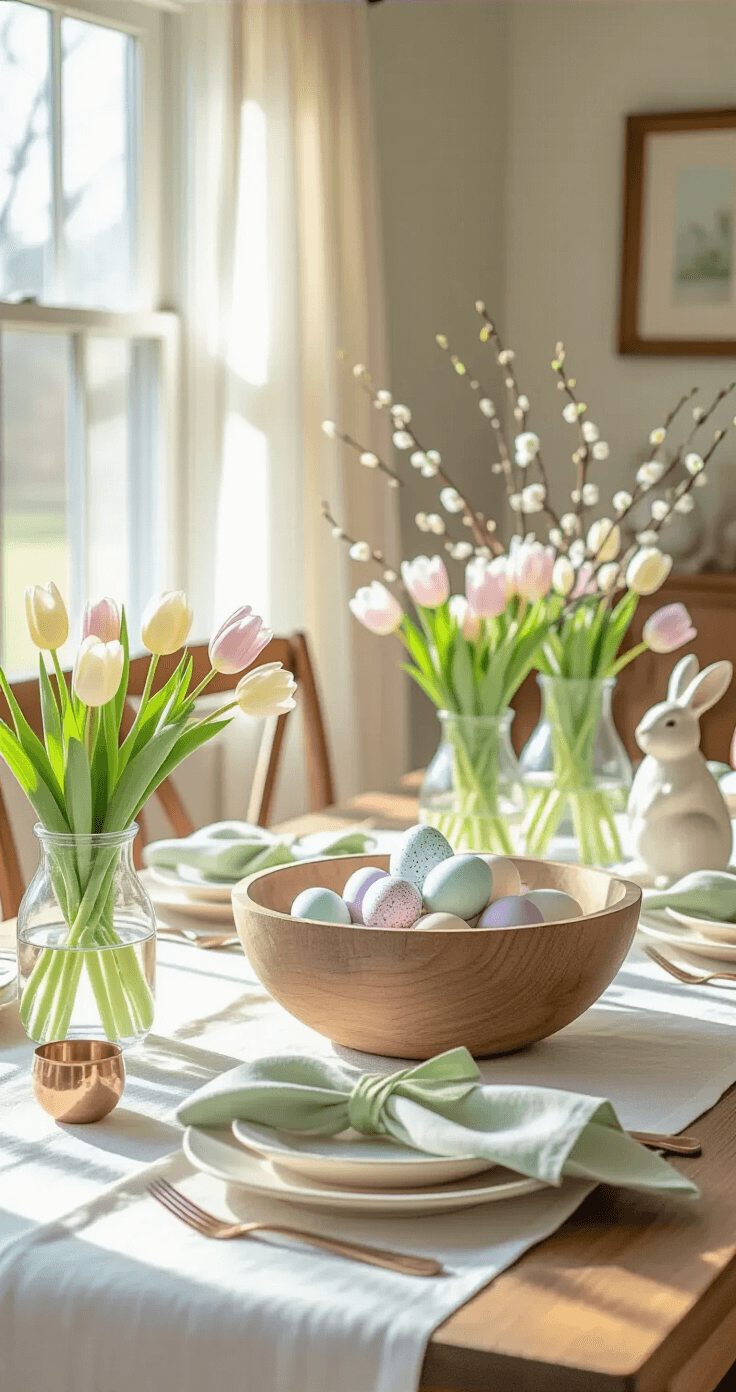
Start with Your Base (Because Wings Don’t Work Without a Foundation)
Here’s what nobody tells you about Easter tables: the linens matter more than anything else.
I learned this the hard way after spending a fortune on decorations that looked ridiculous on my sad, bare table.
Pick your color scheme first.
I’m talking about choosing 2-3 colors max and sticking to them like your life depends on it.
Popular combos that actually work:
- Soft pastels (butter yellow, lavender, mint green)
- Classic spring (white, sage green, blush pink)
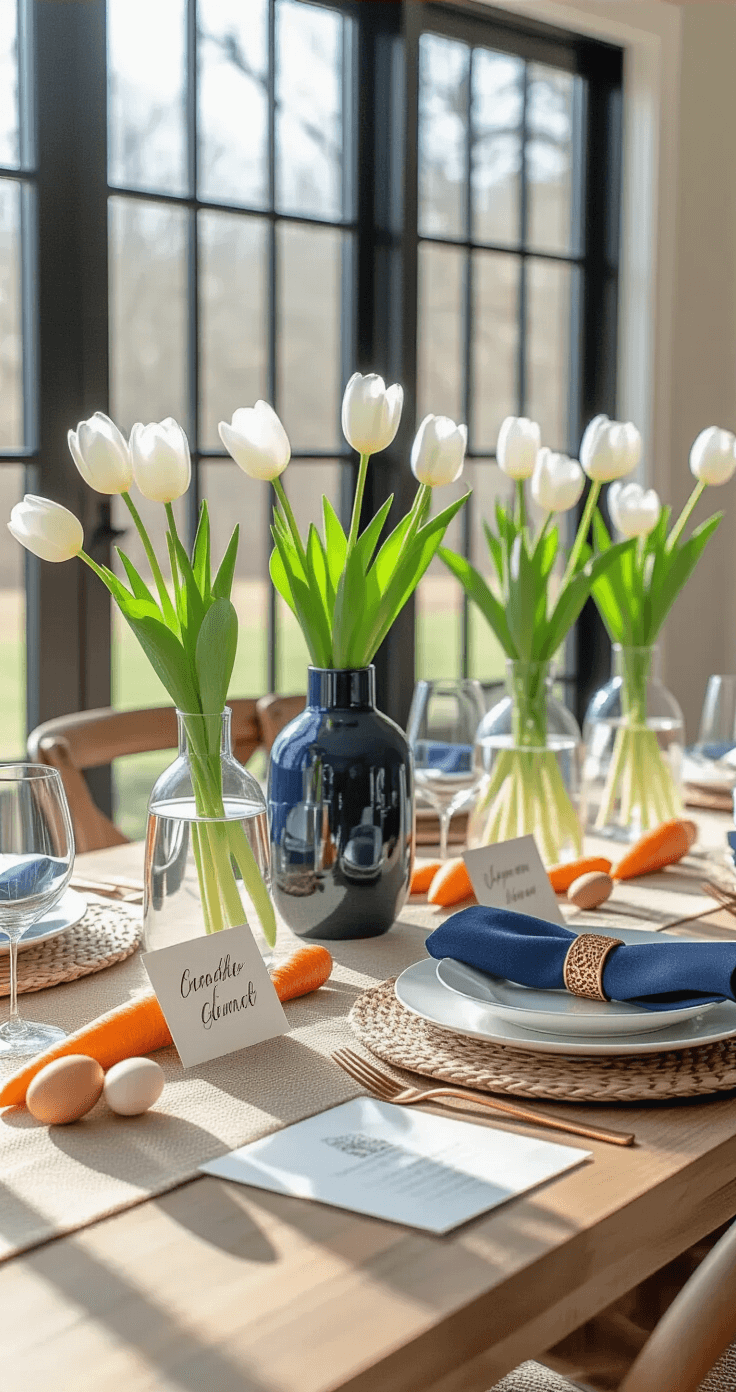
- Bold and modern (burnt orange, navy blue, crisp white)
- Traditional Easter (robin’s egg blue, sunny yellow, pale purple)
Once you’ve got your colors, grab a tablecloth or runner that anchors everything.
I prefer linen because it photographs beautifully and doesn’t look cheap, but a quality cotton works too.
Pro tip: A simple white or neutral base lets your colorful accents shine without competing for attention.

Napkins Aren’t Just for Spills (They’re Design Gold)
I used to think napkins were purely functional.
Wrong.
They’re actually mini canvases that pull your whole look together.
Here’s my napkin strategy:
- Linen napkins for upscale brunches
- Cotton prints for casual family gatherings
- Quality paper napkins for zero-stress cleanup (no shame in this game)
The real magic happens with napkin rings.
These little guys instantly elevate your table from “meh” to “wow, you really did that.”
Options I’ve tried and loved:
- Fresh rosemary sprigs tied with twine (smells incredible)
- Bunny-shaped rings (adorable without being childish)
- Metallic gold or copper (surprisingly versatile)
- DIY ribbon-wrapped cardboard rings (dirt cheap and customizable)
Last Easter, I folded my napkins into bunny ears.
Took me three YouTube tutorials to figure it out, but the kids lost their minds with excitement.
Worth every awkward fold.
The Centerpiece: Where Most People Overthink Everything
Listen carefully: your centerpiece doesn’t need to be complicated.
I’ve seen drop-dead gorgeous tables with nothing but a cluster of glass vases filled with grocery store tulips.
The trick is intentionality, not complexity.
My go-to centerpiece approaches:
Fresh Flowers (The Obvious Winner)
Tulips are the Easter MVP.
Period.
Buy them a few days early so they open by Sunday.
I usually grab 20-30 stems in a single color and spread them across 3-5 vessels down the table’s center.
Other spring blooms that work beautifully:
- Daffodils (sunshine in flower form)
- Hyacinths (the scent alone is worth it)
- Ranunculus (fancy-looking but affordable)
- Peonies if you’re feeling fancy
Blooming Bulbs (Living Centerpieces)
These are my secret weapon for tables that stay decorated for days.
Grab potted daffodils, crocuses, or hyacinths from literally any grocery store.
Pop them into wicker baskets lined with moss or burlap.
Done.
They keep growing throughout your celebration, which somehow feels very on-brand for Easter’s whole renewal theme.
The Dough Bowl Method (For The Styled-But-Not-Trying Look)
This is what I do when I want maximum impact with minimal effort.
Find a long wooden dough bowl or tray.
Fill it with:
- Preserved moss (buy a bag once, use it for years)
- Faux flowers in your color palette
- Vintage ceramic bunnies or lambs
- Scattered decorative eggs
The whole thing takes maybe 15 minutes to arrange and looks like you hired someone.
Key rule: Vary your heights or everything looks flat and boring.

Layering Your Place Settings Like a Reasonable Human
Here’s where people get intimidated for no good reason.
Start with a white dinner plate.
Seriously, that’s it.
Then add a salad plate or bowl in your accent color on top.
My typical layering:
- Charger plate (optional but makes everything look fancier)
- White dinner plate
- Colored salad plate or patterned bowl
- Folded napkin with a sprig of something green
You don’t need matching Easter-themed dishes unless you want them.
The color coordination does the heavy lifting.
I mixed my everyday white plates
Book Your Stay in Sarasota
Find the perfect accommodation.
This post may contain affiliate links. Please see my disclosure policy for details.


