An English rose garden is a style, not a size. It is built on a few repeatable moves: shrub and climbing roses in soft, faded shades, planted in mixed borders with lavender, foxgloves, and catmint, and given structure with gravel paths, a bench, and maybe an arch or two. You do not need an estate or a gardener to get there, a few well-chosen roses in the right companions do most of the work. Below are 27 ideas covering borders, paths, climbers, containers, and seating, each with the actual plants and pieces so you can copy a look or just borrow the planting combination. Most are hardy and repeat-flowering, so the garden earns its keep from late spring into autumn rather than blooming once and done.
1. David Austin Dream Blooms
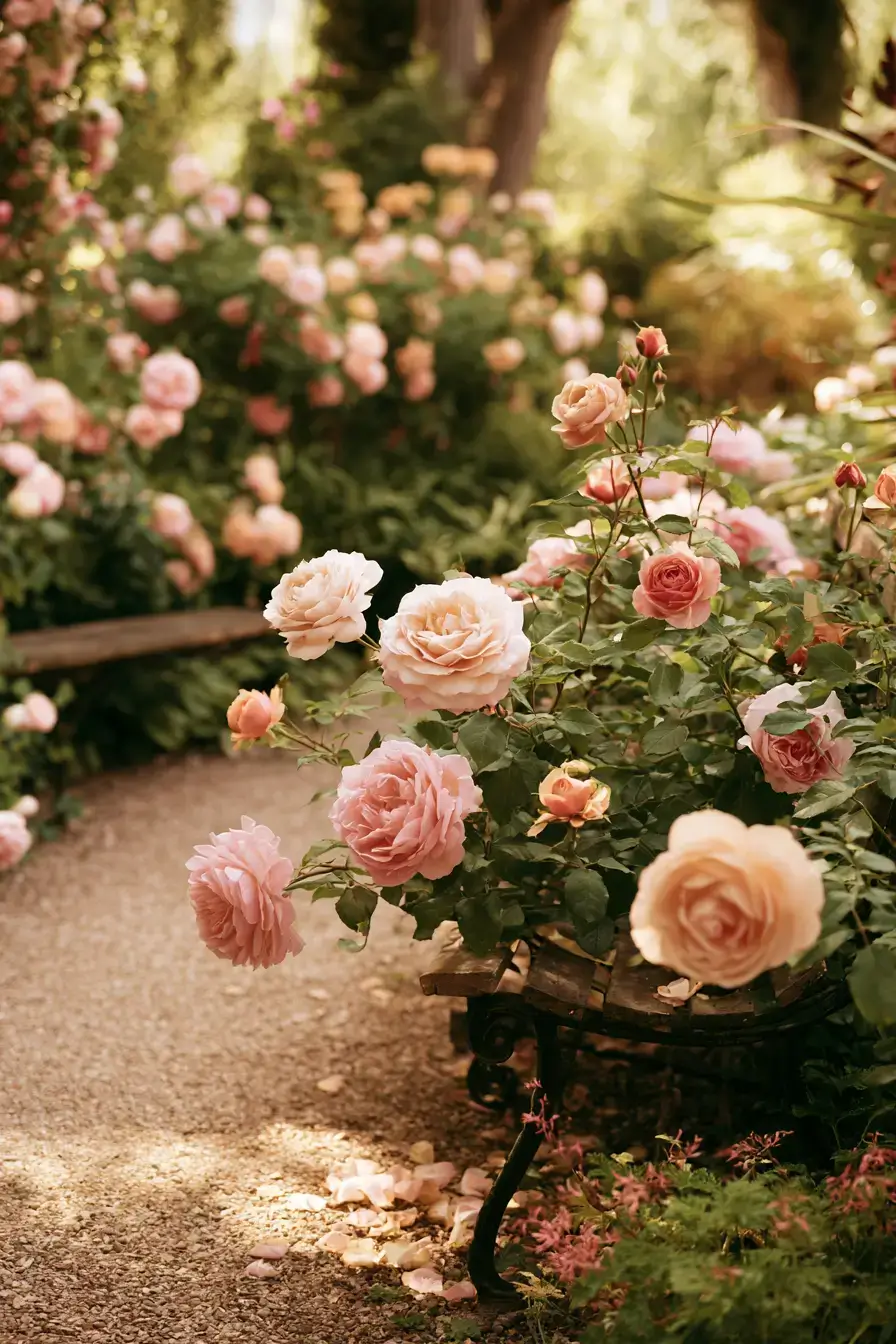
David Austin roses are the easy entry point to this style because they combine old-rose shape with modern repeat flowering. Blush, cream, and peach varieties like Desdemona or The Generous Gardener give that soft, faded look without the once-only bloom of true heirlooms. Plant them where you will actually walk past them, not at the far end of the plot, so the scent earns its place. A curved gravel path between the beds makes the roses easier to tend and admire, and keeps your shoes out of the border after rain. Deadhead spent blooms to keep the flush going into autumn.
2. Romantic Rose Border Beauty
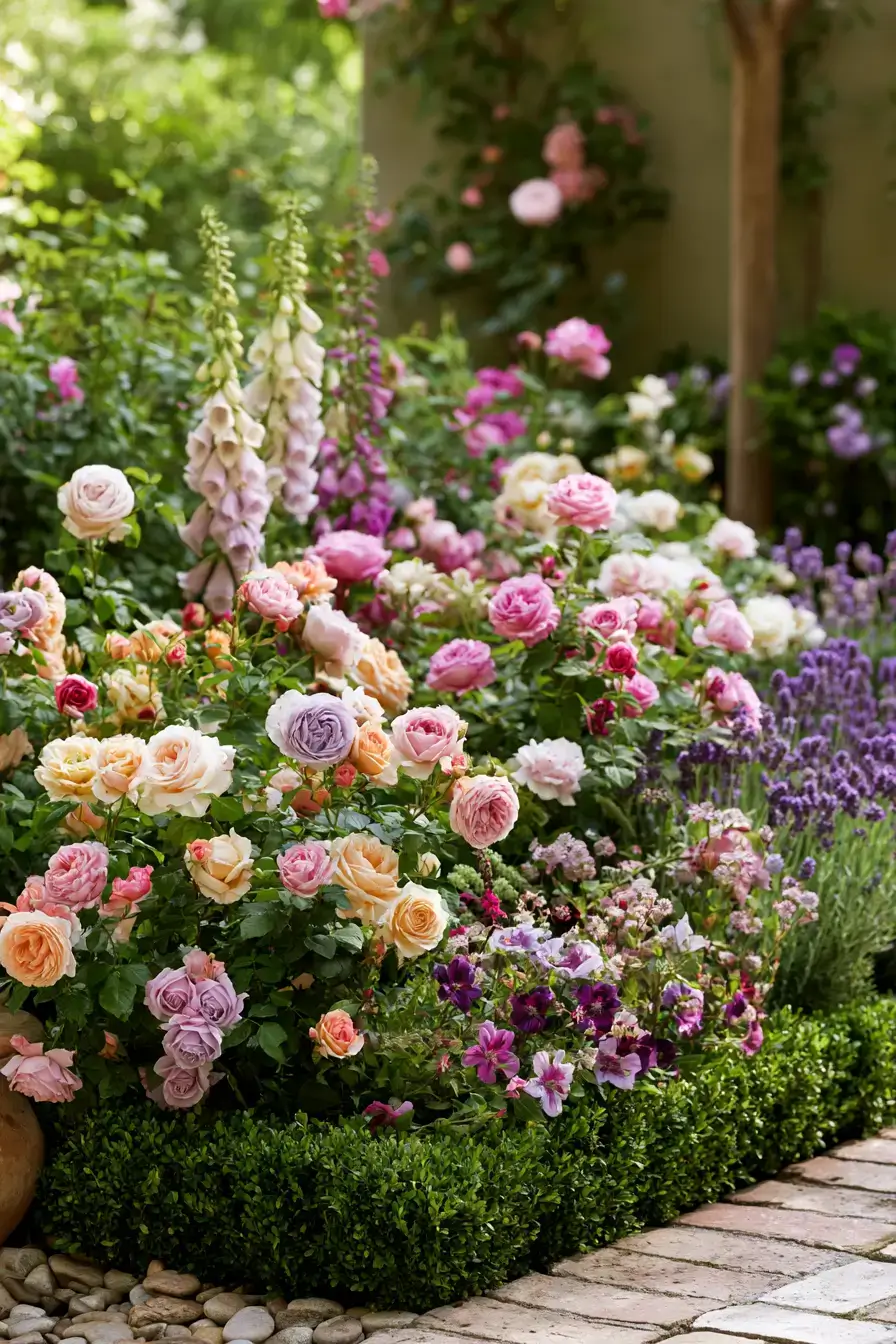
Layered borders are what stop a rose garden looking like a row of lollipops. Put the roses at the back or middle, then fill the front with foxgloves, lavender, and airy foliage so the bed reads as one planting rather than separate clumps. Repeating the same two or three colours across the whole border is what makes it feel calm and deliberate. Edge with stone or low box to keep the line crisp, but remember box is prone to blight and caterpillar now, so a low lavender edge is often the safer bet.
3. Cottage Rose Path Charm
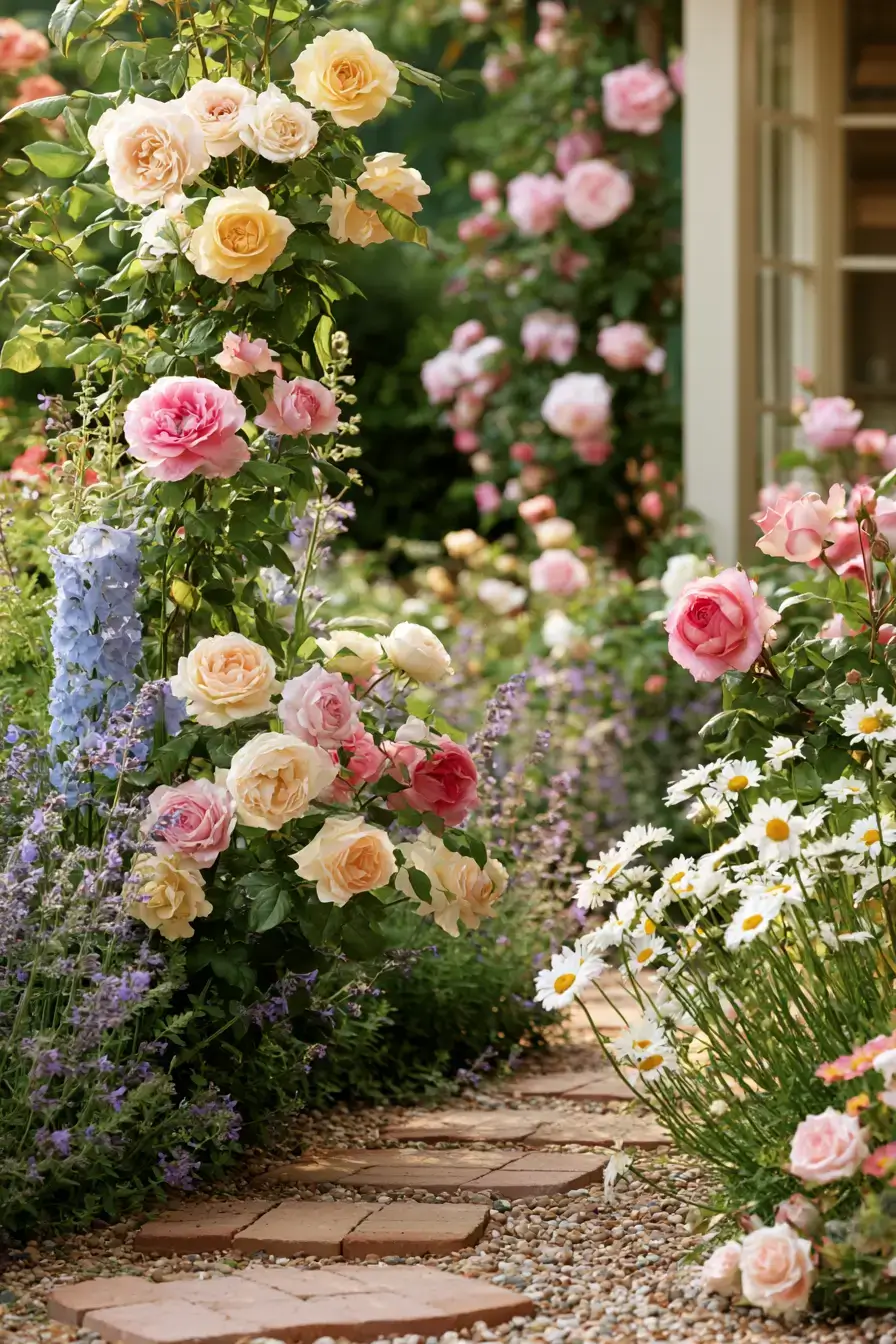
A cottage path works best when the roses are trained to spill just slightly over the edge, not swamp it. Brick, gravel, or stepping stones all suit; gravel is cheapest and easiest to lay, brick reads smarter but needs a proper edge to stop it migrating. Add delphiniums, catmint, and daisies for height and movement, but keep them off the walking line. The path only feels welcoming if you are not dodging plants with every step, so train climbers up a support rather than letting them flop across the stones.
4. Climbing Rose Arch Magic
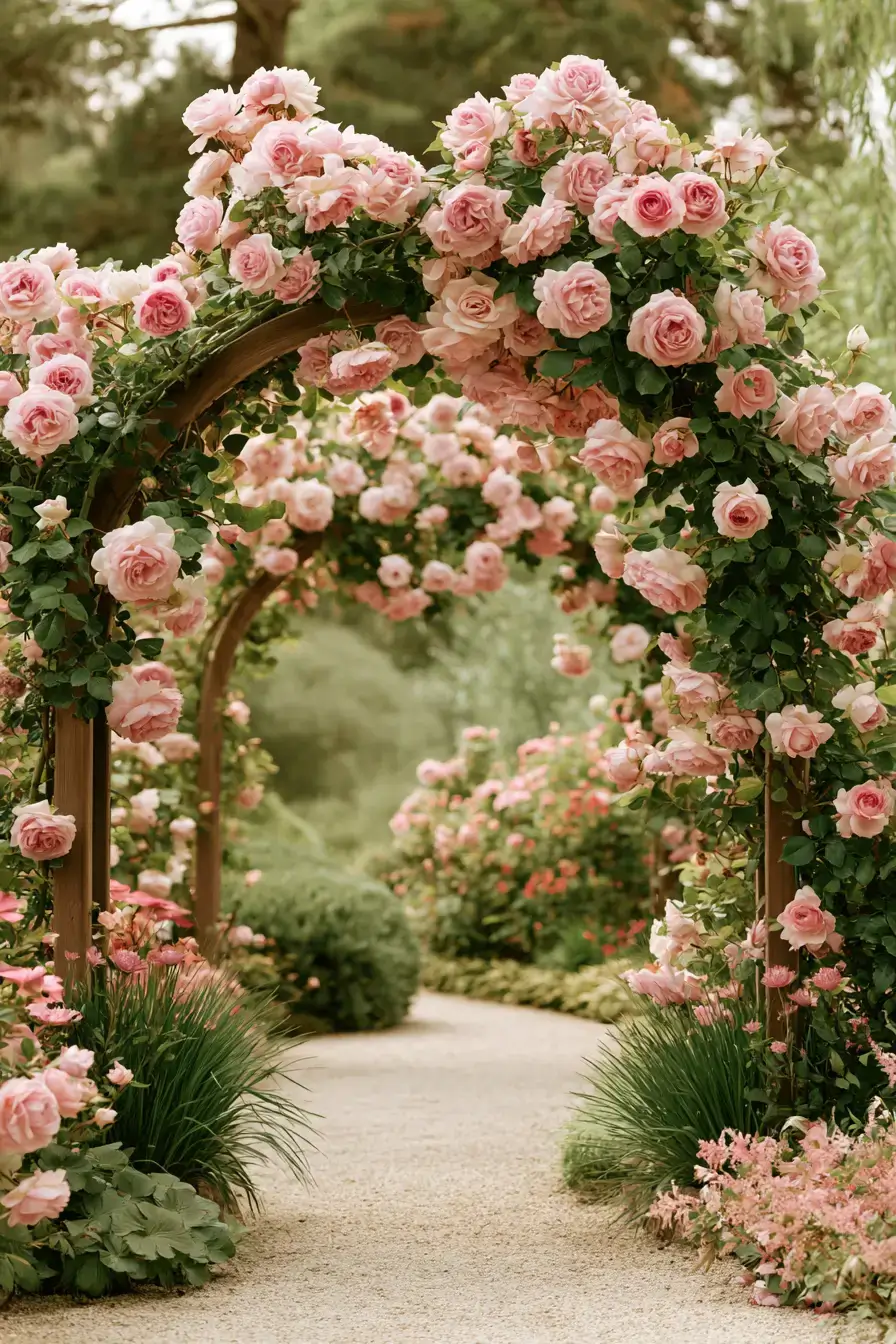
A climbing rose over an arch is the signature English-garden moment, but the arch has to be sturdy enough for the plant at full size. David Austin and Jackson & Perkins both sell fragrant climbers; fix horizontal wires or a trellis on the arch first so you can tie the stems in flat, which flowers better than a tangle. Metal arches outlast painted wood outdoors by years, so spend on the frame. Position it where you will pass under it, the scent at head height is the whole point.
5. Heirloom Rose Corner Glow
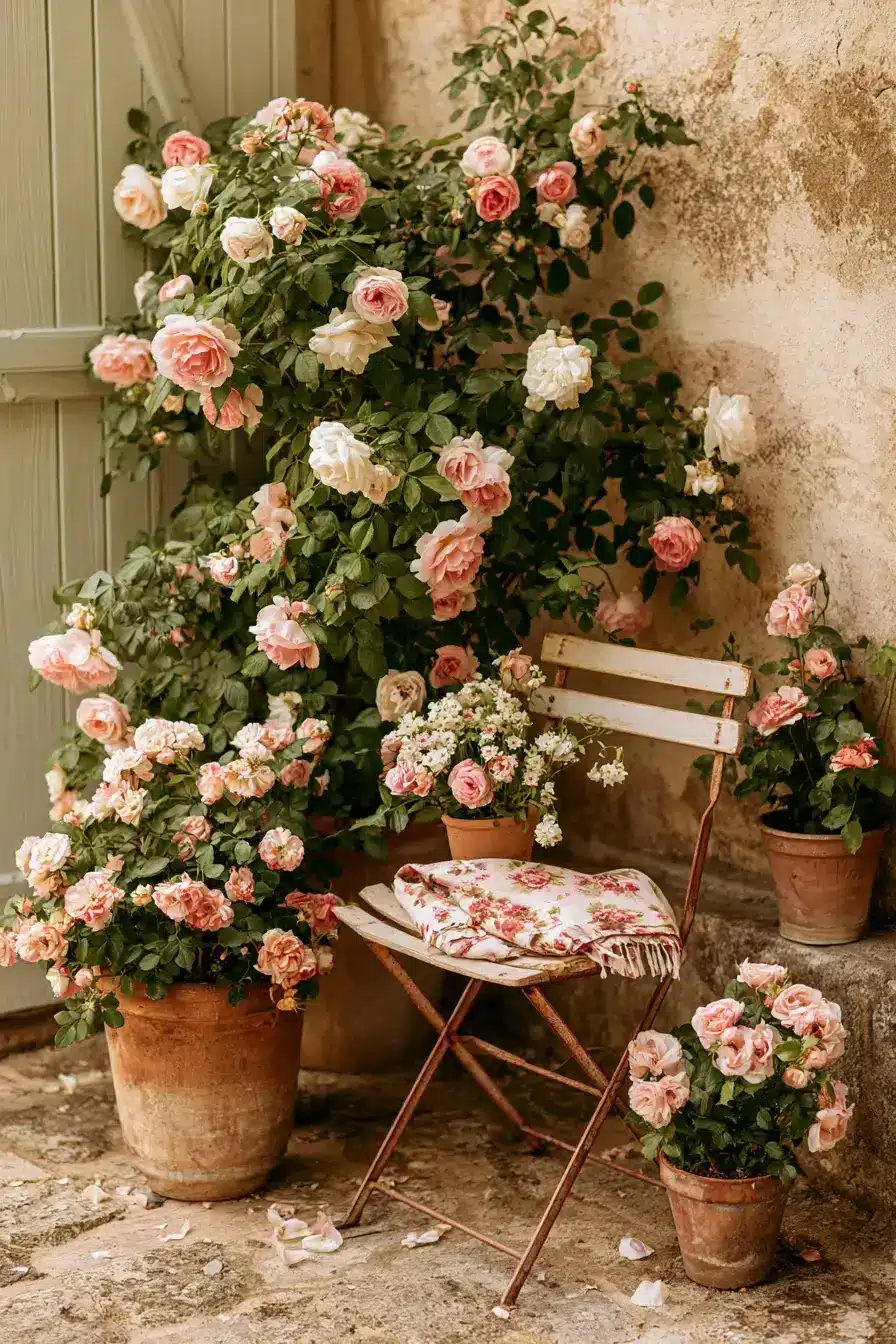
An heirloom corner is about restraint: a few vintage-style roses in blush, white, and faded pink, set against terracotta, aged stone, and a single bistro chair. The look comes from the pots and the patina, not from quantity, so two good containers beat six mismatched ones. A small chair or stool turns it from a display into a place to sit, which is what makes it feel personal rather than staged. Keep the roses to one or two tones or the corner gets busy fast.
6. Rose Garden Seating Bliss
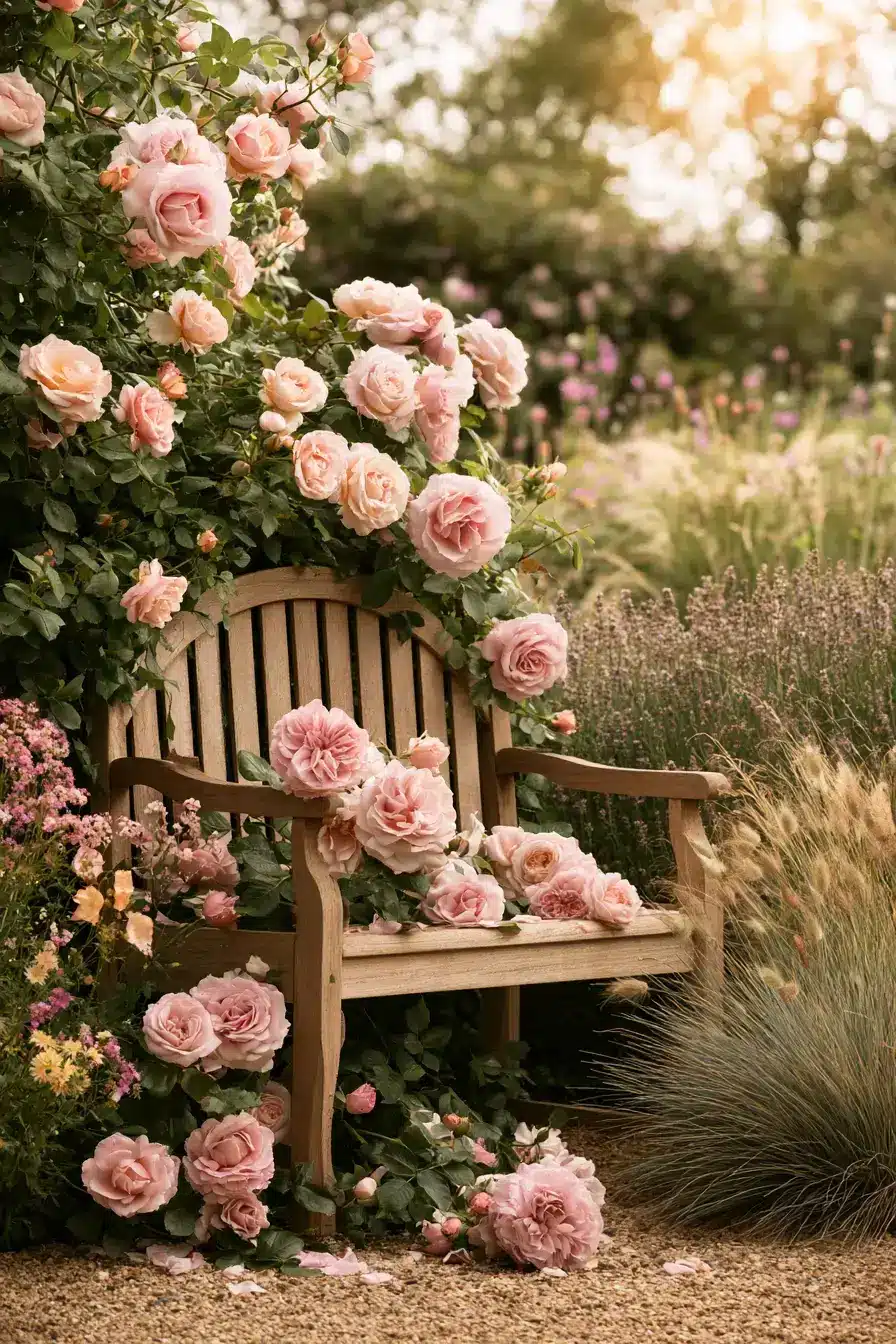
Seating only works in a rose garden if it sits where the scent actually is, tucked among the blooms rather than at the lawn edge. A Lutyens-style teak bench is the classic English choice and weathers to a silver grey; a painted seat suits a more cottage feel. Put it near roses, lavender, and a soft grass like Stipa so the sound and smell close in around you. Check sightlines before fixing it in place, you want to be looking at flowers, not the bins.
7. Pastel Rose Bed Beauty
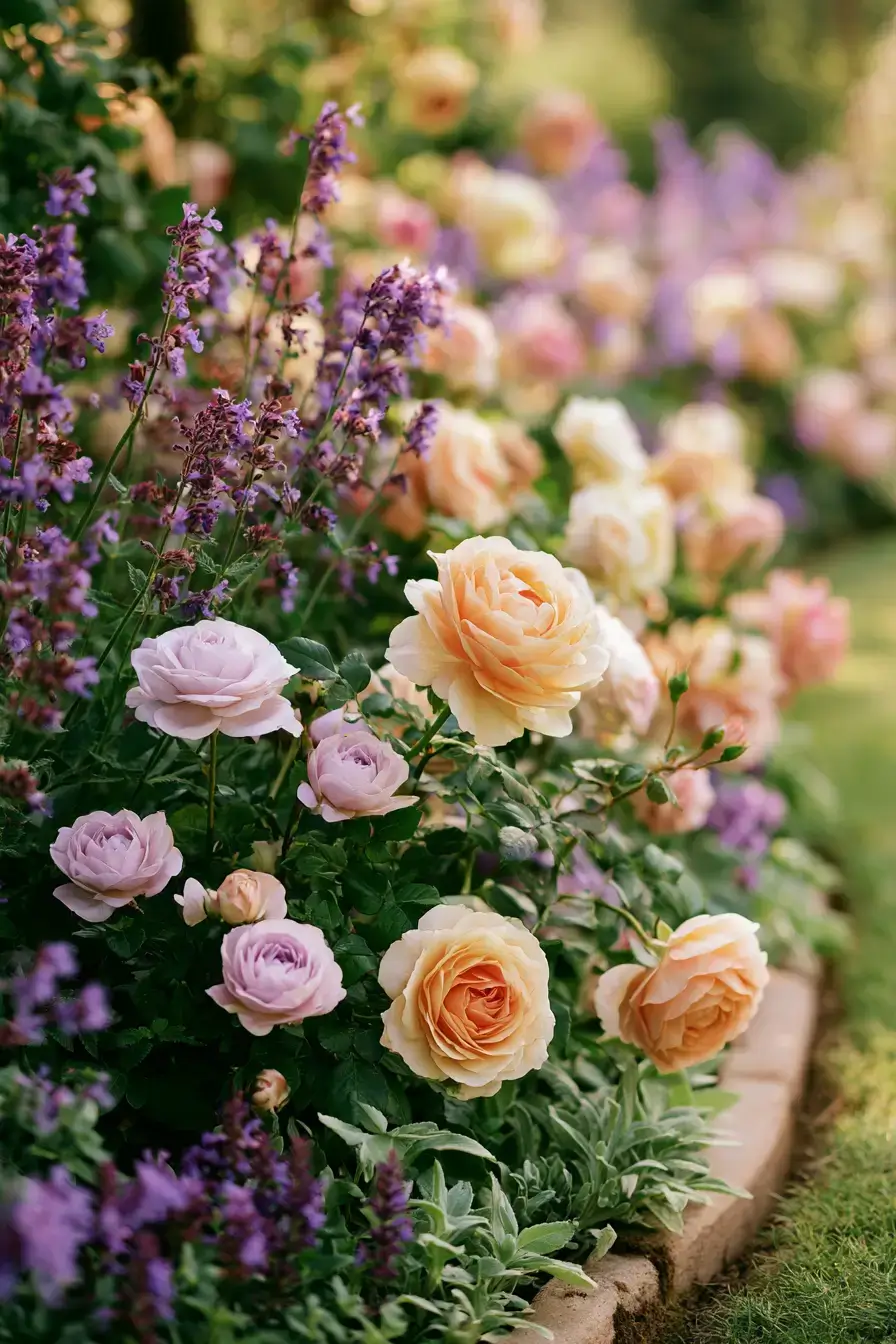
Pastel beds rely on tone management more than plant choice. Peach, blush, buttercream, and pale lavender all sit well together, but the bed goes muddy if you throw in hot pink or orange. David Austin and Heirloom both do good soft shades; pair them with airy salvia or nepeta so the colour does not read as a solid block. Deadhead religiously in the first flush or the pastels brown off and the whole bed looks tired by midsummer.
8. Gertrude Jekyll Rose Charm
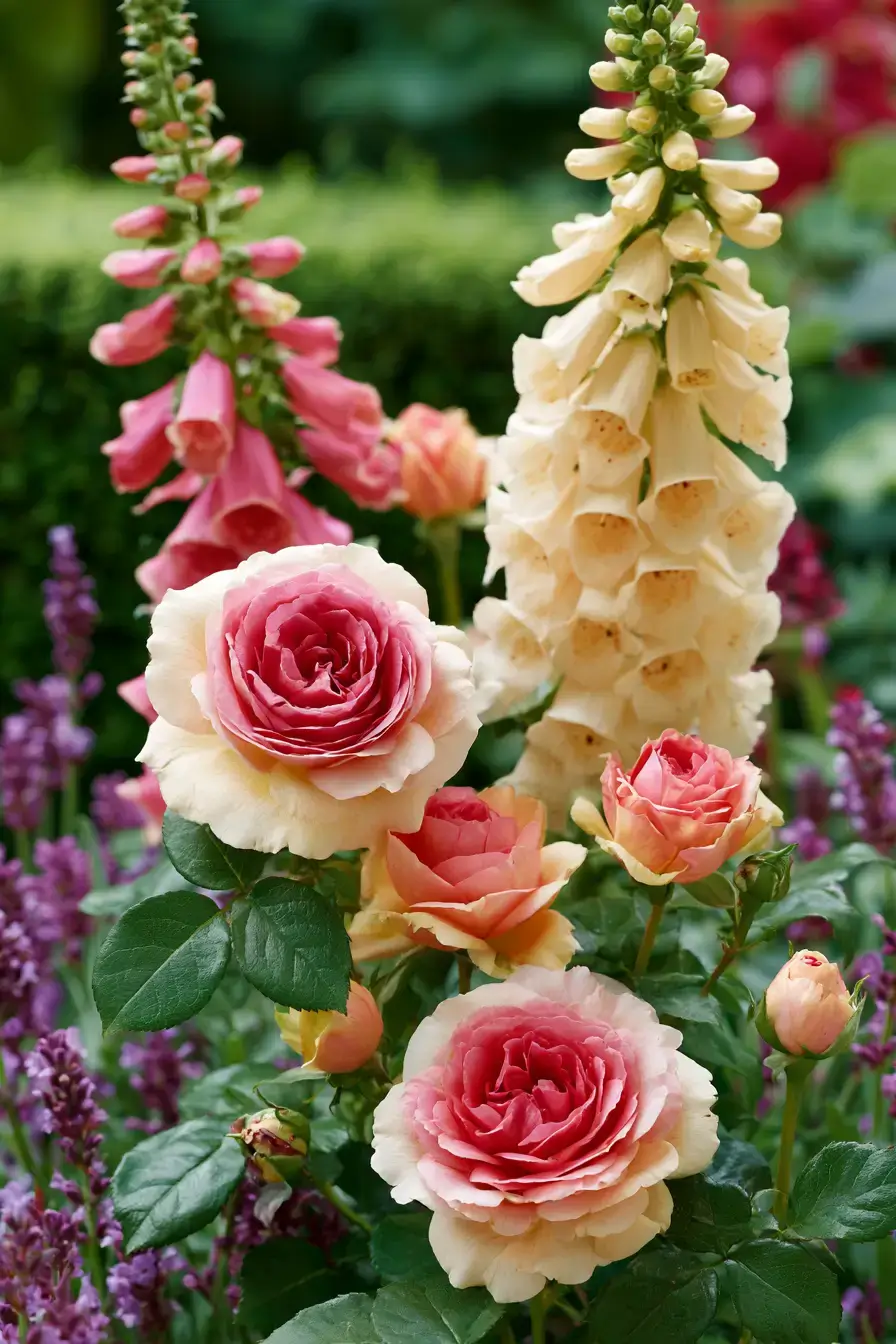
Gertrude Jekyll is a reliable climber with a strong myrrh scent and vivid pink blooms, which is why it turns up in so many of these schemes. It grows vigorously, so give it a proper support, a wall, trellis, or arch, and tie it in through the season or it flops. Cream foxgloves, lavender, and green hedging behind it keep the pink from dominating. It flowers on new wood, so a spring prune keeps it in check and encourages repeat blooms.
9. Fragrant Rose Walkway Magic
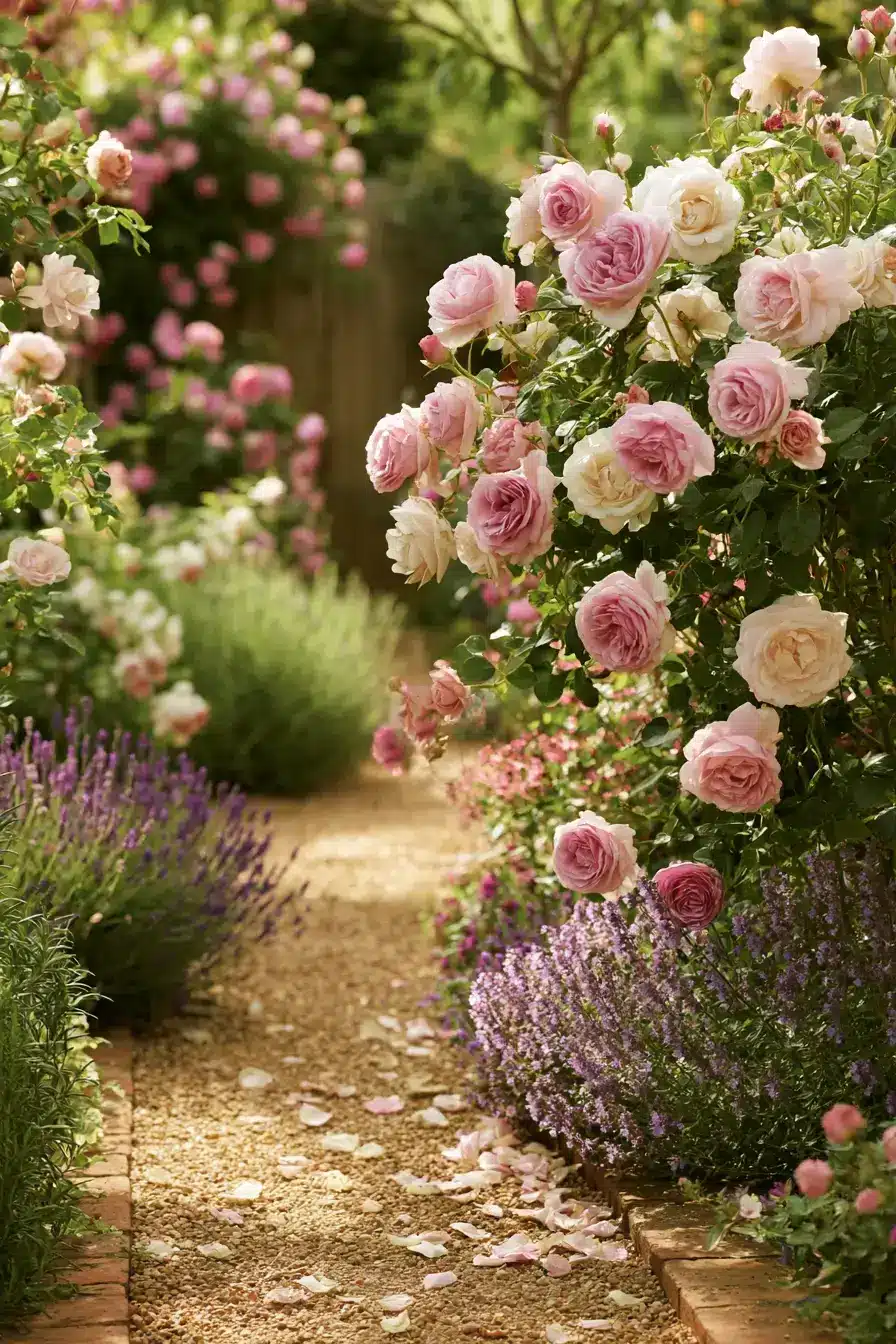
A scented walkway is the most underrated idea here because it costs almost nothing beyond plant choice. Line the path with a mix of pink and white roses plus lavender, rosemary, and catmint, all of which release scent when brushed. Gravel or brick underfoot suits the relaxed English feel and is kinder on wet mornings than bare soil. Keep the planting low enough that you are not fighting through it, the path should stay walkable, not just decorative.
10. Rose Trellis Cottage Glow
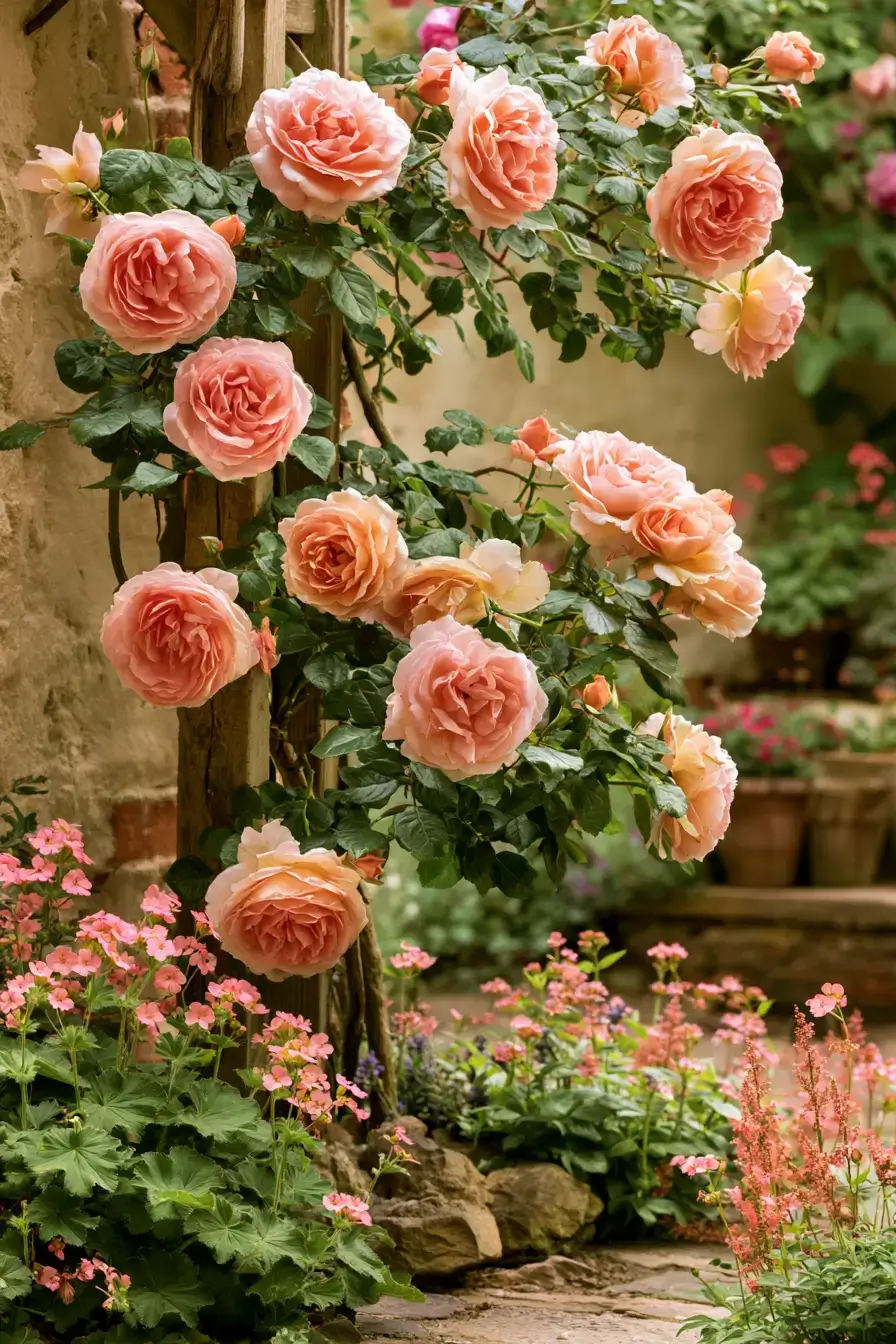
A rose-covered trellis is the cheapest way to add height to a flat garden, and it screens a fence or wall you would rather not look at. Train a climber across a wooden or metal trellis fixed to the wall, tying stems in horizontally so they flower along their length. Soften the base with lady’s mantle, hardy geranium Rozanne, or alchemilla so the eye does not land on bare stems. Wooden trellis rots at the ground in a few years; metal lasts longer and needs less upkeep.
11. Country Rose Hedge Beauty
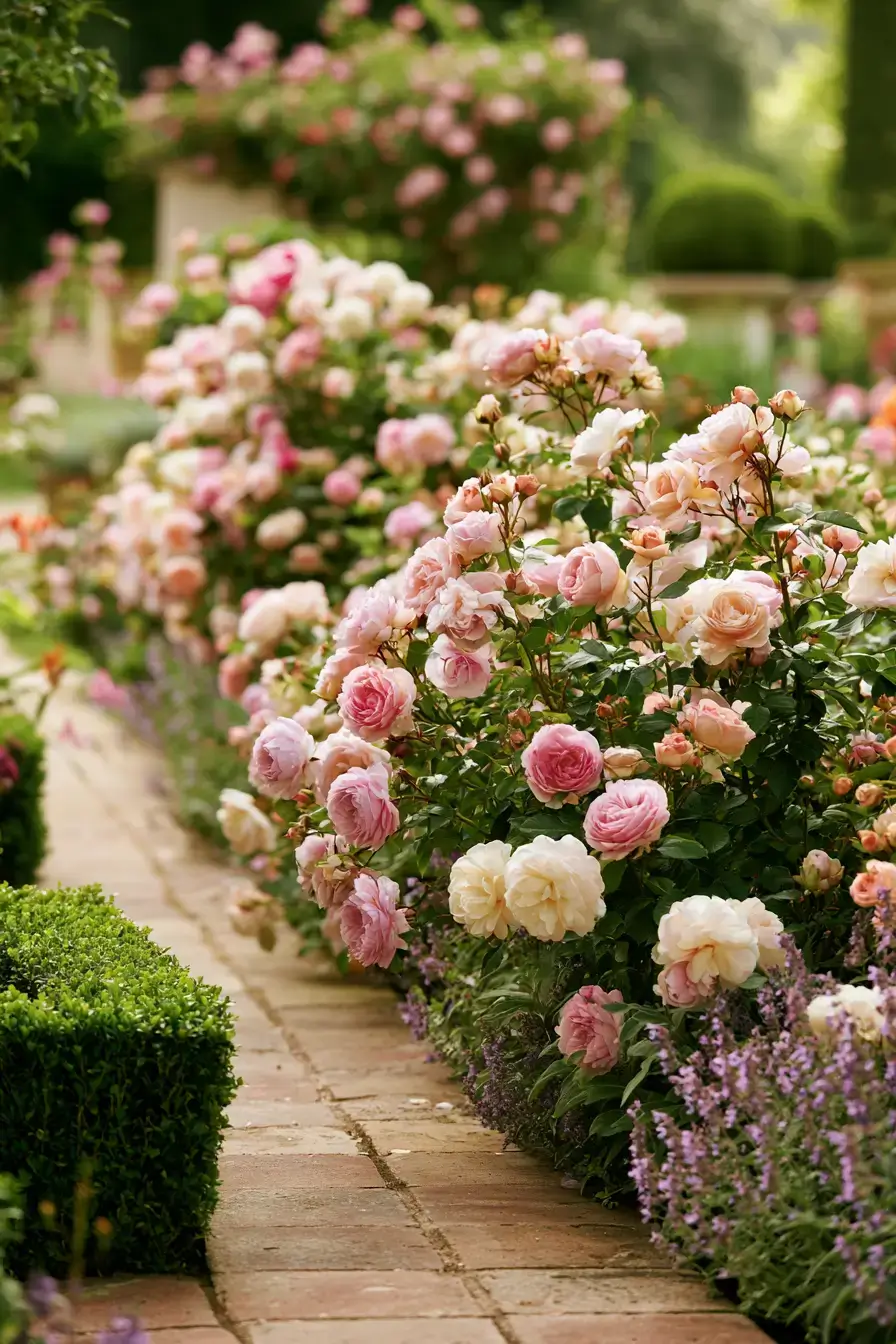
A rose hedge gives gentle structure along a path or boundary without the formality of clipped box. Use repeat-flowering shrub roses in pink and creamy white, planted close enough to mingle but not so close they compete for light. Box, lavender, or nepeta at the front softens the base and hides the bare lower stems that roses always get. Trim the hedge lightly after each flush rather than hard, so you keep the natural shape and the flowers.
12. Pink Rose Border Cheer
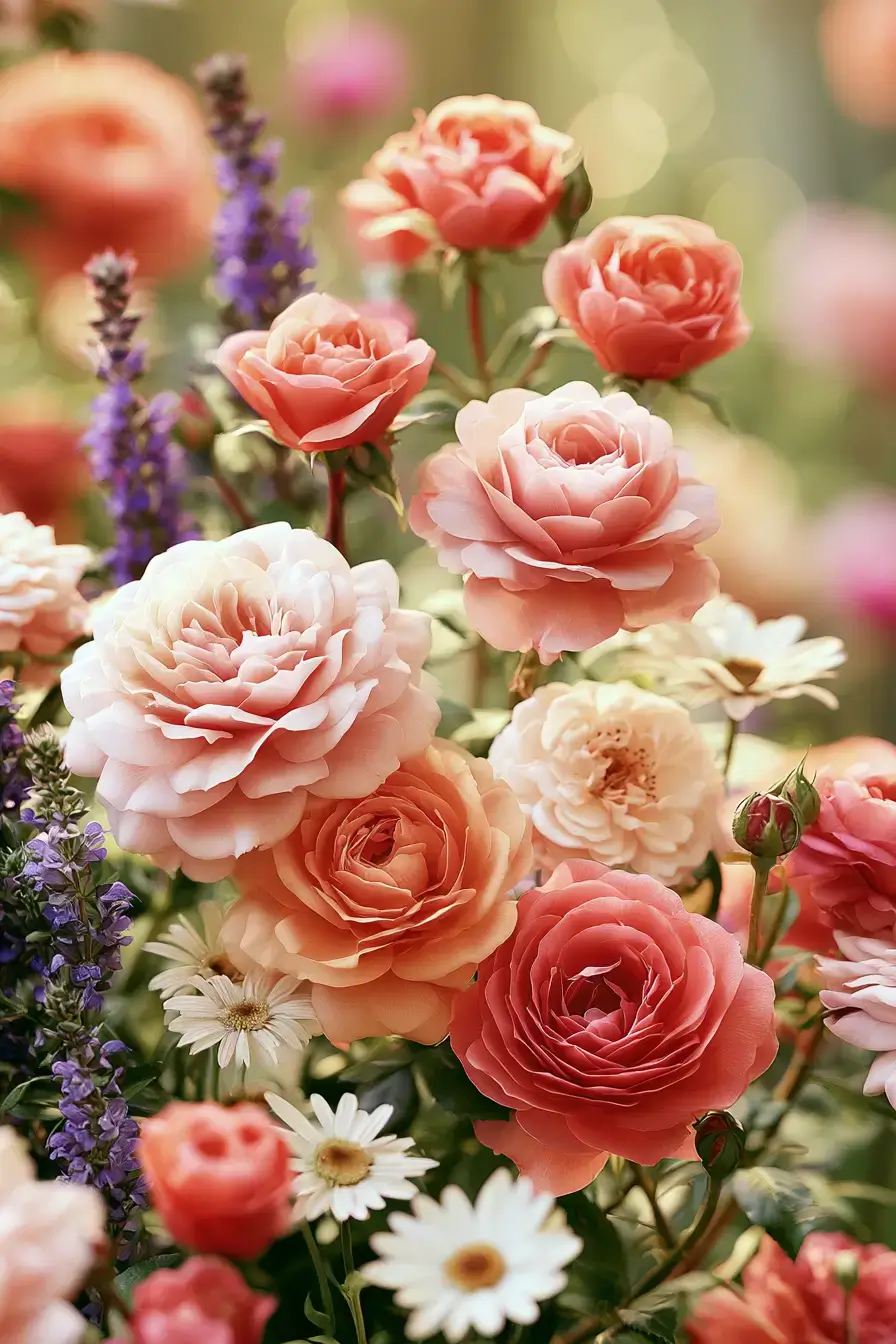
Pink borders are cheerful but easy to overdo, so pick a tight range: warm pink, coral, and blush, and let white daisies and purple salvia do the balancing. David Austin’s The Alnwick Rose is a good warm-pink shrub; pair it with something that flowers at a different height so the bed has layers. The risk is all-pink sameness, the salvia and daisies are what stop it looking like a wedding arrangement. Water newly planted roses well in the first season, they establish slowly.
13. White Rose Garden Grace
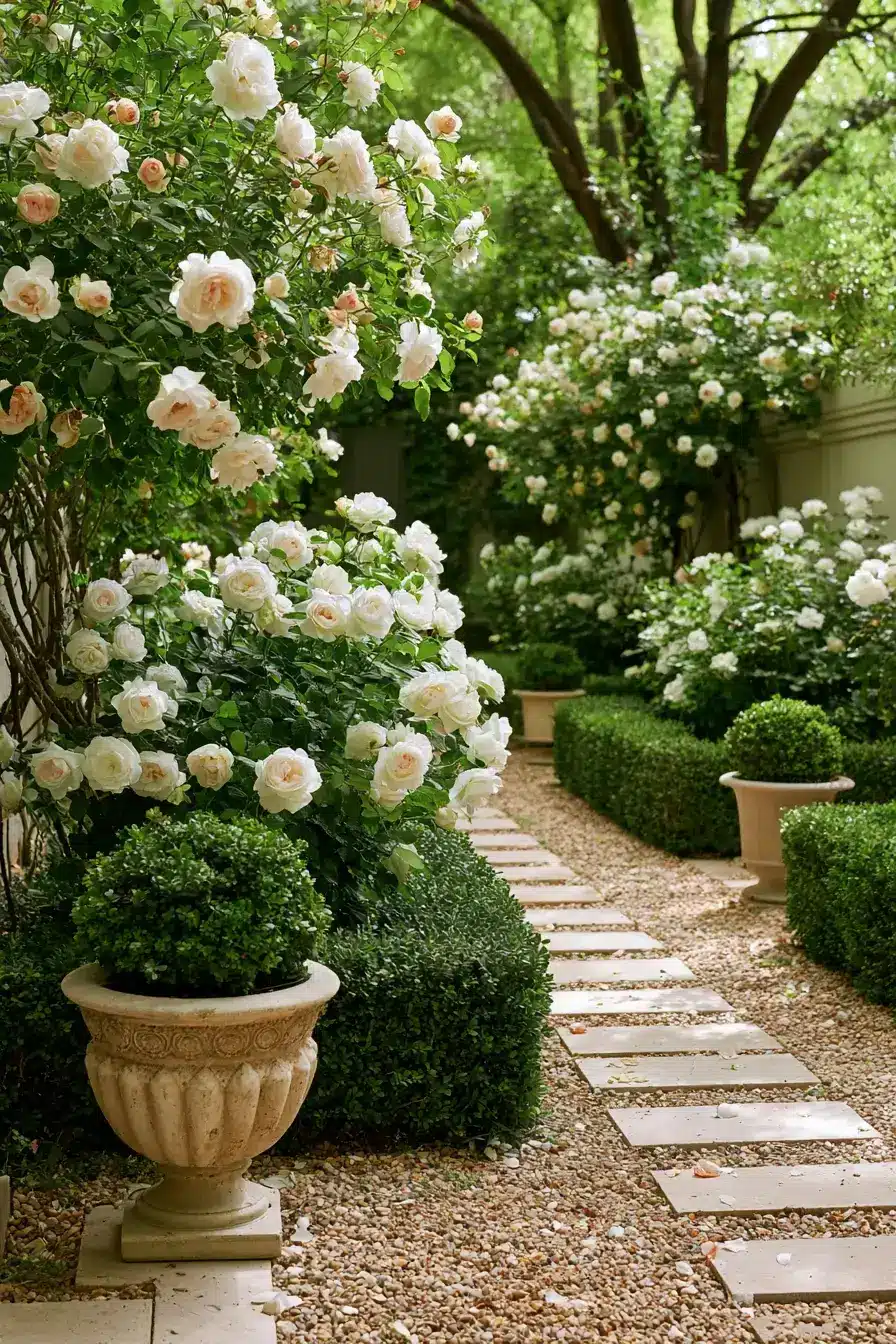
An all-white rose area reads as calm and a bit more formal than a mixed border, which suits a small space or a focal corner. White David Austin types or Iceberg give clean blooms; underplant with box, gravel, and simple planters to keep it polished rather than frothy. White shows blackspot and dead blooms more than coloured roses, so you will deadhead and check foliage more often. It is worth it for the way it picks up evening light.
14. Gravel Rose Path Charm
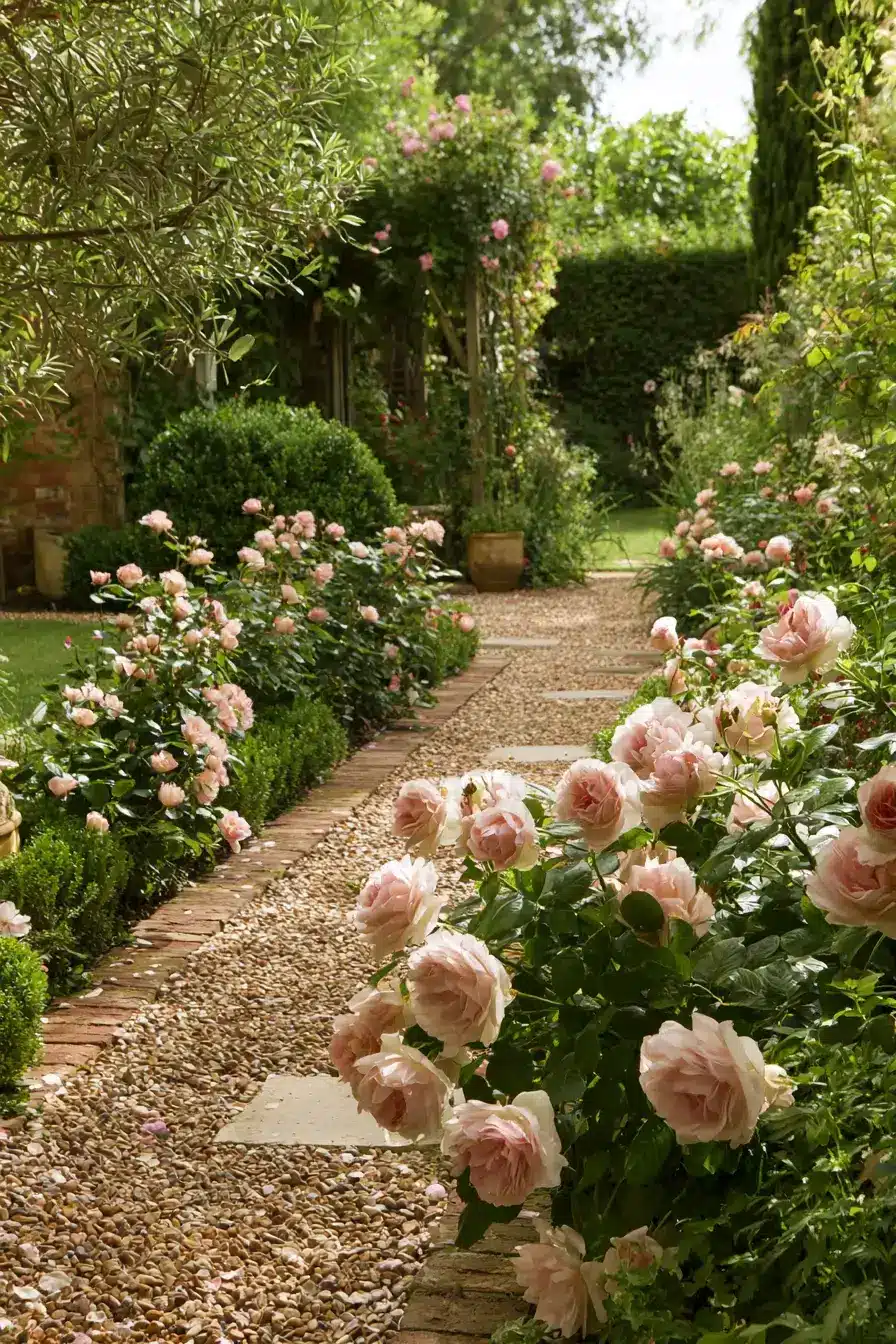
Gravel paths are the workhorse of this style: cheap, permeable, and they suppress weeds once laid deep enough. Let roses spill a little over the edge for softness, but keep the crown clear of gravel so the stems do not rot. Pea gravel with brick or stone edging stays put better than loose gravel with nothing to hold it. Rake it once in a while; left alone it walks into the beds and the lawn.
15. Rose Tea Corner Delight
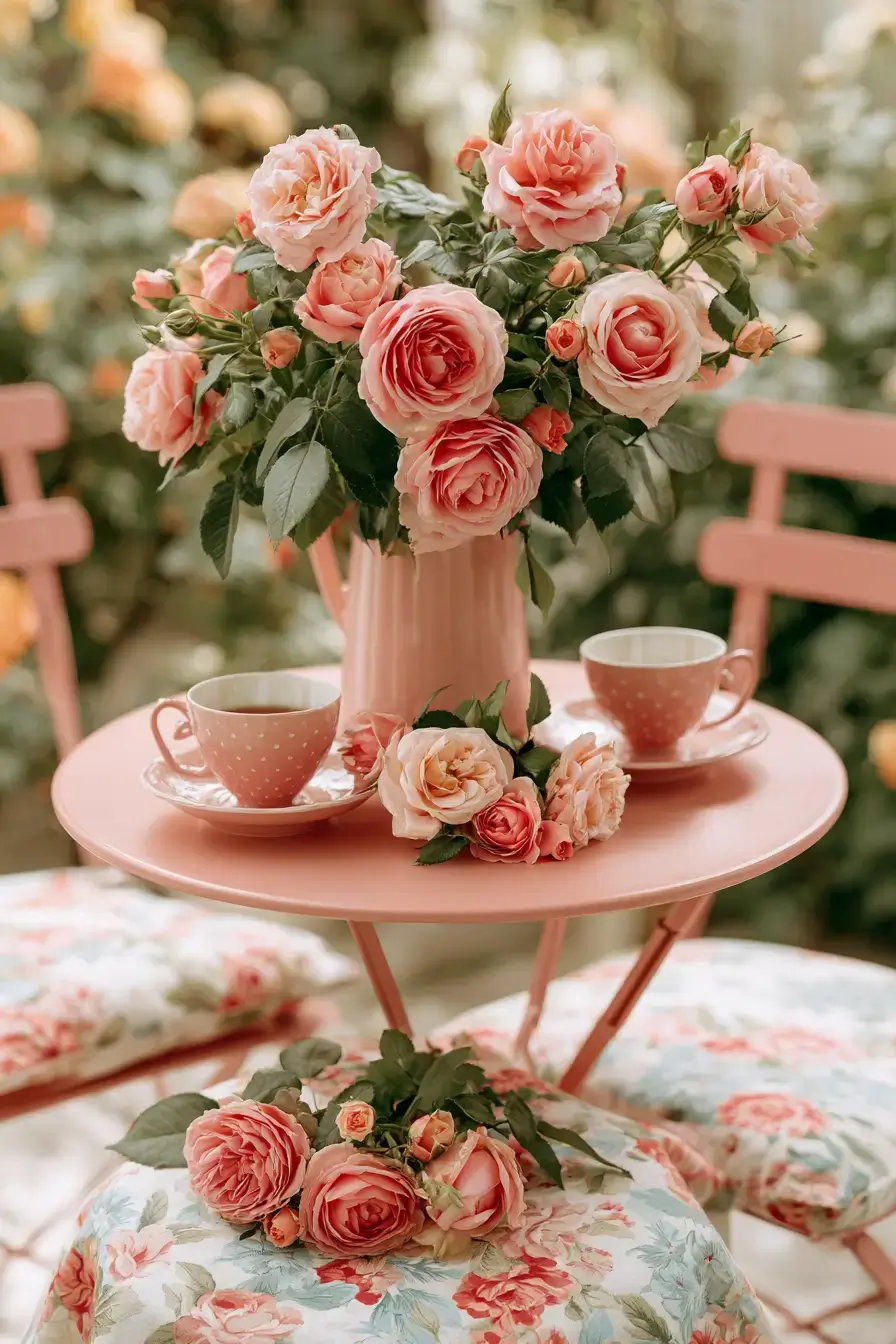
A tea corner is only as good as the furniture you put in it, and rose thorns do not mix with flimsy chairs. Fermob or IKEA both do weatherproof bistro sets that fold away; add a small table you can actually set a cup on. Surround it with fragrant roses at seating height, not tall ones that drop petals in your tea. A floral cloth and a vase of cut roses finish it, but keep them out of direct midday sun or the flowers cook.
Save this article
Enter your email and we'll send it straight to your inbox.
16. Graceful Rose Pergola Retreat
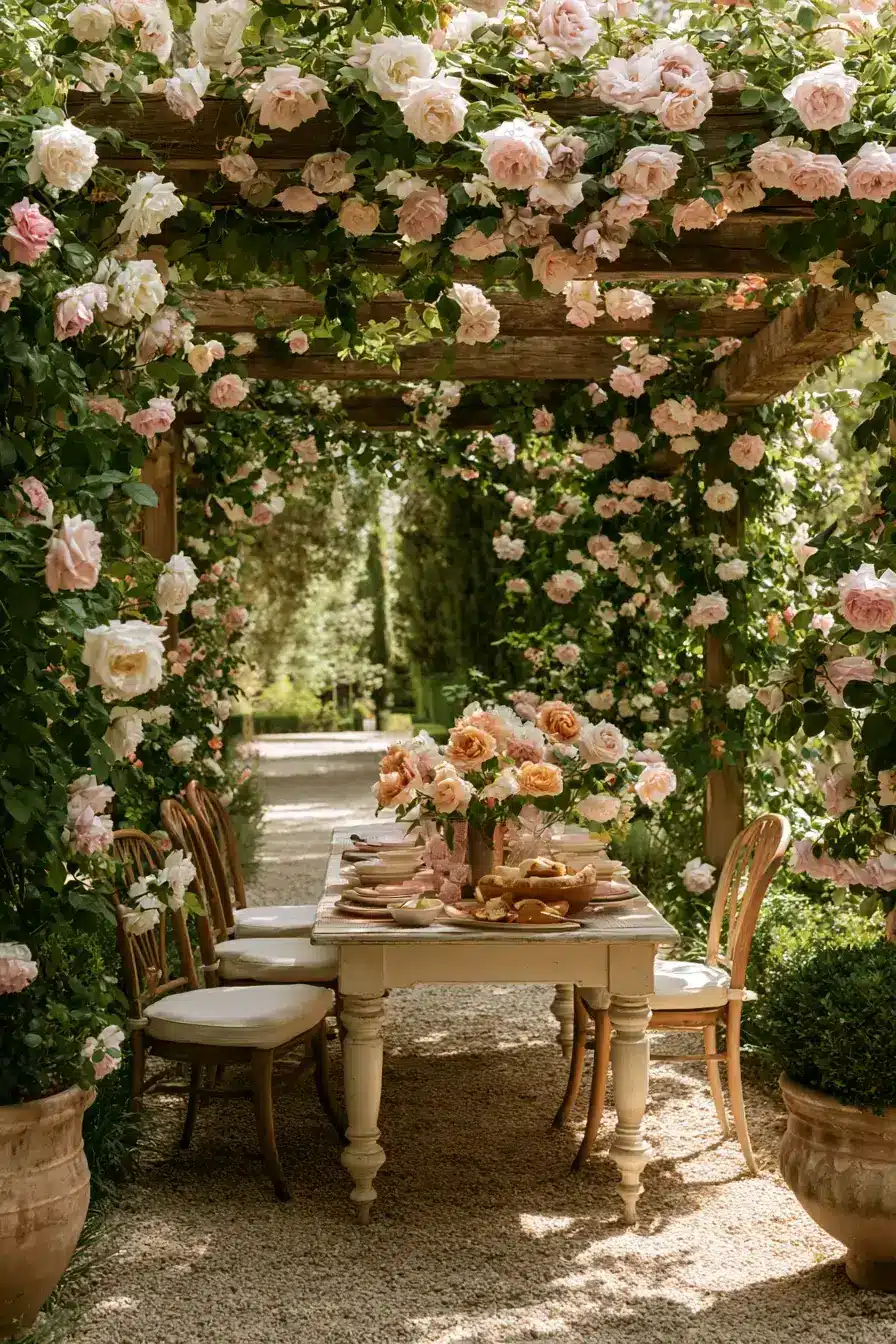
A rose pergola turns a path or seating area into a room, but it needs commitment: a climber per post, trained across the top each year. Pale pink, white, or peach roses give a soft canopy; underneath, a gravel path or a dining table makes it usable rather than just pretty. Cedar kits are common and smell good but need oiling to avoid going grey; metal frames are lower maintenance. Site it where you will actually sit under it, not as a distant feature.
17. Container Rose Display Joy
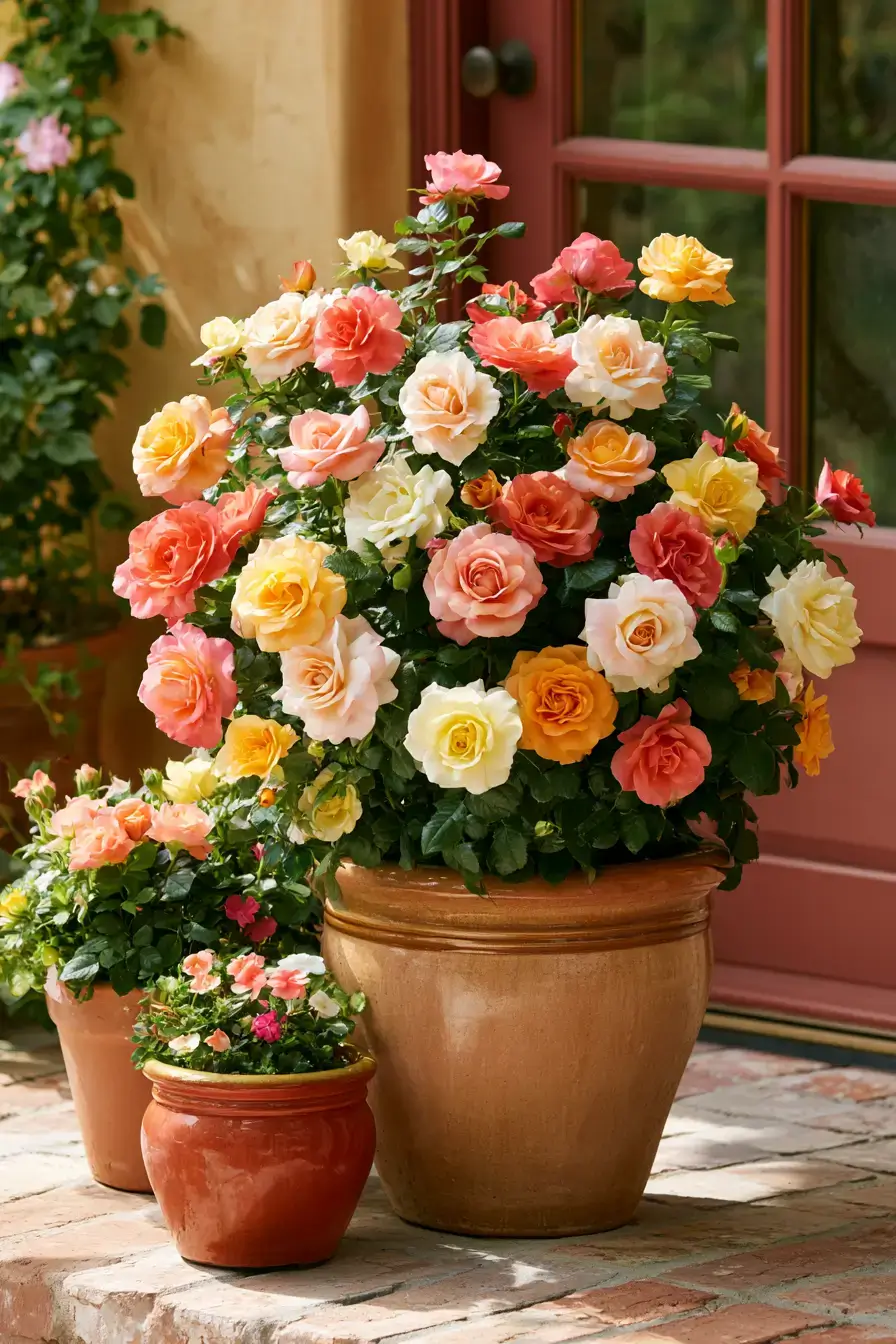
Container roses suit patios, balconies, and the front of a terrace where there is no border to speak of. Use compact or patio roses in terracotta or glazed pots, and group three or more so they read as a display rather than loners. Proven Winners, David Austin, and Heirloom all sell reliable pot-sized varieties; check the pot has drainage and is frost-proof or it cracks in winter. Containers dry out fast, so water more often than you would in the ground, and feed through the growing season.
👑 Get The Look
18. Rose Gate Entrance Magic
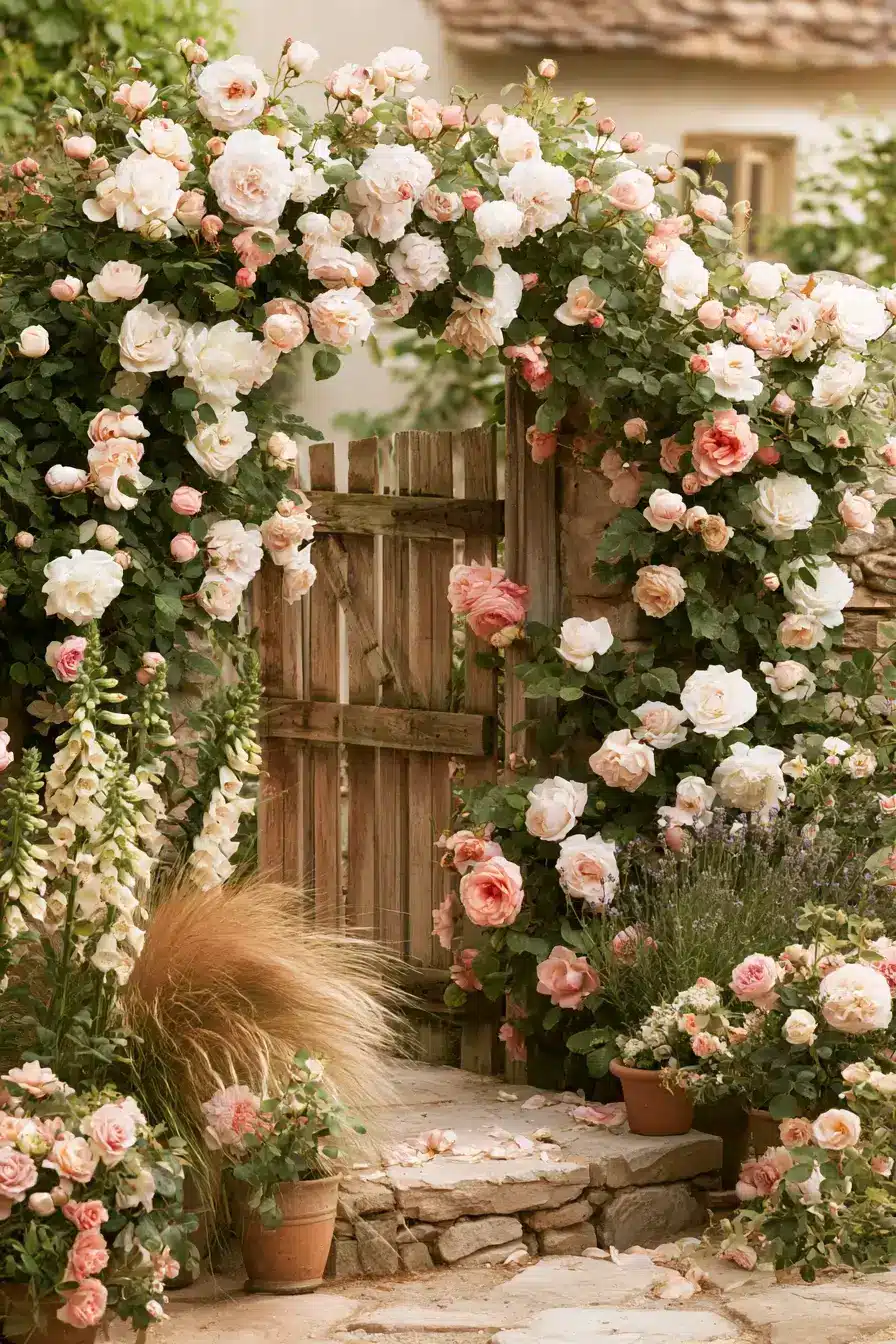
A rose-framed gate is a strong welcome, but the roses need a real support, wires or a trellis on the wall either side, not just tied to the gate itself. Fragrant pink or white climbers give the warm first impression; lavender, foxgloves, and soft grasses at the base layer the look. Keep the growth off the gate’s moving parts or it jams every time you open it. A wood or wrought-iron gate both work; match the rose colour to the paint or leave it natural.
19. Bench Rose Nook Charm
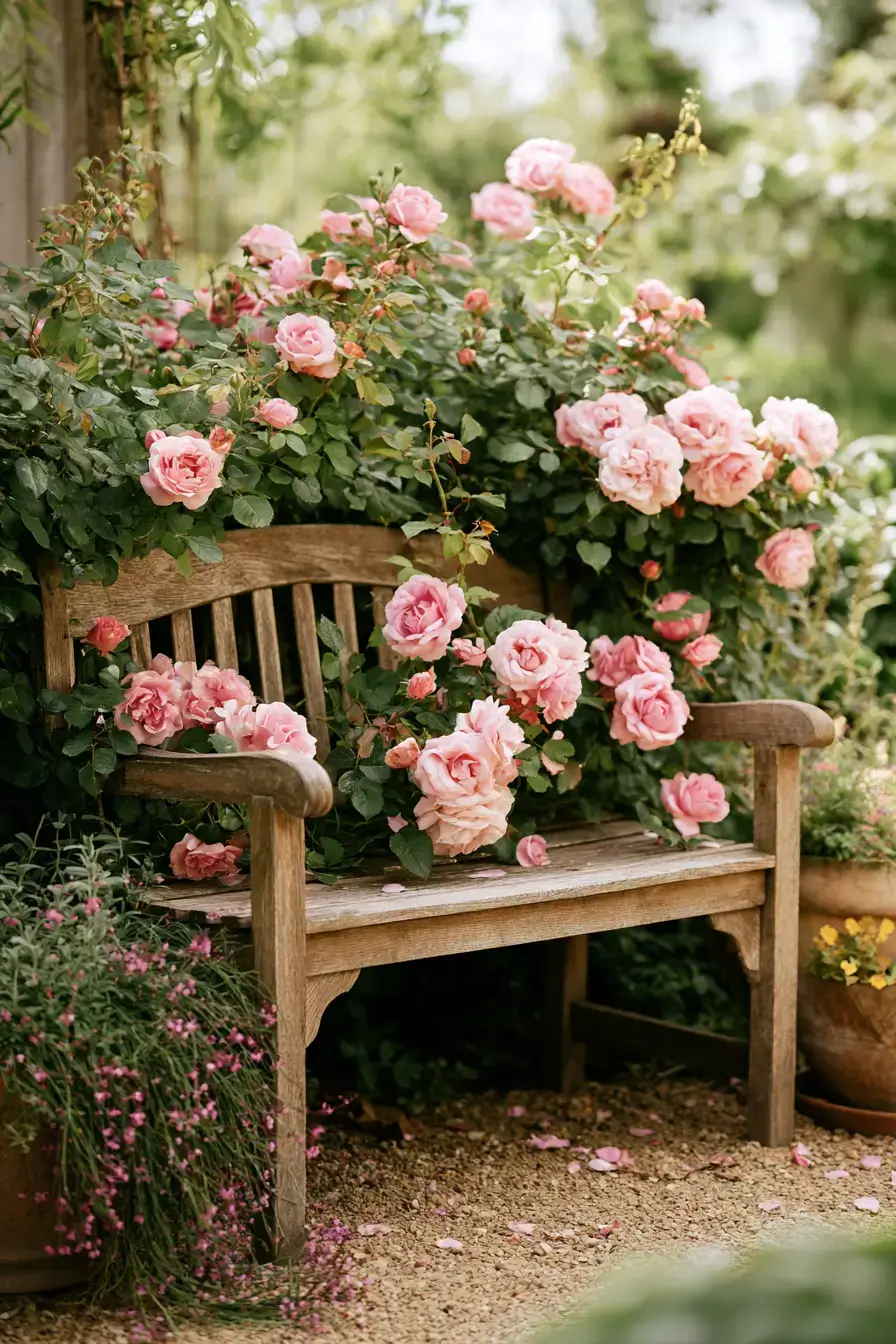
A bench nook works best tucked into a corner where two borders meet, so the roses close in around you. A weathered wooden bench or a simple metal seat is enough; anything fancier fights the planting. Surround it with roses, lavender, and something trailing so the view is flowers, not fence. Keep the seat in at least half-day sun or it stays damp and green, and site it away from the prevailing wind if you actually want to sit on it.
20. Boscobel Rose Bed Glow
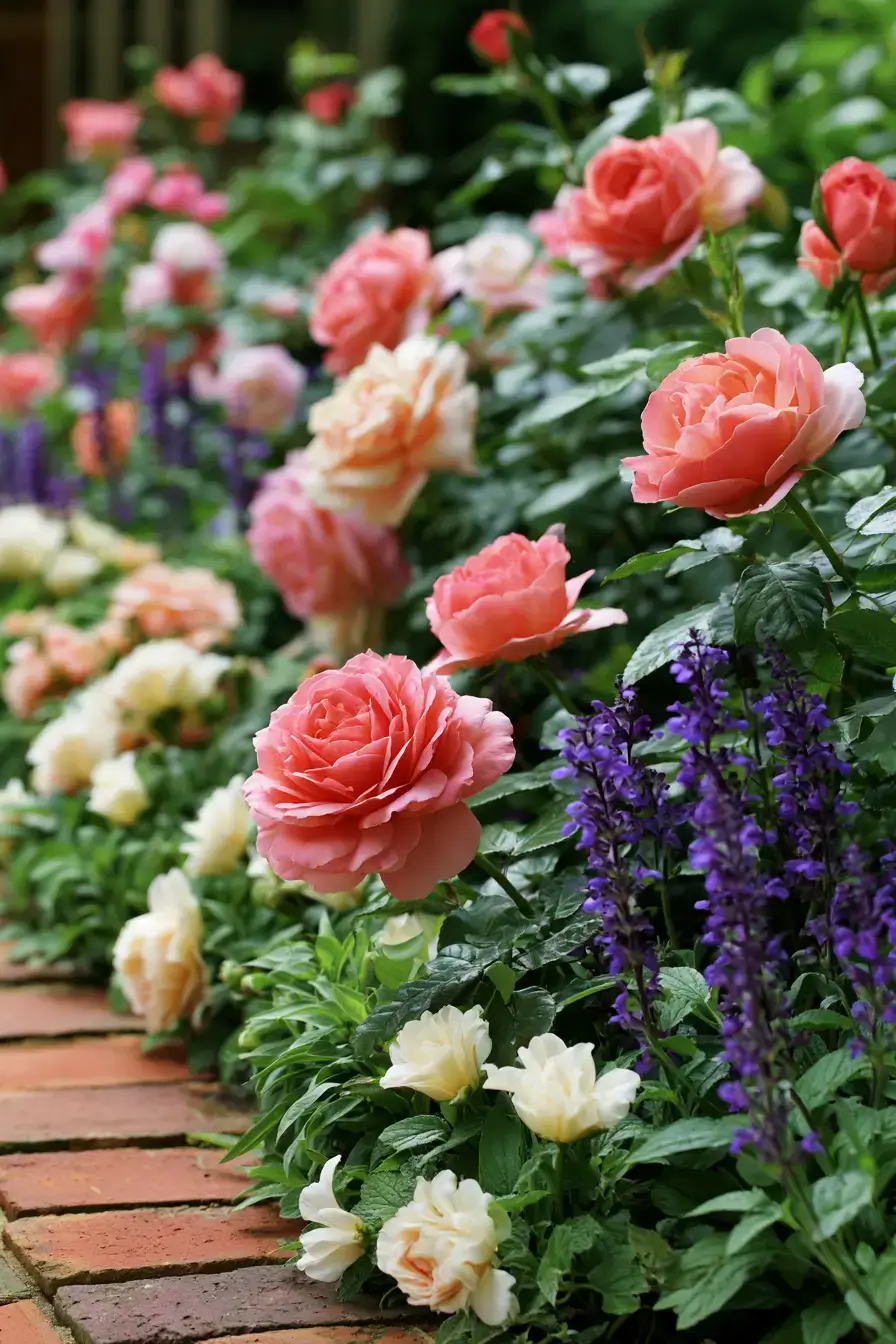
Boscobel is a David Austin shrub with a warm coral-pink bloom and good repeat flowering, a useful splash of colour among all the blush tones. Plant it with cream flowers, purple salvia, and green foliage so the coral reads as deliberate rather than loud. A mulch of composted bark or a brick edge keeps the bed neat and holds moisture in summer. Like most shrub roses it is happiest with its feet in the ground for a season before it really performs, so do not judge it in year one.
21. Mixed Rose Border Beauty
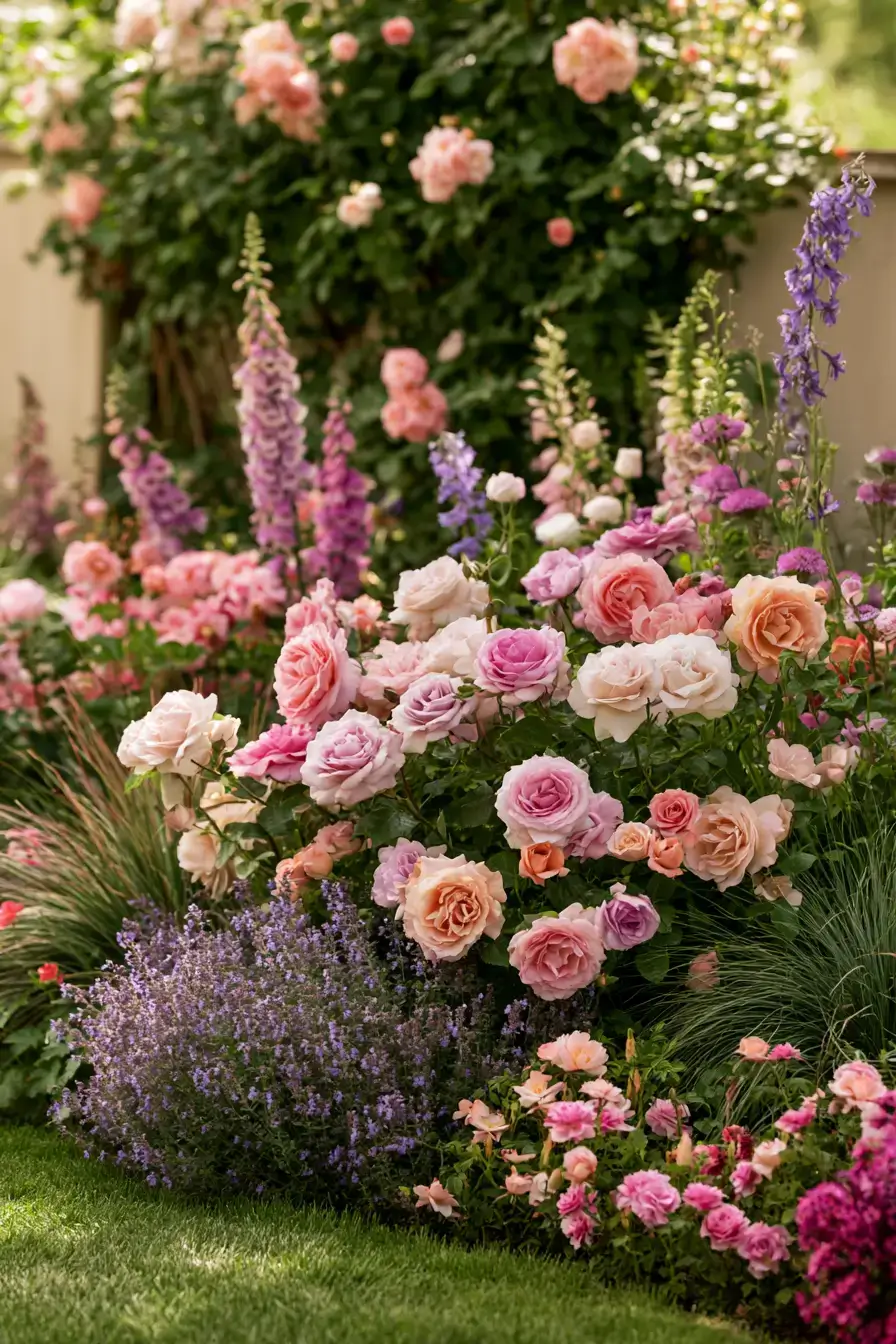
Mixed borders are where the English style earns its name, roses mixed with herbs, perennials, and grasses so nothing sits in isolation. David Austin roses with lavender, nepeta, foxgloves, and delphiniums give the layered, slightly loose look; repeat the colours so it coheres. The grasses and airy perennials stop the roses looking stiff, which is the whole point. Give the roses the sun and the airflow, tuck the shade-tolerators in front, and you get a border that flowers in waves rather than all at once.
22. Cottage Fence Rose Charm
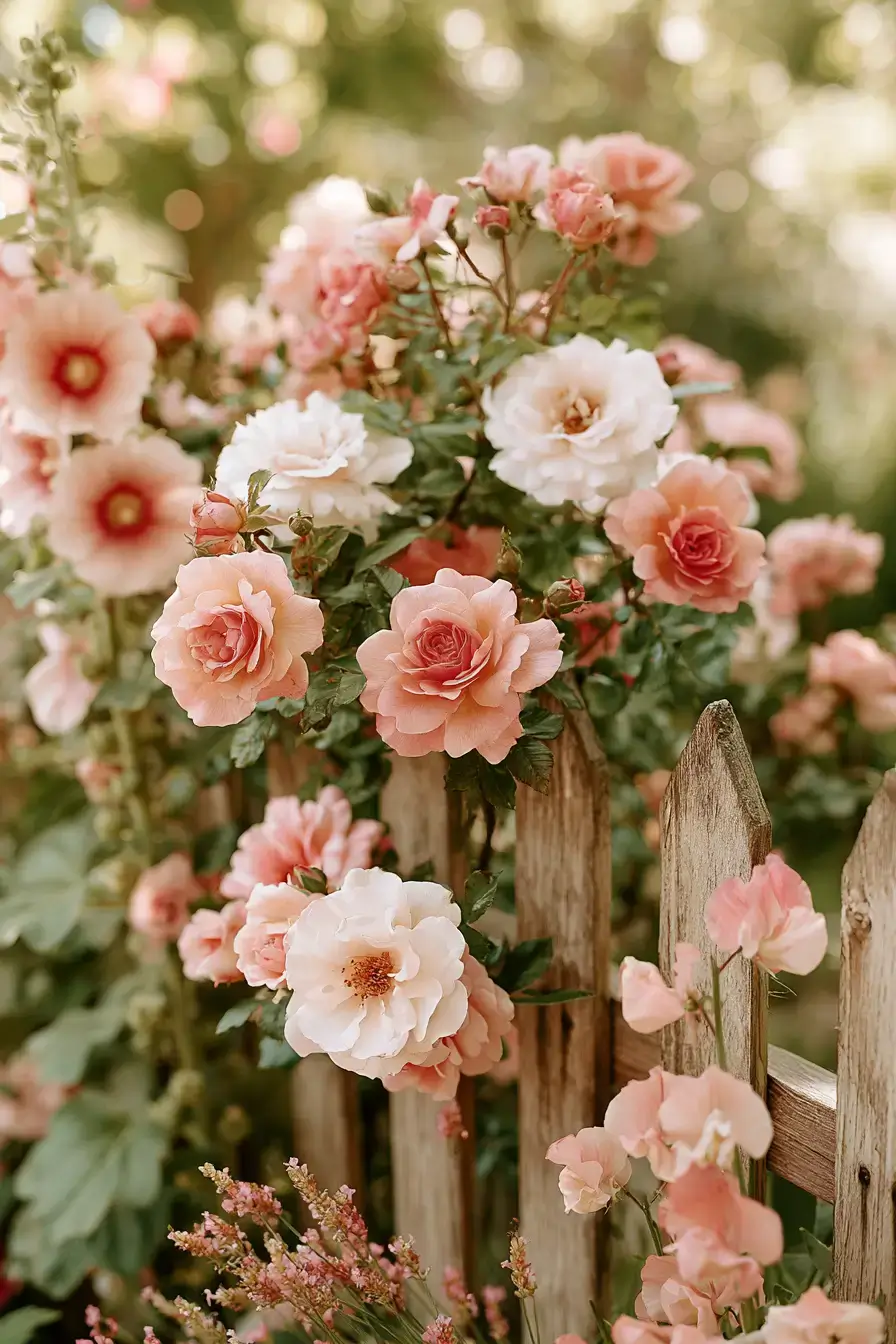
A cottage fence becomes a feature once roses grow along it, but use a support, eyes and wires or a slim trellis, so the canes are tied in rather than flopping through the slats. Climbing or shrub roses in pink, white, and peach all work; hollyhocks, lavender, and sweet peas in front add the extra cottage layer. Keep the rose off the fence’s fixings and the climbing ones tied to the top rail so they do not shade the plants beneath. Paint or stain the fence first, it is awkward once the roses are in.
23. Lavender Rose Pairing Bliss
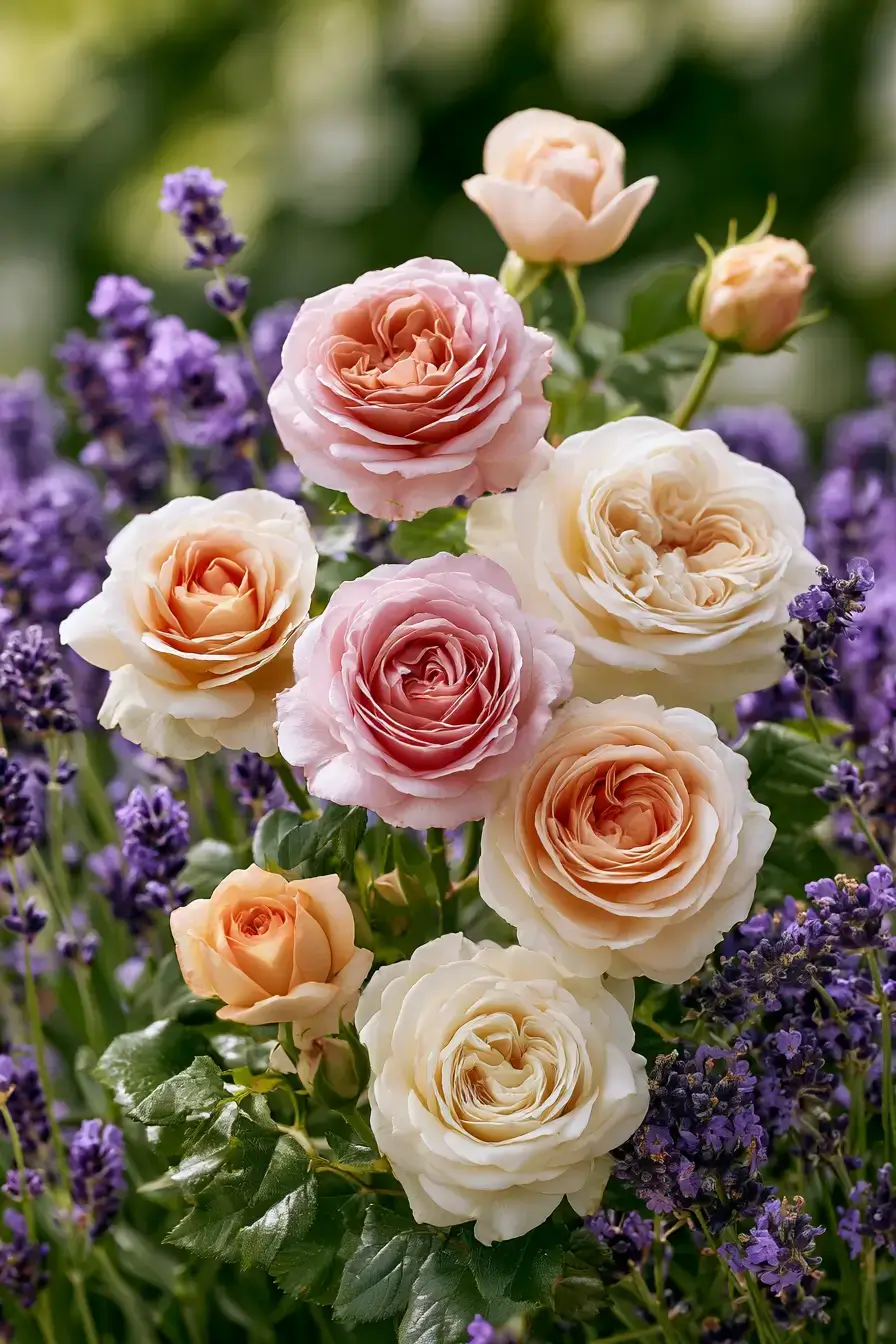
Roses and lavender is the classic combo for good reason: the purple softens the pink and white, and the scent doubles up. Hidcote and Munstead are the tidy, hardy lavenders to use, planted at the rose feet where you will brush past them. The catch is drainage, both hate wet winters, so on heavy soil raise the lavender slightly or it rots off by year two. Cut the lavender back after flowering and it stays compact instead of turning to wood.
24. Rose Archway Garden Magic
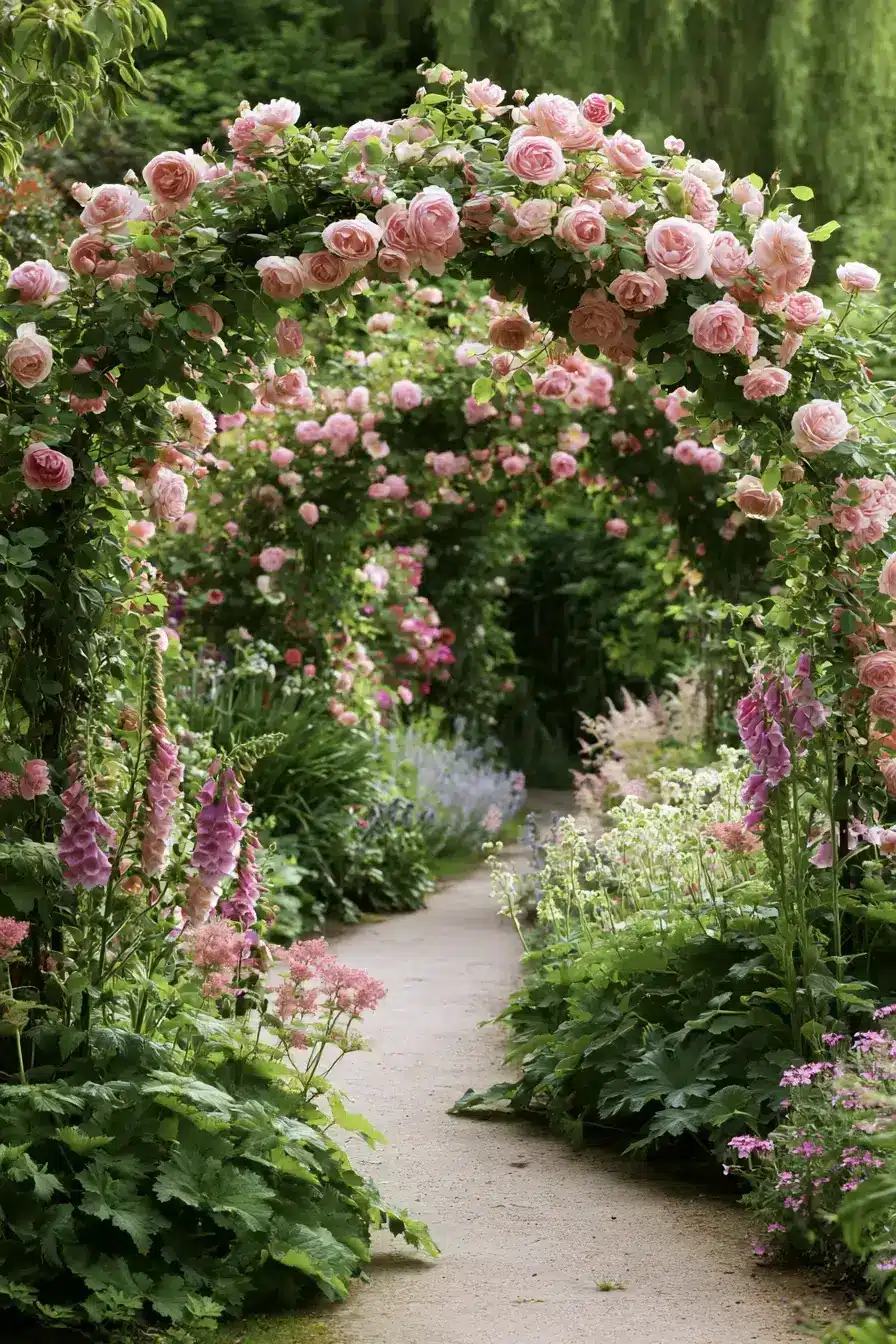
Repeated arches over a path give that walk-through-the-blooms effect, but it is a bigger job than a single arch because each one needs its own climber and annual training. Space them so you can still mow or weed between, and train the roses overhead rather than letting them tangle. Catmint, lady’s mantle, or foxgloves at the base keep the structure from looking bare. Metal arches are worth it here, wood rots where it meets the ground and you will be replacing them within a few seasons.
25. Lady Gardener Rose Glow
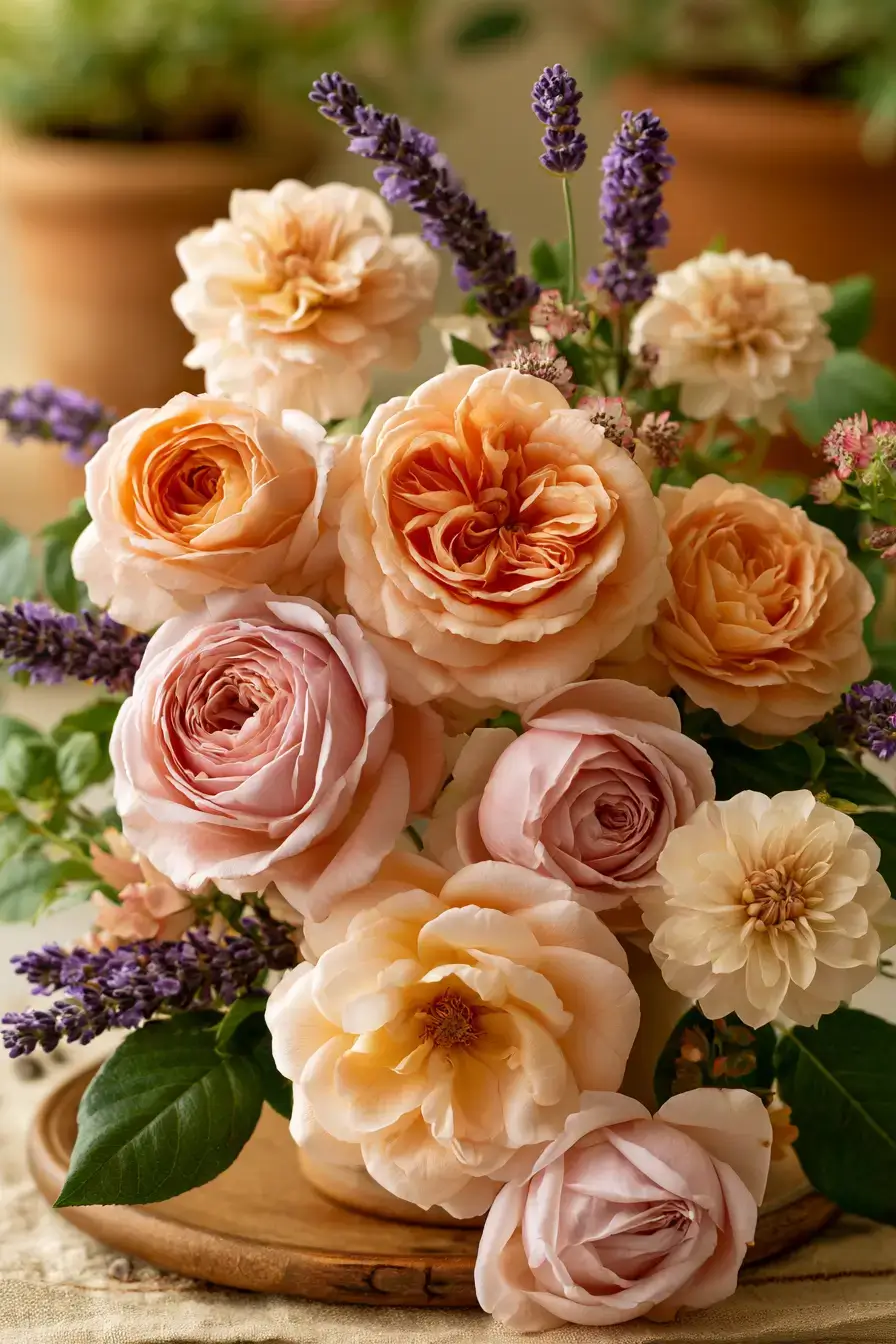
The Lady Gardener is a David Austin with a soft peach tone and a strong fragrance, a good choice if you want warmth without hot colour. Plant it with cream flowers, lavender, and terracotta pots so the peach reads as cozy rather than bright. It repeats well through the season if you deadhead, and the scent is genuinely strong, which is why it turns up in seating areas. Give it a sunny, open spot or it is prone to blackspot in still, shaded corners.
26. Patio Rose Planter Beauty
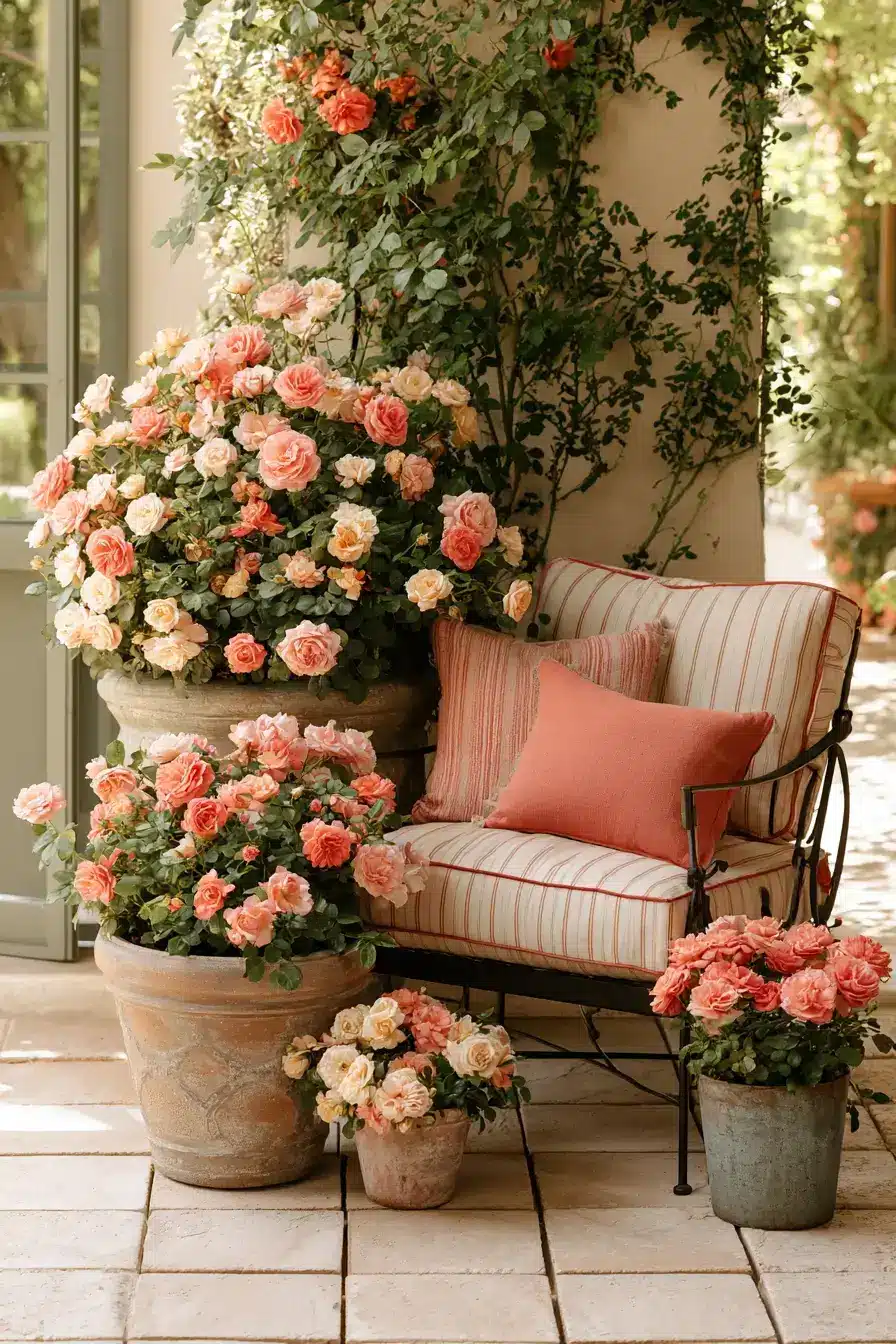
Patio planters bring roses right up to where you sit, which is ideal for balconies or a tiny garden with no border. Use compact patio roses in pink, peach, cream, or coral, in terracotta, stone, or aged zinc pots for a collected look. The pots must drain and be frost-proof, cheap terracotta splits in a hard winter. Water and feed containers more than ground roses, they exhaust their soil quickly, and you will get a longer show for it.
27. English Rose Sanctuary Dream
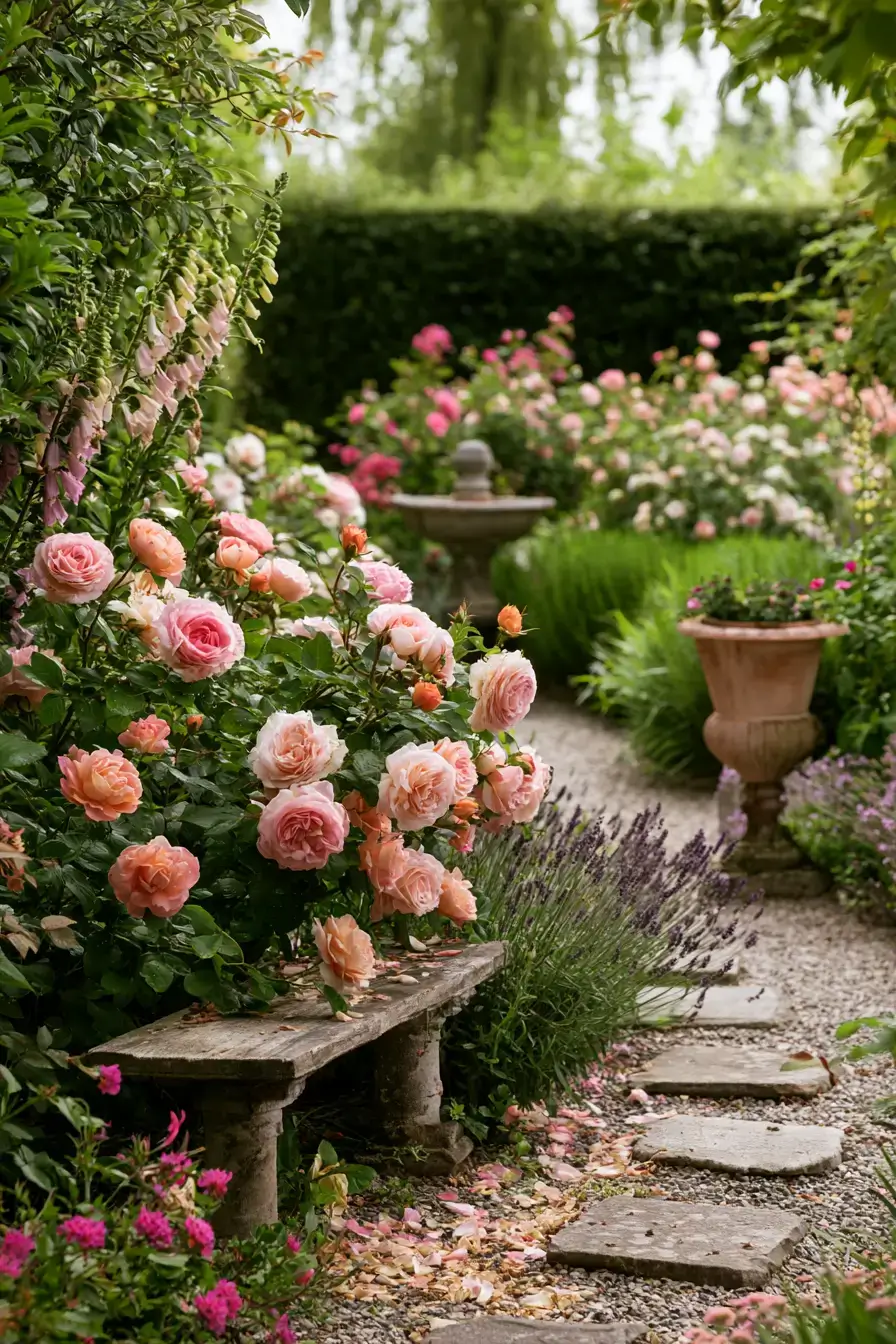
A rose sanctuary is really the sum of the earlier ideas done in one space: layered roses, a winding path, and a seat to use it from. Mix fragrant David Austins with lavender, foxgloves, and green hedging, then add one or two focal pieces, a birdbath, a weathered bench, or a vintage urn, to stop it feeling like a blank bed. Keep the palette soft and the structure simple so the planting stays the star. Do the path and seating first, then fill in the roses around them.
You do not need every idea here to get the English rose look. Three things carry it: repeat-flowering shrub roses in muted shades, lavender or nepeta at their feet for scent and softness, and one structural element, a gravel path, a bench, or an arch, to stop the planting reading as a random flowerbed. Buy roses as bare root in late winter for the best choice and price, plant them with their graft union at soil level, and mulch rather than pile soil against the stems. Pick the ideas that fit your light and space, do them properly, and the romantic part tends to look after itself.
This post may contain affiliate links. Please see my disclosure policy for details.
Want to keep this one?
We'll email you the link so you can find it again later.