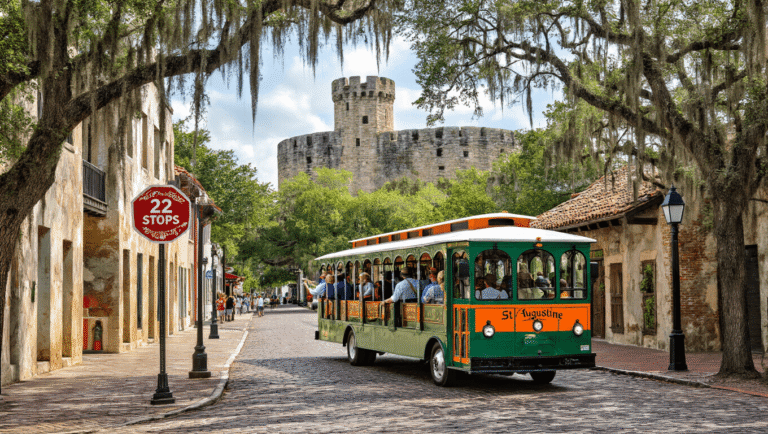
Have you ever wondered what it feels like to walk through living history? St. Augustine isn’t just another tourist destination—it’s a breathtaking portal to America’s earliest European roots.
Founded in 1565, this extraordinary city predates Jamestown and Plymouth Rock by decades, making it the oldest continuously occupied European settlement in the United States. Imagine cobblestone streets whispering centuries-old stories, where Spanish colonial architecture stands proudly alongside modern attractions.

The Unbelievable Birth of a Legendary City
Contents
- The Unbelievable Birth of a Legendary City
- Why St. Augustine Matters More Than You Think
- The Fortress That Defined an Era: Castillo de San Marcos
- A Living Museum of Extraordinary Experiences
- Multicultural Roots: Beyond the Standard Narrative
- Unexpected Historical Gems
- Travel Tip: Navigating Your Historical Adventure
- More Than Just a Destination
- Culinary Adventures: Tasting St. Augustine’s Historic Flavors
- The Art of Preservation: Beyond Buildings
- Sustainable Tourism: Balancing Preservation and Progress
- Civil Rights: A Pivotal Battlefield for Equality
- Hidden Natural Wonders
- Modern Challenges, Timeless Spirit
- Your Ultimate St. Augustine Travel Playbook
- The Unexpected Magic of America’s Oldest City
My first visit to St. Augustine was like stepping into a time machine. Walking down Aviles Street—the oldest street in America—I was struck by how meticulously preserved this city remains. Narrow, brick-lined pathways flanked by pastel-colored buildings transported me directly into the 16th century.
Why St. Augustine Matters More Than You Think
This isn’t just another historical site. St. Augustine represents a complex tapestry of cultures:
- Spanish explorers’ initial settlement
- Indigenous Native American interactions
- African American historical significance
- Multicultural influences spanning centuries
The city’s strategic location along Florida’s northeastern coast made it a pivotal point of cultural exchange and conflict. From Spanish conquistadors to British rulers, from African freedmen to Cuban immigrants, each group left an indelible mark on this remarkable place.
The Fortress That Defined an Era: Castillo de San Marcos
Standing before the Castillo de San Marcos, you’ll understand why this national monument is so extraordinary. Completed in 1695, it’s the oldest masonry fort in continental United States—a stone sentinel that has weathered sieges, changing governments, and countless historical transformations.

A Living Museum of Extraordinary Experiences
St. Augustine offers more than just static historical exhibits. Here, history comes alive through:
- Living history demonstrations
- Authentic reenactments
- Interactive archaeological sites
- Immersive cultural experiences
The Colonial Quarter exemplifies this perfectly—a historic village spanning four centuries where visitors can literally walk through different historical periods.
Multicultural Roots: Beyond the Standard Narrative
What makes St. Augustine truly unique is its nuanced representation of diverse histories. Sites like Fort Mose—the first legally sanctioned free African settlement in what would become the United States—challenge traditional historical narratives.
The city doesn’t just commemorate European conquest; it celebrates the complex interactions between indigenous peoples, European colonizers, African descendants, and successive waves of immigrants.
Unexpected Historical Gems
Some of the most fascinating attractions might surprise you:
- The Oldest Wooden Schoolhouse (a tiny, preserved educational artifact)
- Ponce de Leon’s Fountain of Youth Archaeological Park
- St. Augustine Lighthouse with its maritime mysteries
- Lincolnville Museum showcasing Civil Rights history
These aren’t just tourist spots—they’re windows into forgotten stories, carefully preserved and passionately shared.
Pro advice for first-time visitors:
- Plan 2-4 days to explore thoroughly
- Wear comfortable walking shoes
- Take guided trolley tours for comprehensive insights
- Visit during shoulder seasons to avoid peak crowds
The city’s mild climate makes it a year-round destination, but spring and fall offer the most comfortable temperatures for extensive exploring.
More Than Just a Destination
St. Augustine represents something profound: a living, breathing testament to America’s complex, interconnected heritage. It’s where different cultures collided, collaborated, and ultimately shaped what would become the United States.
Each cobblestone, each restored building, each museum exhibit tells a story—not just of conquest and survival, but of human resilience, adaptation, and remarkable cultural fusion.
As the sun sets over Matanzas Bay, casting golden light on centuries-old structures, you’ll realize St. Augustine is more than a destination. It’s an experience that reconnects you with the nuanced, fascinating roots of American history.
The maritime breeze carries whispers of explorers, settlers, slaves, and immigrants—inviting you to listen, to learn, and to understand our shared human journey.
Explore more about Florida’s timeless charm:
👇Find The Cheapest Flights To Anywhere Here👇
Culinary Adventures: Tasting St. Augustine’s Historic Flavors
Have you ever wondered what conquistadors ate while exploring this ancient city?
St. Augustine’s culinary landscape is a delicious time machine of cultural fusion. Minorcan, Spanish, African, and Caribbean influences dance together on local plates, creating flavors you won’t find anywhere else in America.
During one unforgettable evening at the city’s oldest restaurant, I savored Minorcan clam chowder—a spicy, tomato-based soup that tells a story of resilience and adaptation. Each spoonful whispers tales of Mediterranean settlers who transformed local ingredients into survival cuisine.

Unexpected Culinary Highlights
- Spanish-inspired seafood dishes
- Ancient recipes preserved through generations
- Local datil pepper specialties
- Fusion restaurants blending multiple cultural traditions
The Art of Preservation: Beyond Buildings
St. Augustine doesn’t just preserve physical structures—it safeguards living traditions. Local chefs, artisans, and cultural practitioners meticulously maintain connections to their ancestral practices.
Take the city’s legendary datil pepper, for instance. Brought by Minorcan settlers in the 18th century, this unique chili represents more than a condiment—it’s a living historical artifact, grown exclusively in this region.
Sustainable Tourism: Balancing Preservation and Progress
Modern St. Augustine faces a fascinating challenge: how to welcome millions of tourists while protecting its historical integrity.
City planners and preservation experts collaborate on innovative approaches:
- Limiting large-scale commercial developments
- Creating strict architectural restoration guidelines
- Developing eco-friendly tourism initiatives
- Promoting responsible visitor experiences
Civil Rights: A Pivotal Battlefield for Equality
Few visitors realize St. Augustine played a crucial role in the 1960s Civil Rights Movement.
Dr. Martin Luther King Jr. organized significant protests here, using the city’s historical tensions as a catalyst for national change. Lincolnville, a historic African American neighborhood, became ground zero for transformative demonstrations that would reshape American society.
The ACCORD Civil Rights Museum captures this powerful narrative, showcasing how this small city became a massive turning point in the struggle for racial equality.
Hidden Natural Wonders
Beyond historical sites, St. Augustine offers breathtaking natural experiences:

Anastasia State Park reveals Florida’s pristine ecological beauty. Here, you’ll find:
- Untouched coastal ecosystems
- Rare bird species
- Pristine beaches
- Kayaking and wildlife viewing opportunities
Modern Challenges, Timeless Spirit
Climate change and rising sea levels pose significant threats to this low-lying historic city. Yet, just as their ancestors did, St. Augustine’s residents adapt and innovate.
Cutting-edge preservation techniques, sustainable urban planning, and community resilience ensure this remarkable city continues thriving.
Learn more about how local design reflects this spirit at our guides on Florida home exterior colors and interior design inspired by Old Florida aesthetics.
Your Ultimate St. Augustine Travel Playbook
Pro Traveler Recommendations:
- Book accommodations near the historic district
- Purchase city passes for multiple attractions
- Schedule tours during shoulder seasons
- Bring comfortable walking shoes
- Budget for unexpected historical discoveries
Explore more inspiration for your trip with our features on Florida home aesthetic and timeless Florida style.
The Unexpected Magic of America’s Oldest City
St. Augustine isn’t just a destination—it’s a living, breathing narrative of human complexity.
Here, indigenous stories intertwine with colonial conquests, African resilience meets Spanish architecture, and every cobblestone holds a whispered secret.
Walking these streets, you’re not just a tourist. You’re a time traveler experiencing the raw, unfiltered story of how America truly began.
As twilight settles over Matanzas Bay, casting long shadows across centuries-old buildings, you’ll understand: St. Augustine isn’t just a city. It’s an experience that rewrites everything you thought you knew about American history.
Ready to unlock America’s hidden time capsule? St. Augustine awaits your discovery.
For more immersive stories and visuals, don’t miss our deep dives into Old Florida aesthetic and cultural preservation.
Explore more at Discover St. Augustine’s Historic Attractions and Heritage Sites and Explore America’s Oldest City Historic Sites and Landmarks.
👇Ready To Book Your Trip?👇
This post may contain affiliate links. Please see my disclosure policy for details.