Florida Room Design Ideas That’ll Make Your Home Feel Like a Permanent Vacation
Florida room design ideas start with understanding one simple truth: you’re creating a space that lives between the comfort of your home and the breezy freedom of the outdoors.
I’ve spent years watching homeowners wrestle with these sunny spaces, wondering how to keep them from looking like a forgotten porch or an overstuffed greenhouse.
The truth? Most people overthink it.

🖼 Steal This Look
- Paint Color: Sherwin-Williams Sea Salt SW 6204
- Furniture: wicker or rattan sectional with weather-resistant cushions in sun-bleached white or soft coral
- Lighting: oversized natural fiber pendant or vintage-inspired ceiling fan with woven blades
- Materials: bamboo, seagrass, teak, and performance fabrics that resist mildew and fading
There’s something almost rebellious about a room that refuses to choose between shelter and sky; I’ve always loved how Florida rooms force us to slow down and actually feel the weather.
Why Your Florida Room Probably Feels Off (And It’s Not Your Fault)
Walk into most Florida rooms and you’ll see one of two disasters.
Either it’s a furniture graveyard—every castoff chair and wobbly table you couldn’t bear to donate—or it’s so pristine and unused that it feels like a waiting room at a beach-themed dentist’s office.
Neither option is what you dreamed about when you imagined sipping morning coffee surrounded by natural light and tropical breezes.
The problem isn’t the space itself.
It’s that nobody tells you how to actually style these glass-wrapped rooms so they work with real life—kids who track in sand, pets who claim the sunniest spot, guests who actually want to spend time there.
Here’s what you’re actually dealing with:
- A room that gets blazing hot in summer and surprisingly chilly in winter
- Windows everywhere (gorgeous, yes, but where do you put the TV?)
- Furniture that looks great indoors but fades or warps within months
- That nagging feeling that something’s missing, but you can’t pinpoint what
Let me walk you through how to fix all of it.
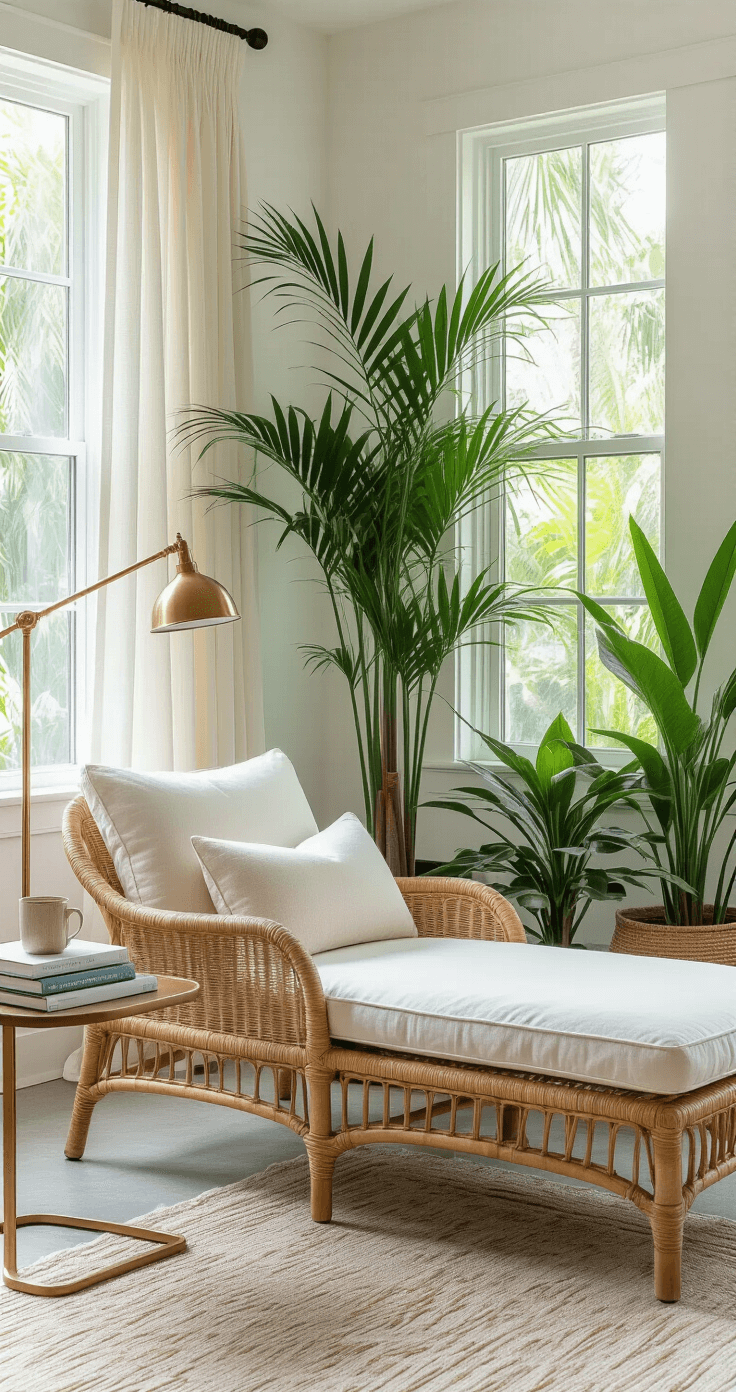
🏠 Steal This Look
- Paint Color: Benjamin Moore White Dove OC-17
- Furniture: weathered teak daybed with Sunbrella cushions in a sandy neutral
- Lighting: rattan pendant cluster with three staggered heights
- Materials: seagrass, reclaimed wood, performance linen, powder-coated aluminum
I learned this the hard way after my ‘perfect’ linen sofa turned green with mildew—now I only recommend materials that can handle humidity swings and honest living.
The Foundation: Furniture That Actually Survives Florida Living
Weather-resistant doesn’t mean ugly.
I’ll die on this hill.
Your Florida room furniture needs to handle humidity, direct sunlight, and temperature swings—but it shouldn’t look like patio furniture you’d find at a highway gas station.
The Smart Furniture Lineup
Start with pieces that earn their keep:
Seating that makes sense:
- Wicker chairs with powder-coated frames (the coating prevents rust and peeling)
- Rattan furniture with removable cushions you can actually wash
- Teak wood pieces that age beautifully instead of looking beaten down
- A chaise lounge positioned where afternoon light hits (trust me, you’ll fight over this spot)
Tables that work:
- Coffee tables low enough that you don’t knock your shins but high enough for actual use
- Side tables within arm’s reach of every seat (nobody wants to get up for their drink)
- A dining table if your space allows—Sunday brunch in a Florida room is undefeated
I learned this the hard way after buying gorgeous upholstered chairs that developed mildew spots within three months.
Now I only buy furniture with high-performance fabrics.
Sunbrella cushions cost more upfront but last years without fading, and they resist moisture like magic.
The Layout That Encourages Actual Hanging Out
Nobody wants to sit in a room arranged like a doctor’s waiting area—chairs lined up against walls, everyone staring at each other awkwardly.
Save this article
Enter your email and we'll send it straight to your inbox.
Create conversation zones instead:
- Position seating in a loose U-shape or L-shape
- Keep walkways at least 30 inches wide (you’ll bump into furniture otherwise)
- Angle a chair slightly toward the best view—gives people permission to gaze outside
- Leave negative space—not every corner needs furniture
Think about how many people you’ll typically host.
Two people who live alone need different seating than a family of five who entertains every weekend.
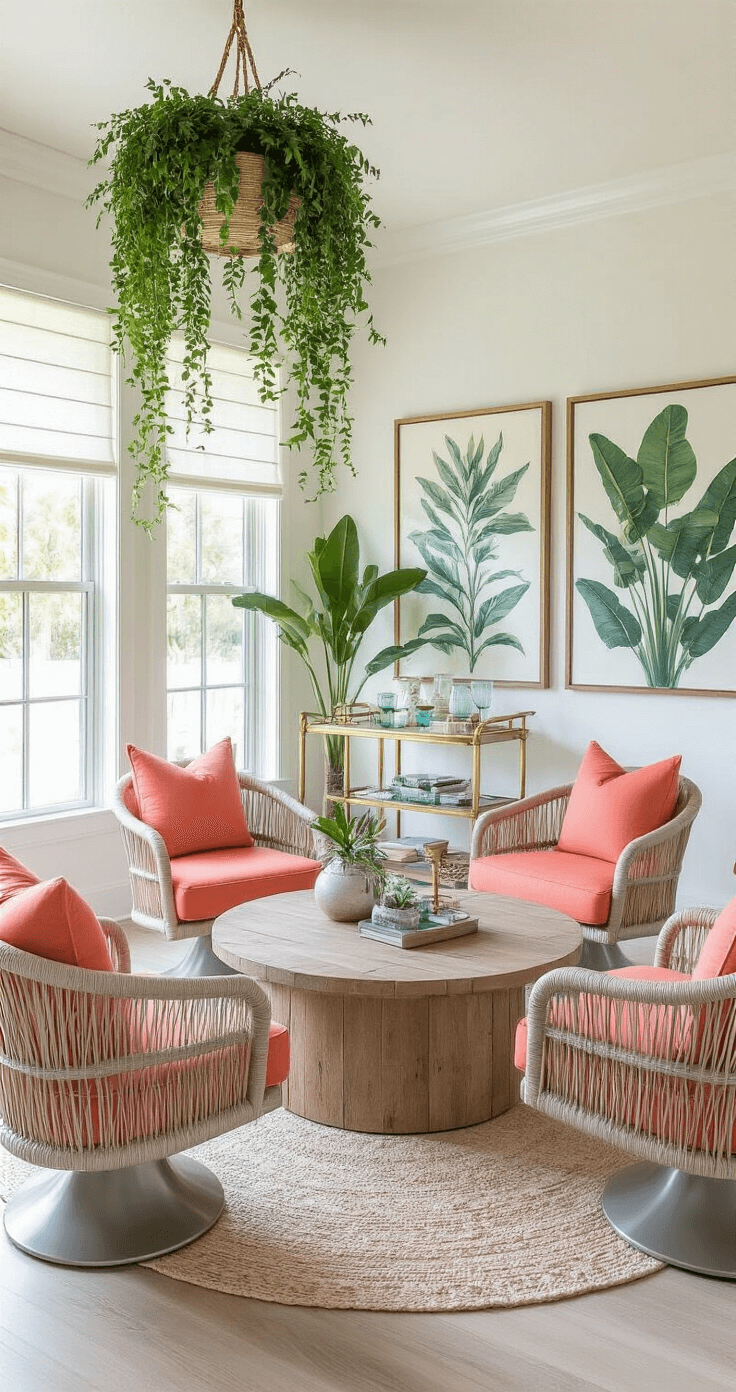
🎨 Steal This Look
- Paint Color: Farrow & Ball Green Smoke 47
- Furniture: Kouboo Rattan Peacock Chair with powder-coated iron frame, Article Sven Charme Tan Leather Daybed for the chaise lounge position, Polywood Nautical Adirondack Chairs in Vintage Finish
- Lighting: Regina Andrew Design Clove Cordless Table Lamp in natural rattan
- Materials: Powder-coated aluminum frames, all-weather wicker weave, marine-grade Sunbrella cushions, solid teak with natural oil finish, seagrass and abaca fiber accents
I’ve watched too many friends replace their ‘indoor-outdoor’ furniture after a single Florida summer because they bought based on looks alone—learn from their sun-bleached mistakes and invest once.
Color: Where Most People Go Wrong
Walk into a Florida room decorated in 2010 and you’ll probably see an explosion of coral, turquoise, and lime green—all screaming at each other like a Jimmy Buffett concert threw up.
Don’t do this.
The color approach that actually works:
Start with a neutral base—whites, soft creams, light grays.
This creates the airy, bright feeling you want while keeping the space from looking like a tropical-themed restaurant.
Then add color strategically through:
- Throw pillows in coastal blues and seafoam greens
- An area rug that ties your palette together (I like subtle patterns better than solid colors)
- Artwork featuring botanical or ocean themes
- Plants (we’ll get to those in a minute)
My go-to color combinations:
- Classic Coastal: White wicker + navy cushions + sandy beige accents
- Modern Tropical: Light gray furniture + coral pillows + emerald green plants
- Old Florida: Natural teak + cream fabrics + pops of vintage turquoise
The trick is choosing three to five colors maximum and repeating them throughout the space.
This creates cohesion without looking matchy-matchy or boring.
I once helped a friend who’d painted her Florida room walls bright yellow thinking it would feel “sunny.”
It felt like being inside a highlighter.
We repainted with a soft white and added yellow through cushions instead—suddenly the room breathed again.
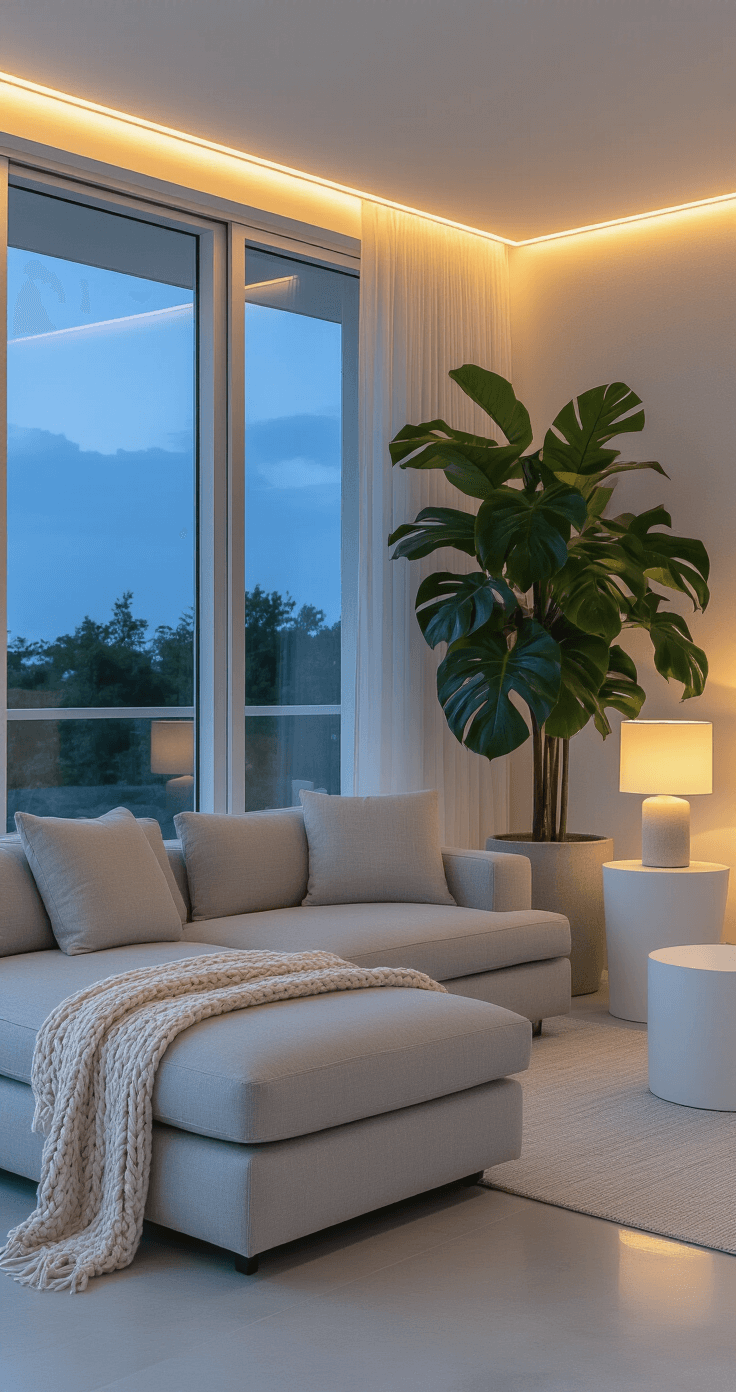
🎨 Steal This Look
- Paint Color: Behr Swiss Coffee 12
- Furniture: white wicker loveseat with navy cushions
- Lighting: natural rattan pendant light
- Materials: woven rattan, bleached wood, linen, jute
I learned this the hard way after painting my own Florida room a cheerful aqua that looked magical for about three weeks, then suffocating every afternoon when the sun hit it full force.
Window Treatments: Solving the Too Much Light Problem
Yes, too much light is a real problem.
Nobody tells you this until you’re sitting in your Florida room at 3 PM with the sun beating through the glass, sweating through your shirt and unable to see your book.
You need control without losing the openness:
- Woven shades that filter light while maintaining privacy
- Sheer curtains you can pull when needed without blocking the view
- Modern blinds with adjustable slats for precise light control
- Electric screens if your budget allows (total game-changer for versatility)
This post may contain affiliate links. Please see my disclosure policy for details.
Want to keep this one?
We'll email you the link so you can find it again later.