

Farmhouse Easter Decor That’ll Make Your modern barn home ideas Feel Like a Cozy Cottage
Contents
Farmhouse Easter decor transforms ordinary spaces into charming spring sanctuaries without requiring a design degree or trust fund.
I’ve spent years perfecting my farmhouse Easter style, and I’m not going to bore you with theories about “curated aesthetics” or pretentious design principles.
What I am going to share is the actual process I use every spring to turn my dining room, mantel, and buffet into spaces that make guests ask, “Did you hire a decorator?”
Why Your Easter Decor Probably Feels Off
Let me guess what happens when you try decorating for Easter.
You buy a bunch of cute pastel items from Target, scatter some eggs around, plop a bunny here and there, and step back thinking, “This should look adorable.”
Instead, it looks like Easter threw up on your furniture.
I know because I did this for three years straight before figuring out what was wrong.
The problem isn’t your items—it’s that you’re treating decoration like a treasure hunt where you hide things around your house.
Real farmhouse Easter decor follows specific principles about layering, color harmony, and intentional placement.
What Makes Farmhouse Easter Different
Farmhouse Easter isn’t about perfection.
It’s about creating lived-in, welcoming spaces that blend rustic vintage elements with fresh spring touches.
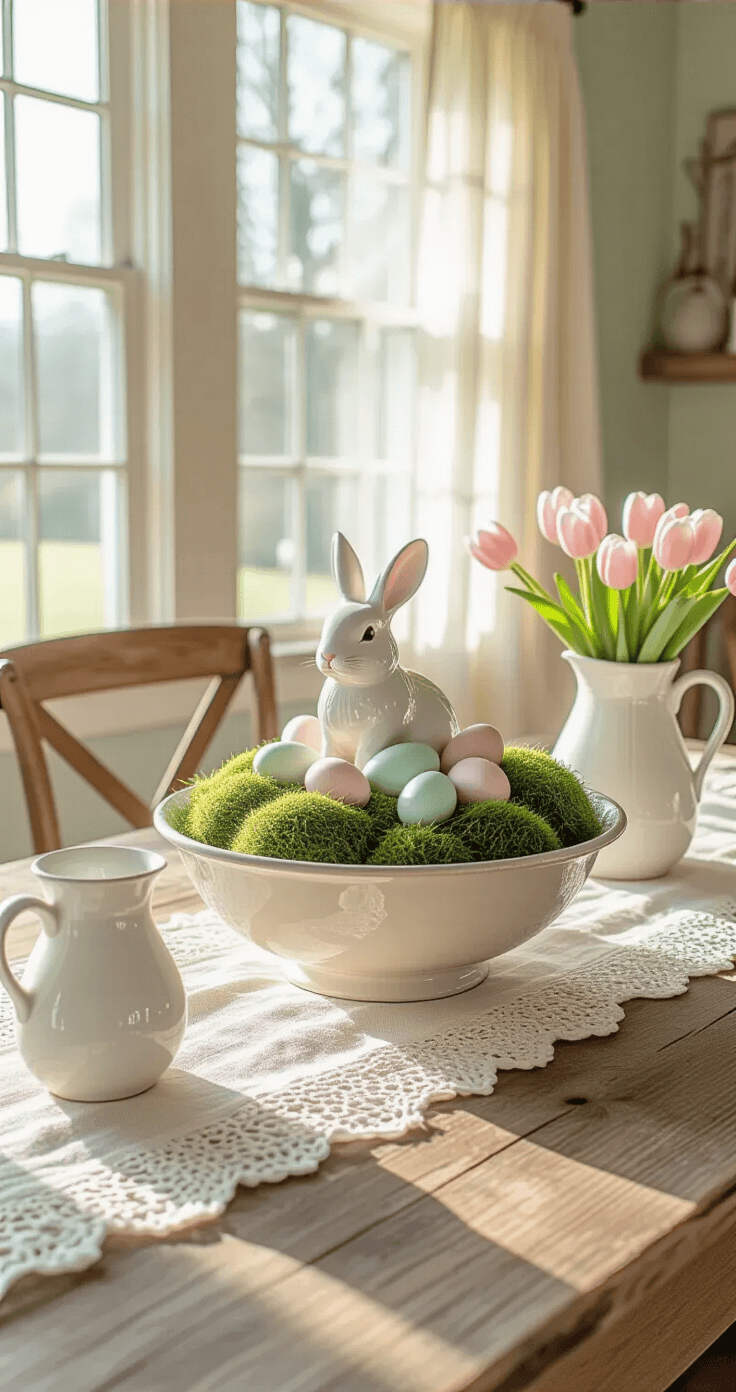
Think weathered wood meeting soft pastels. Lace tablecloths bunched up for texture instead of ironed flat. Eggs nestled in moss inside an old dough bowl instead of lined up in a plastic basket.
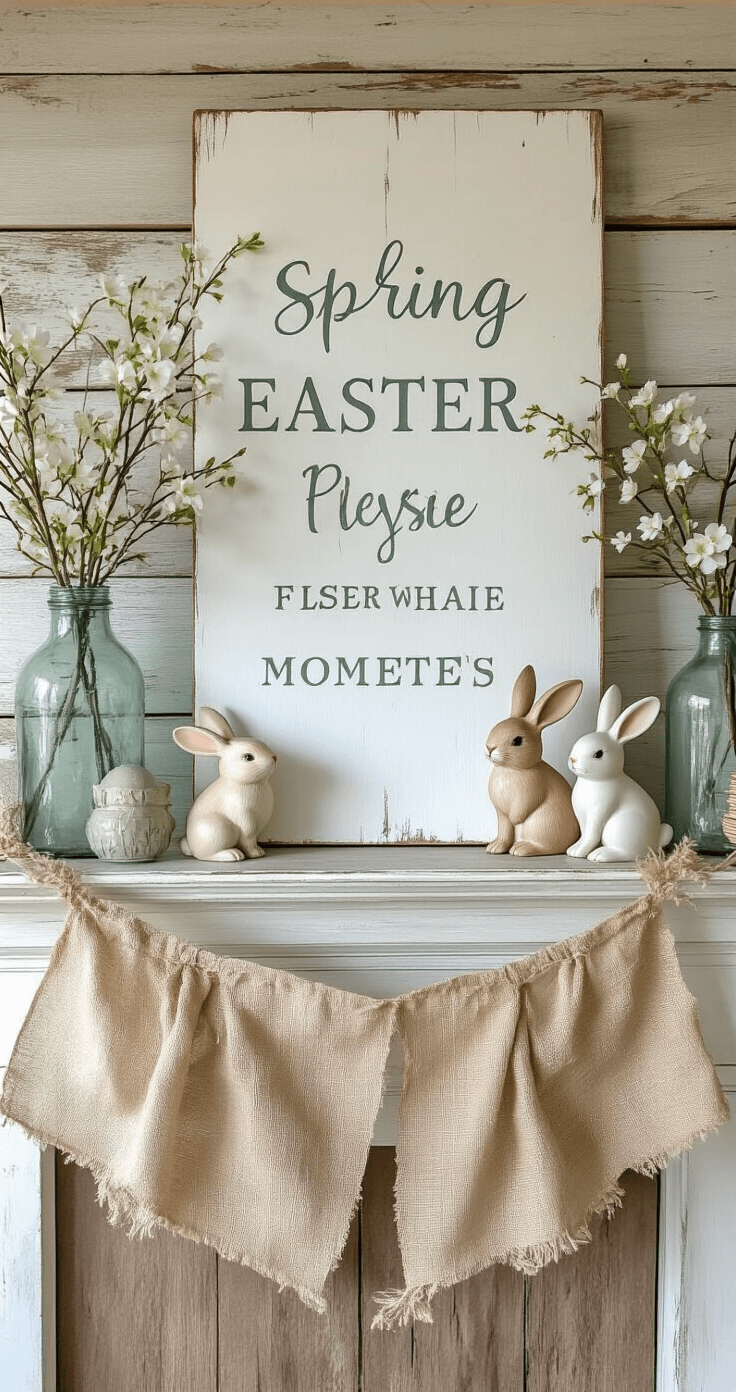
The style works because it combines:
- Vintage pieces (thrifted ceramics, antique glassware, old wooden boxes)
- Natural elements (moss, branches, fresh flowers, cotton stems)
- Soft pastels (blush pink, powder blue, mint green, cream)
- Rustic textures (reclaimed wood, linen, burlap, aged metal)
Last spring, I decorated my entire dining room for under $45 by shopping my house first and hitting two thrift stores for vintage egg cups and ceramic bunnies.
The compliments I got made me realize something important: expensive doesn’t equal impressive.
Your Farmhouse Easter Shopping List
Let me break down what you actually need versus what stores try to convince you to buy.
The Non-Negotiables
Start with these hero pieces:
- Wooden dough bowls or vintage wooden boxes for your main centerpiece
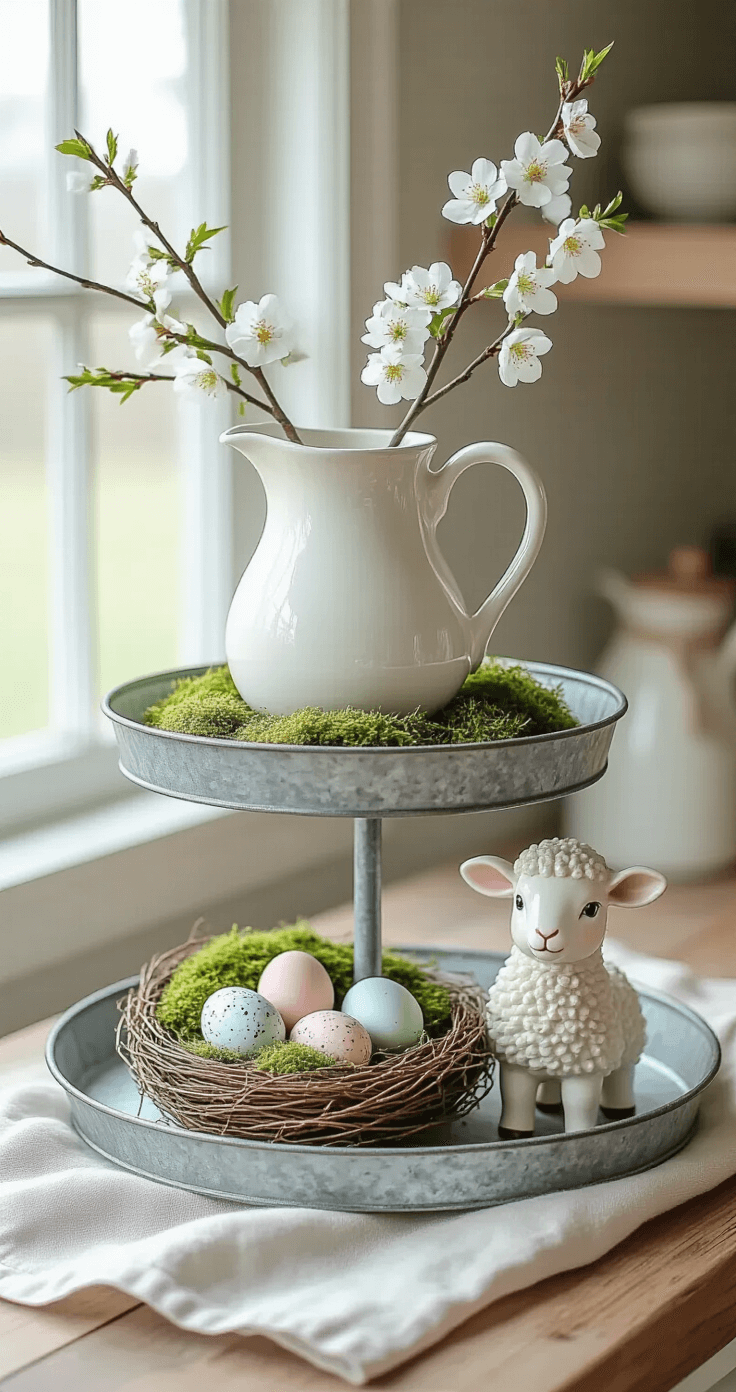
- Tiered trays for creating focal displays on counters or buffets
- White ceramic pitchers (check thrift stores first—I’ve found mine for $3 each)
Fill your displays with:
- Pastel artificial eggs in various sizes (get way more than you think you need)
- Ceramic or wooden bunny figurines (mix sizes—one large statement piece and several small ones)
- Artificial spring flowers like tulips, daffodils, or cherry blossoms
- Sheet moss from the craft store (this becomes your best friend)
Add texture with:
- Lace tablecloths or runners (vintage ones from estate sales have the best character)
- Linen napkins in cream or soft pastels
- White plates and chargers (I use water hyacinth chargers for extra farmhouse texture)
The Nice-to-Haves
These elevate your displays from good to “where did you learn this?”
- Vintage glassware like depression glass or old glass insulators
- Cake stands in white or metal for creating height variations
- Cotton branches or pussy willow stems
- Small farmhouse signs with spring quotes
- Vintage flash cards with spring animals
- Tea cups and small ceramic bowls from secondhand shops
The Budget Hacks
I’ve decorated gorgeous Easter displays spending almost nothing by:
- Using mason jars as vases instead of buying new containers
- Painting dollar store wooden signs with farmhouse sayings
- Collecting eggs from my own chickens (real eggs work if you blow them out properly)
- Repurposing wooden crates as display risers
- Making my own fabric carrots from scrap material
One year I hot-glued lace trim onto plain white pillar candles and everyone thought they were expensive boutique candles.
They cost me $1.50 total.

The 1-2-3 Formula That Makes Everything Look Intentional
Here’s the styling secret that changed everything for me.
I call it the 1-2-3 Formula, and once you understand it, you’ll never struggle with arranging decor again.
1 = Your hero piece (the star of your display)
2 = Your supporting actors (medium-sized items that complement the hero)
3 = Your extras (small details that fill gaps and add interest)
Let me show you how this works on a dining table centerpiece.
Building Your Centerpiece
Start with your hero (1):
Place your dough bowl or wooden box in the center of your table.
Fill it with sheet moss until it’s fluffy and overflowing slightly.
Add a cluster of pastel eggs nestled into the moss—use odd numbers (5, 7, or 9 eggs look most natural).
Position your largest ceramic bunny figurine slightly off-center in or beside the bowl.
Add your supporting actors (2):
On either side of your hero bowl, place two white pitchers or vintage bottles.
Fill them with spring flowers at varying heights—one tall arrangement, one shorter.
These should be roughly the
Conclusion
We hope this guide has given you the inspiration and information you need to make the most of your experience. Remember that the best adventures are the ones where you’re fully present and open to new possibilities. Take what you’ve learned here and create memories that will last a lifetime. Whether you’re a first-time visitor or a seasoned local, there’s always something new to discover. Start planning your next adventure today.
This post may contain affiliate links. Please see my disclosure policy for details.


