

Florida Kitchen Design: Creating Coastal Spaces That Actually Work
Florida kitchen design demands more than pretty coastal colors and some seashell decor.
I learned this the hard way when I first moved to Tampa and tried to replicate my New England kitchen aesthetic.
Big mistake.
The humidity attacked my cabinets within months, the closed-off layout felt suffocating in the heat, and I realized I was fighting against what Florida living is actually about.
Why Your Kitchen Needs to Think Like a Floridian
Here’s what nobody tells you about designing a Florida kitchen.
Your space needs to handle brutal humidity, intense sun exposure, and a lifestyle that refuses to stay indoors.
You’re not just cooking here. You’re entertaining, flowing between your lanai and kitchen island, and dealing with weather that can go from paradise to hurricane watch in the same week.
The old approach of treating kitchens as separate rooms died somewhere around 2015. Now we’re building architectural volumes that connect, breathe, and actually make sense for how people live.

The Island Isn’t Just for Cooking Anymore
Walk into any newly designed Florida kitchen and you’ll spot it immediately.
The island dominates the room like a piece of sculptural furniture.
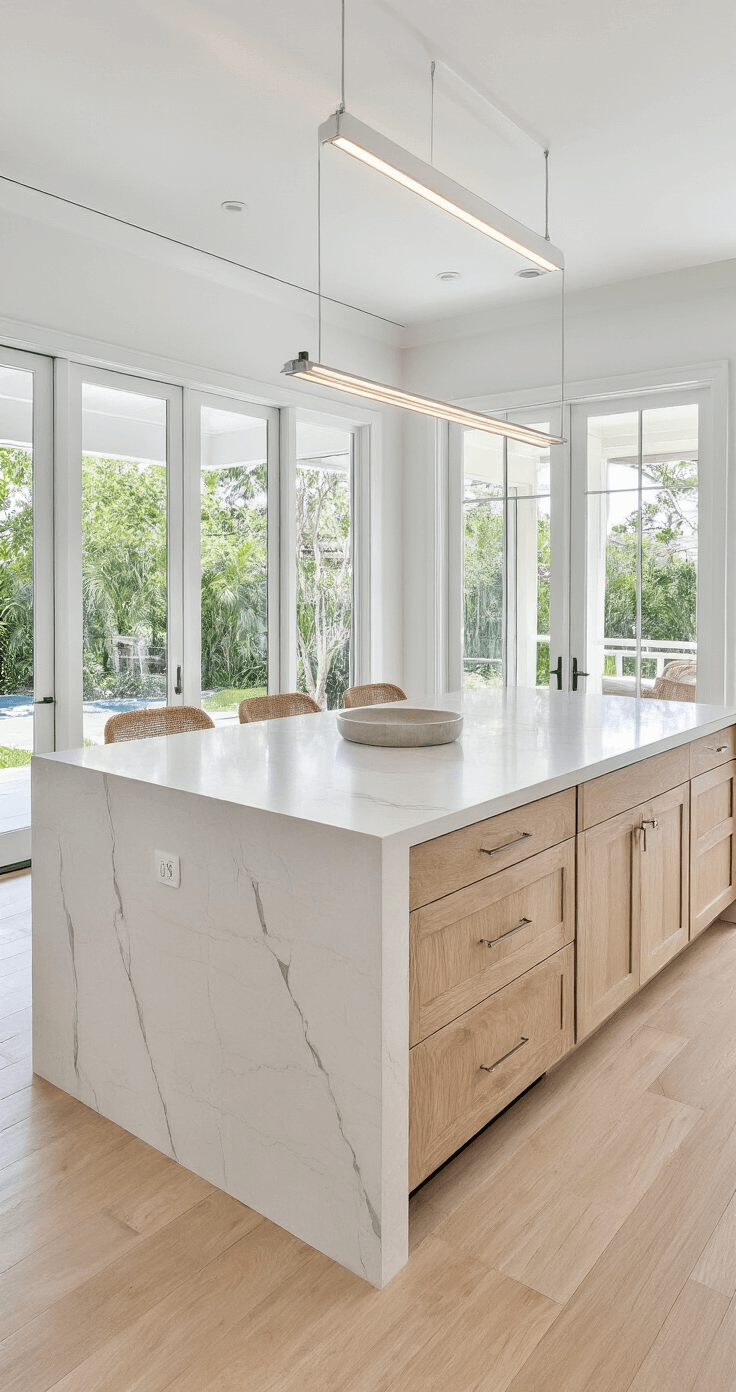
I replaced my basic builder-grade island two years ago with a waterfall edge quartzite countertop installation, and it completely transformed how we use the space.
Here’s what modern Florida islands actually do:
- Serve as the primary dining spot for quick meals and casual entertaining
- Provide hidden storage that keeps clutter off counters in open floor plans
- Create natural room division without blocking sightlines
- Anchor the space visually so your eye knows where to land
- Offer prep space that multiple people can use simultaneously
The furniture-like presence matters more than you’d think.
Fluted bases, mixed materials, and bold stone choices make the island feel intentional rather than like an afterthought.
My neighbor went with a navy blue base and white oak waterfall edge, and honestly, I’m still jealous.
The combination brings warmth without feeling heavy.

Stop Fighting the Outdoors (Start Inviting It In)
This is where Florida kitchens separate themselves from everywhere else.
Indoor-outdoor flow isn’t a luxury feature. It’s a fundamental requirement.
I spent three months researching hurricane-rated sliding glass doors before committing to a full wall of multi-slide panels.
Best decision I’ve made in home renovation.
The seamless transition requires:
- Glass systems that fully retract or stack to eliminate barriers
- Flooring materials that continue from inside to outside patios
- Coordinated ceiling heights that don’t create awkward visual drops
- Kitchen layouts that orient toward outdoor views and entertainment spaces
- Weather-resistant materials near openings that handle moisture and sun
My kitchen now opens completely to our covered lanai.
When we entertain, nobody’s stuck inside while others enjoy the breeze. The space feels three times larger, and the natural ventilation actually helps with cooling costs.
Materials That Won’t Betray You in Year Three
Here’s where I made my biggest early mistakes.
I chose gorgeous matte white cabinets that showed every humidity mark and required constant maintenance.
Florida’s climate attacks materials that work perfectly fine in Arizona or Colorado.
Materials that actually survive Florida living:
- Honed quartzite and granite that don’t show water spots like polished surfaces
- Wood cabinetry with proper sealing and matte finishes that hide minor wear
- Recycled quartz countertops that resist moisture penetration
- Mixed-material combinations that add texture without maintenance headaches
- Hardware finishes like brushed brass or matte black that age gracefully
I switched to white oak cabinets with a matte finish last year.
The subtle grain pattern hides the reality of daily life while still looking refined.
The stark white trend photographs beautifully but lives terribly in humid climates.
Your cabinets will develop a patina whether you want them to or not, so choose materials that look better with age rather than worse.

The Architectural Approach Nobody Explains
This concept changed how I think about kitchen design completely.
Treating the kitchen as an integrated architectural volume means coordinating everything with the home’s bones. Not just picking pretty finishes.
When my architect friend walked through my space, she immediately pointed out mismatched ceiling heights, windows placed with no relationship to the island, and sightlines that led nowhere interesting.
Architectural intention includes:
- Ceiling heights that create volume without feeling cavernous
- Window placement coordinated with task areas and views
- Structural elements like beams that define zones naturally
- Sightlines from entry points that land on focal features
- Balance between solid walls and openings that feels purposeful
I raised one section of ceiling above the island and added a linear LED pendant system that follows the quartzite edge.
That single change made the room feel twice as intentional.
Now the space has visual hierarchy instead of being a flat box with cabinets.

Colors That Work With (Not Against) Florida Light
The light here is different.
Intense, angled, and unforgiving to color choices that work beautifully in dimmer climates.
I tested seven different white paint samples before realizing they all looked slightly yellow in our western-facing kitchen.
Coastal whites and sandy beiges form your foundation, but they need more nuance than just picking “Simply White” and calling it done.
Look for whites with slight gray or blue undertones that counteract the warm Florida sunlight.
Bold accent colors bring the personality without overwhelming.
I painted my island base in a deep teal that reads almost navy in afternoon light but comes alive
This post may contain affiliate links. Please see my disclosure policy for details.


