How to Create the Perfect Grandmacore Living Room (Without Looking Like a Time Capsule)
Contents
- How to Create the Perfect Grandmacore Living Room (Without Looking Like a Time Capsule)
- What Exactly Is Grandmacore (And Why Everyone’s Obsessed)
- Why This Look Actually Works in Modern Homes
- Starting Your Grandmacore Journey (The Smart Way)
- The Color Palette That Makes Everything Work
- Furniture That Forms Your Foundation
- Pattern Mixing (Without Looking Like a Circus)
- Book Your Stay in Sarasota
Grandmacore living room design brings back the cozy, layered aesthetic our grandmothers perfected.
I’ll be honest with you.
When I first heard about grandmacore, I thought someone was playing a joke on interior design.
But then I visited my friend Sarah’s newly decorated apartment, and everything clicked.
She’d taken her grandmother’s old credenza, paired it with a vintage floral armchair, and suddenly her sterile white-box apartment felt like home.
That warmth you feel walking into your grandmother’s living room?
You can recreate it without turning your space into a museum.

What Exactly Is Grandmacore (And Why Everyone’s Obsessed)
Grandmacore isn’t about copying your grandmother’s house exactly.
It’s about capturing that feeling.
You know the one—where everything feels lived-in, loved, and deeply personal.
The aesthetic centers on:
- Heavy wooden furniture with history
- Patterns everywhere (and I mean everywhere)
- Brass accents that have earned their patina
- Textiles your grandmother would actually use
- Collections displayed with pride, not hidden away
Unlike the cold minimalism that’s dominated design for years, grandmacore celebrates abundance.
But here’s the trick—it’s curated abundance, not chaos.
Why This Look Actually Works in Modern Homes
I spent five years living in a minimalist apartment.
White walls, three pieces of furniture, one sad succulent.
It looked great in photos but felt like a waiting room.

Grandmacore solves that problem by prioritizing comfort over Instagram-perfect sterility.
The style works because:
- Vintage pieces are often better quality than modern equivalents
- Thrifting and secondhand shopping keeps costs reasonable
- Every item tells a story (making your space uniquely yours)
- The aesthetic forgives imperfection—actually thrives on it
- Layered textures create warmth modern design often lacks
Plus, buying vintage is genuinely sustainable.
You’re not adding to manufacturing demand, and you’re saving beautiful pieces from landfills.
Starting Your Grandmacore Journey (The Smart Way)
Don’t run out and buy everything at once.
I made that mistake, and my living room looked like an antique store exploded.
Begin with one anchor piece.
For me, it was a solid oak bookshelf I found at an estate sale for $80.
That piece set the tone for everything else.
Your anchor could be:
- A heavy wooden coffee table with character
- An upholstered armchair in a bold floral print
- A substantial credenza or sideboard
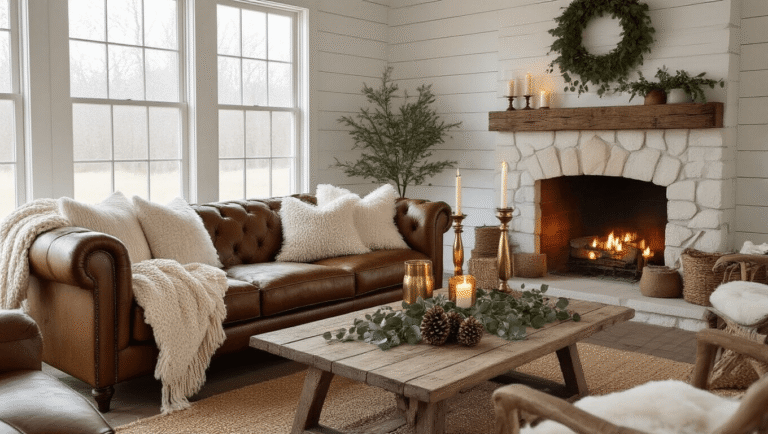
- A vintage leather sofa in cognac or brown
Once you have that foundation, everything else builds around it.

The Color Palette That Makes Everything Work
Forget stark white and builder’s beige.
Grandmacore lives in the warm, muted spectrum:
Primary colors:
- Dusty rose and blush pink
- Sage and olive green
- Cream and warm beige
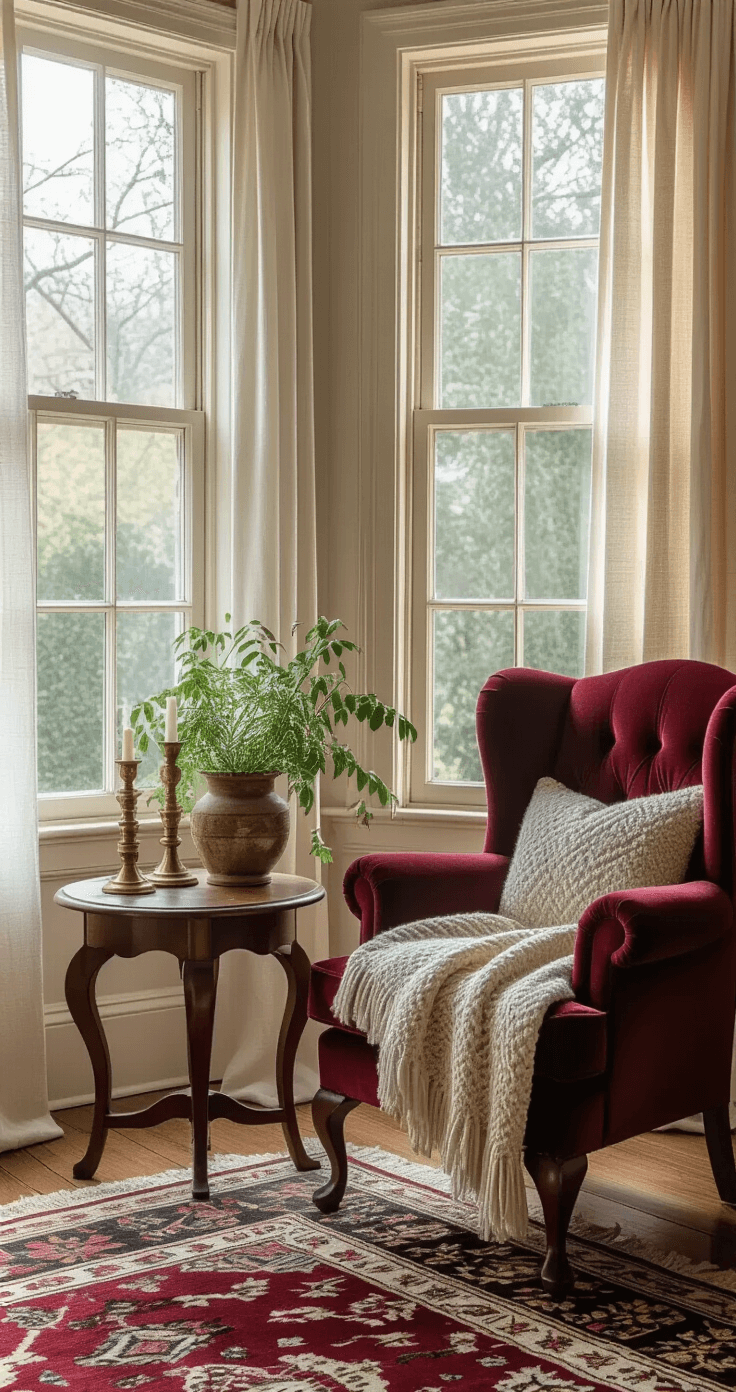
- Wine red and bordeaux
- Rich browns and cognac
These colors work because they:
- Create warmth without overwhelming
- Pair beautifully with wood tones
- Serve as a neutral backdrop for patterns
- Photograph well in natural light
- Age gracefully (no trendy colors that’ll look dated)
I painted one accent wall in my living room a soft sage green.
It transformed the space from generic to grounded in about three hours.
Furniture That Forms Your Foundation
Heavy furniture is non-negotiable in grandmacore design.
Those flimsy particle board pieces from big-box stores won’t cut it.
Hunt for:
Dark wood pieces with substance
- Solid wood coffee tables (bonus points for glass tops)
- Heavy bookcases and wall units
- Substantial side tables with drawers
- China cabinets or display cases
Upholstered seating with character
- Overstuffed sofas (leather or fabric)
- Wing-back chairs
- Slipcovered pieces in linen or cotton
- Tufted ottomans that double as extra seating
The best part?
You can find these pieces at estate sales, thrift stores, and online marketplaces for a fraction of new furniture costs.
I furnished my entire living room for under $600 by shopping patiently over three months.
Pattern Mixing (Without Looking Like a Circus)
This is where people get scared.
But pattern mixing is what gives grandmacore its personality.
The rules are simpler than you think:
Start with one dominant pattern
- Floral wallpaper or a large floral sofa
- A bold oriental rug
- Paisley or toile curtains
Layer in complementary patterns at smaller scales
- Gingham throw pillows
- Striped blankets
- Checkered cushions
- Embroidered accents
Keep your color palette consistent across all patterns
I have a floral sofa, gingham pillows, and a striped throw—all in shades of dusty pink, cream, and sage.
It shouldn’t work on paper, but
Book Your Stay in Sarasota
Find the perfect accommodation.
This post may contain affiliate links. Please see my disclosure policy for details.