How To Get The Old Florida Aesthetic (Without It Looking Like A Tourist Trap)
The Old Florida aesthetic is one of those styles that feels like a long exhale.
You know that feeling when you walk into a breezy, sun-washed room and your shoulders just drop?
That’s it.
That’s exactly what we’re chasing here.
But here’s the thing — a lot of people try to pull this look together and end up with something that feels more like a souvenir shop than a dreamy coastal retreat.
Too many shells.
Too much plastic.
Too “beach vacation rental” and not enough “actually lives here.”
I’ve been styling rooms in this aesthetic for years, and I’ve made every mistake in the book.
So let me save you the time, the money, and the mild decorating heartbreak.
This guide covers everything — from the furniture that makes the look, to the colors, the textures, the plants, the accessories, and how to keep it fresh all year long.
Whether you’re starting from scratch or just doing a quick refresh, I’ve got you.
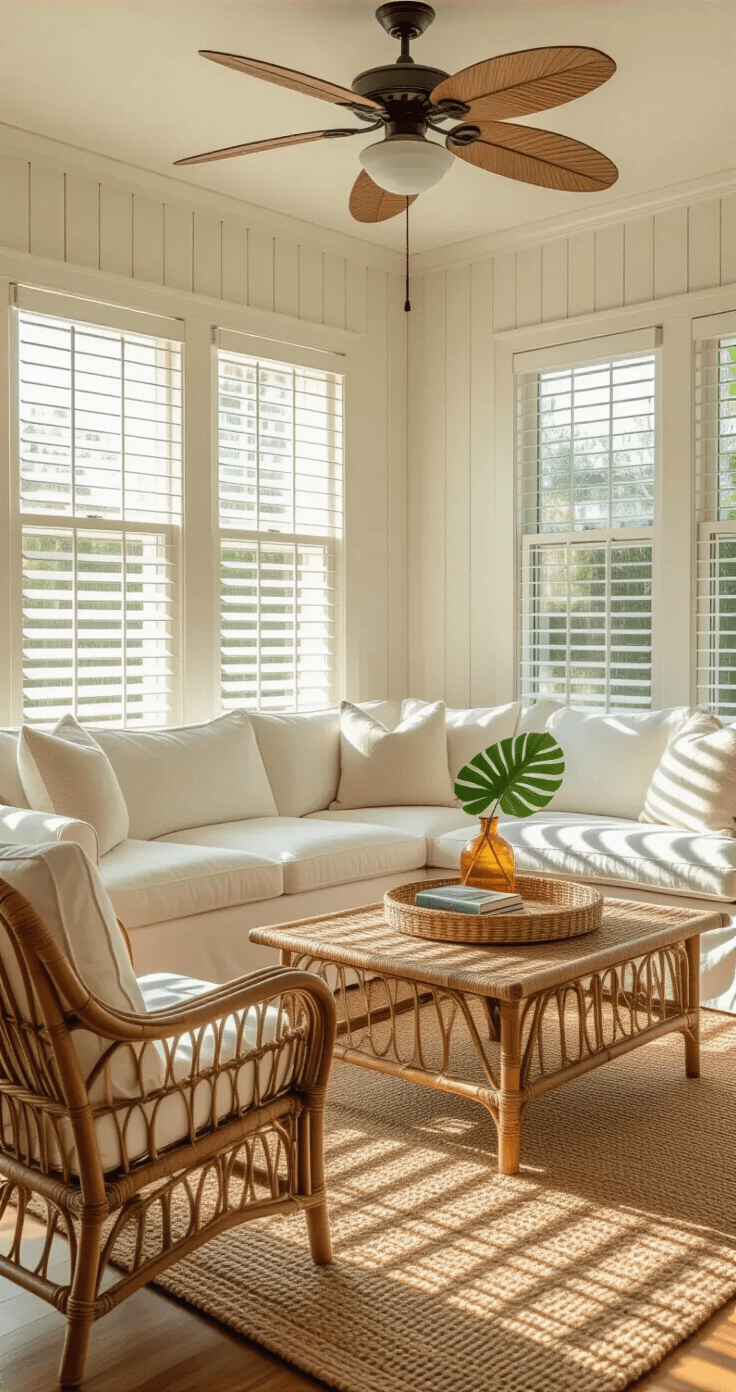
What Actually Makes Something “Old Florida Style” (And What Doesn’t)
Before you buy a single thing, let’s get clear on what this style actually is.
Old Florida aesthetic is not just “beach house.”
It’s a very specific vibe — think relaxed coastal living mixed with vintage nostalgia and a generous splash of tropical charm.
It pulls from mid-century Florida — the 1950s and 60s — when life in the Sunshine State meant ceiling fans, jalousie windows, rattan furniture on the porch, and a glass of something cold in your hand at all times.
It’s Key West cottages, Miami bungalows, and old-school Florida motels — but pulled into your actual home in a way that feels timeless, not themed.
What it IS:
- Airy and light-filled
- Warm and a little nostalgic
- Tropical but not kitschy
- Relaxed and casually layered
- Rooted in natural materials and soft, sun-bleached color
What it is NOT:
- Nautical or “anchor and rope” coastal
- Modern minimalist
- Heavy or dark
- Overly rustic or farmhouse
- A beach souvenir collection exploded across your living room
Got it?
Good.
Let’s build this thing.
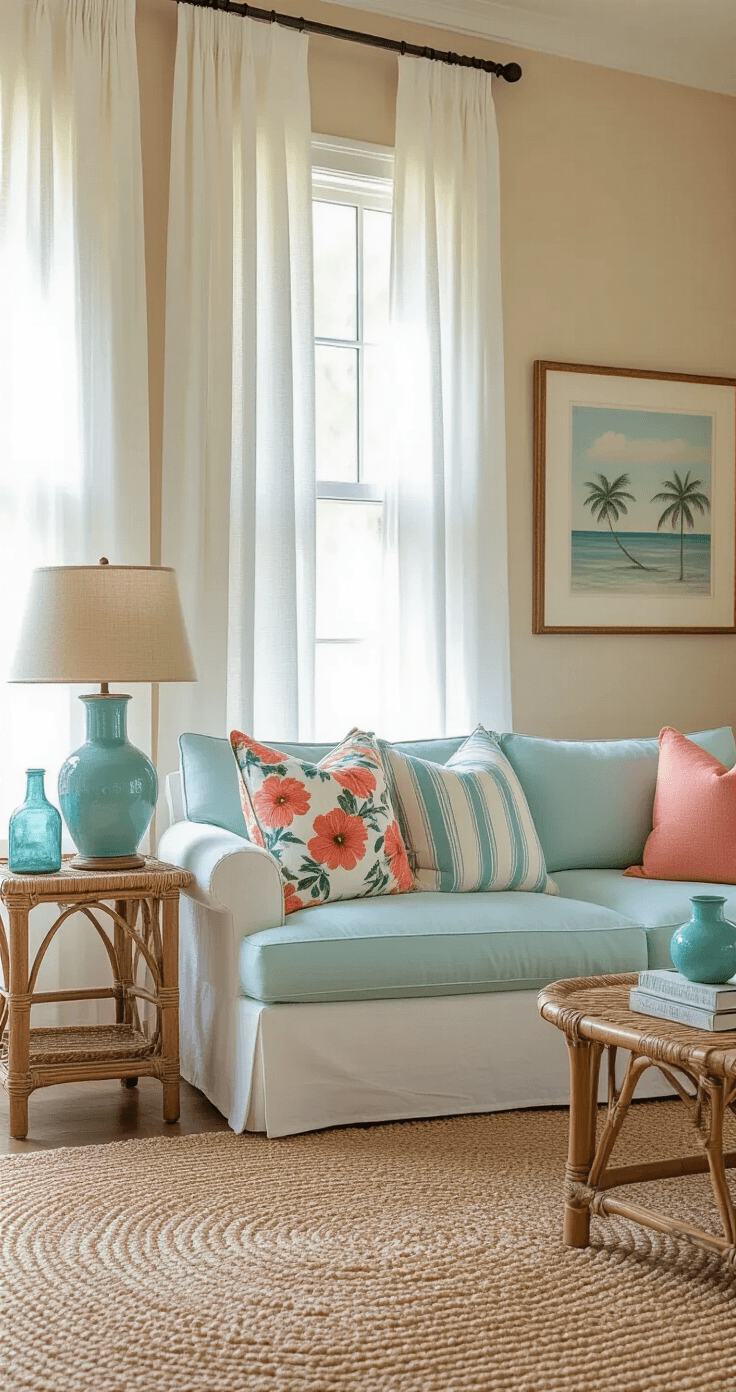
The Color Palette That Makes Old Florida Feel So Good
Color is everything in this aesthetic.
Get it right and your room will feel like a permanent vacation.
Get it wrong and it’ll feel either too sterile or like the inside of a waterpark gift shop.
Here’s the formula I use every single time:
Save this article
Enter your email and we'll send it straight to your inbox.
The 60-70-20-10 Rule:
- 60–70% light neutrals — warm whites, sandy beige, soft cream, pale linen
- 20–30% pastels — seafoam, sky blue, mint, blush, pale yellow
- 10–20% saturated tropical accents — coral, turquoise, sunny yellow, leafy green
That means your walls, sofa, and large rug should be doing most of the neutral heavy lifting.
Your curtains, secondary seating, and textiles carry the pastels.
And your throw pillows, art, vases, and small accessories bring in the punchy tropical color.
A few color combos that absolutely work:
- Warm white + seafoam + coral + natural rattan
- Sandy beige + sky blue + sunny yellow + whitewashed wood
- Soft cream + mint + blush + aged brass
One important rule:
If you introduce a bold color, repeat it at least 2–3 times in the room.
One lone coral pillow looks like an accident.
Coral pillow + coral in the art + coral ceramic vase = intentional and gorgeous.
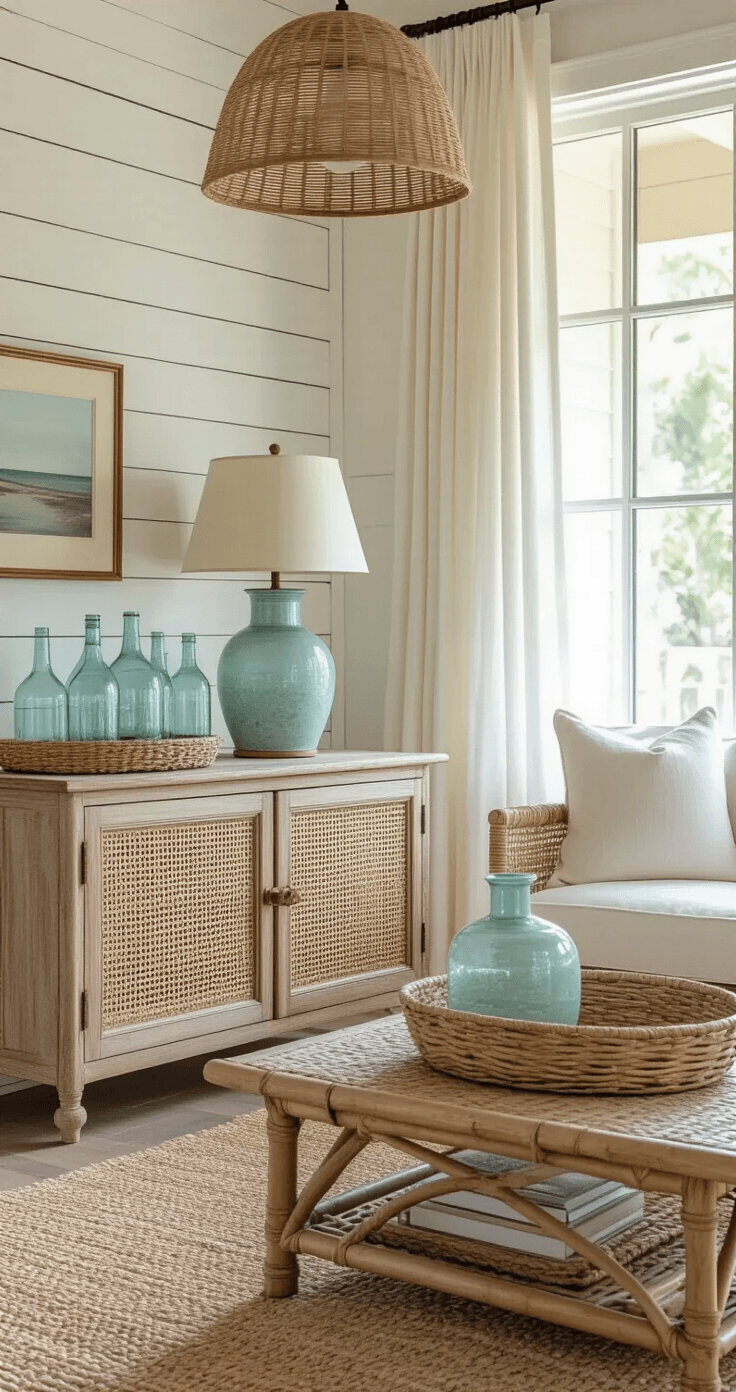
The Materials That Define The Old Florida Aesthetic
This is where the style really lives.
Old Florida is a textural experience as much as a visual one.
The core materials you need:
- Rattan, wicker, and cane — chairs, headboards, cabinet fronts, trays, baskets
- Bamboo — ceiling fans, shelving, lighting, small furniture
- Weathered or whitewashed wood — coffee tables, floors, shutters, paneling
- Pine and cypress — ceilings, trim, built-ins (the real Old Florida architectural detail)
- Natural fiber textiles — linen, cotton, lightweight blends for slipcovers and curtains
- Jute, seagrass, and sisal — rugs, baskets, woven accessories
- Aged brass and gold — hardware, sconces, lamp bases, mirror frames
- Glass — colored bottles in aqua, seafoam, and amber; vintage glassware; lanterns
The texture pairing that always works:
Smooth + rough.
Glass next to wicker.
Ceramic lamp on a jute tray.
Linen curtains against a weathered wood wall.
When you mix smooth and rough textures, the room stops looking flat and starts feeling alive.
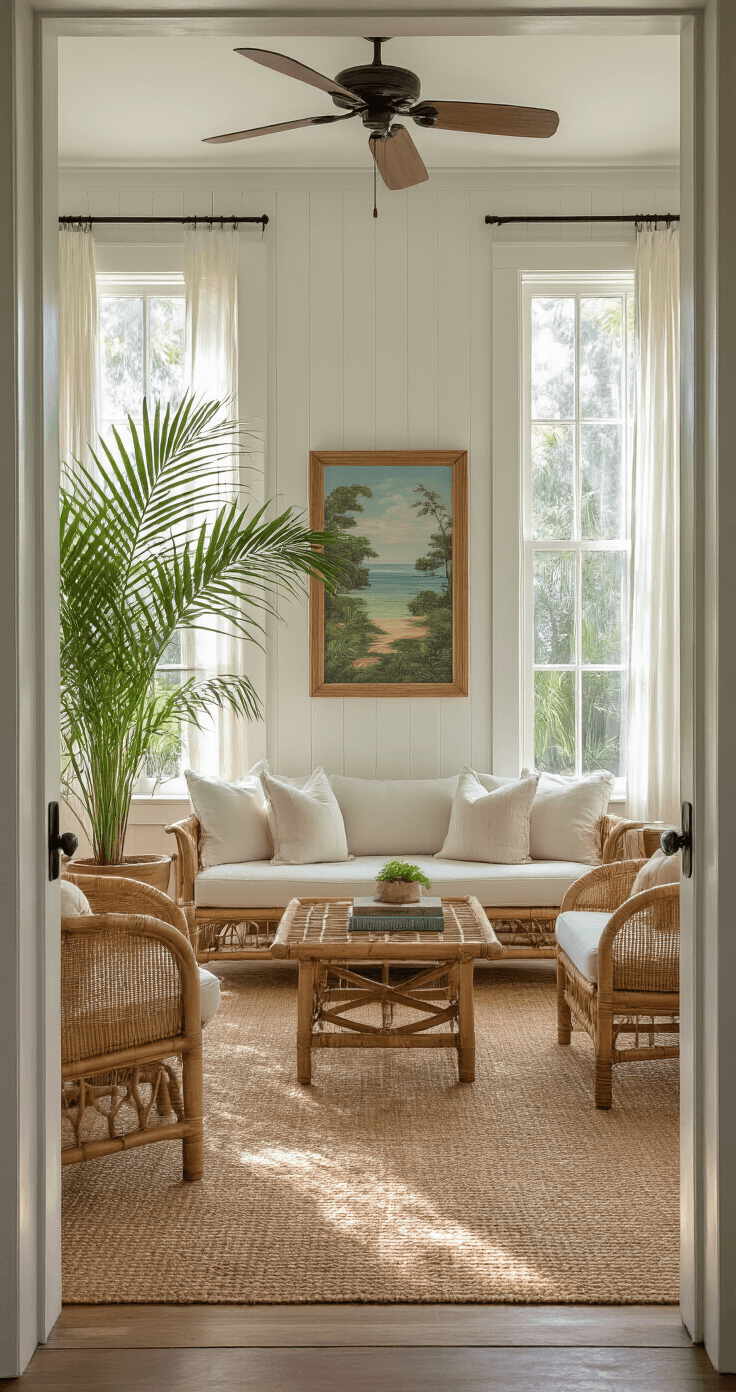
The Furniture That Anchors The Old Florida Look
Let’s talk about the pieces that do the heavy lifting.
These are your hero items — the ones that set the tone for everything else in the room.
The Non-Negotiables
1. A Rattan or Wicker Armchair
This is arguably the single most important piece in the entire aesthetic.
One good rattan armchair can transform a plain room into something that feels like a vintage Florida veranda.
Look for one with a loose cushion in white, natural linen, or a subtle tropical
This post may contain affiliate links. Please see my disclosure policy for details.
Want to keep this one?
We'll email you the link so you can find it again later.