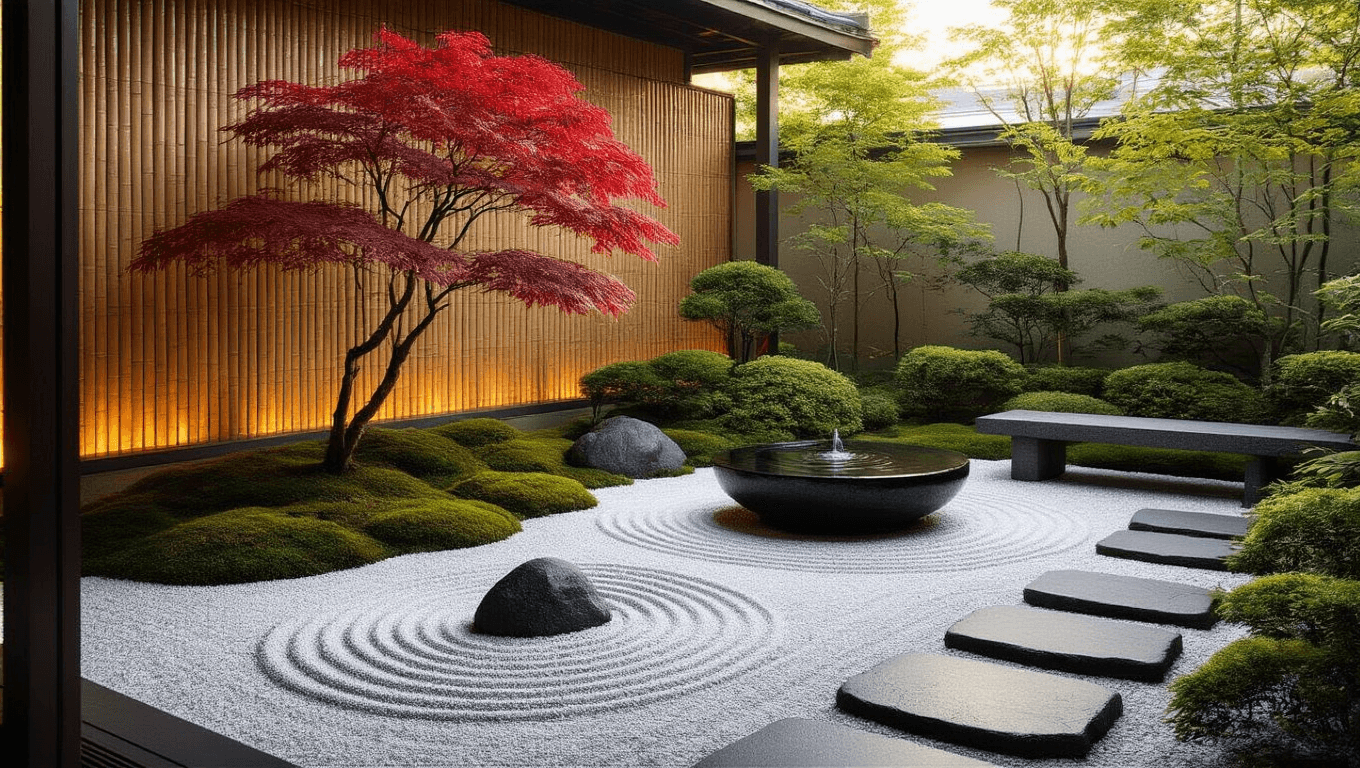
Why Japanese Gardens Are Magic for Compact Spaces
Let’s get real. Most of us are struggling with:
– Tiny balconies
– Cramped urban patios
– Limited outdoor areas
– Zero gardening experience
Good news: A Japanese garden is your secret weapon for transforming these challenges into zen-like retreats.
✎ Steal This Look
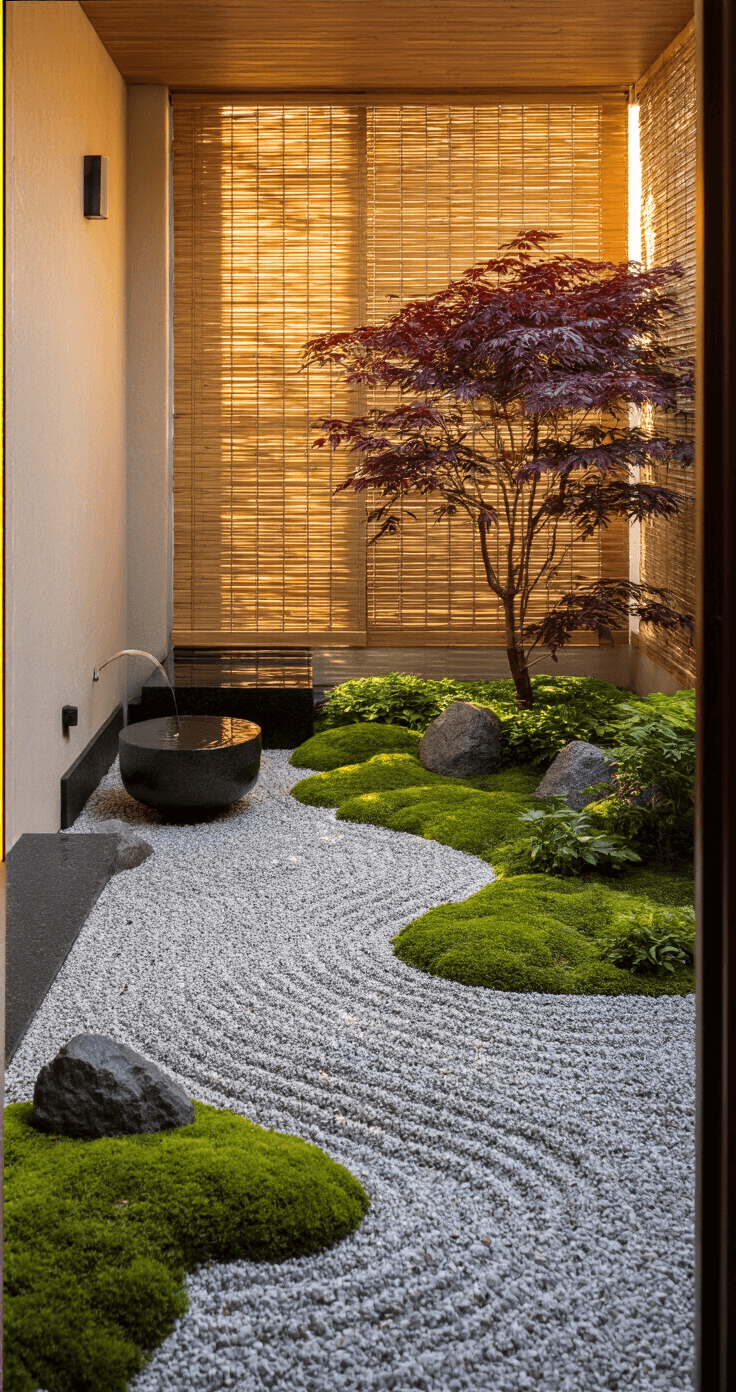
- Paint Color: Sherwin-Williams Natural Linen SW 9109
- Furniture: low black stone basin water feature with wall-mounted curved spout
- Lighting: warm LED strip lighting behind bamboo or wooden lattice screens for backlit glow
- Materials: raked white pea gravel, live moss patches, dark basalt accent stones, natural bamboo screening, unfinished cedar ceiling planks
This is the kind of space that stops your breath when you walk past it in the morning—proof that four walls and a sliver of sky can become your daily reset button.
🛒 Get The Look
The Zen Philosophy: More Than Just Looks
Japanese gardens aren’t just pretty. They’re a philosophy of:
– Harmony
– Simplicity
– Connection with nature
– Mindful design
Essential Elements for Your Miniature Zen Paradise
Must-Have Components:
– Thoughtful boundaries
– Strategic plant selection
– Minimal, meaningful decor
– Purposeful negative space
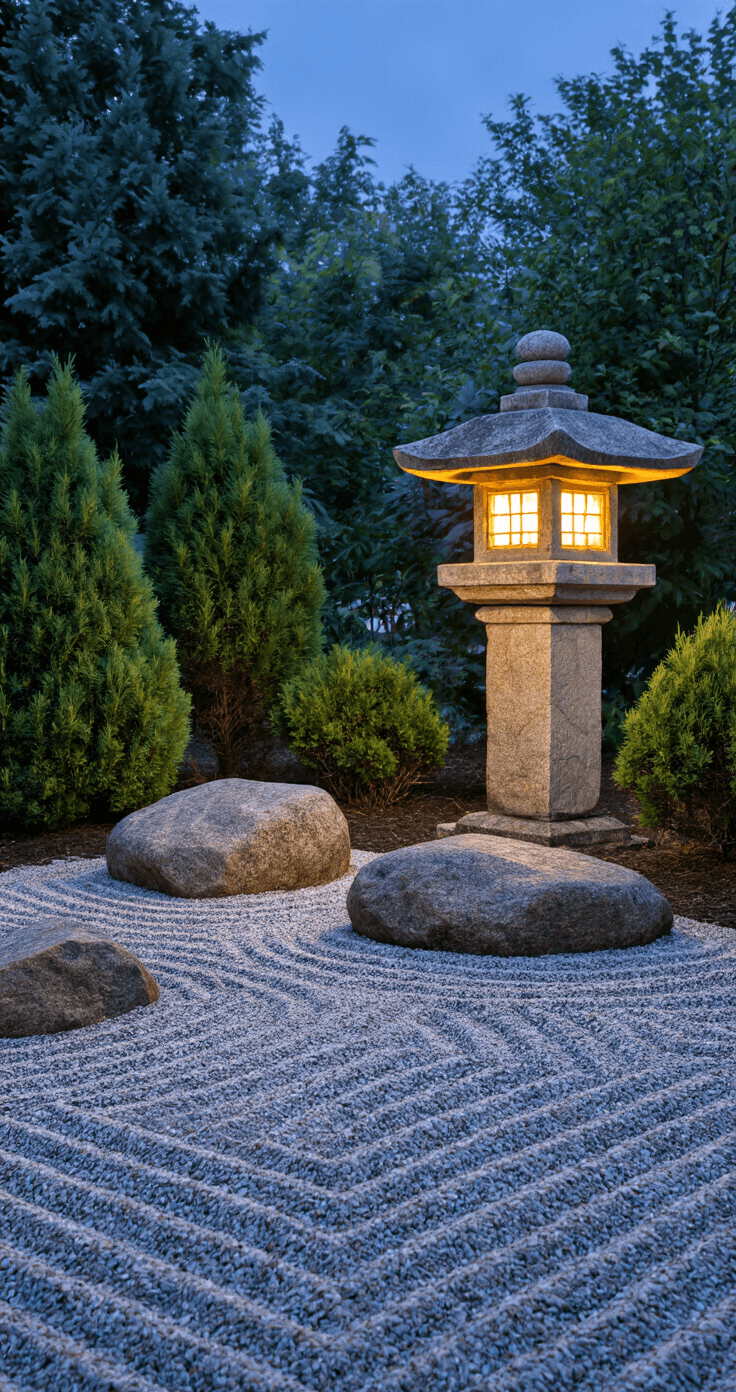
★ Steal This Look
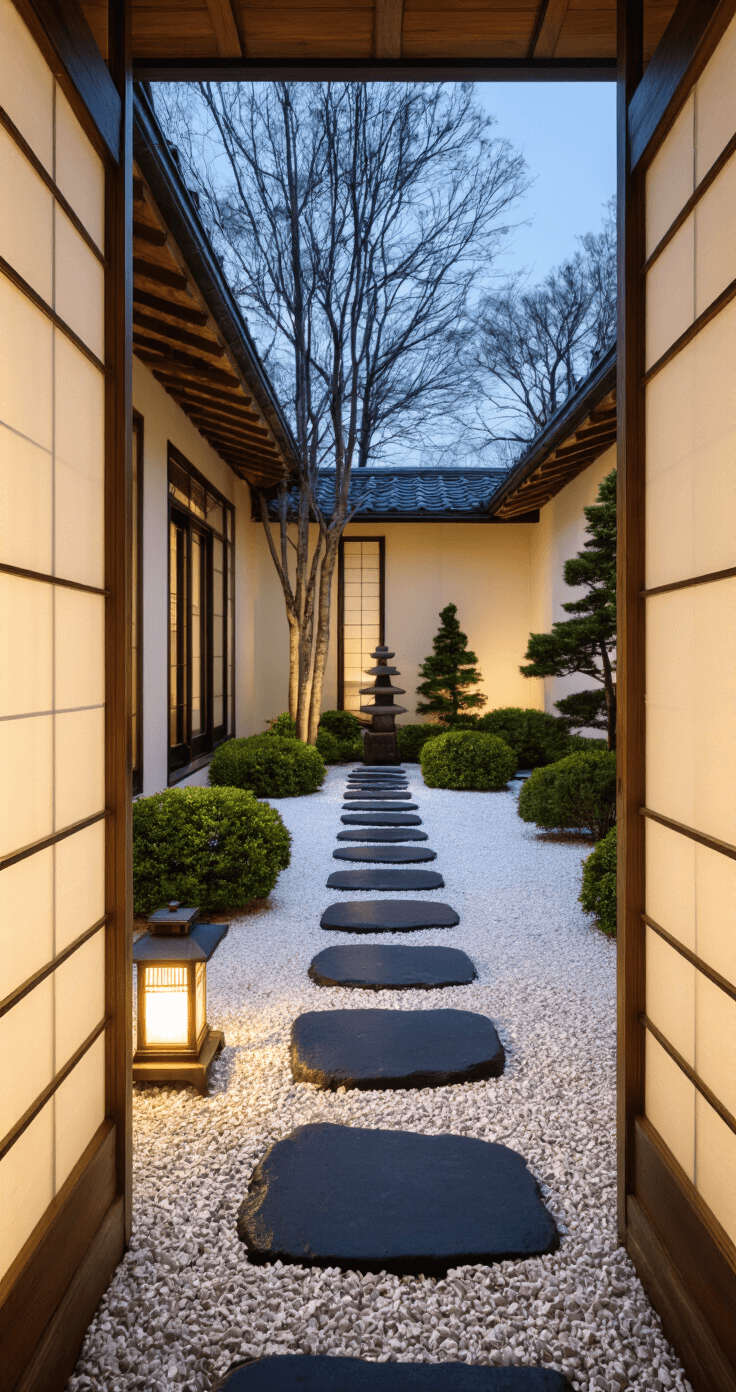
- Paint Color: Farrow & Ball White Tie 2002
- Furniture: low wooden bench with clean lines positioned against the courtyard wall for contemplation
- Lighting: stone pagoda lantern with warm LED candle
- Materials: dark slate stepping stones, white pea gravel, dark walnut timber frames, pruned boxwood shrubs
There’s something deeply grounding about stepping through those shoji doors into this quiet world—the bare branches against twilight remind us that beauty lives in every season, not just bloom.
Plant Selection: Nature’s Perfect Palette
Top Plants for Small Japanese Gardens:
– Japanese Maple (stunning color variations)
– Dwarf Evergreens
– Moss
– Ferns
– Mondo Grass
Pro Tip: Choose plants that create visual layers and texture without overwhelming your space.
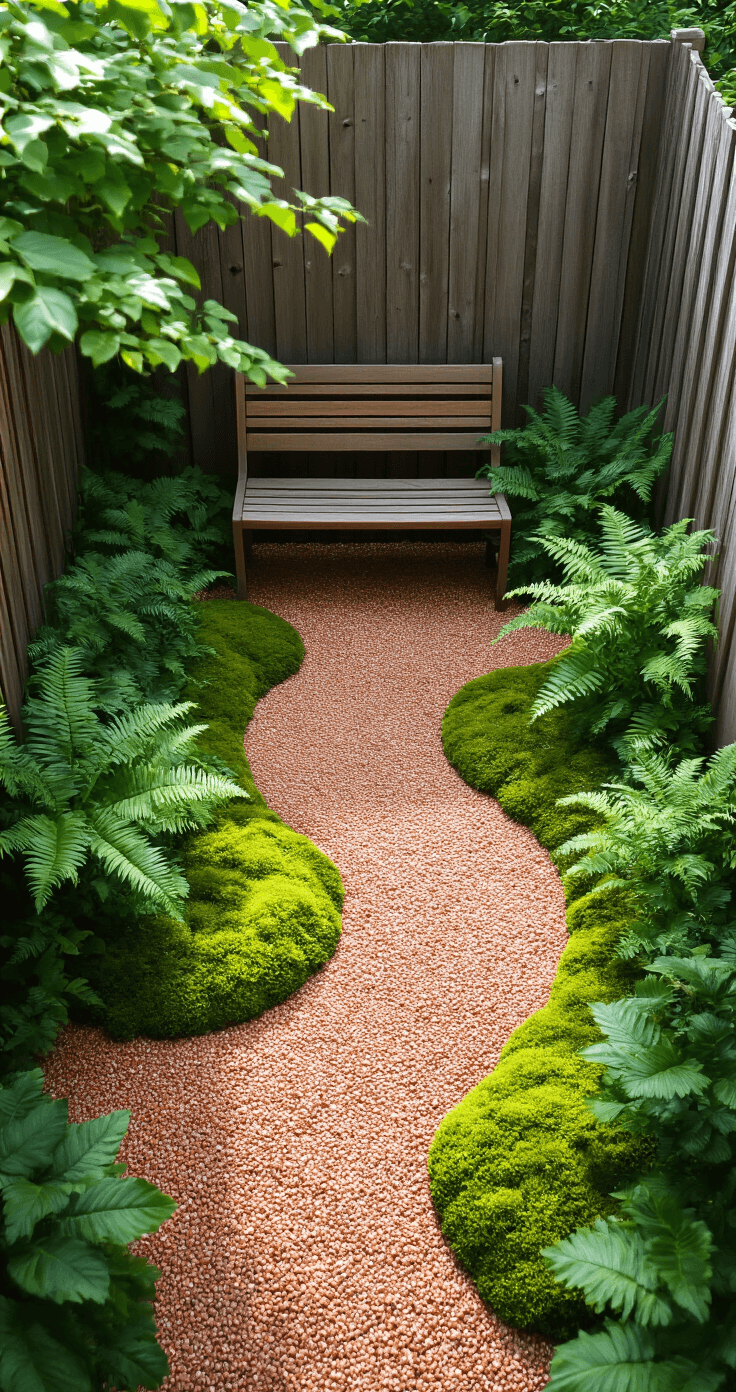
🎨 Steal This Look
- Paint Color: Behr Weathered Moss PPU11-17
- Furniture: slatted acacia wood outdoor bench with horizontal backrest
- Lighting: solar-powered LED bollard lights with warm 2700K output
- Materials: corrugated weathered steel fencing, terracotta pea gravel, sheet moss, river rocks, fern understory planting
This corner proves you don’t need square footage to feel transported—just the discipline to edit down to three materials and let them breathe.
Design Secrets Most People Don’t Know
Insider Techniques:
– Use “forced diminishing perspective”
– Create depth with strategic rock placement
– Incorporate “borrowed scenery” from surrounding views
– Balance asymmetry with intentional design
Step-by-Step Garden Creation
1. Define Your Space
– Measure your available area
– Identify primary viewing angle
– Decide on indoor or outdoor focus
2. Create Boundaries
– Bamboo screens
– Low hedges
– Minimalist fencing
3. Layout Foundations
– Stepping stones
– Gravel paths
– Subtle elevation changes
Save this article
Enter your email and we'll send it straight to your inbox.
4. Add Water Elements
– Tiny fountains
– Bamboo water spouts
– Small decorative basins
5. Accessorize Mindfully
– Stone lanterns
– Minimal seating
– Carefully placed ornaments
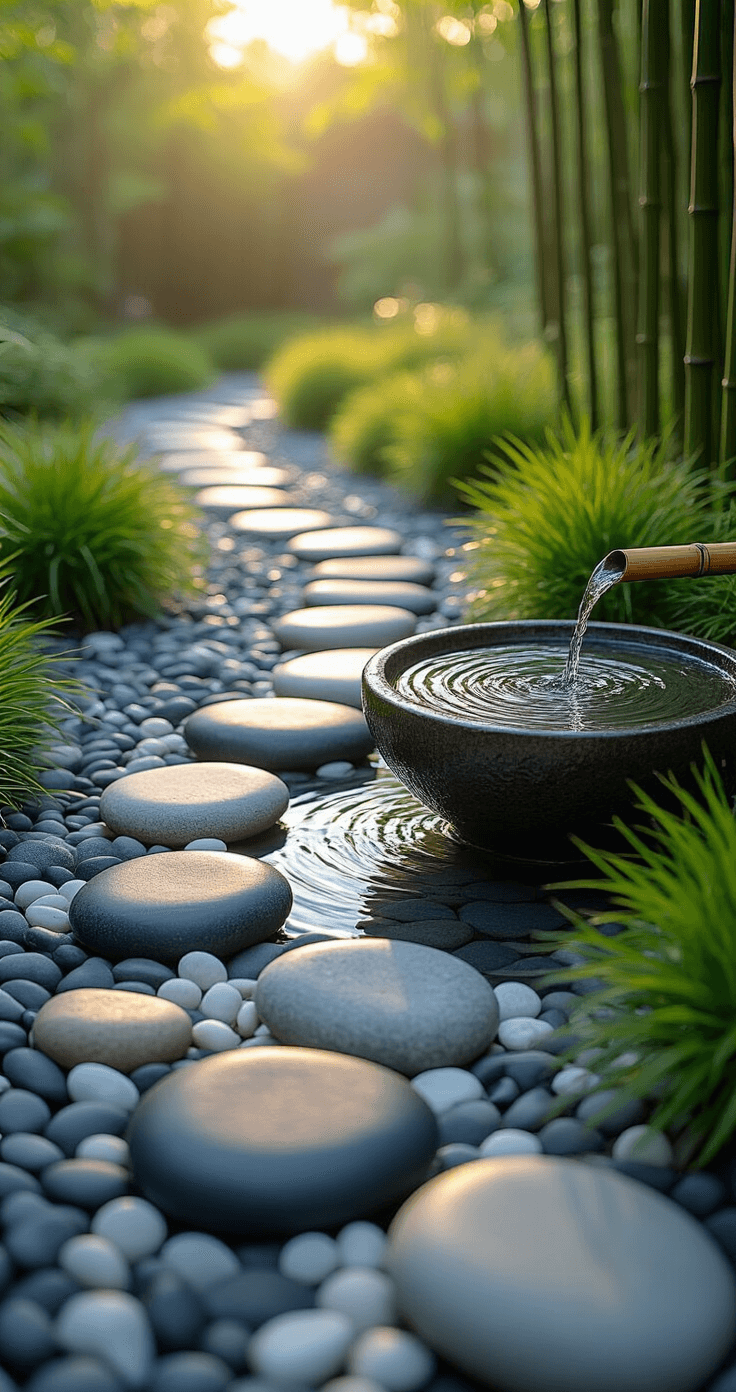
🏠 Steal This Look
- Paint Color: PPG Stonehenge Greige PPG1001-3
- Furniture: low-profile teak meditation bench with weathered finish
- Lighting: solar-powered bamboo path lights with warm amber glow
- Materials: smooth river stone, dark granite basin, bamboo spout, mondo grass, pea gravel
This garden rewards the slow walker—every stone invites you to pause, and the water’s rhythm becomes your breathing pace. It’s less a space to cross than one to arrive in.
Common Mistakes to Avoid
❌ DON’T:
– Overcrowd the space
– Use too many different colors
– Ignore vertical dimension
– Forget about seasonal changes
✅ DO:
– Embrace simplicity
– Focus on texture
– Create visual flow
– Think like nature
Maintenance: Keeping Your Zen Garden Pristine
Quick Care Tips:
– Regular gentle pruning
– Minimal watering
– Annual soil refresh
– Seasonal plant rotation
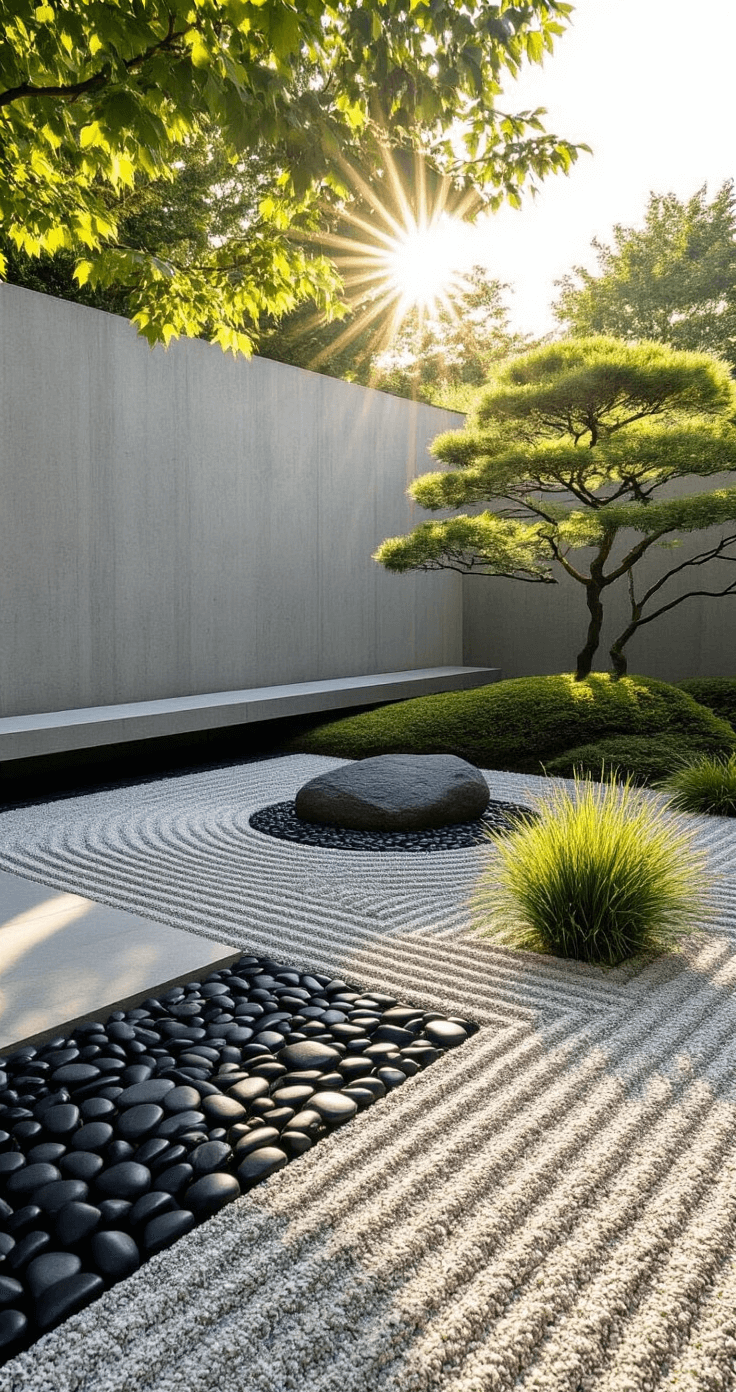
💡 Steal This Look
- Paint Color: Clare Paint Chalky White CW-01
- Furniture: low-profile concrete bench with hidden storage for garden tools
- Lighting: solar-powered LED path lights with warm 2700K output, flush-mounted along gravel edges
- Materials: polished black river rock, crushed limestone gravel, poured concrete, sheet moss, dwarf pine specimens
This garden asks you to slow down and actually look—there’s nowhere to hide clutter, which forces a kind of honesty about what you really need in your outdoor space.
Budget-Friendly Transformation
Affordable Hacks:
– Use container plants
– DIY rock arrangements
– Thrift store ornaments
– Propagate your own plants
Your Personal Zen Journey Starts Now
Remember, a Japanese garden is more than a design—it’s a meditation, a living artwork that evolves with you.
Your tiny space isn’t a limitation. It’s an opportunity for extraordinary beauty.
Final Wisdom: Nature doesn’t hurry, yet everything is accomplished. Your garden will grow, just like your patience.
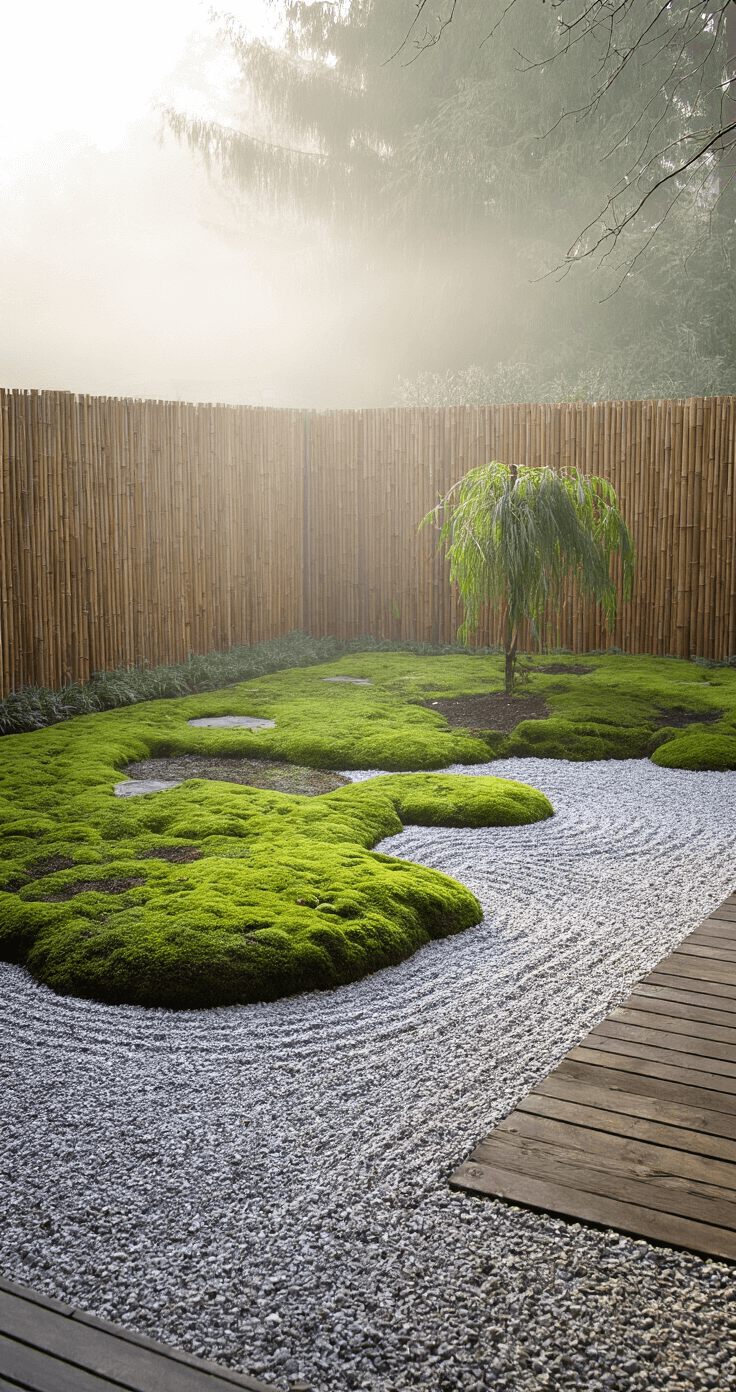
✎ Steal This Look
- Paint Color: Backdrop Paper Plane 0014
- Furniture: low-profile teak meditation bench with slatted seat
- Lighting: solar-powered bamboo stake lights with warm 2700K glow
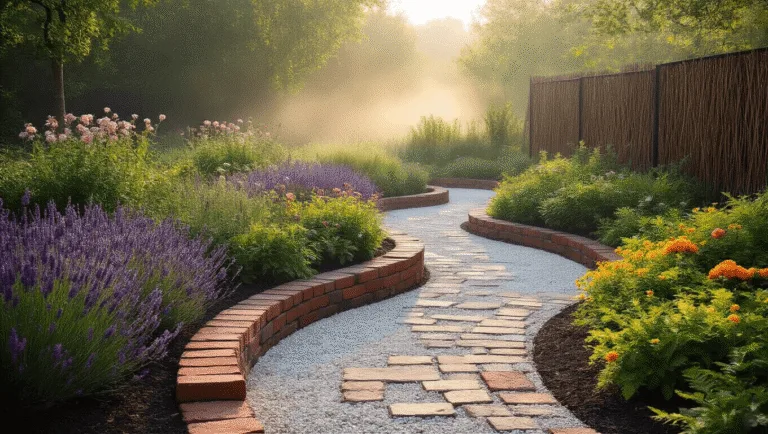
- Materials: natural cedar fencing, live moss, raked pea gravel, untreated teak decking
This garden invites you to slow down before you even step outside—the mist-softened light and deliberate emptiness creates room for your thoughts to settle.
🌊 Get The Look
This post may contain affiliate links. Please see my disclosure policy for details.
Want to keep this one?
We'll email you the link so you can find it again later.