

Winter Mantel coastal decor That Works Long After the Tinsel Comes Down
Contents
Winter mantel decor doesn’t have to scream “Christmas” to feel magical.
I learned this the hard way three years ago when I stood in my living room on December 26th, staring at a garish explosion of red and green that suddenly felt completely wrong.
The tree was coming down, the stockings were being packed away, but winter? Winter was just getting started.
That’s when I figured out what most people miss: your mantel can—and should—carry you through the entire cold season without looking like Santa’s workshop threw up on it.
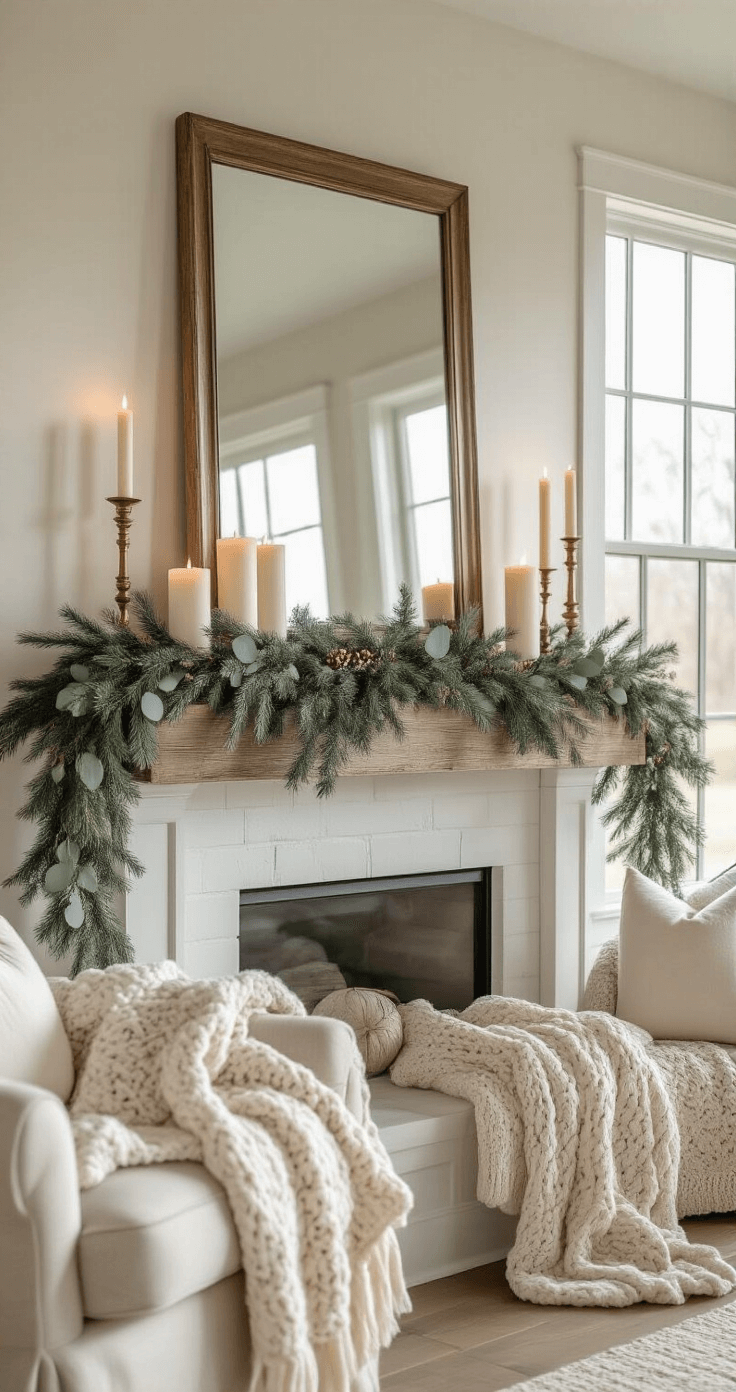
Why Most Winter Mantels Fall Flat
Here’s what happens in millions of homes every year.
December rolls around and we go all-in on Christmas decor. Then January hits and we strip everything away, leaving a sad, bare mantel that looks like we gave up on life.
The space that was your modern barn home ideas’s focal point suddenly becomes an awkward void you avoid looking at.
Winter mantel decor using neutral palettes, natural greenery, and layered textures solves this problem completely by creating a display that works from November straight through to March without a single awkward transition.
The Foundation: Keep It Neutral or Keep Redecorating
I’m going to be blunt here.
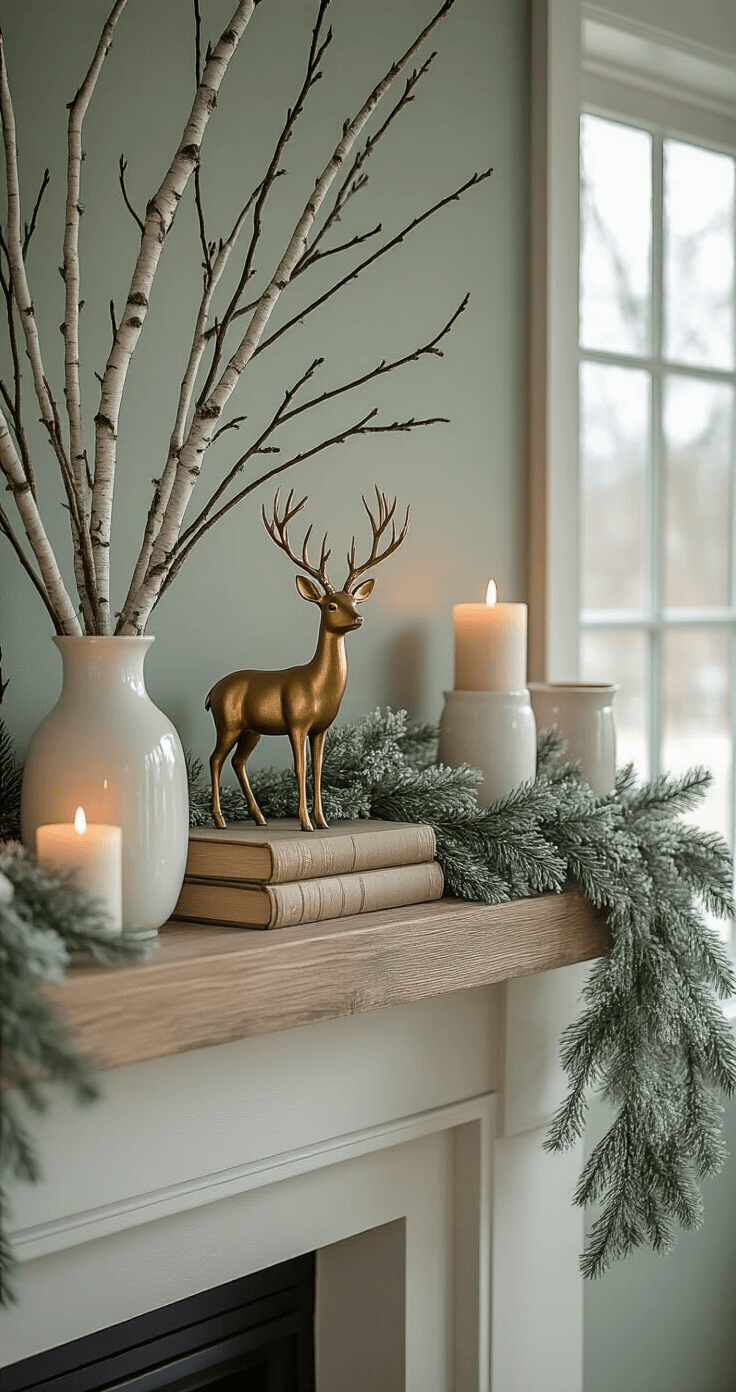
If you want a mantel that survives the entire winter season, ditch the red. Lose the obvious Christmas colors. Say goodbye to anything that screams “holiday specific.”
Stick with neutral tones as your absolute foundation:
- White and cream (think fresh snow, not wedding cake)
- Gray in various shades (from dove to charcoal)
- Beige and tan (warm, not boring)
- Natural wood tones (the real MVP)
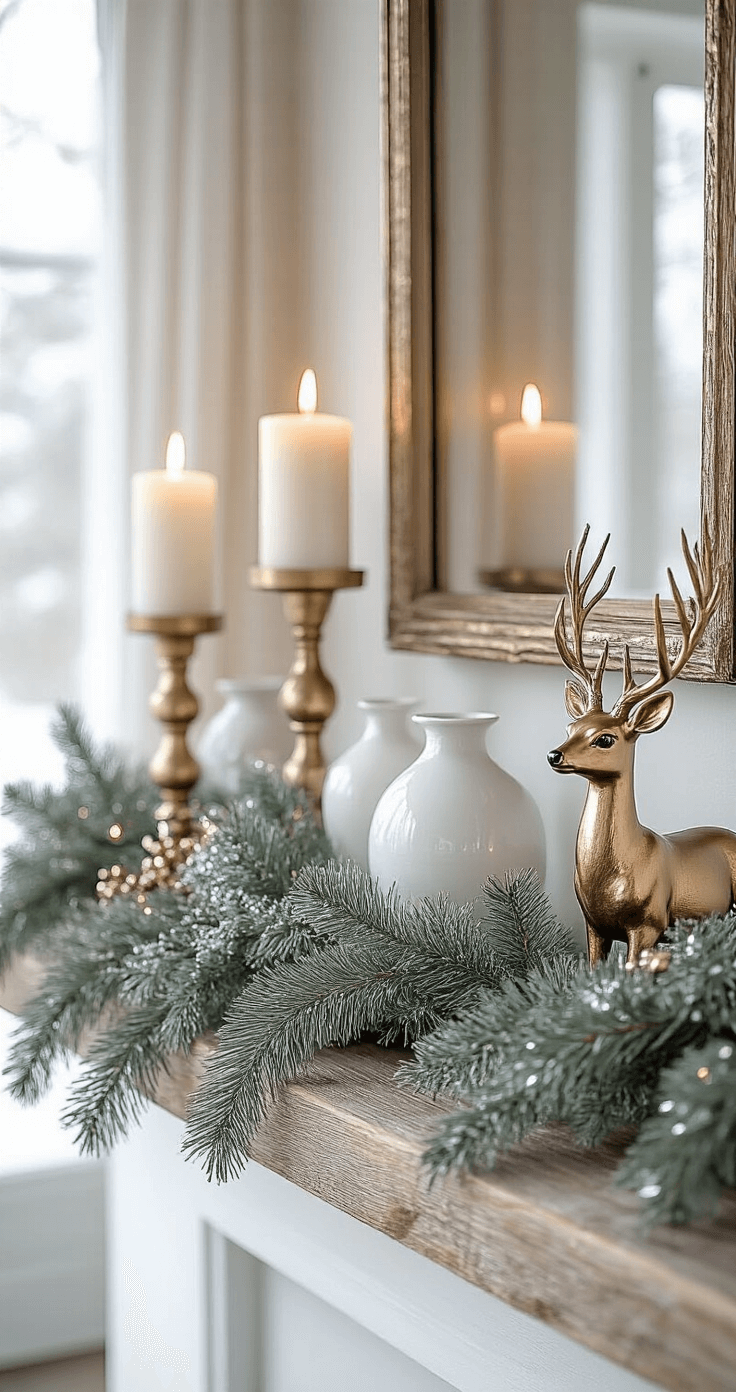
I use a neutral winter garland as my starting point every single year.
It’s frosted, it’s green, it works with everything, and most importantly—it doesn’t look like I’m confused about what month it is.
The magic formula I’ve used for three winters running is stupid simple but absolutely effective:
Texture + Greenery + Candles = Cozy Winter Mantel
That’s it. Commit that to memory and you’re already ahead of 90% of people struggling with their mantels.
Greenery: Your Non-Negotiable Base Layer
Let me tell you about greenery.
It’s doing the heavy lifting here, so don’t cheap out or phone it in.
Real or faux winter garlands are your foundation—I prefer mixing materials because it looks less staged and more collected over time.
My personal setup uses two different garlands layered together, and this technique changed everything for me.
Here’s exactly how I do it:
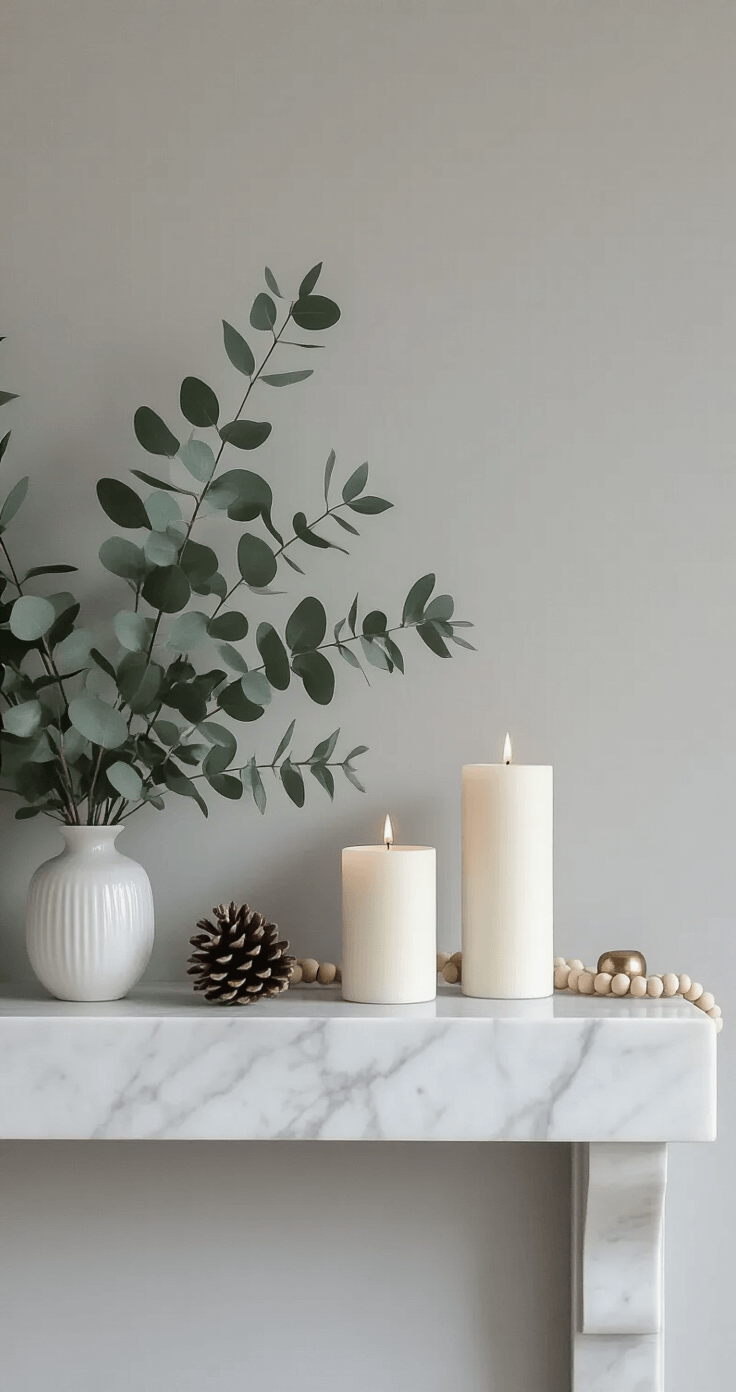
Start with eucalyptus (either real or faux eucalyptus garland) draped across your mantel first. Don’t make it perfect—let it fall naturally with some pieces hanging lower than others.
Then layer pine or cedar garland right on top of it. This is where it gets good—carefully pull some of those eucalyptus stems through the pine so both layers show.
The result? Depth. Visual interest. That expensive-designer-did-this look that actually took you twelve minutes.
Other greenery options that work beautifully:
- Fresh pine branches (they smell incredible but need replacing)
- Cedar sprigs (hardier, last longer)
- Frosted artificial branches (zero maintenance, maximum impact)
- Bare birch branches for height (more on that later)
Lighting: Because Dark Mantels Are Sad Mantels
I don’t care if your fireplace works or not.
Actually, scratch that—mine doesn’t work and my winter mantel still glows like a hygge fever dream.
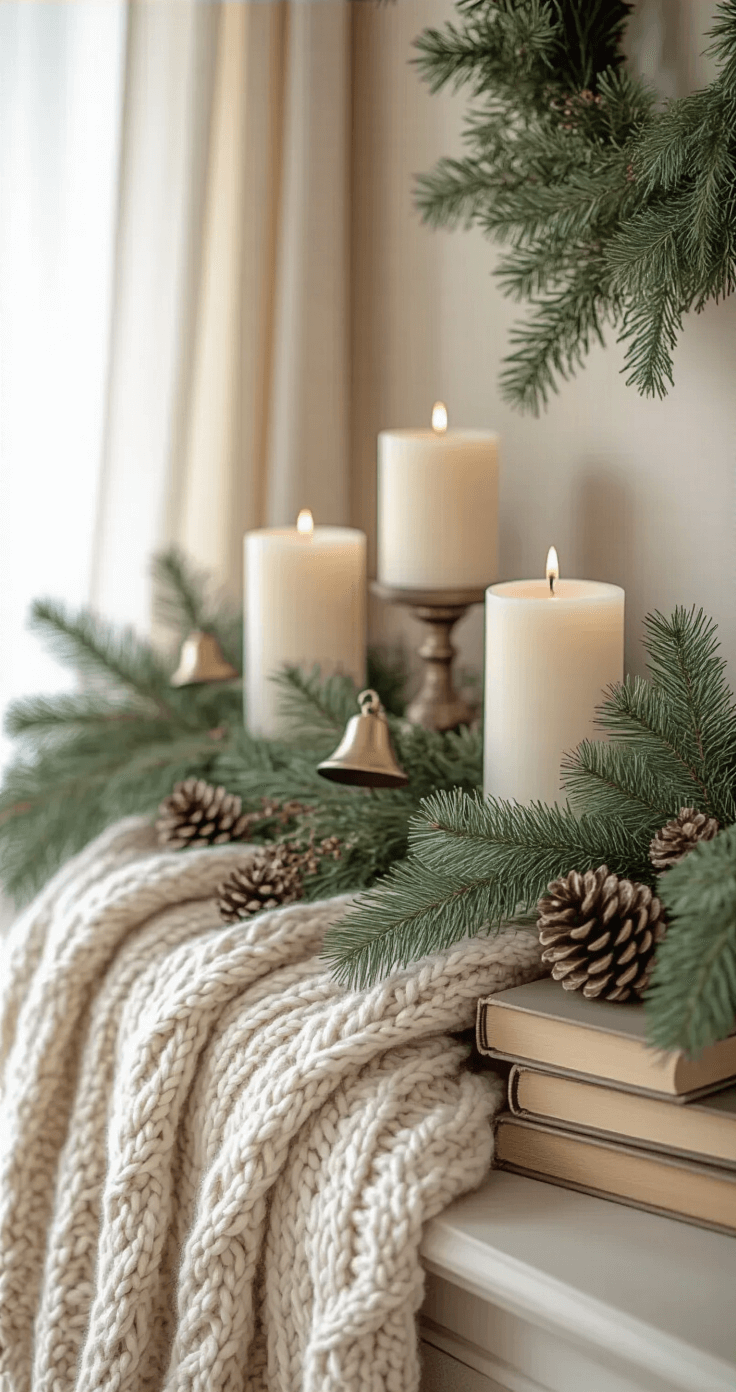
Lighting creates warmth and ambiance without requiring a functioning fireplace, and this is where you can really make magic happen.
My absolute favorite trick: place candles directly in front of a mirror to reflect the light and double your cozy glow.
I positioned a large decorative mirror behind my mantel two winters ago and the difference was staggering.
Suddenly, three candles looked like six. The whole space felt twice as warm. Guests kept asking what I’d changed because the room felt completely different.
Lighting options that actually work:
- Fairy lights or string lights woven through your garland (get the warm white, not the blue-white that looks like a dentist’s office)
- Flameless candles with timers (I set mine for 5pm-11pm and never think about it)
- White taper candles in varying heights (classic and elegant)
- Pillar candles grouped in threes or fives (odd numbers always look more natural)
Pro move: Get flameless candles with remote control so you can turn them on from your couch like the lazy genius you are.
Texture: The Secret Ingredient Nobody Talks About
This is where good mantels become great mantels.
Texture adds dimension without adding clutter, and it’s the element most people completely overlook.
I learned about texture from a designer friend who walked into my house, looked at my mantel, and said, “It’s flat. Everything is flat.”
She was right. I had greenery and candles, but zero variation in material or surface quality.
Here’s what transformed my mantel:
Woven elements like a basket filled with chunky knit blankets tucked to one side (functional and beautiful—my
This post may contain affiliate links. Please see my disclosure policy for details.


