Theme-Driven Design
A themed bedroom gives a boy a room that reflects what he actually likes, which makes him more likely to keep it tidy. The trick is to keep the theme in the cheap, swappable layers, bedding, decals, a few accessories, and leave the walls and big furniture neutral so you can change the theme without repainting.
Theme Ideas:
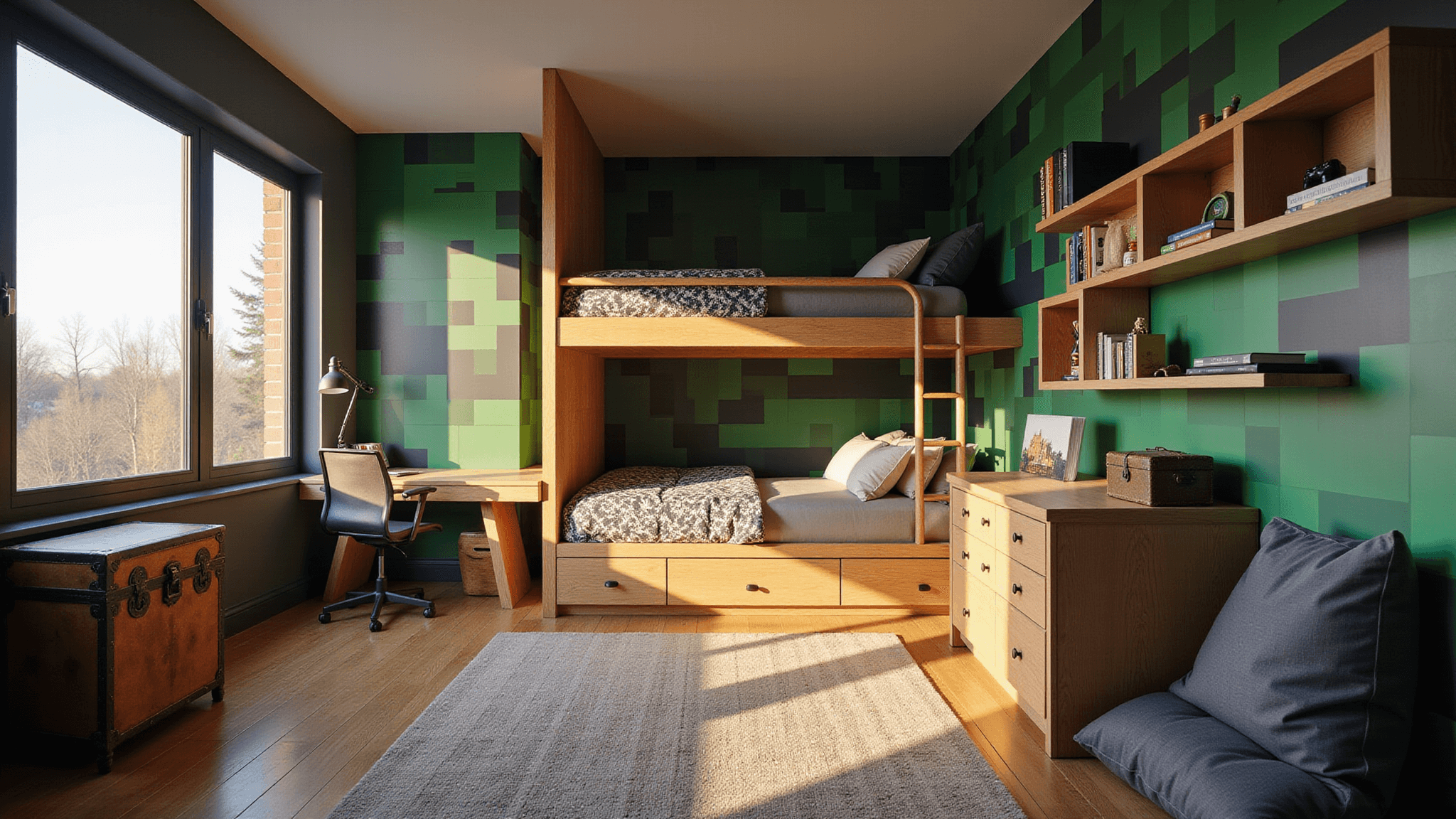
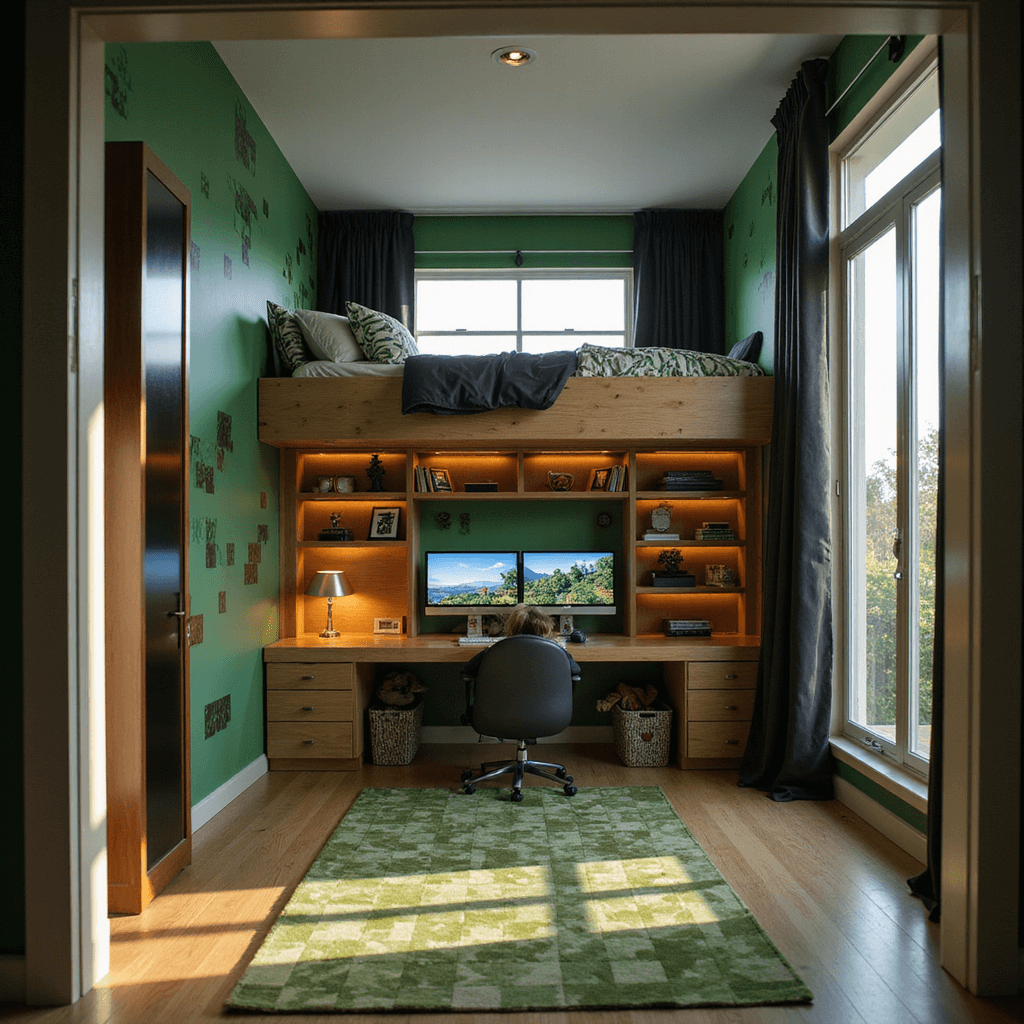
- Minecraft Magic: Green walls that transport them into their favorite game world
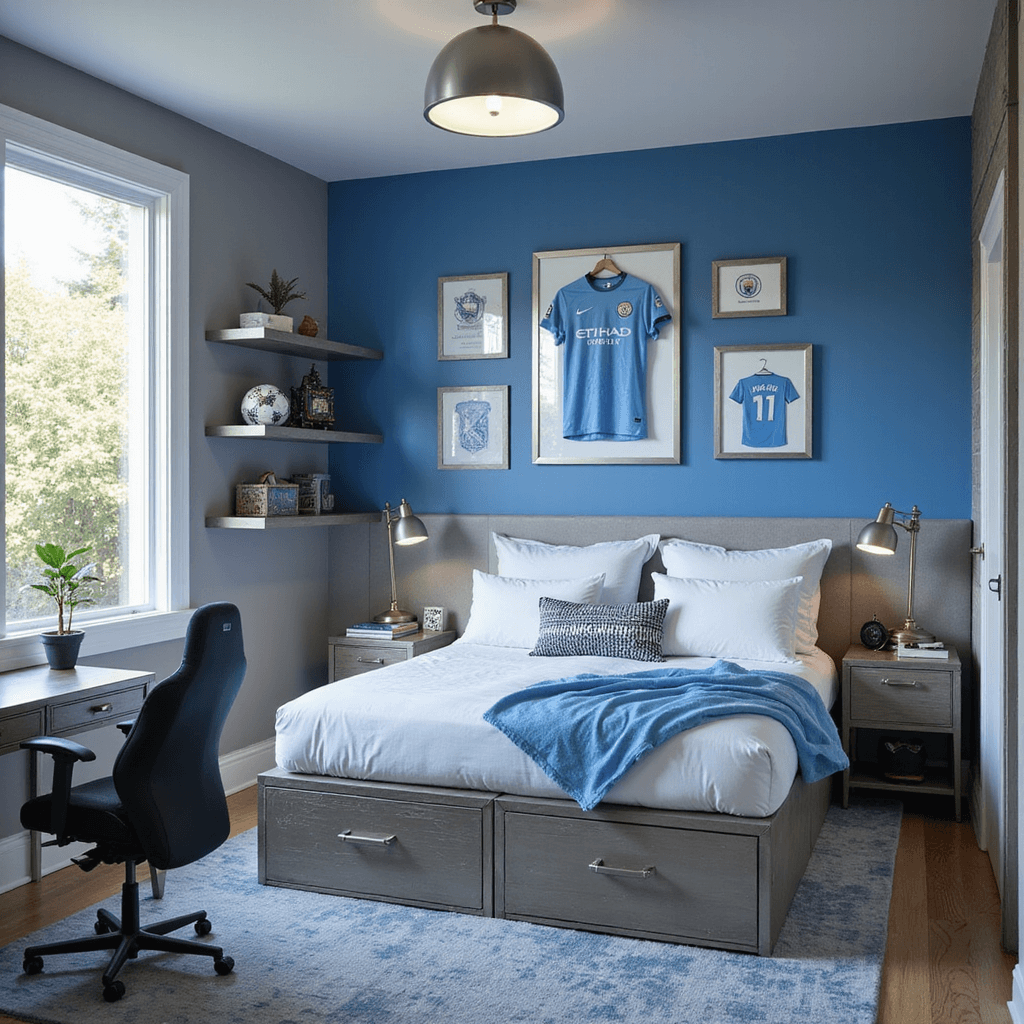
- Sports Fanatic’s Paradise: Manchester City blue with team memorabilia
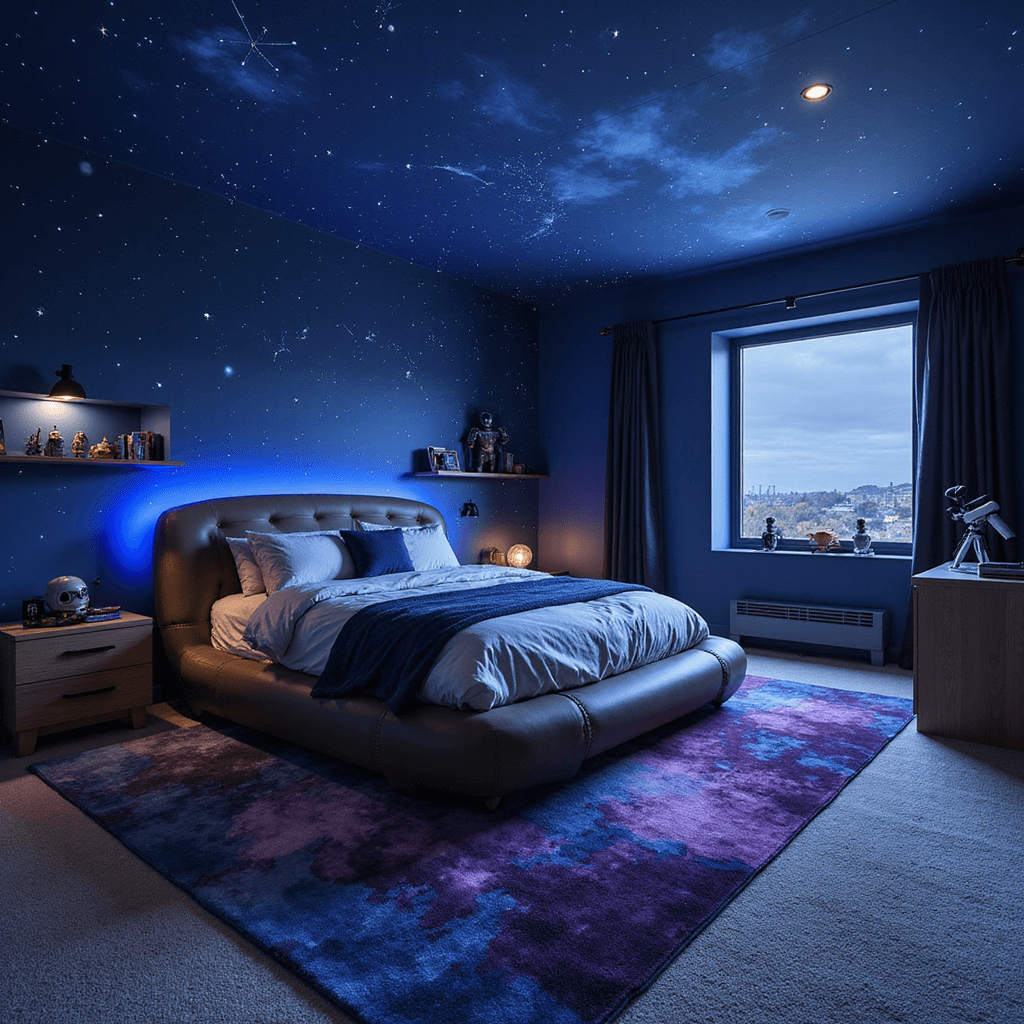
- Space Explorer’s Retreat: Star-studded walls and cosmic accessories
- Adventure: Nature-inspired designs that give the room a story
Tip: Keep the theme in the accessories, not the furniture, so it is easy to swap when his interests move on.
Color Schemes
Pick a base of neutrals and add one or two accent colors your son chooses, so the room feels deliberate rather than random.
Color Power Players:
- Navy Blue: A safe, long-lasting base
- Neutral Neutralizers: Grays and whites for a clean look
- Bold Beauties: Forest green, vibrant red, mustard yellow
Paint note: A navy-and-white striped wall reads as classic and hides scuffs better than a flat color.
Smart Furniture Solutions
Space-Saving Pieces
Use furniture that does two jobs in a small room:
Save this article
Enter your email and we'll send it straight to your inbox.
Multitasking Furniture Favorites:
- Bunk beds with built-in staircases
- Wall-to-wall beds for epic sleepovers
- Custom built-in desks that eat up zero floor space
Vintage Vibes:
- Antique bookshelves that tell a story
- Preloved pieces with character
- Collectible displays that spark conversation
Creating Functional Zones
Your boy’s bedroom isn’t just a sleep space – it’s a command center:
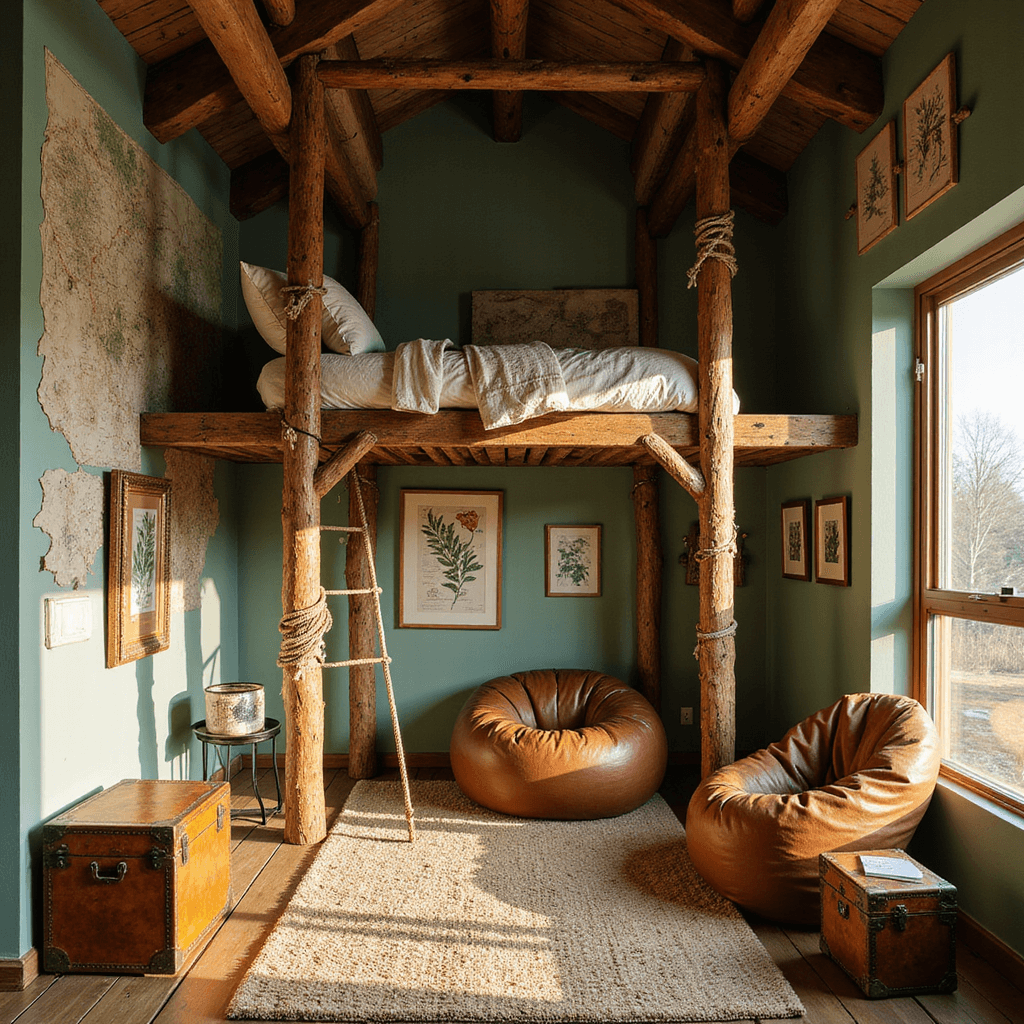
Useful Zones:
- Reading Nook: A quiet corner with a bookshelf
- Play Area: Soft rugs, vibrant colors
- Homework Station: Built-in desk for maximum productivity
- Sleepover Central: Beds that welcome friends
Storage That Works
Storage is what keeps a kid’s room usable:

Storage Options:
- Built-in cabinets
- Wall-mounted shelves
- Under-bed drawers
- A gallery wall for displaying collections
Personalization is Key
5-Step Personalization Process:
- Involve your kid in design decisions
- Invest in quality foundational pieces
- Create a functional layout
- Mix new and vintage items
- Celebrate their unique personality
In short: A good boys’ bedroom is practical first, with the theme carried in pieces that are easy to change as he grows.
You do not need a big budget; a few well-chosen pieces and his input on the theme get most of the way there.
This post may contain affiliate links. Please see my disclosure policy for details.
Want to keep this one?
We'll email you the link so you can find it again later.