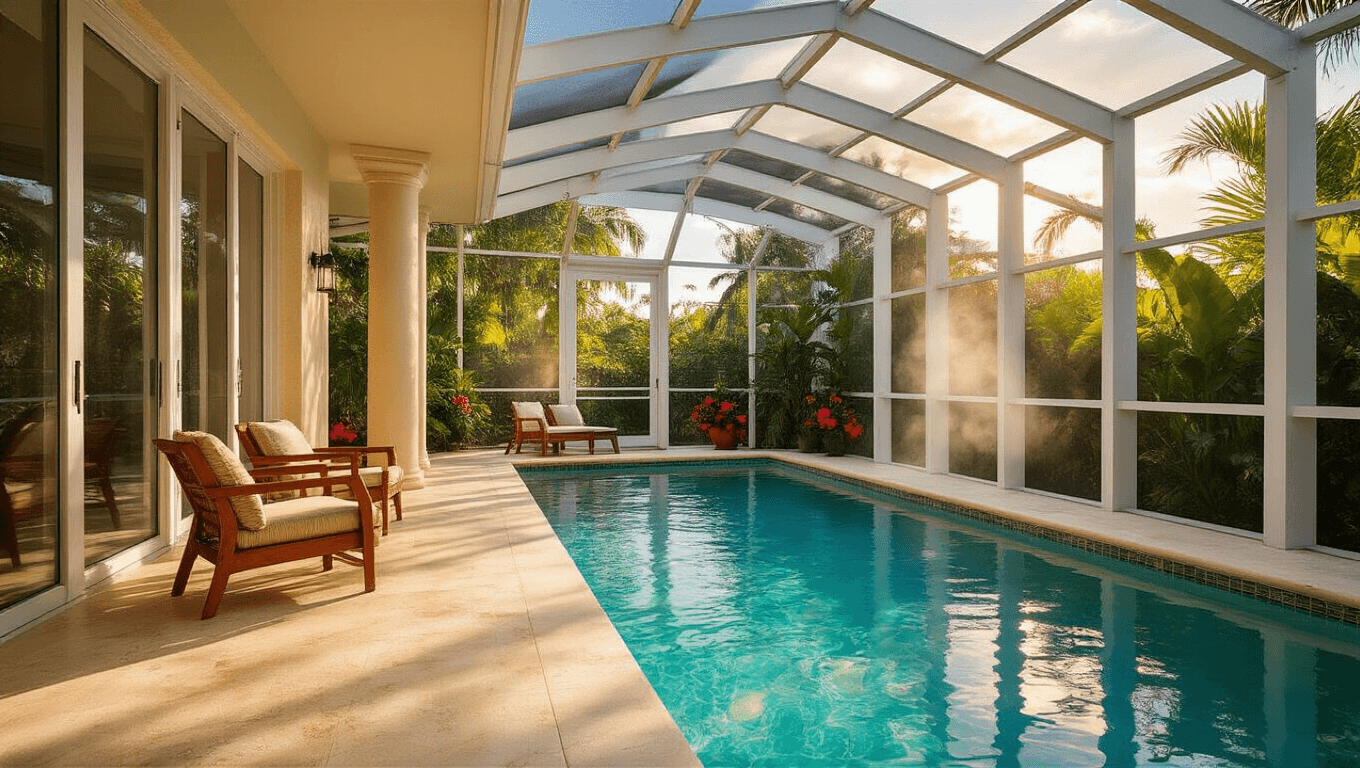
Florida Pool Cages: Everything You Need to Know Before Installing Your Backyard Oasis
Florida pool cages might just be the best investment you’ll make for your backyard, and I’m not being dramatic here.
After years of watching my neighbor battle mosquito swarms during evening swims and fishing pool skimmers full of palm fronds every morning, I finally installed my own pool enclosure.
The difference was night and day.
Let me walk you through everything you need to know about these aluminum-framed sanctuaries that transform Florida pools from maintenance nightmares into year-round retreats.
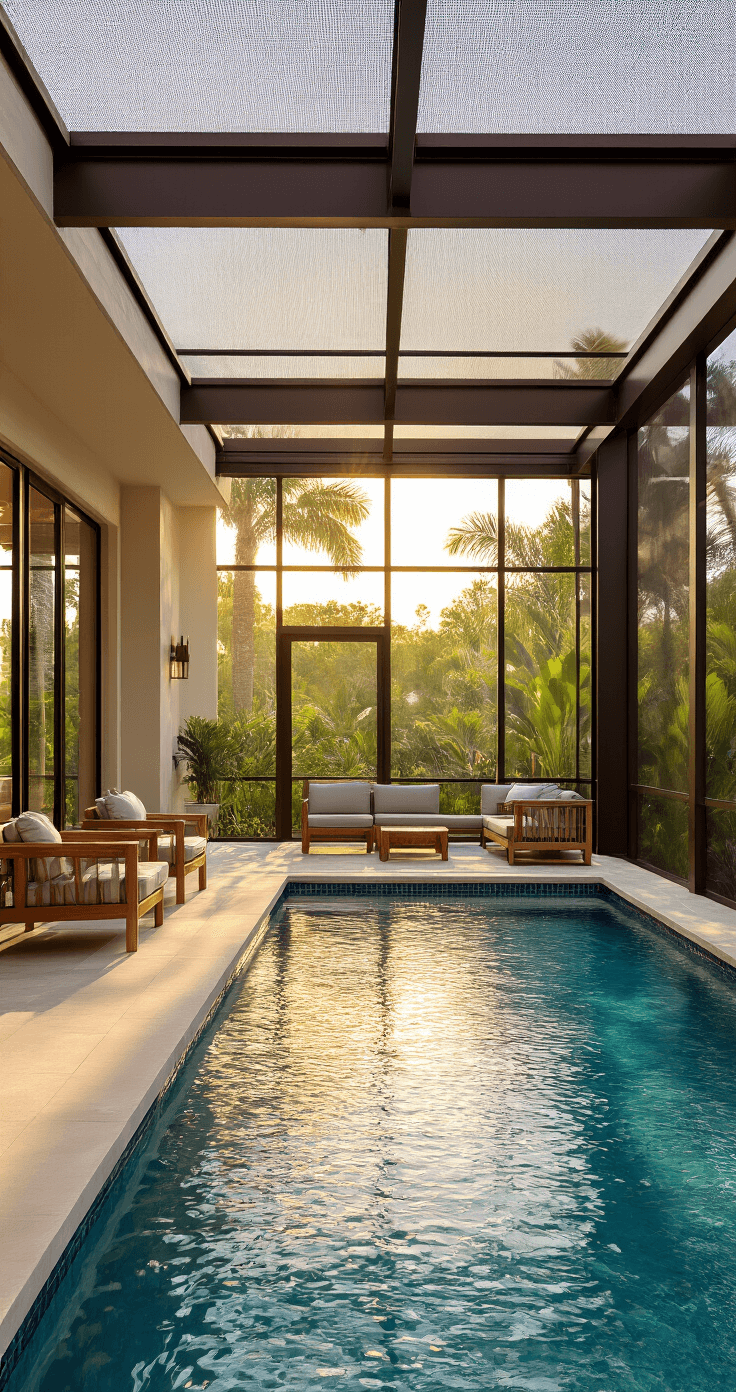
🏠 Steal This Look
- Paint Color: Sherwin-Williams Swimming SW 6764
- Furniture: Weather-resistant aluminum sling chaise lounges with Sunbrella cushions in a coastal blue stripe
- Lighting: Wet-rated LED string lights with Edison bulbs draped along the cage frame perimeter
- Materials: Powder-coated aluminum framing, Phifer Super Solar screening, travertine paver decking, and marine-grade stainless steel fasteners
There’s something deeply satisfying about swimming at dusk without slapping at your own arms—my cage turned the pool from a chore into the place I actually want to be at the end of a humid Florida day.
Why Florida Pools Need Cages (And It’s Not Just About Bugs)
Look, I’ll be straight with you.
The mosquitoes in Florida don’t just bite—they throw pool parties on your skin.
But that’s only the beginning of why these screened enclosures have become standard equipment for Sunshine State homeowners.
The pest problem is relentless:
- Mosquitoes breed faster than you can say “bug spray”
- No-see-ums are invisible torturers that slip through regular defenses
- Love bugs create disgusting messes twice a year
- Wasps and yellow jackets view your pool deck as prime real estate
Beyond the insect invasion, you’ve got wildlife management to consider.
I’m talking about uninvited guests like snakes, frogs, lizards, and—depending on your location—the occasional alligator who thinks your pool is their personal watering hole.
Birds also love dive-bombing pools, leaving deposits you definitely don’t want floating in your water.
Debris reduction alone justifies the investment:
- Leaves and twigs accumulate constantly
- Hurricane season turns your pool into a collection bin for neighborhood debris
- Pollen coats everything in that lovely yellow film
- Cleaning time drops from daily to weekly
The safety factor sealed the deal for me when my sister’s kids started visiting regularly.
Pool cages create an additional barrier that prevents unsupervised access, especially when equipped with self-closing, lockable doors.
It’s not childproof, but it’s another layer of protection that gives parents peace of mind.
Then there’s UV protection—specialized screens filter harmful sun rays while you swim, reducing sunburn risk and potentially lowering your skin cancer risk over time.
A quality pool cage mesh screen can block a significant percentage of UV rays without making your pool area feel dark.
Temperature regulation surprised me most.
My enclosed pool area stays cooler during brutal summer afternoons and warmer during those mild winter evenings, extending my swimming season by weeks.
Privacy matters too, especially in densely populated neighborhoods.
Your pool cage creates a semi-private retreat where you can relax without feeling like you’re swimming in a fishbowl.
The Three Main Pool Cage Styles (And Which One I’d Choose Again)
Florida pool enclosures come in three visibility categories, and the differences matter more than you’d think.
Standard View: The Budget-Friendly Workhorse
Standard view cages feature closely spaced aluminum supports.
You’ll see vertical bars every 18-24 inches, creating a cage-like appearance that’s honestly a bit prison-y.
Save this article
Enter your email and we'll send it straight to your inbox.
Pros:
- Most affordable option
- Maximum structural strength
- Extremely durable in storms
- Lower maintenance requirements
Cons:
- Limited yard visibility
- Can feel claustrophobic
- Not ideal for scenic properties
- Blocks some natural light
My contractor friend installs these mostly for rental properties and budget-conscious homeowners.
They work perfectly fine, but if you’ve got a beautiful backyard or water view, you’ll regret the visual obstruction.
Mid View: The Goldilocks Solution
Mid view enclosures space the vertical supports wider—typically 36-48 inches apart.
This design opened up my pool area considerably without sacrificing structural integrity.
What I love about mid view:
- Significantly better visibility
- Still hurricane-resistant when properly installed
- Moderate price increase over standard
- Maintains excellent insect protection
- Balanced aesthetic appeal
The trade-offs:
- Slightly higher initial cost
- May require thicker frame materials
- Fewer contractor options in some areas
I chose mid view for my installation, and three years later, I’d make the same choice.
The visibility improvement is substantial, and the cost difference was about 20% more than standard view—totally worth it.
Ultra View: Maximum Visibility, Maximum Investment
Ultra view designs minimize framing for nearly unobstructed views.
These enclosures feature wide-open spaces between vertical supports, sometimes exceeding 72 inches.
When ultra view makes sense:
- Waterfront properties with scenic views
- Modern architectural homes
- Properties where aesthetics justify premium pricing
- Lower wind-zone areas with less hurricane risk
The reality check:
- Highest price point (sometimes double standard view)
- May require additional engineering
- Potentially more vulnerable in extreme weather
- Fewer contractors experienced with installation
A neighbor with a gorgeous lakefront property installed ultra view, and honestly, it’s stunning.
But she paid significantly more, and her contractor had to use reinforced materials to meet building codes.
★ Steal This Look
- Paint Color: use Farrow & Ball brand. Match the ACTUAL wall color in the image. Format: Farrow & Ball ColorName CODE
- Furniture: specific furniture for this room
- Lighting: specific lighting fixture
- Materials: key textures and materials
1-2 sentences of human framing about this room
🎁 Get The Look
Materials Matter (Especially in Florida’s Harsh Climate)
Not all pool cage materials are created equal.
Florida’s environment is brutal—intense UV exposure, salt air near coasts, hurricane-force winds, and constant humidity.
Aluminum frame quality determines longevity:
- Standard residential grade works for inland properties
- Thicker commercial-grade aluminum resists coastal corrosion
- Powder-coated finishes prevent weathering and oxidation
- Stainless steel hardware prevents rust-related failures
I initially tried saving money with a contractor who used cheaper materials.
Within 18 months, I noticed corrosion on connectors and hardware near the pool deck where water constantly splashed.
Lesson learned—invest in proper materials upfront or pay for replacements later.
Screen mesh options affect function and durability:
- Standard 18×14 mesh balances airflow and insect protection
- Fine mesh stops no-see-ums but reduces airflow
- Pet-resistant screens withstand scratching from dogs and cats
- Solar screens reduce heat and UV penetration
I replaced my original standard mesh with a heavy-duty pet-resistant screen after my golden retriever decided the screen made an excellent scratching post.
The upgraded material cost more but has survived two years of dog abuse without a single tear.
Hurricane protection requires specific engineering.
Florida building codes mandate wind resistance ratings based on your location, with coastal areas requiring higher standards.
Your contractor should provide engineering specifications showing
This post may contain affiliate links. Please see my disclosure policy for details.
Want to keep this one?
We'll email you the link so you can find it again later.