How I Transformed My Kitchen Into a Grandmacore Haven (And Why You’ll Want To Too)
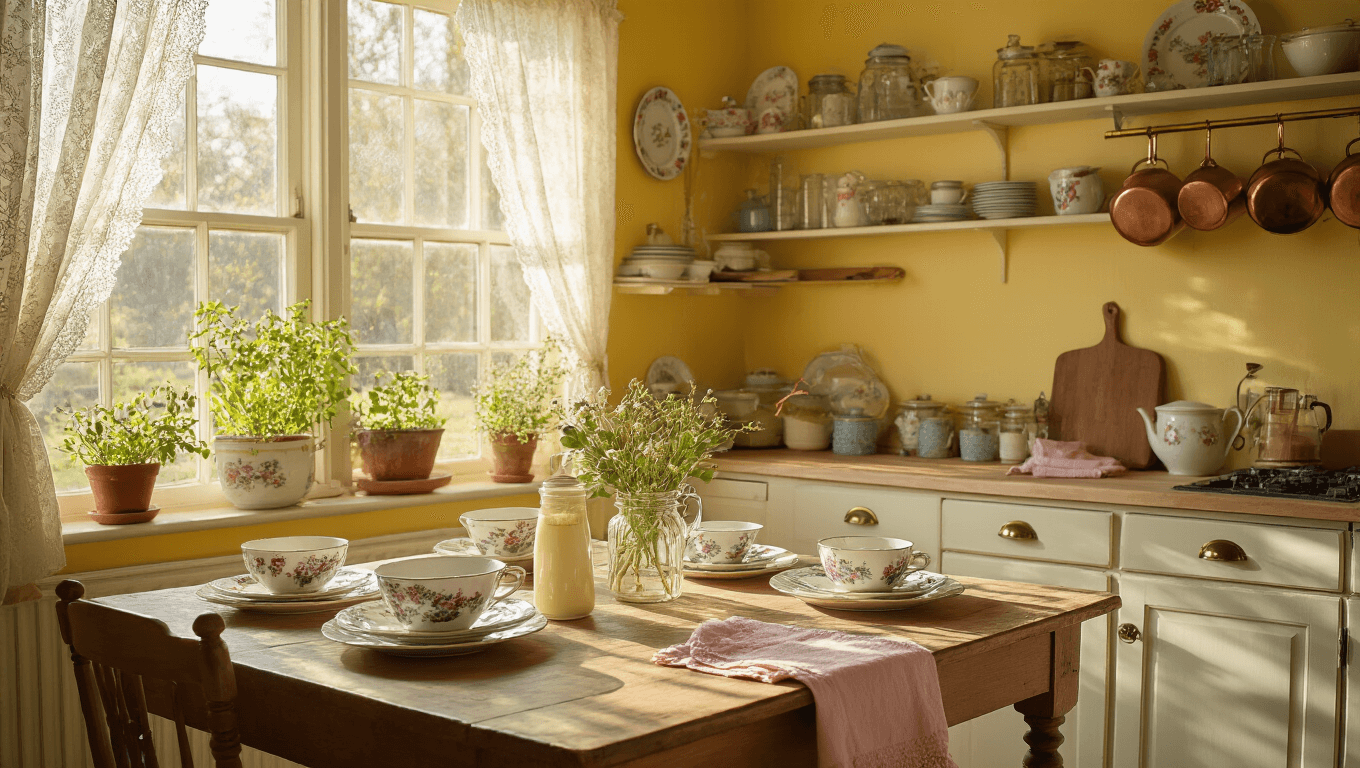
**Grandmacore kitchen design** hit me like a warm hug from my actual grandmother when I first stumbled across it on Pinterest last spring.
I was drowning in sterile white kitchens and cold minimalist spaces that looked more like operating rooms than places where you’d actually cook a Sunday roast.
You know that feeling when you walk into a space and immediately want to bake cookies? That’s grandmacore. And I’m here to tell you exactly how to get it.

🎨 Steal This Look
- Paint Color: Sherwin-Williams Clary Sage SW 6178
- Furniture: farmhouse-style pine kitchen table with turned legs and mismatched wooden chairs, including one with a worn needlepoint cushion
- Lighting: schoolhouse pendant with milk glass shade over the sink and a vintage-inspired brass chandelier with candle-style bulbs over the table
- Materials: butcher block countertops, checkered linoleum or vintage-inspired vinyl flooring, open shelving with iron brackets, copper pots and enamelware, flour sack tea towels, crocheted pot holders
There’s something deeply comforting about a kitchen that doesn’t perform perfection—where the flour canister sits out because you actually bake, and the calendar on the wall has actual appointments penciled in, not just aesthetic styling.
What the Hell Is Grandmacore Anyway?
Look, I’m not going to dance around this. Grandmacore is what happens when you take everything cozy about your grandmother’s kitchen—the mismatched teacups, the slightly worn wooden table, the smell of something always baking—and deliberately recreate it in your own space.
It’s cottage-core’s older, wiser sister who actually knows how to can preserves.
This isn’t about turning your kitchen into a museum. It’s about creating a space that feels lived-in, loved, and utterly comforting from the moment you walk in.
Here’s what makes it different from just “vintage”:
- It celebrates imperfection (that chip in your dish? Character.)
- It mixes old and new without apology
- It prioritizes comfort over Instagram-perfection
- It’s sustainable as hell (reusing vintage pieces instead of buying new)
The Colors That Make You Want to Stay for Tea
I painted my kitchen walls three times before I got it right.
The secret? Muted, soft tones that feel like they’ve been there for decades.
Forget stark white or trendy navy. We’re talking:
- Butter yellow that looks like morning sunlight
- Sage green (the color of herb gardens, not hospital scrubs)
- Blush pink that’s barely there
- Creamy whites with warm undertones
- Dusty blue like faded denim
I went with a soft cream for my walls and added pops of color through vintage floral curtains and dish towels.
The result? My kitchen finally stopped feeling like a showroom and started feeling like home.

💡 Steal This Look
- Paint Color: Farrow & Ball Pointing 2003
- Furniture: farmhouse-style pine kitchen table with turned legs and mismatched vintage chairs
- Lighting: brass schoolhouse pendant with milk glass shade
- Materials: unlacquered brass, worn butcher block, linen cafe curtains, hand-thrown pottery
This is the kitchen where you’ll actually sit down with your coffee instead of rushing through, because the walls hold warmth that makes slowing down feel natural rather than forced.
Open Shelving: The Heart of Grandmacore
This is where I went slightly overboard (my partner would say extremely overboard).
Open shelving isn’t just storage—it’s your chance to display your treasures.
What goes on grandmacore shelves:
- Mismatched vintage plates in different patterns
- Glass storage jars filled with flour, sugar, and pasta
- Well-worn cookbooks with splattered pages
- Teacups hanging from little hooks
- Mason jars (yes, I’m that person now)
- Vintage tins with faded labels
I found most of my dishes at estate sales for pennies. That floral plate set from 1952? Three dollars. The satisfaction of using them every day? Priceless.
Pro tip: Don’t match things on purpose. The slight chaos is the point.

🎨 Steal This Look
- Paint Color: Behr Cottage White PPU7-12
- Furniture: a salvaged pine hutch with scalloped trim and glass-front cabinets paired with floating barn wood shelves on wrought iron brackets
- Lighting: a schoolhouse pendant with milk glass shade and aged brass hardware
- Materials: reclaimed barn wood, hand-thrown ceramic, distressed cast iron, vintage linen, chipped enamelware
This is where your kitchen becomes a living scrapbook—every scuffed plate and flour-dusted jar tells a story you actually lived, not one you bought from a showroom.
Furniture That Actually Has a Soul
My biggest splurge was a wooden farmhouse table I found at an antique market.
It’s scratched, slightly wobbly, and I love it more than furniture should be loved.
The furniture checklist:
- A solid wood table (bonus points if it looks like it’s survived some family dinners)
- Mismatched chairs around said table
- A vintage hutch or cabinet for displaying dishes
- Wooden cutting boards leaning against the backsplash
- A rolling cart (preferably with peeling paint)
The key is patina. That’s a fancy word for “stuff that looks old and lived-in.”
If your furniture looks like it just came off the IKEA showroom floor, we need to fix that. Distress it, age it, or just use it daily until life does the work for you.

🖼 Steal This Look
- Paint Color: Valspar Cozy White 7006-2
- Furniture: solid wood farmhouse table with visible wear, mismatched vintage chairs in varying wood tones and upholstery
- Lighting: aged brass pendant with seeded glass shade over the table
- Materials: reclaimed pine, worn oak, chippy milk paint, unlacquered brass, linen slipcovers
There’s something deeply comforting about running your hand across a table surface that’s hosted decades of birthday cakes and coffee cups—it’s furniture that holds memory, not just dishes.
The Magic of Mismatched Dishware
I’m going to let you in on a secret that changed my life.
You don’t need matching dish sets.
I spent years thinking I needed the perfect 12-piece dinnerware collection in one pattern. What a waste of energy.
Now I collect:
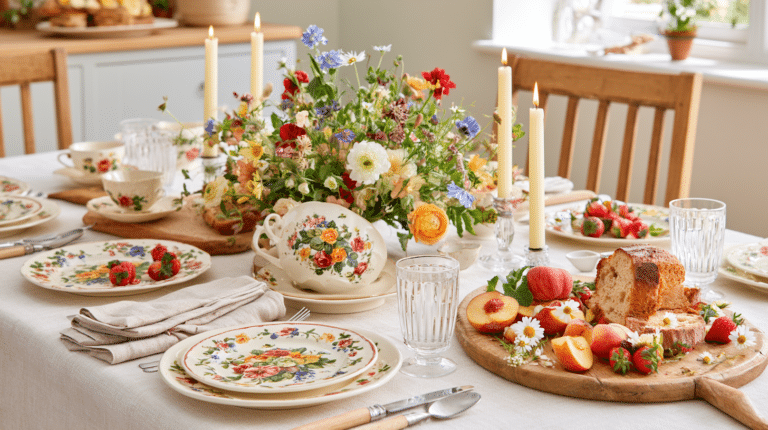
- Floral plates from different decades
- Teacups with delicate handles
- Vintage serving platters
- Depression glass in various colors
- Vintage-style enamelware
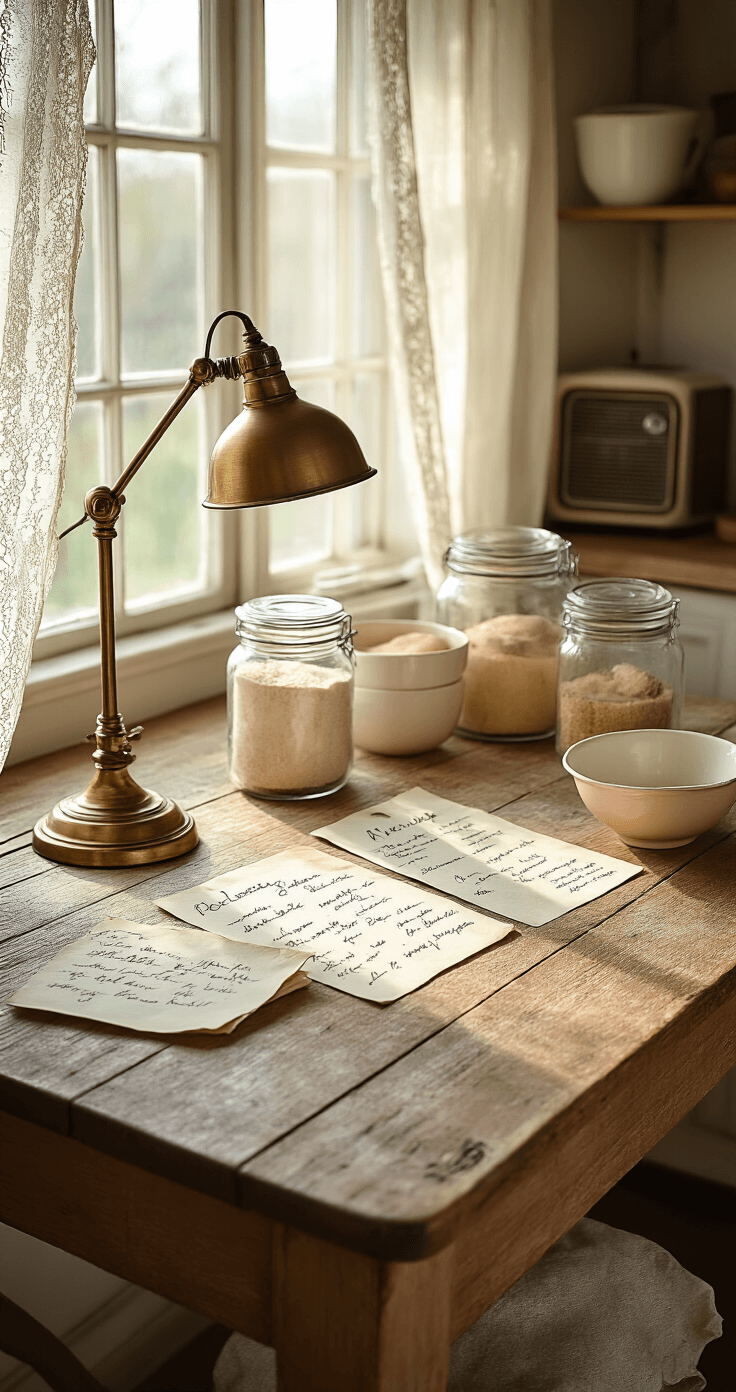
Every piece tells a story. My favorite bowl came from my actual grandmother. The blue plate with roses? Estate sale in Connecticut.
When friends come over, they actually comment on the dishes. That never happened with my boring white plates from Target.
✎ Steal This Look
- Paint Color: PPG Antique White 11-1
- Furniture: vintage hutch with glass-front cabinets for displaying collected dishware
- Lighting: brass pendant light with milk glass shade over the dining area
- Materials: distressed wood shelving, linen napkins, copper pot racks, worn ceramic surfaces
This kitchen style celebrates the stories behind objects, turning everyday meals into small rituals of remembrance and connection.
Textiles That Make Everything Softer
This is where grandmacore gets really cozy.
Layer these like your comfort depends on it:
- Lace curtains that filter afternoon light (I found café curtains that hit just below my window sills)
- Floral tablecloth
Book Your Stay in Sarasota
Find the perfect accommodation.
🌟 Steal This Look
- Paint Color: Dunn-Edwards Whisper White DEW340
- Furniture: vintage drop-leaf kitchen table with turned legs, spindle-back wooden chairs with rush seats
- Lighting: brass swing-arm wall sconce with fabric bell shade
- Materials: unbleached cotton duck, heirloom-quality lace, faded vintage linen, hand-crocheted cotton doilies
This is the room where I slow down enough to notice how afternoon light turns lace into shadow lace on the walls—textiles here aren’t just soft, they’re timekeepers.
This post may contain affiliate links. Please see my disclosure policy for details.