Spring Table Decor That’ll Make Your Dining Room Sing (Without Breaking the Bank)
Spring table decor transforms your dining space with fresh florals, soft textures, and colors that make winter feel like a distant memory.
I’ll admit it—I used to think table decorating was reserved for people who had their lives together. You know, the ones who meal prep on Sundays and never lose their car keys. But here’s what I discovered: creating a gorgeous spring table is easier than assembling IKEA furniture, and way more rewarding.

✎ Steal This Look
- Paint Color: Sherwin-Williams Agreeable Gray SW 7029
- Furniture: extendable farmhouse dining table with turned legs, upholstered dining chairs with linen slipcovers
- Lighting: linear chandelier with seeded glass shades and aged brass finish
- Materials: washed linen, weathered wood, hammered metal, pressed glass, natural raffia
There’s something quietly triumphant about setting a beautiful table on a random Tuesday night; it tells your brain that ordinary moments deserve celebration too.
Why Your Table Looks Sad (And How to Fix It)
You’ve probably walked past your dining table and thought, “Something’s missing here.” Maybe it’s been collecting mail and random household items since February. Or perhaps you threw some flowers in a vase once and called it a day.
Here’s the thing: your table is the heart of your home. It’s where you eat breakfast standing up, where kids do homework, where you pretend to enjoy work-from-home lunch breaks. Making it look intentional for spring doesn’t require a design degree or a trust fund.
What Actually Makes a Table Look “Spring-ish”
Before you run to the store and buy every bunny figurine in sight, let’s talk about what creates that fresh spring feeling.
The Magic Formula:
- Soft, touchable textures that make you want to sit down
- Natural elements that remind you there’s life outside
- Colors that don’t scream “I’m trying too hard”
- Layers that look collected, not catalog-perfect
- One solid focal point (not seventeen competing decorations)
I learned this the hard way after my first attempt looked like a craft store exploded on my table.

💡 Steal This Look
- Paint Color: use Farrow & Ball brand. Match the ACTUAL wall color in the image. Format: Farrow & Ball ColorName CODE
- Furniture: specific furniture for this room
- Lighting: specific lighting fixture
- Materials: key textures and materials
I still cringe at photos of my first Easter table, where I placed matching bunnies at every seat like place cards—now I know restraint feels more like the season itself.
The Non-Negotiables: What Your Spring Table Actually Needs
1. Something Soft Under It All
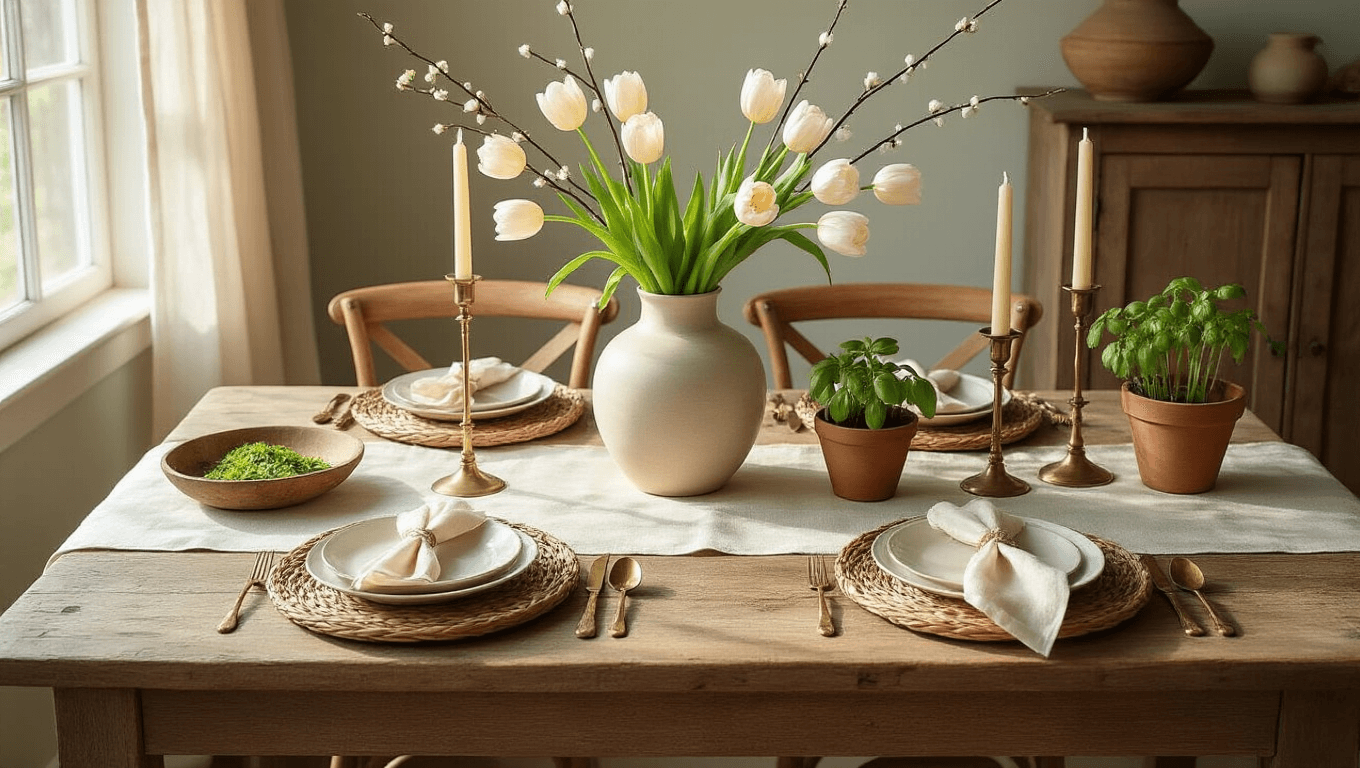
A linen table runner or tablecloth is your foundation. Think of it like primer before makeup—it makes everything else look better.
I’m obsessed with neutral tones (creams, tans, soft grays) because they don’t fight with your food or flowers. But if you want to go bold with pastels or florals, do it. Your table, your rules.
Pro move: Layer a runner over a tablecloth for instant dimension.
2. Something Woven for That “Collected Over Time” Vibe
Woven chargers or a woven tray instantly make your table look like you traveled somewhere interesting. Even if the most exotic place you’ve been lately is the grocery store.
I picked up a rattan tray from a thrift store for $4, and people ask about it constantly.
3. Something Alive (Or Fake—I Won’t Judge)
Real flowers die. That’s their job. If you’re not ready for that commitment, faux stems have come a long way.
My rule: if it looks plastic from three feet away, it’s not worth buying. The good ones have variations in color, slightly imperfect petals, and don’t shine like they’re coated in Vaseline.

🏠 Steal This Look
- Paint Color: Behr Swiss Coffee 12
- Furniture: extendable farmhouse dining table in warm oak finish
- Lighting: linear rattan pendant light over table center
- Materials: Belgian linen, natural rattan, unfinished wood, matte ceramic
I learned this the hard way after hosting Easter dinner on bare wood—my grandmother’s silver looked lonely and the whole table felt unfinished. A $38 linen runner changed everything.
Save this article
Enter your email and we'll send it straight to your inbox.
Five Centerpiece Ideas That Actually Work
The “I Raided the Garden Center” Look
Grab three or four terra cotta pots in different sizes. Plant them with herbs, pansies, or whatever’s not dead at your local nursery. Cluster them on a wooden board or tray.
Why this works: It’s functional (hello, fresh basil), forgiving (plants can be messy), and smells amazing.
I add a little moss around the bases because I’m fancy like that. Actually, it’s because the moss hides the fact that I overwatered one pot and now there’s a weird crusty salt ring.
The “One Big Statement” Strategy
Sometimes you just need one substantial vase filled with something dramatic. Branches with blossoms, oversized hydrangeas, or those expensive-looking tulips that are actually $10 for a bunch.
The trick: Go bigger than feels comfortable. That dinky vase you think is “enough”? It’s not. You want something that makes people say “Oh!” when they walk in.
I have a cream-colored vase that’s almost ridiculously large, and it’s been the best $30 I’ve spent on home decor. Fill it with fresh greenery from the yard (free!), and suddenly you look like you have your act together.

The “Scattered Small Vases” Approach
Buy five to seven small bottles or bud vases from wherever. Thrift stores are perfect for this. Put one to three stems in each. Scatter them down the table’s center.
Why I love this:
- Guests can see each other (unlike those towering centerpieces that require neck craning)
- You can move them around easily when serving food
- Each vase costs almost nothing to fill
- It looks intentional, not sparse
I rotate between tulips, daffodils, and whatever caught my eye at Trader Joe’s.
The Dough Bowl Situation
If you’ve been on Pinterest in the last five years, you’ve seen these. A long wooden dough bowl filled with… stuff.
Here’s how to make it not look like you copied Pinterest:
- Start with the bowl (vintage is ideal, but new works)
- Add height variation: tall candles, a small plant, stacked books
- Fill gaps with moss or greenery
- Include one unexpected element: vintage scissors, a bird figurine, interesting stones
The key is odd numbers and varying heights. Three candles, five elements total. Our brains like asymmetry more than we think.

Find the perfect accommodation.
🖼 Steal This Look
- Paint Color: Valspar Garden Party 5001-1C
- Furniture: reclaimed wood farmhouse dining table with visible grain and natural finish
- Lighting: linear brass pendant with exposed Edison bulbs hung 30 inches above table surface
- Materials: unglazed terra cotta, raw edge wood, sphagnum moss, matte ceramic, hammered brass
This is the setup I return to every March when I’m desperate for green life but it’s still 40 degrees outside—there’s something deeply satisfying about snipping herbs you grew yourself, even if you only kept them alive for three weeks.
This post may contain affiliate links. Please see my disclosure policy for details.
Want to keep this one?
We'll email you the link so you can find it again later.