

Easter Tablescapes That’ll Make Your Guests Forget About the Ham
Contents
Easter tablescapes transform ordinary dining tables into spring celebrations that set the tone for your entire gathering, and I’m here to show you exactly how to pull it off without losing your mind or your budget.
Listen, I get it. You’re juggling a million things before Easter Sunday. The thought of creating one of those picture-perfect tablescapes you see on Pinterest feels about as realistic as finding a golden egg in your backyard.
But here’s what nobody tells you: the most stunning Easter tables aren’t the ones that cost a fortune or take all day to arrange. They’re the ones that feel intentional, pull together a few key elements, and actually work for real people hosting real dinners.
I’ve been styling Easter tables for my family for over a decade now, and I’ve learned what works, what’s a waste of money, and what makes guests actually stop and say “wow” when they walk into your dining room.
What Makes an Easter Tablescape Actually Work
Easter tablescapes blend spring florals, pastel colors, and thoughtful details into a cohesive design that celebrates the season without looking like a craft store exploded on your table.
The secret? You need three core layers:
- Foundation pieces (table runner, placemats, basic linens)
- Anchor elements (centerpiece, main floral arrangement)
- Finishing details (napkin rings, place cards, scattered accents)
Most people get overwhelmed because they try to tackle everything at once. I learned the hard way that building your tablescape in distinct layers makes the whole process manageable and actually enjoyable.
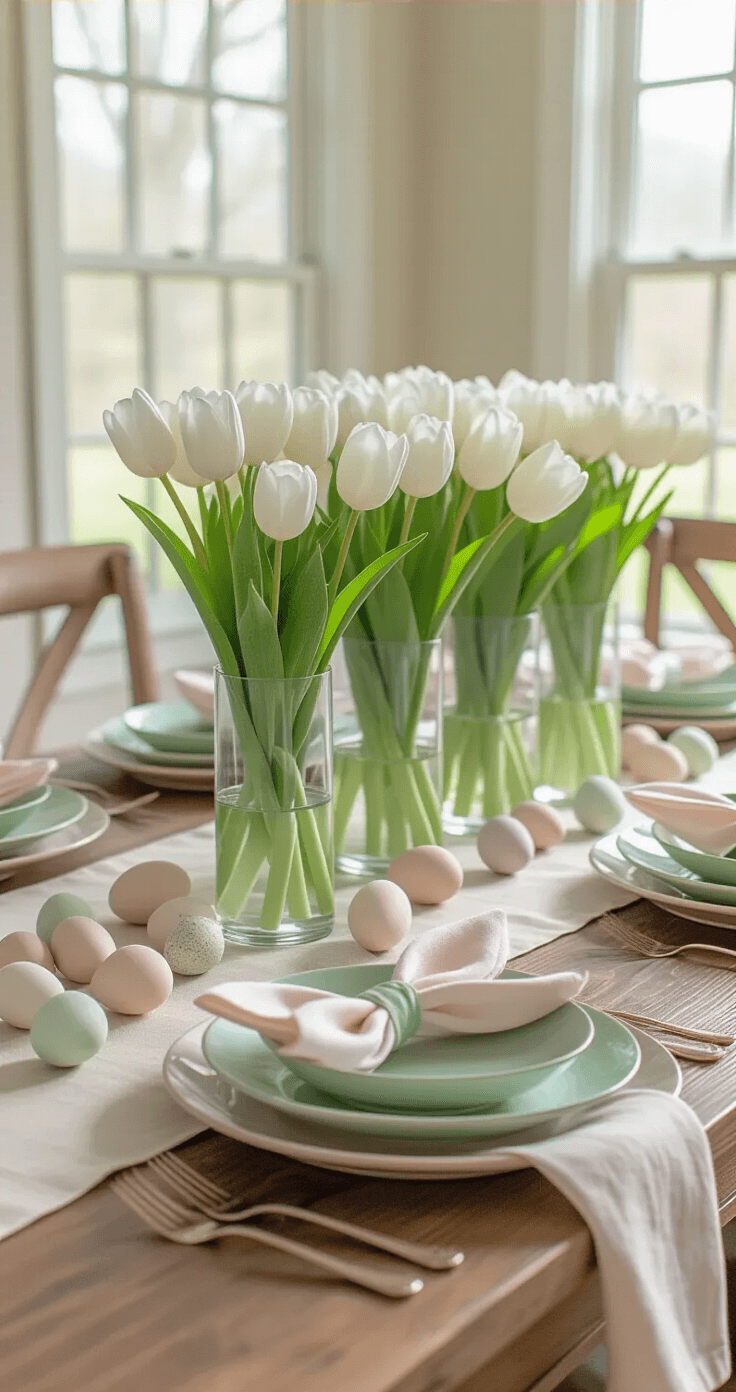
Your Easter Tablescape Foundation: Getting the Bones Right
The foundation makes or breaks your entire setup. Get this part right, and everything else falls into place beautifully.
The Base Layer
Start with your table runner or tablecloth.
I’ve tried fancy linens and budget options, and honestly? The texture matters more than the price tag.
Best foundation options:
- Lace runners for vintage charm and elegance
- Linen in soft neutrals (cream, beige, soft gray) that let your colors pop
- Patterned runners with subtle spring motifs or abstract pastels
- Layered look using a solid tablecloth with a contrasting runner on top
Last Easter, I used a simple cream linen runner from my closet and layered individual burlap placemats at each setting. Cost me basically nothing, looked intentional and expensive.
Plate Stacks That Pop
Your plates create the framework for each place setting.
I always do three layers when possible:
- Charger plate (large decorative base plate)
- Dinner plate (white or neutral usually works best)
- Salad or dessert plate (this is where you bring in pattern or color)
The trick is using your salad plate as the color moment. Floral patterns, soft pastels, or even spring green plates add personality without overwhelming the setting.
You don’t need to buy new plates every year. I rotate the same white dinner plates and swap out the smaller accent plates based on my color scheme.
Napkin Situation
Cloth napkins make everything feel more special, period.
I keep a collection of linen napkins in soft spring colors: blush pink, sage green, pale yellow, lavender.
Simple napkin fold options:
- Classic rectangle fold with a decorative ring
- Rolled and tied with ribbon or twine
- Bunny ear fold (surprisingly easy, major impact)
- Tucked into a small nest with an egg on top
The bunny ear fold became my signature move after I tried it on a whim three years ago. My niece still talks about those napkin bunnies.

The Centerpiece: Your Table’s Main Character
Your centerpiece anchors the entire table. Everything else plays off this main element.
Fresh Floral Arrangements
I’ll be straight with you: fresh flowers make the biggest impact.
Best spring blooms for Easter tables:
- Tulips in a single color for dramatic simplicity
- Daffodils for classic spring charm
- Hyacinths for incredible fragrance
- Ranunculus for romantic, layered petals
- Pussy willows for unexpected texture
I buy flowers from Trader Joe’s or my local grocery store, never fancy florists. The secret is grouping the same flower type together rather than mixing everything into a chaotic mess.
Last year, I used nothing but white tulips in simple glass vases down the center of the table. Clean, modern, absolutely stunning. Cost about $20 total.

Non-Floral Centerpiece Ideas
Not everyone wants to deal with fresh flowers (totally valid).
Alternative centerpiece options:
- Dough bowl display: Fill a wooden dough bowl with moss, decorated eggs, and small ceramic bunnies
- Tiered tray arrangement: Stack decorated eggs, small plants, and spring figurines on a three-tier tray
- Candle grouping: Cluster pillar candles in varying heights with small floral or egg accents around the base
- Terrarium-style runner: Line glass apothecary jars down the center filled with moss, eggs, and tiny spring elements
I rotate between fresh florals and alternative centerpieces depending on my energy level and budget that year.
Height and Visual Interest
Here’s something that changed my tablescape game completely: varying heights.
Flat tables look boring, period.
Add dimension by:
- Using pedestals or cake stands under some elements
- Stacking books under bowls or trays
- Choosing tall vases mixed with low
Book Your Stay
This post may contain affiliate links. Please see my disclosure policy for details.


