Florida Backyard Landscaping: Your Ultimate Guide to a Stunning, Low-Maintenance Outdoor Oasis
Living in Florida means having the perfect opportunity to create a breathtaking backyard that’s both beautiful and brilliantly adapted to our unique environment. Let me walk you through how to transform your outdoor space into a stunning, low-maintenance paradise.
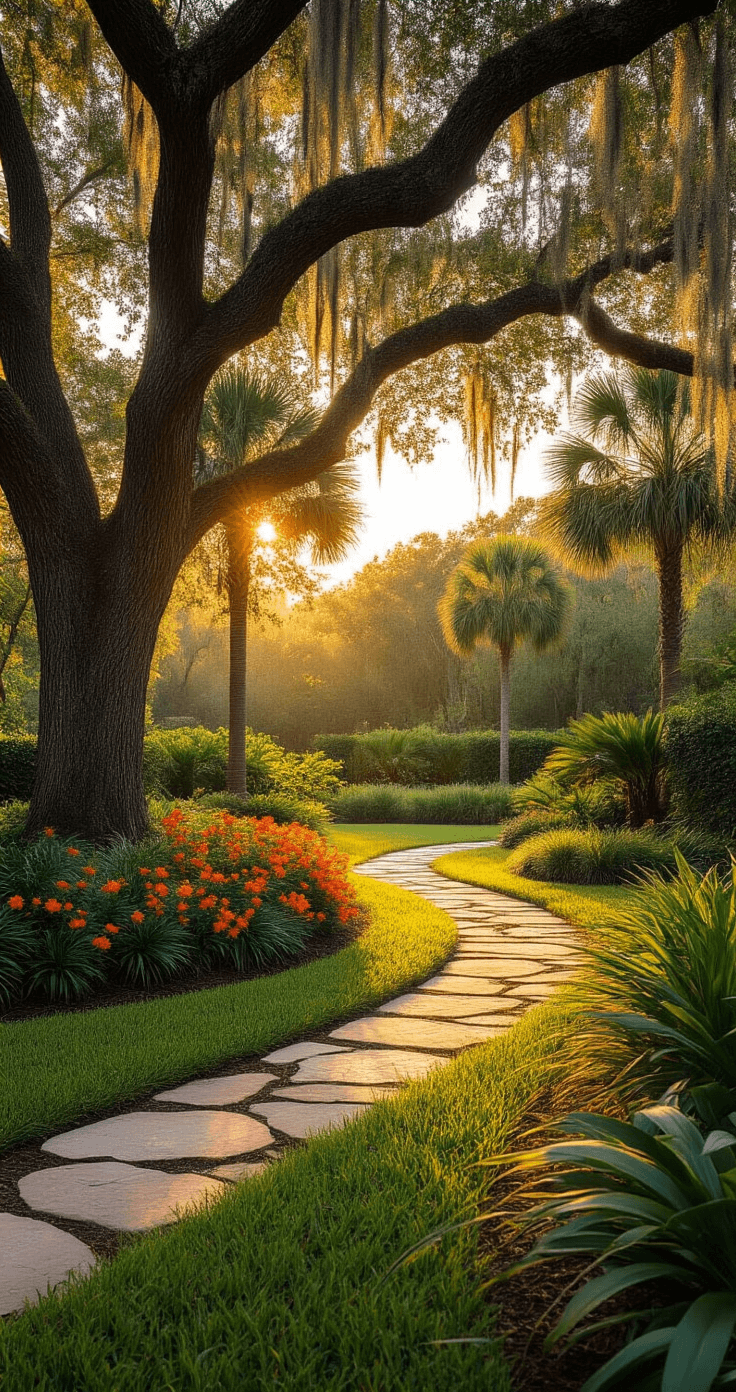
🖼 Steal This Look
- Paint Color: Sherwin-Williams Rainwashed SW 6211
- Furniture: Weathered teak Adirondack chairs with Sunbrella canvas cushions in coral or turquoise
- Lighting: Copper-hammered path lights with warm 2700K LED bulbs and nautical rope-wrapped pendant over dining area
- Materials: Crushed shell pathways, reclaimed coral rock, native coquina, sealed ipe decking, and crushed granite for drainage layers
Your Florida backyard should feel like a natural extension of the landscape you drove through to get home—effortless, resilient, and quietly spectacular at golden hour when the light turns everything amber.
Why Native Plants Are Your Backyard’s Best Friends
Florida’s landscape isn’t just about looking good – it’s about creating a sustainable ecosystem right in your own yard. Native plants are the superheroes of backyard landscaping, and here’s why:
- Drought-Resistant Champions: These plants laugh in the face of Florida’s intense heat
- Wildlife Magnets: Attract butterflies, birds, and local pollinators
- Low Maintenance: Practically care for themselves once established
Top Native Plants for Your Florida Backyard
- Sabal Palm – The quintessential Florida tree
- Live Oak – Provides incredible shade and drama
- Firebush – Brings vibrant color and attracts wildlife
- Muhly Grass – Adds texture and movement to your landscape
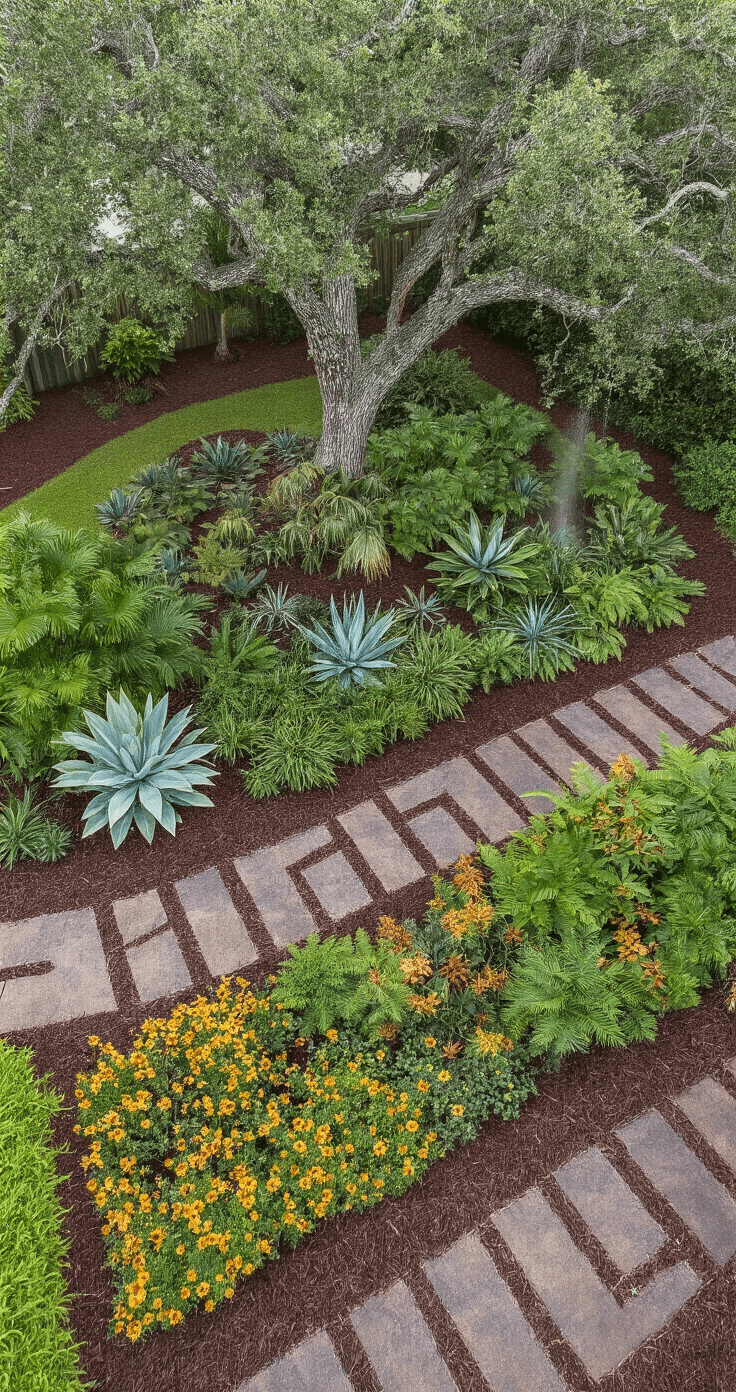
🌟 Steal This Look
- Paint Color: Benjamin Moore Cushing Green HC-125
- Furniture: weathered teak Adirondack chair with wide slats
- Lighting: bronze post lantern with seeded glass
- Materials: crushed shell pathways, coquina stone edging, natural pine straw mulch
There’s something deeply satisfying about stepping into a yard that feels like it belongs to Florida rather than fighting against it—native plants let you work with the land instead of wrestling it into submission.
🔔 Get The Look
Design Principles: Creating Your Backyard Masterpiece
The Right Plant, Right Place Strategy
Grouping plants with similar needs isn’t just smart – it’s a game-changer. Think of it like creating plant neighborhoods where everyone gets along perfectly.
Pro Tip: Use mulch to:
- Retain moisture
- Suppress weeds
- Regulate soil temperature
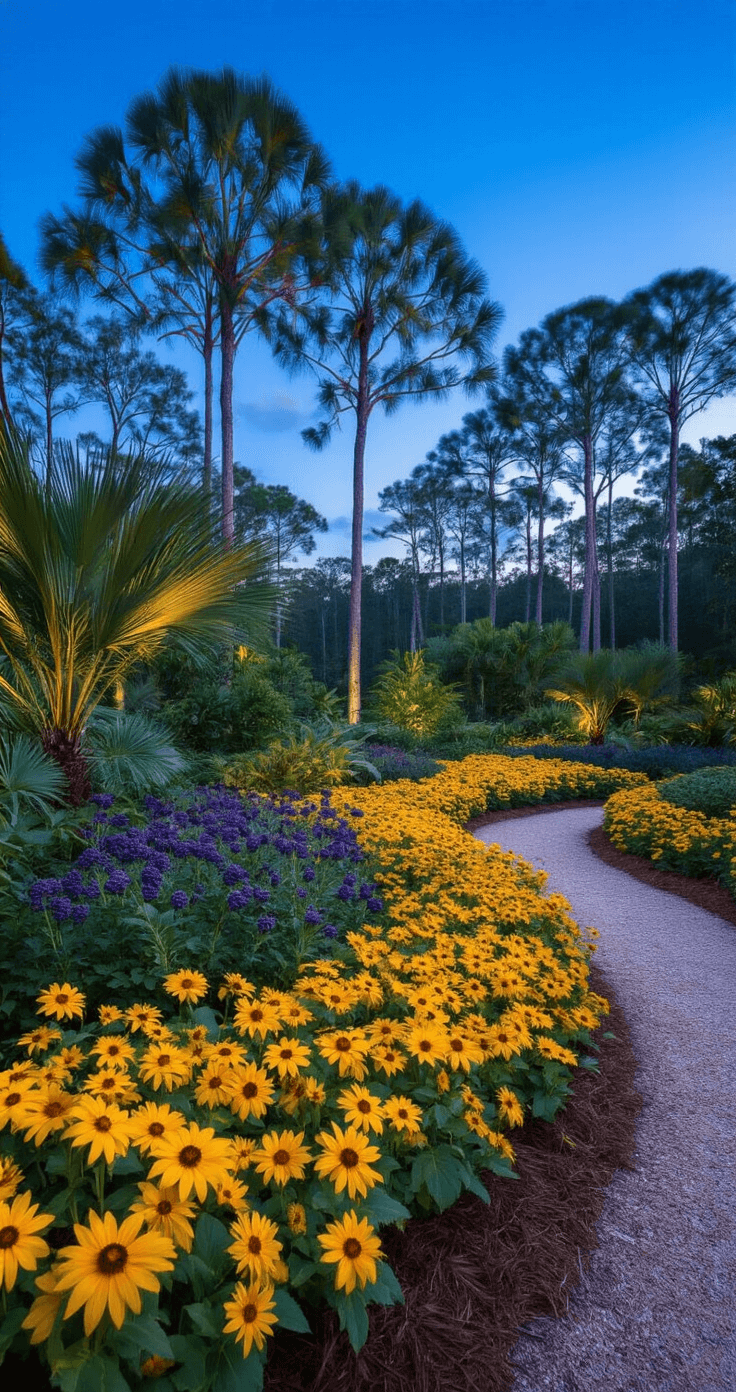
💡 Steal This Look
- Paint Color: Farrow & Ball Green Smoke 47
- Furniture: weathered teak Adirondack chairs with Sunbrella canvas cushions
- Lighting: low-voltage brass path lights with frosted glass globes
- Materials: crushed shell pathways, reclaimed coral stone, natural cypress mulch, drought-tolerant native grasses
Your Florida backyard isn’t a northern garden with better weather; it’s a subtropical ecosystem that rewards working with, not against, the sandy soil and punishing afternoon sun.
Layering: The Secret to a Lush Landscape
Imagine your backyard as a living, breathing canvas. Vertical layering means:
- Ground covers as your base
- Shrubs as your middle layer
- Trees as your dramatic backdrop
Hardscape Heroes
Don’t forget non-plant elements that make your yard pop:
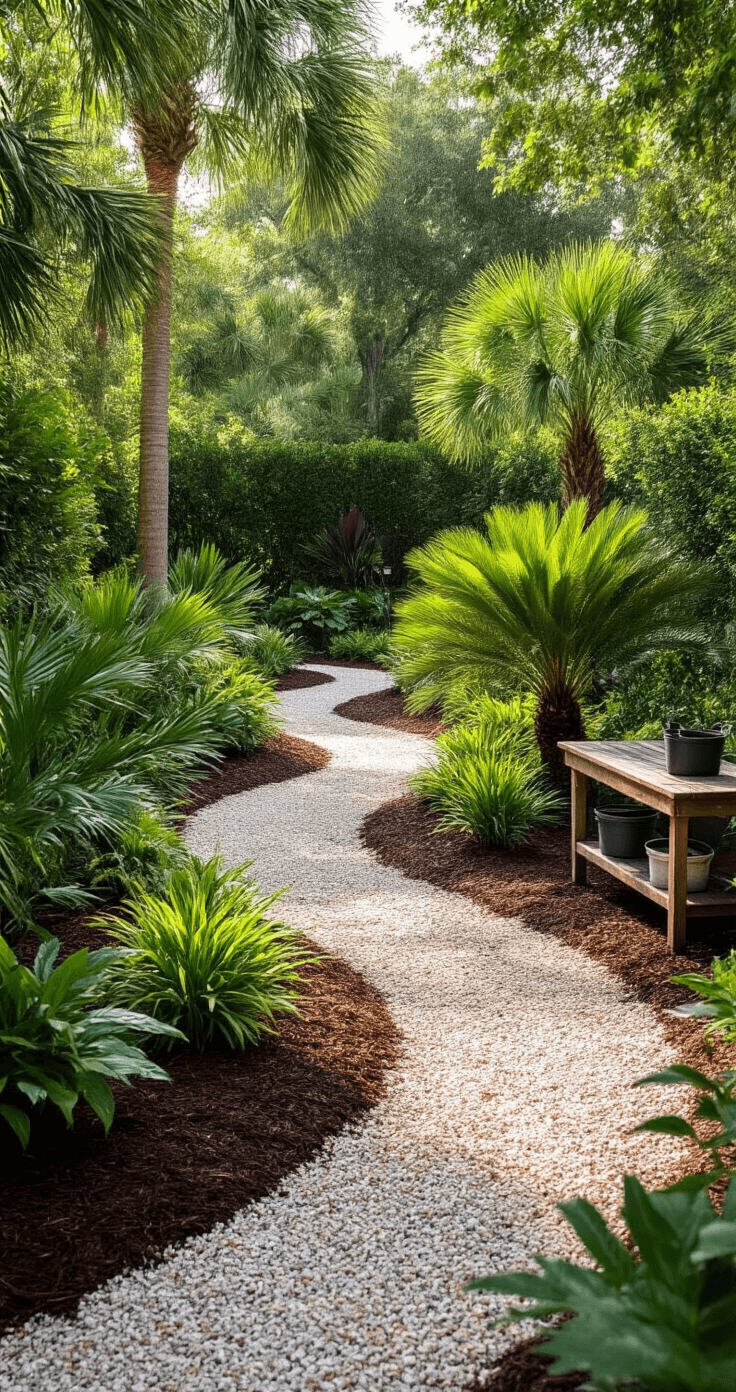
- Gravel pathways
- Stone seating areas
- Pergolas
- Water features
Save this article
Enter your email and we'll send it straight to your inbox.
✎ Steal This Look
- Paint Color: Behr Cactus Shadow S-H-790
- Furniture: weathered teak Adirondack chairs with Sunbrella canvas cushions
- Lighting: low-voltage brass path lights with amber LED bulbs
- Materials: crushed coral rock, reclaimed limestone pavers, corten steel edging, woven seagrass outdoor rugs
This is the part where your yard stops looking like a collection of plants and starts feeling like a place you discovered, not built—layering is what separates the magazine spreads from the parking lot medians.
Theme Inspiration for Your Florida Backyard
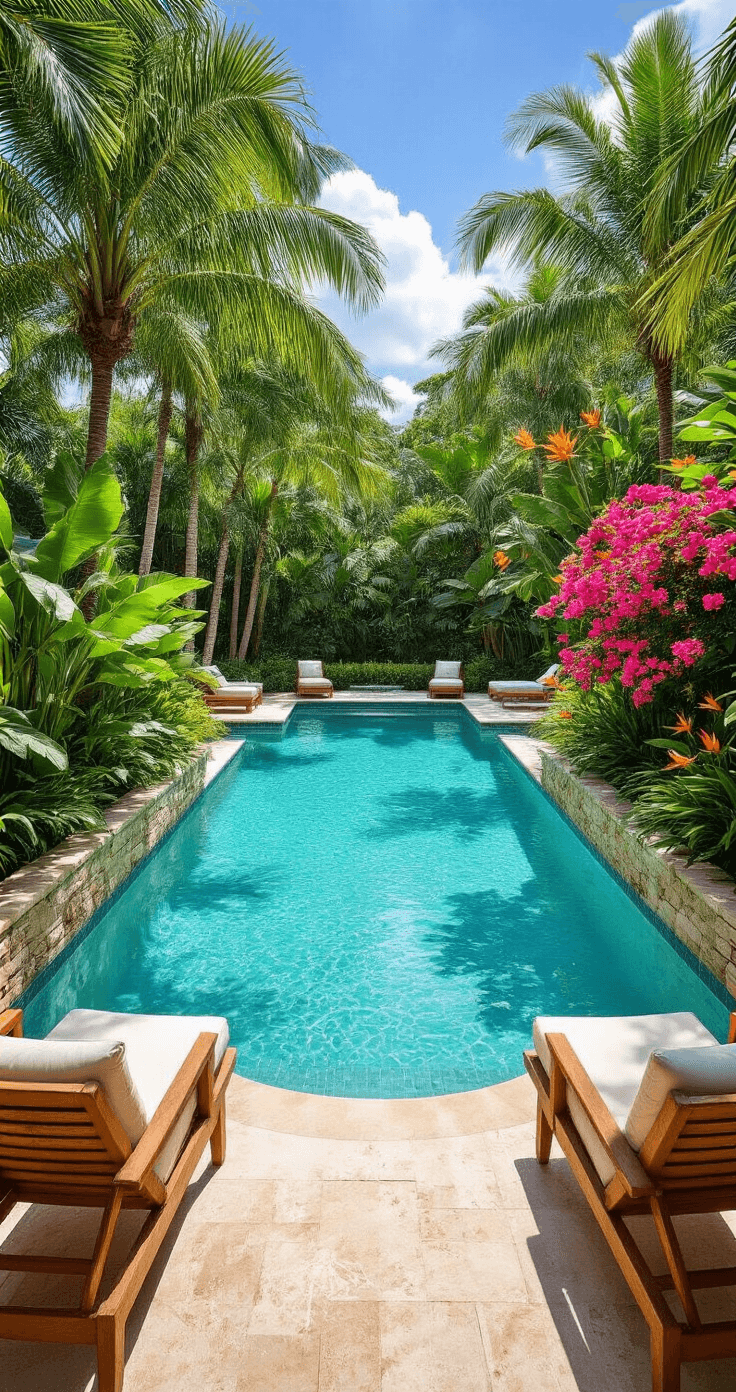
- Tropical Retreat
- Lots of palms
- Vibrant flowering plants
- Swimming pool focal point
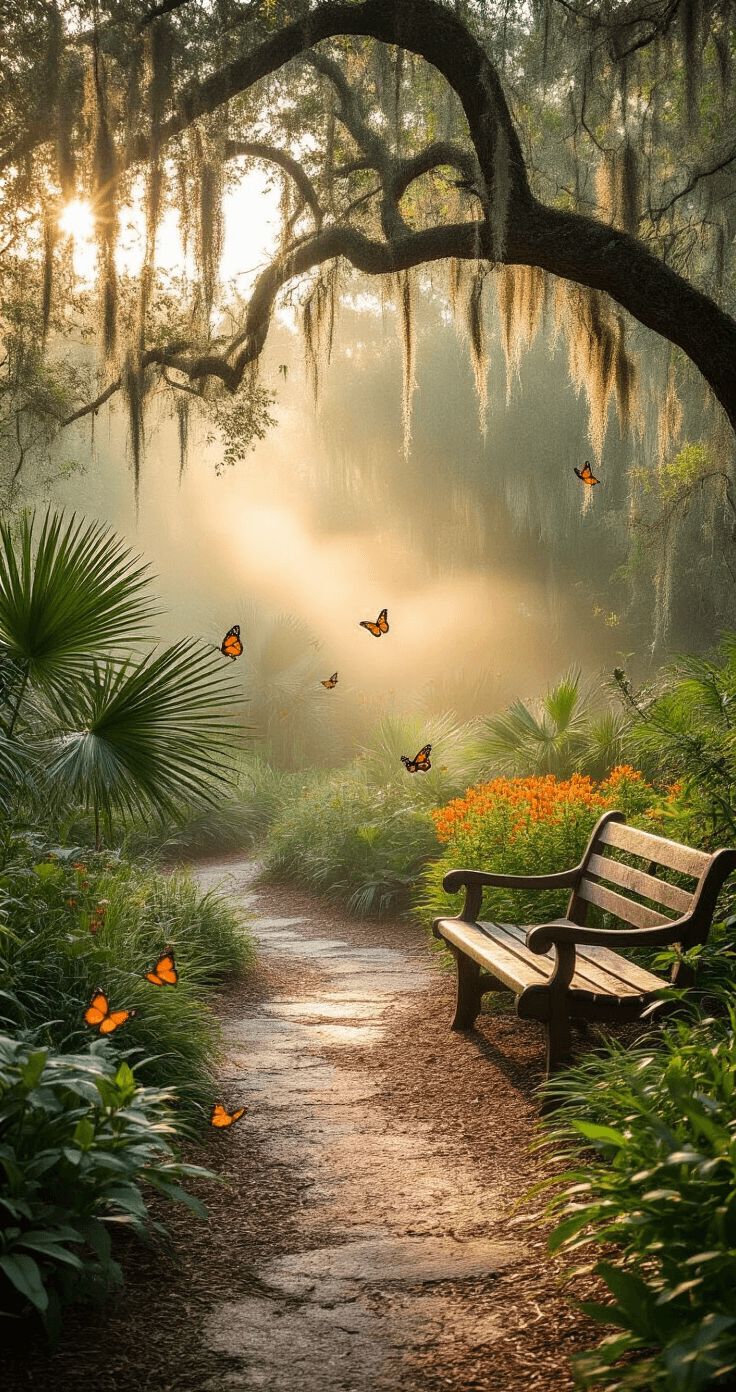
- Native Wildlife Garden
- Butterfly-friendly plants
- Natural, slightly wild look
- Minimal intervention required
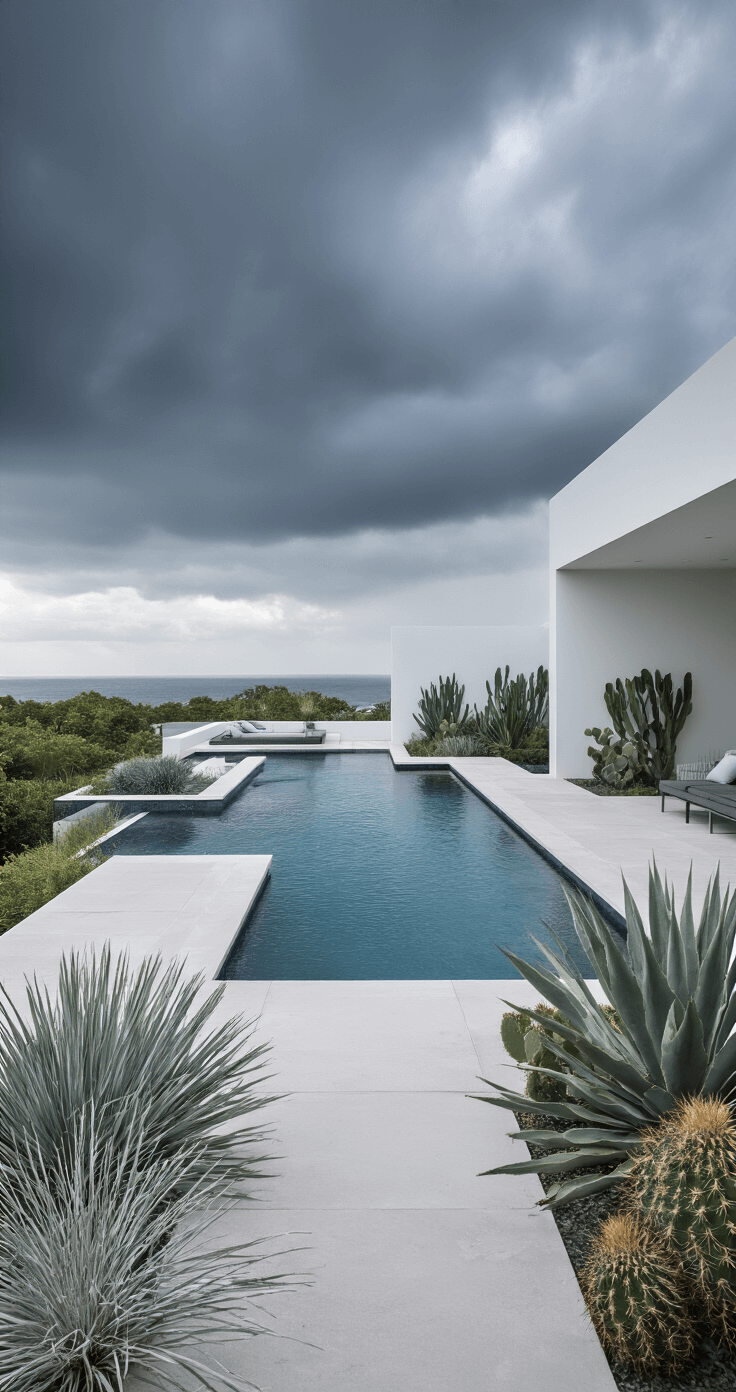
- Modern Coastal
- Clean lines
- Salt-tolerant plants
- Blue and white color palette
🏠 Steal This Look
- Paint Color: Valspar Palm Leaf 5006-3C
- Furniture: weathered teak Adirondack chairs with Sunbrella cushions in coral stripe
- Lighting: oversized rattan pendant with Edison bulb for covered lanai
- Materials: crushed shell pathways, reclaimed coral stone, woven abaca, driftwood accents
Your Florida backyard isn’t just outdoor space—it’s where afternoon thunderstorms become entertainment and winter evenings still demand ceiling fans; the right theme honors that year-round indoor-outdoor rhythm.
Maintenance: Keep It Simple
The beauty of a Florida-friendly yard is its low maintenance. Your checklist:
- Water efficiently
- Mulch regularly
- Choose native, drought-tolerant plants
- Prune strategically
✎ Steal This Look
- Paint Color: PPG Glade Green PPG1131-4
- Furniture: weathered teak potting bench with galvanized steel top
- Lighting: solar-powered LED path lights with warm 2700K output
- Materials: crushed shell mulch, reclaimed cypress, powder-coated aluminum edging
After years of battling finicky ornamentals, I’ve learned that the most beautiful Florida yards look almost untouched because they work with what we have: sandy soil, afternoon downpours, and relentless sun.
Pro Styling Tips
- Layer textures and colors
- Create visual flow
- Use focal points strategically
- Photograph during golden hours (early morning or late afternoon)
✎ Steal This Look
- Paint Color: Dunn-Edwards Whisper White DEW340
- Furniture: weathered teak outdoor sectional with deep-seated cushions in Sunbrella Canvas Spa
- Lighting: string lights with vintage Edison bulbs draped between palm trunks and pergola beams
- Materials: crushed coral rock pathways, reclaimed cypress wood decking, sea glass mosaic accents, and rust-resistant aluminum frames
There’s something almost meditative about a Florida backyard at 6:47 AM when the dew still clings to the coontie palms and the only sound is a distant mourning dove—this is when you realize the landscaping isn’t just decoration, it’s your daily reset button.
Final Thoughts
Your Florida backyard isn’t just a space – it’s an experience. By following these principles, you’ll create an outdoor sanctuary that’s beautiful, sustainable, and uniquely yours.
Remember: Every yard tells a story. Make yours incredible.
Quick Resources
- UF/IFAS Gardening Solutions
- Local nurseries specializing in native plants
- Pinterest boards for continuous inspiration
This post may contain affiliate links. Please see my disclosure policy for details.
Want to keep this one?
We'll email you the link so you can find it again later.