Florida Front Porch Ideas That Actually Work (No Fancy Design Degree Required)
Florida front porch ideas come alive when you blend coastal charm with practical choices that survive humidity, afternoon storms, and that relentless subtropical sun.
I’ve spent years perfecting my own Florida porch and watching neighbors struggle with furniture that rusts, fabrics that mildew, and plants that crisp up like forgotten toast.
Let me save you the headaches and wasted money.
🏠 Steal This Look
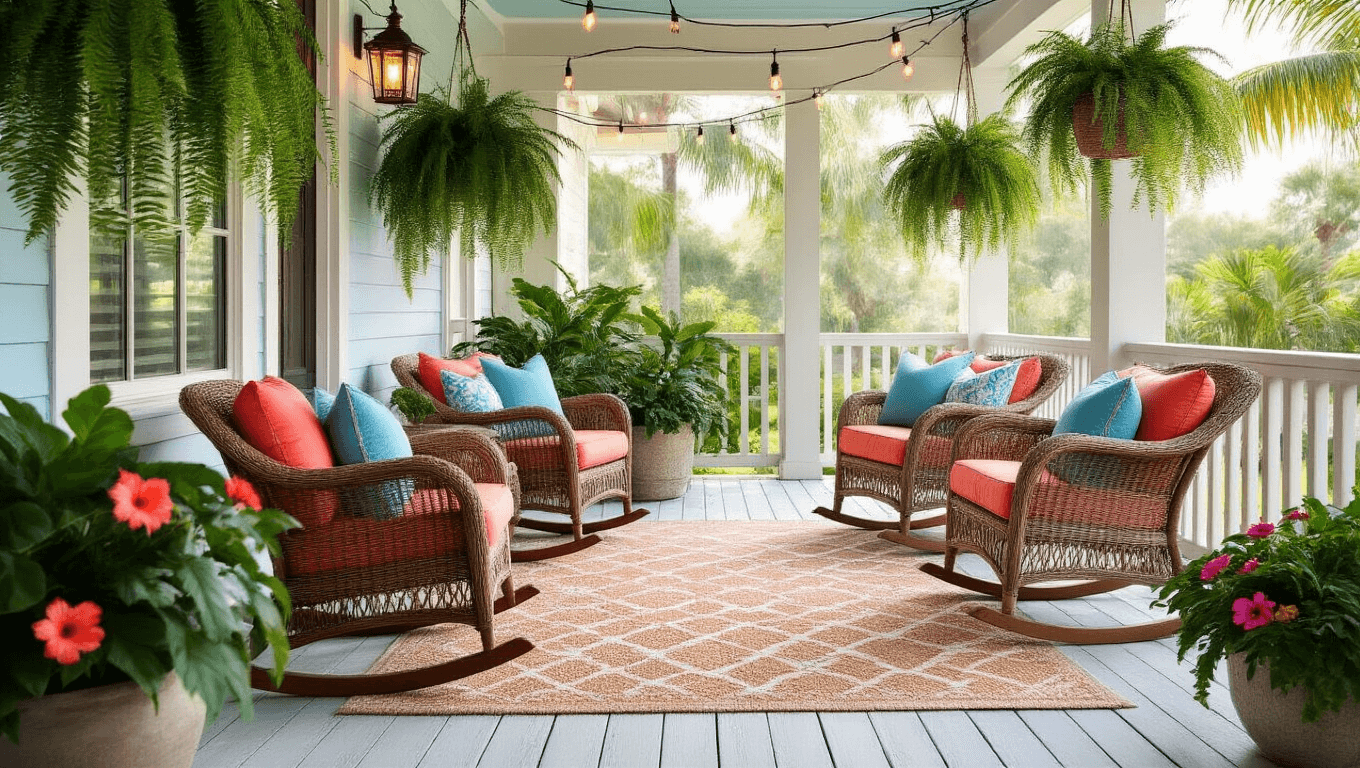
- Paint Color: Sherwin-Williams Sea Salt SW 6204
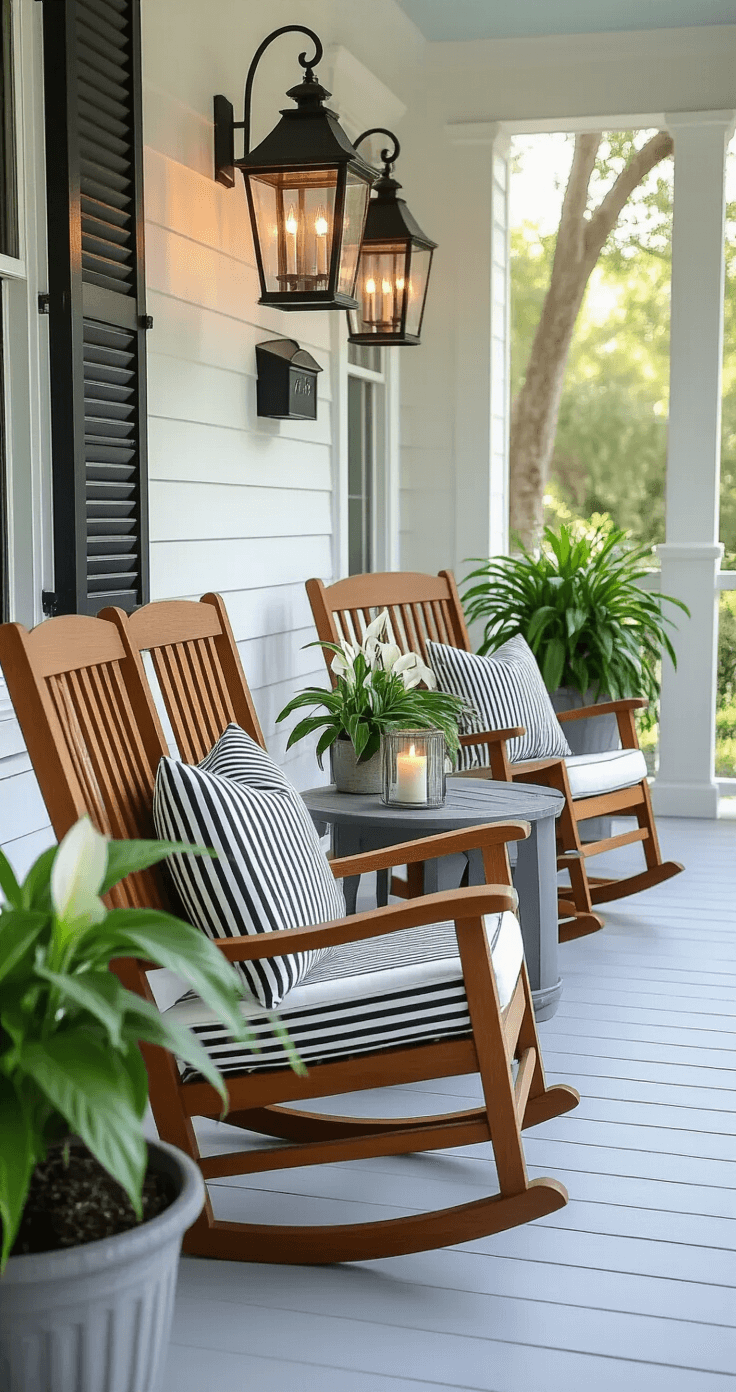
- Furniture: weathered teak rocking chairs with Sunbrella canvas cushions in navy stripe
- Lighting: oversized galvanized steel barn pendant with frosted glass
- Materials: powder-coated aluminum frames, marine-grade polymer wicker, coral stone pavers, reclaimed cypress ceiling planks
There’s something deeply satisfying about a porch that still looks put-together after a summer thunderstorm rolls through—this is the setup that finally let me stop rushing furniture inside every afternoon.
Why Your Florida Porch Needs Different Treatment
Your Florida porch isn’t a Connecticut porch with palm trees slapped on.
The climate here plays by different rules.
What makes Florida porches unique:
- Humidity that attacks fabric, wood, and metal relentlessly
- Intense UV rays that fade everything within months
- Afternoon thunderstorms that appear out of nowhere
- Year-round outdoor living (not just summer decoration)
- Bugs that think your cozy porch is their vacation rental
- Salt air in coastal areas that corrodes metal faster than you’d believe
I learned this the hard way when I bought gorgeous cushions that developed black mold spots within six weeks.
The tag said “outdoor fabric” but clearly had never met Florida’s 80% humidity.

✎ Steal This Look
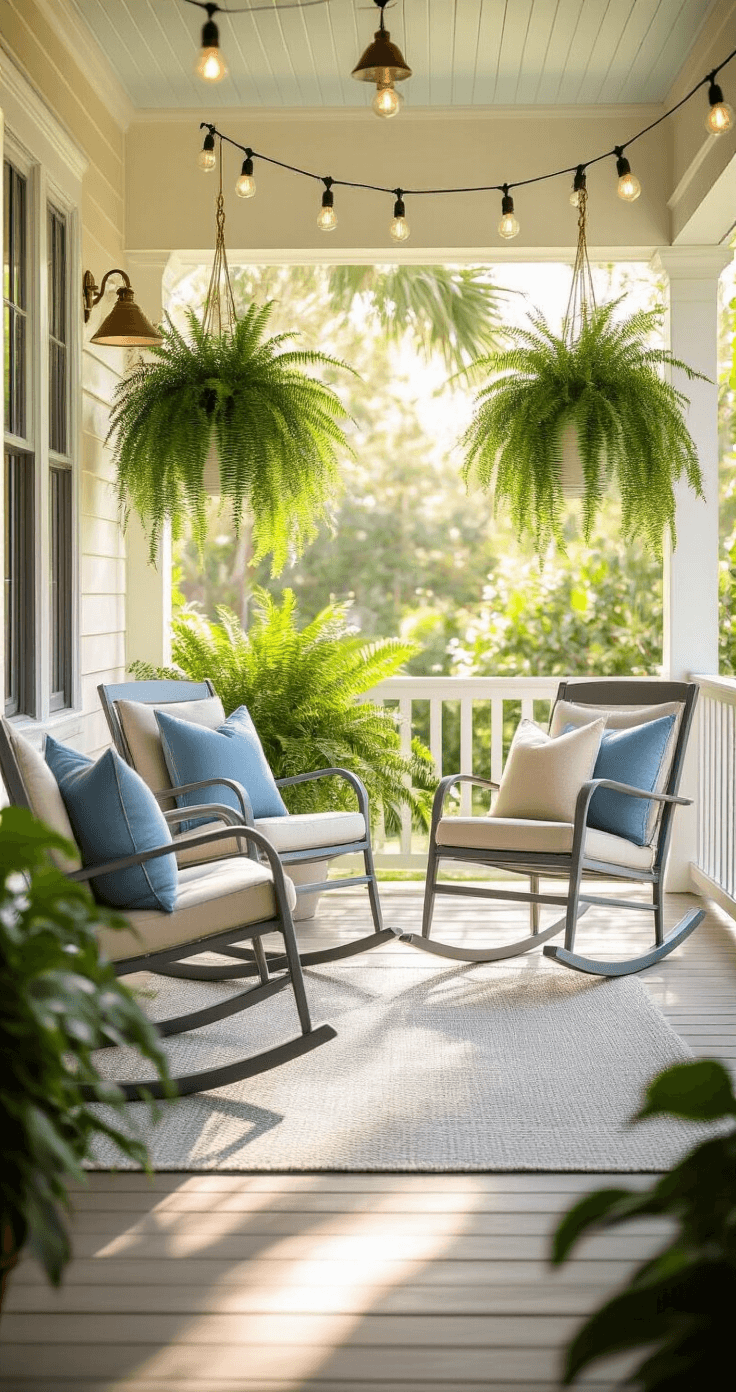
- Paint Color: Benjamin Moore White Dove OC-17
- Furniture: polypropylene resin wicker rocking chairs with Sunbrella cushions
- Lighting: wet-rated brass ceiling fan with integrated LED and remote
- Materials: marine-grade polymer, powder-coated aluminum, solution-dyed acrylic fabrics, composite decking
This is the reality check every new Florida transplant needs—your gorgeous Pinterest porch will become a science experiment in decay without climate-smart choices.
The Foundation: Choosing Furniture That Won’t Betray You
Start with seating that can handle what Florida throws at it.
Materials that actually survive:
- All-weather wicker or resin wicker – Looks traditional, shrugs off moisture
- Powder-coated aluminum – Won’t rust when rain inevitably hits it
- Teak or eucalyptus wood – Naturally weather-resistant (skip pine and untreated woods)
- Marine-grade poly lumber – Practically indestructible, though not everyone loves the look
I swear by my weather-resistant wicker rocking chairs positioned near the front door.
They’ve survived three hurricane seasons without a scratch.
Furniture arrangement tips:
- Create conversation areas rather than lining everything against the wall like a doctor’s waiting room.
- Angle two rockers toward each other with a small table between them.
- Position a bench perpendicular to the house if you’ve got the space.
- Leave clear walking paths – nobody wants to do an obstacle course with grocery bags.
🏠 Steal This Look
- Paint Color: Farrow & Ball Oval Room Blue No. 85
- Furniture: weather-resistant wicker rocking chairs with marine-grade cushions
- Lighting: brass-finish outdoor pendant with seeded glass shade
- Materials: all-weather resin wicker, powder-coated aluminum frames, Sunbrella performance fabric, teak accent tables
There’s something deeply satisfying about rocking through an afternoon thunderstorm knowing your chairs will be dry and ready by evening—it’s the small victory that makes Florida porch living feel effortless rather than exhausting.
Fabrics and Textiles: The Moisture Battle
This is where most people mess up spectacularly.
Regular outdoor fabric isn’t enough in Florida.
You need solution-dyed acrylic or Sunbrella-grade materials that resist both UV damage and mildew.
I add outdoor throw pillows with removable washable covers in coastal blues, sandy beiges, and crisp whites.
Save this article
Enter your email and we'll send it straight to your inbox.
Every few months, I toss the covers in the wash with a cup of white vinegar to prevent any mildew from getting ideas.
Color strategy that works:
- Light neutrals show dirt but stay cooler in direct sun
- Medium blues and greens hide Florida’s pollen dust better
- Avoid dark colors unless your porch stays shaded – they absorb heat like crazy
- Patterns hide wear better than solid colors
Change out pillows seasonally if you want.
Brighter tropical patterns in summer, warmer terracotta and coral tones in fall and winter.
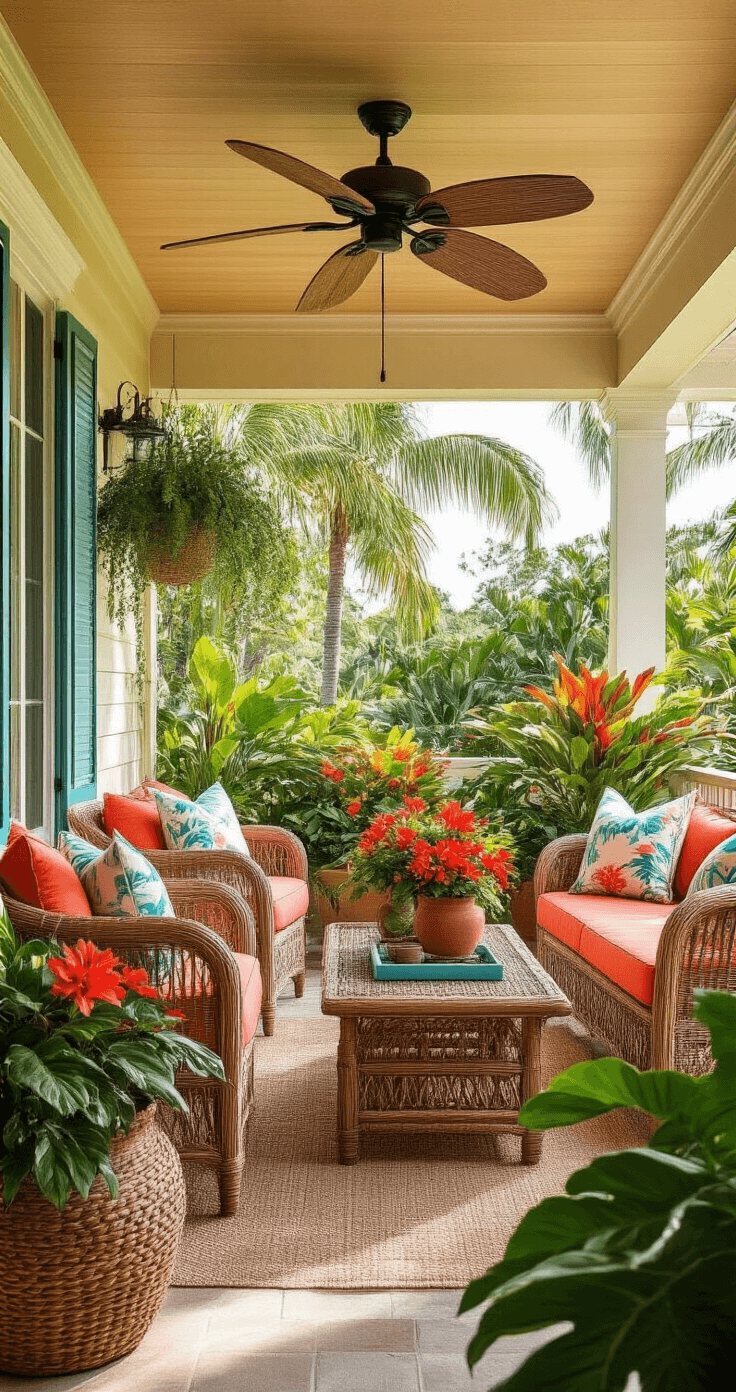
💡 Steal This Look
- Paint Color: use Behr brand. Match the ACTUAL wall color in the image. Format: Behr ColorName CODE
- Furniture: all-weather wicker loveseat with Sunbrella cushions in Canvas Natural
- Lighting: outdoor-rated fabric pendant with mildew-resistant lining
- Materials: solution-dyed acrylic, marine-grade canvas, quick-dry foam, mesh underlayer
I learned this the hard way after a $400 outdoor sectional turned green with mildew in my Sarasota carport—now I treat fabric selection like insurance, not decoration.
Plants That Thrive (Not Just Survive)
Florida’s growing zones mean you can have lush greenery year-round if you pick the right players.
For shaded porches:
- Boston ferns in hanging planters
- Pothos that trail beautifully
- Peace lilies for elegant height
- Caladiums for bold color (they go dormant in winter, don’t panic)
For sunny porches:
- Hibiscus for show-stopping blooms
- Crotons with their crazy colorful leaves
- Bougainvillea if you’ve got something for them to climb
- Succulents in cute arrangements (they’re not just desert plants)
I keep ferns on both sides of my front door in matching planters.
The symmetry looks intentional and expensive.
Real talk: They need watering almost daily in summer, but they create that lush Southern porch vibe instantly.
Group plants in odd numbers – three, five, seven.
It looks more natural and designed than even pairs.
Maintenance reality check:
Dead leaves happen.
Trim them off regularly rather than letting your porch look like a plant hospice.
I spend maybe 10 minutes every few days deadheading flowers and removing crispy bits.

🖼 Steal This Look
- Paint Color: use Valspar brand. Match the ACTUAL wall color in the image. Format: Valspar ColorName CODE
- Furniture: matching pair of substantial cast-iron or heavy ceramic planters flanking the front door
- Lighting: outdoor-rated pendant or flush-mount fixture with warm 2700K LED for evening plant visibility
- Materials: terracotta, glazed ceramic, weathered zinc, woven seagrass basket liners, coconut coir liners
There’s something deeply satisfying about that morning watering routine with coffee in hand—it’s the slow start Florida mornings demand, and guests always comment on how ‘established’ the house feels before they even step inside.
Lighting: From Functional to Magical
Florida evenings are too beautiful to waste, and proper lighting extends your porch hours dramatically.
Layer your lighting:
- Overhead fixtures – Ceiling fans with lights pull double duty by keeping air moving while illuminating the space
- Wall sconces or lanterns – Flank your door for symmetry and adequate light for fumbling with keys
- String lights or café lights – This is where magic happens
I strung outdoor Edison bulb string lights across my porch
This post may contain affiliate links. Please see my disclosure policy for details.
Want to keep this one?
We'll email you the link so you can find it again later.