

Florida vacation tips Home Aesthetic: Your Complete Guide to Coastal Living Done Right
Florida home aesthetic works because it captures everything you actually need in a home—cool spaces that handle the heat, rooms that breathe with the outdoors, and that laid-back vibe that makes you feel like you’re on permanent vacation.
I’ve spent years watching Florida homes evolve from tacky beach shacks to sophisticated coastal sanctuaries, and I’m here to tell you exactly how to nail this look in your own space.
What Makes Florida Homes Different (And Why You Should Care)
Look, Florida isn’t like anywhere else.
The humidity will destroy your fancy velvet sofa in three months flat.
The sun bleaches everything to oblivion if you’re not careful.
And if you can’t open your space to catch that ocean breeze, you’re missing the entire point of living here.
Florida homes solve real problems while looking absolutely stunning.
The three main styles you’ll see everywhere:
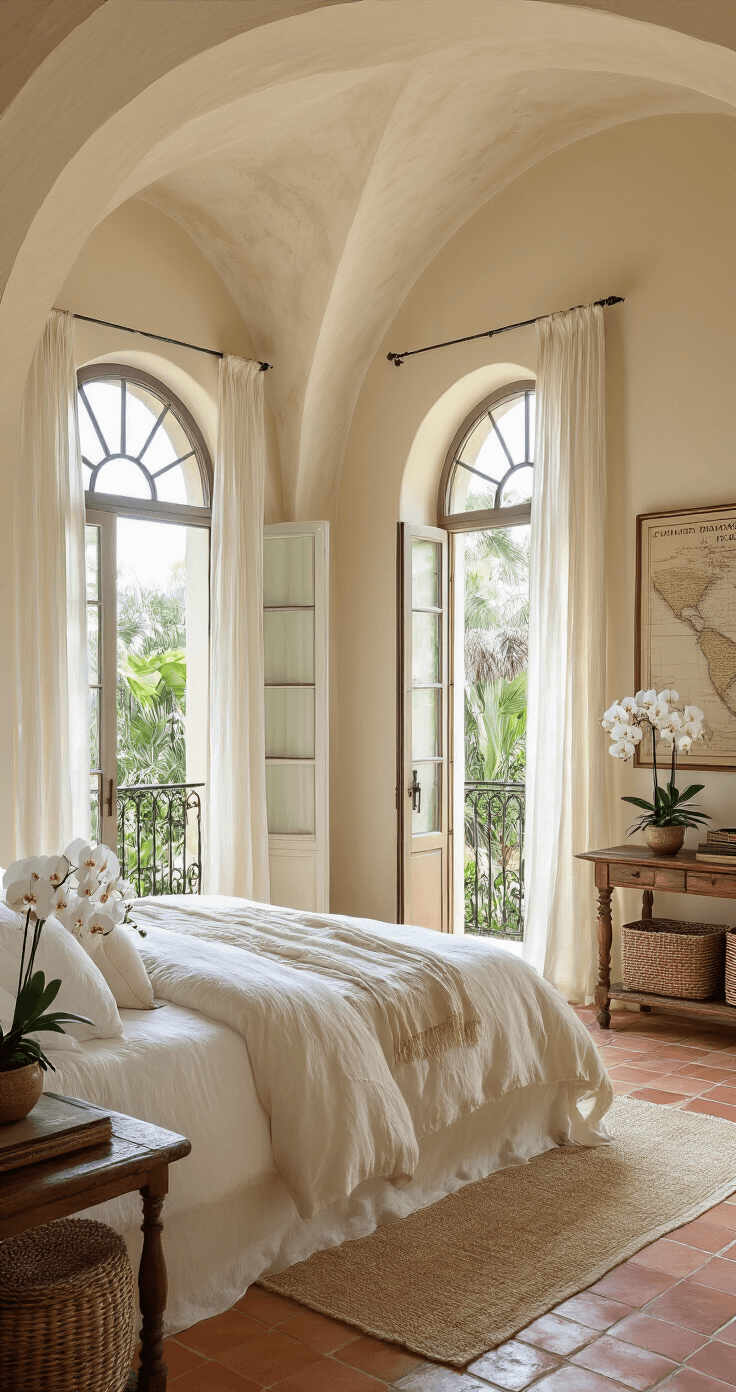
- Mediterranean elegance – Those gorgeous two-story beauties with stucco walls and terracotta tile roofs that make you think of Italian villas
- Coastal Contemporary – Clean lines, massive windows, and layouts designed to showcase water views like they’re works of art
- Coastal Indies – The classic elevated homes with wraparound porches that literally saved lives during hurricanes for generations
I remember touring a Mediterranean-style home in Naples Florida guide last year that completely changed how I thought about Florida architecture.
The moment I walked in, I understood why people pay premium prices for these features.
Thick stucco walls kept the interior cool even during August.
Ornamental ironwork added character without feeling stuffy.
And those arched doorways created natural flow between rooms that felt both grand and welcoming.
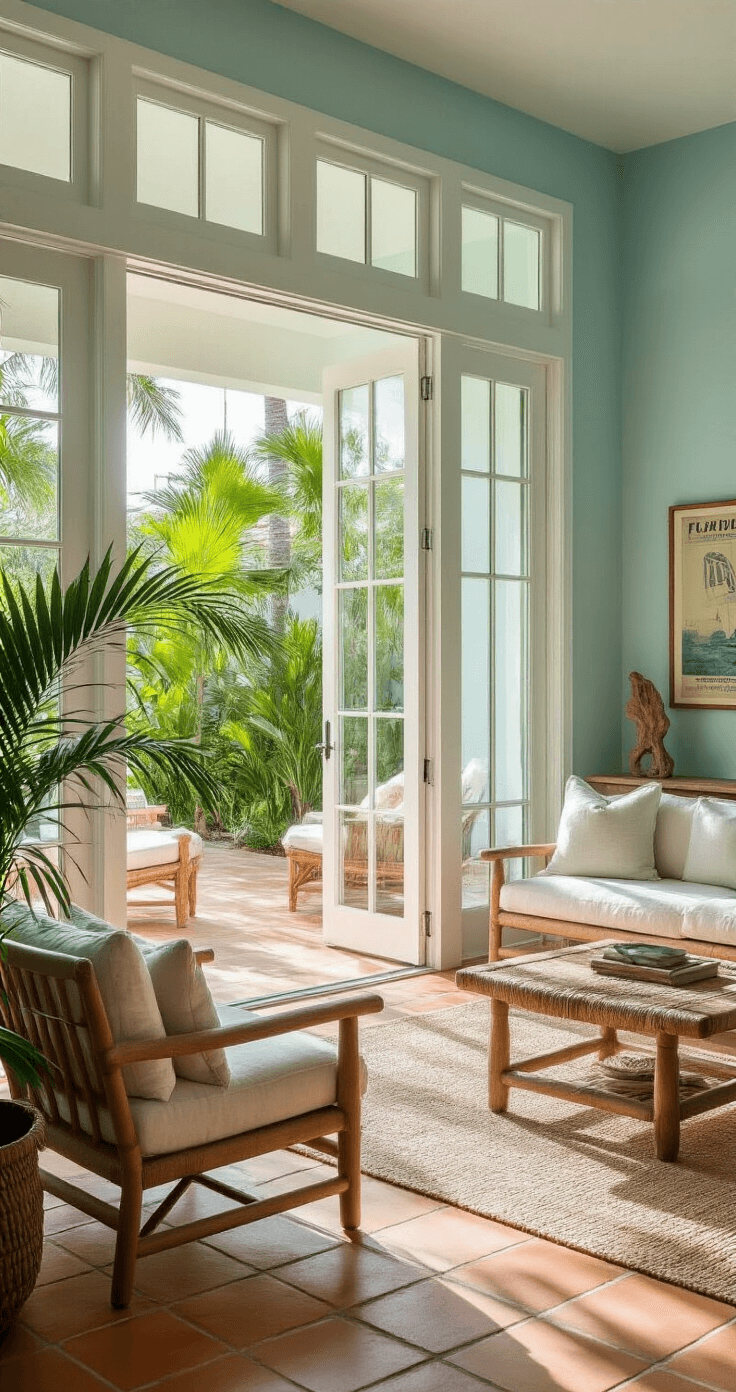
Colors That Actually Work in Florida (Not That Pinterest Nonsense)
Forget what you’ve seen in those generic beach house posts.
Florida color palettes need to serve a purpose beyond looking pretty.
Here’s what actually works:
- Soft blues – Think faded denim, not electric Caribbean blue
- Sandy neutrals – Beige, cream, and warm whites that won’t show every speck of sand
- Vibrant greens – Palm frond green, sea grass, sage that connects indoor spaces to the lush outdoors
- Weathered grays – Driftwood tones that hide wear and feel intentionally casual
I painted my living room in a pale seafoam blue three years ago, and it still looks fresh because the color naturally camouflages the slight fading from our massive south-facing windows.
That’s the difference between smart Florida colors and regular paint choices.
When you’re shopping for coastal throw pillows, stick to these proven tones.
They’ll outlast trends and actually complement Florida’s intense natural light instead of fighting against it.
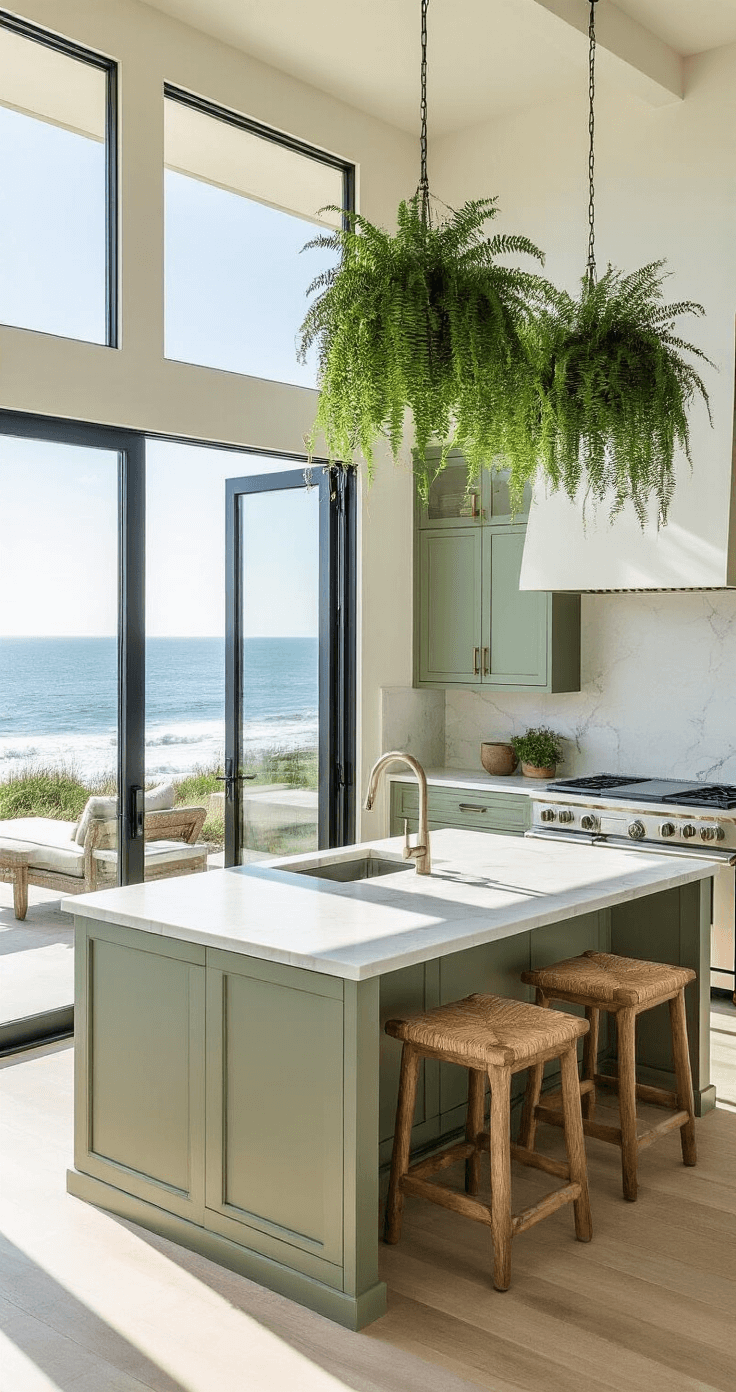
The Indoor-Outdoor Thing Everyone Talks About (And How to Actually Do It)
This is where most people completely miss the mark.
Indoor-outdoor living isn’t just about buying some patio furniture and calling it a day.
It’s about erasing the line between your living room and your lanai so completely that you forget where one ends and the other begins.
What this actually requires:
- Massive sliding glass doors – And I mean floor-to-ceiling, wall-to-wall sliders that disappear into pockets
- Consistent flooring – Your tile or wood-look flooring should flow from inside to outside without jarring transitions
- Covered outdoor spaces – You can’t use an outdoor room if the sun is melting your face off
- Outdoor kitchens – Not a sad little grill, but actual cooking and prep space with a weather-resistant outdoor refrigerator
My friend Sarah just renovated her Fort Lauderdale home and installed twelve-foot pocket sliders.
The transformation was absolutely mental.
Her 1,400 square foot house now feels like 2,500 square feet because the covered patio became a genuine extension of her living area.
She hosts dinner parties where half the guests are technically outside and half are inside, and nobody notices or cares.
That’s when you know you’ve nailed it.
Pro tip for renters or budget-conscious folks:
You don’t need expensive renovations to capture this feeling.
Strategic furniture placement, matching indoor-outdoor area rugs, and identical color schemes between your interior and patio create visual continuity that tricks the eye beautifully.
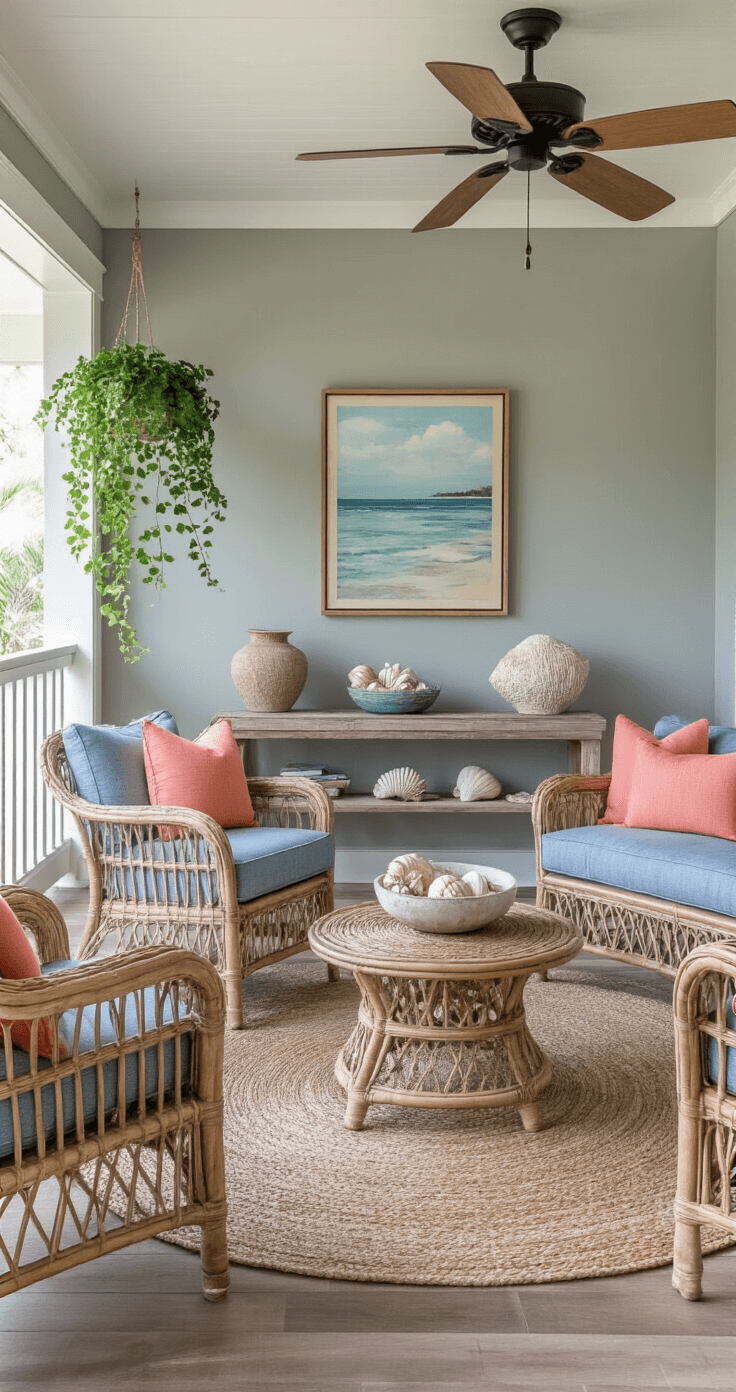
Bringing Nature Inside Without Creating a Jungle
Florida’s lush landscape is your biggest decorating asset.
But there’s a fine line between tropical paradise and plant hoarder situation.
The plants that actually thrive in Florida homes:
- Palms – Areca palms and parlor palms handle indoor conditions and add instant Florida vibes
- Ferns – Boston ferns love humidity and look romantic hanging in corners
- Orchids – They’re not as fussy as people claim, and they add elegance without taking up floor space
- Pothos – Nearly indestructible and perfect for trailing from shelves
I killed seven fiddle leaf figs before accepting they hate Florida’s climate.
Don’t be me.
Work with plants that want to live here, not against them.
Beyond living plants, bring in coastal elements that reference Florida’s beaches and waterways.
A bowl of local seashells you collected yourself beats any store-bought decoration.
Driftwood pieces make stunning natural wooden sculpture displays.
Coral fragments (ethically sourced, please) add texture and conversation starters.
But here’s the critical part:
Don’t overdo it.
One stunning piece of driftwood makes a statement.
Seventeen pieces of driftwood make your home look like a beach gift shop exploded.
Restraint is your friend.
Materials That Survive Florida’s Brutal Climate
This post may contain affiliate links. Please see my disclosure policy for details.


