

Pool Cage Landscaping in Florida: My Journey From Boring Screen Box to Backyard Paradise
Contents
Pool cage landscaping in Florida transformed my screened enclosure from a sterile bug barrier into the tropical retreat I’d been dreaming about since moving to the Sunshine State.
I’ll never forget staring at my newly installed pool cage five years ago, thinking it looked like a giant birdcage dropped onto my patio. The aluminum frame gleamed in the sun, the screen blocked bugs beautifully, but the whole setup screamed “unfinished project.”
My neighbor Carol leaned over the fence and said what I was thinking: “Looks a bit industrial, doesn’t it?”
She was right. I needed plants, color, texture—something to soften those harsh metal lines and make the space feel like an actual outdoor room instead of a maximum-security swimming facility.
The Three Rules I Wish Someone Told Me on Day One
Before I spent a single dollar at the garden center, I learned three expensive lessons that could have saved me hundreds in repairs.
Keep those roots in check
I planted a beautiful weeping podocarpus about three feet from my screen enclosure. Big mistake. Within eighteen months, the roots started pushing against the footer, and branches scraped the screen every time the wind picked up. My screen repair guy charged me $300 to fix the tears, then pointed at the tree and said, “That’s your problem right there.”
I moved it eight feet away. Give your trees and larger shrubs at least six to ten feet of clearance from the cage structure. Their root systems spread wider than you think, and branches grow faster than your HOA violations pile up.
Water and aluminum are frenemies
Here’s what nobody mentions in those glossy landscaping magazines: irrigation water and fertilizer runoff corrode aluminum pool cages faster than you’d believe.
I installed decorative garden sprinklers that looked fantastic but sprayed directly onto the cage frame. Within a year, I noticed white oxidation spots spreading across the aluminum.
Now I use drip irrigation systems for everything within ten feet of the enclosure. The water goes exactly where it’s needed—into the soil, not onto my expensive structure.
Position your garden beds at least three feet away from the cage posts. Your future self will thank you when you’re not scrubbing corrosion or repainting frames.
Every plant is a bug hotel and leaf factory
I love nature, but I don’t love spending every Saturday morning fishing leaves and dead flowers out of my pool.
My first summer, I planted a gorgeous oak-leaf hydrangea right next to the screen. The flowers attracted every bee, wasp, and mosquito in central Florida, and when those massive leaves dropped, they’d blow straight through the screen door every time someone walked through.
Outdoor lighting near plants doubles down on this problem. Those stylish solar pathway lights I installed attracted moths, beetles, and palmetto bugs like I was running an insect nightclub.
Smart placement strategy:
- Keep flowering plants at least five feet from doors and seating areas
- Position lights away from dense foliage
- Choose plants with smaller leaves that don’t create cleanup nightmares
- Accept that some debris is inevitable and budget time for maintenance
Creating Visual Interest Without the Headaches
Hardscaping became my secret weapon
After my plant placement disasters, I pivoted to hardscaping for the bones of my design.
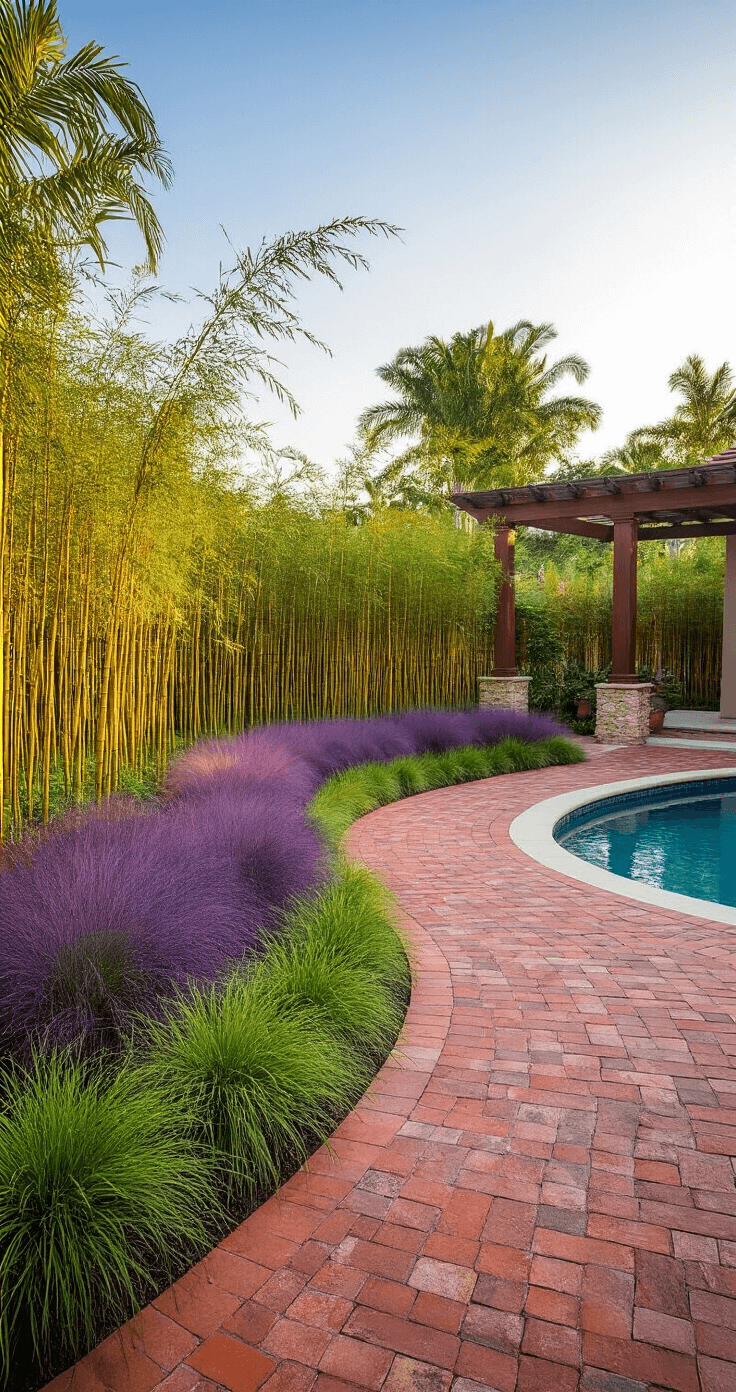
I added a curved brick pathway from the house to the pool cage entrance using red clay paver bricks. The path cost about $800 in materials and a weekend of back-breaking work, but it instantly made the space feel intentional.
Other hardscaping elements that worked brilliantly:
- A small pergola attached to the cage exterior for climbing plants (keeping vines outside the structure)
- A stone border defining the perimeter between lawn and cage area
- A wooden deck extension that transitioned from my lanai into the pool area
- Decorative concrete pavers creating a seating area outside the screen
Hardscaping doesn’t need watering, doesn’t attract bugs, and won’t damage your cage structure. It’s the reliable friend who shows up on time and never causes drama.
Container gardening saved my shaded lanai
Inside my screened enclosure, I have about 60% shade coverage. Most sun-loving tropicals just sulked and died in those conditions.
Container gardening changed everything.
I filled large ceramic planters with shade-tolerant varieties that actually thrived:
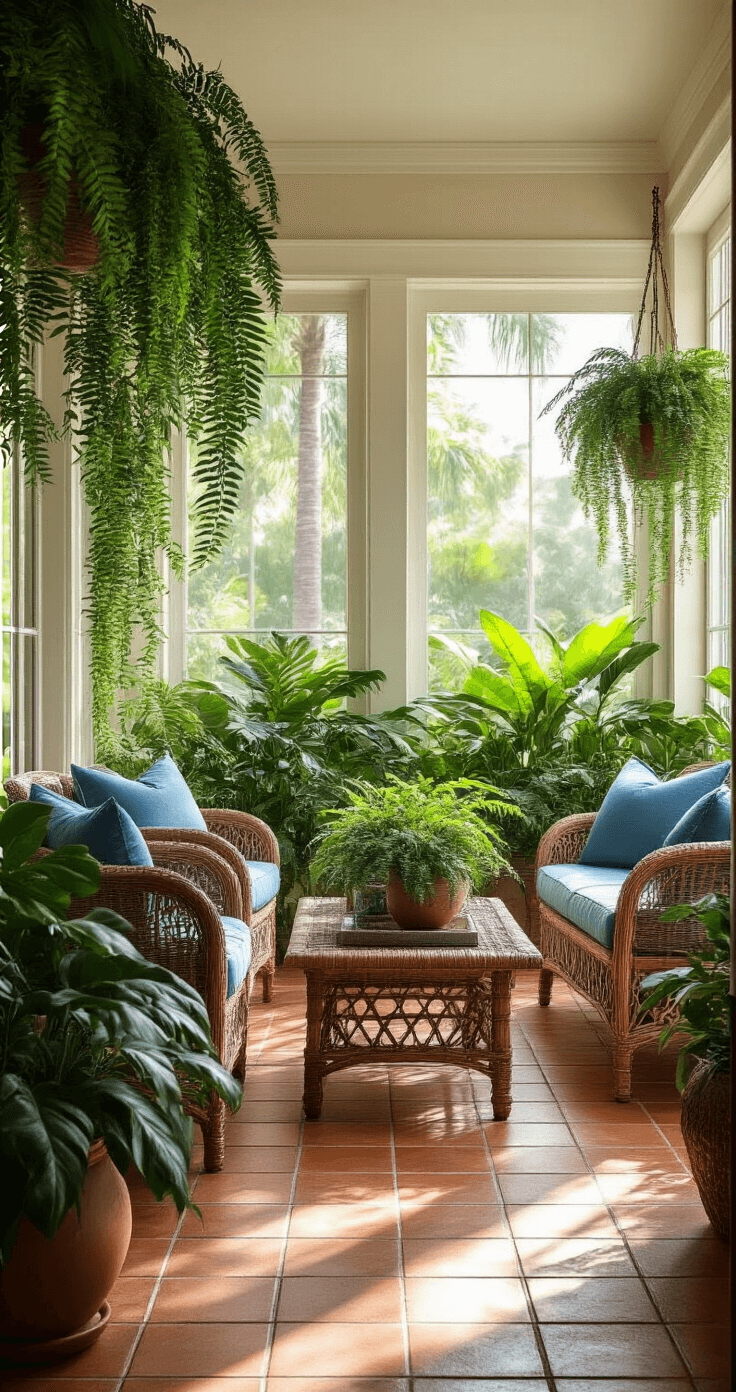
- Boston ferns that cascaded like green waterfalls from hanging baskets
- Begonias providing pops of pink and red without demanding full sun
- Caladiums with their wild, colorful leaves that looked hand-painted
- Peace lilies that bloomed reliably and tolerated my occasional neglect
- Philodendrons that climbed trellises and softened corners
The container approach gave me flexibility. When a plant wasn’t happy in one spot, I just moved the pot. No digging, no root damage, no commitment issues.
I water containers every two to three days in summer, which sounds like work until you remember that in-ground beds in Florida need daily watering during dry spells.
Ornamental grasses: low drama, high impact
I needed privacy screening along one side of my pool cage where my neighbor’s second-story windows looked directly down into my space.
Enter muhly grass.
I planted seven clumps of this purple-blooming beauty about four feet apart, and within one growing season, I had a flowing, textured privacy wall that caught the breeze and glowed pink in fall.
Why ornamental grasses win in Florida:
- Drought-tolerant once established
- Don’t require fertilizer
- Rarely need pest control
- Provide year-round interest
- Move gracefully in wind instead of looking stiff
- Native varieties support local wildlife
Purple lovegrass is another superstar. It stays compact (around three feet tall), doesn’t spread aggressively, and creates that soft, naturalistic look that makes your pool area feel like a resort.
I’ve spent maybe two hours per year maintaining these grasses—just cutting them back once in late winter. Compare that to the weekly trimming my neighbor does on her hedge, and I’m winning the time management game.
Building Privacy and Color Outside the Cage
Climbing plants on external structures
I wanted more privacy on the exterior of my pool cage without blocking views from inside.
My solution: a simple wooden trellis system attached to posts placed three feet outside the screen enclosure.
This post may contain affiliate links. Please see my disclosure policy for details.


