Modern Florida Home Interiors: How I Created a Cool, Breezy Paradise Without Looking Like a Beach Cliché
Modern Florida home interiors saved my sanity when I moved from a cramped Chicago apartment to a sun-drenched Fort Lauderdale house that felt more like a greenhouse than a home.
The blinding light bounced off every white wall. The heat crept in through every window. And my dark furniture looked like it belonged in a funeral home, not a tropical paradise.
I quickly learned that designing a Florida interior isn’t just about slapping some palm leaf prints on throw pillows and calling it a day.

Why Your Florida Home Needs a Different Approach
Listen, I tried bringing my Midwest design sensibility down south. Big mistake.
The harsh sunlight that flooded my living room at 3 PM made my charcoal sofa look like a black hole. My heavy velvet curtains trapped heat like a sauna. And the closed-off rooms felt claustrophobic when the whole point of Florida living is feeling that ocean breeze, even if you’re ten miles inland.
Modern Florida interiors work differently because:
- The sun is your frenemy (it gives amazing light but also brutal heat)
- Humidity will destroy the wrong materials faster than you can say “mold remediation”
- You need to blur the line between inside and outside
- Heavy, dark, enclosed spaces feel suffocating in tropical climates
The Color Scheme That Actually Works
I’ll be honest with you. When I first started researching Florida interiors, every designer told me “go neutral.”
And I rolled my eyes so hard I nearly sprained something.
But here’s what they meant, and why it actually makes sense:
Start with a neutral foundation, then layer in colors that don’t fight with the natural environment outside.
I painted my main living areas in a warm cream (not stark white, which just looks dingy in bright sunlight). Then I brought in soft sage greens, warm terracotta, sandy beiges, and those gorgeous deep ocean blues that remind you of the Gulf on a calm day.
The result? My home feels like it’s part of the landscape, not fighting against it.
My Go-To Florida Color Palette:
- Base colors: Warm whites, creams, soft grays
- Accent colors: Seafoam green, coral, deep turquoise, warm terracotta
- Grounding tones: Warm browns, taupes, driftwood grays
Pro tip: I used high-gloss paint in my dining room, and it completely changed the game. The glossy finish reflects natural light, so even my deeper blue accent wall doesn’t darken the space. It actually glows.
Materials That Won’t Betray You in Year Two
Remember what I said about humidity? Yeah, I learned this the hard way when my beautiful MDF media console started warping after eight months.
Florida-friendly materials include:
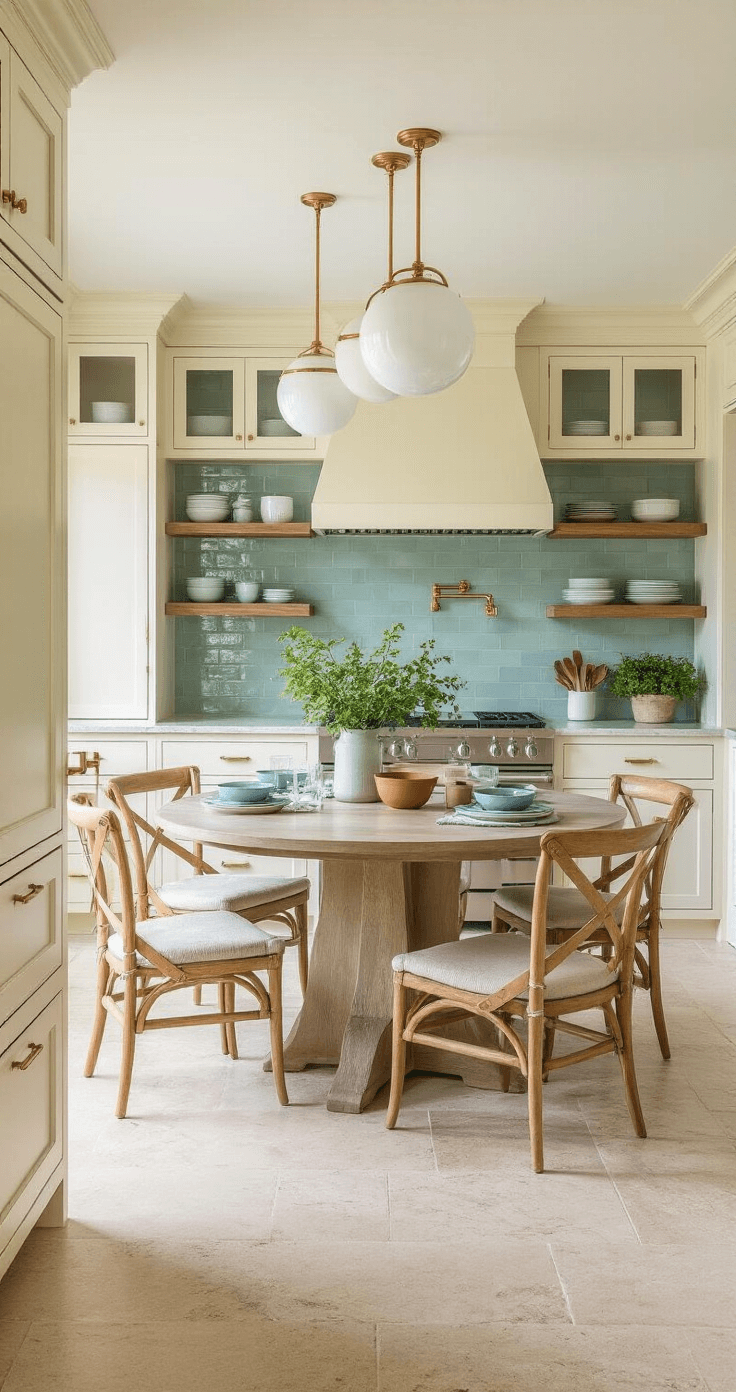
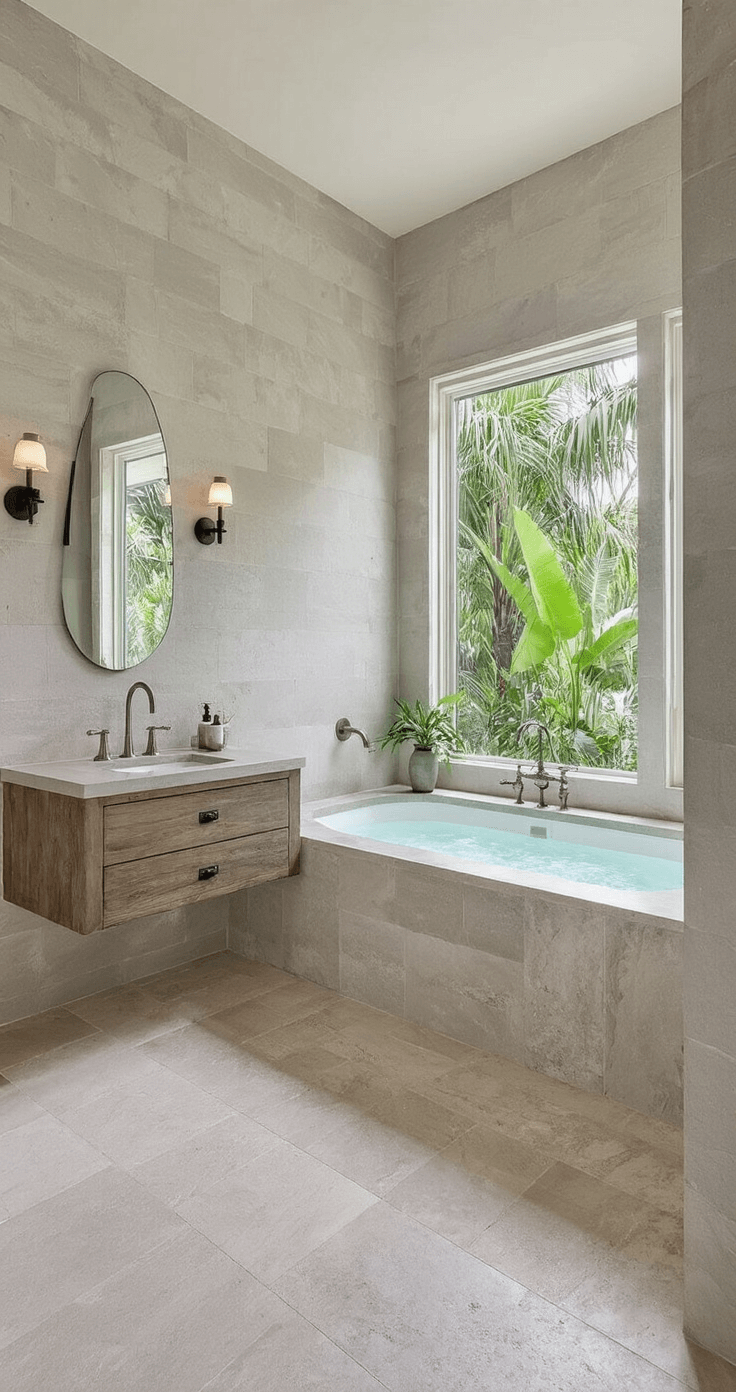
- Travertine or limestone flooring (cool underfoot, naturally elegant, and virtually indestructible)
- Polished concrete (modern, easy to clean, stays cool)
- Teak or treated outdoor-grade wood (even for some indoor furniture pieces)
- Metal accents (brass, brushed nickel, or matte black)
- Natural stone (marble, granite, quartz for countertops)
- Glass (tables, shelving, doors)
Avoid like the plague:
- Untreated wood (it’ll warp)
- Heavy, dark woods (they make spaces feel closed-in)
- Cheap particle board (humidity is not its friend)
- Materials that can’t handle moisture or intense sunlight
I replaced my floors with travertine tile, and it was the best decision I made. Cool, elegant, and it handles the inevitable sand and water tracked in from the pool without breaking a sweat.

The Curve Revolution (And Why I’m Here for It)
I used to think curved furniture was just a passing trend. Then I sat in my friend’s curved sofa after a long beach day, and I got it.
Sharp angles feel aggressive. Curves feel like an exhale.
I incorporated curves through:
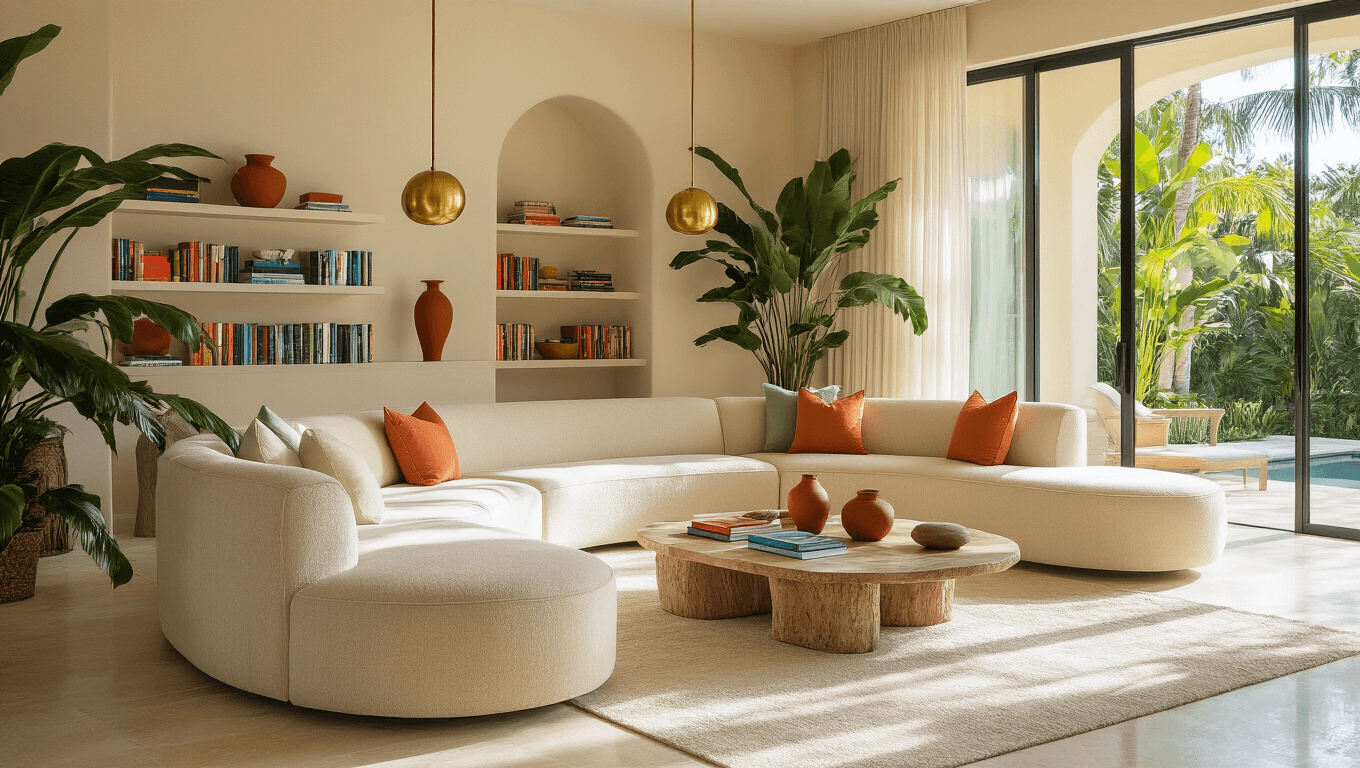
- A curved sectional sofa in my living room (conversation flows better, and it softens the whole space)
- An oval dining table instead of rectangular (more people fit, and it’s easier to move around)
- Round mirrors throughout the house
- Arched doorways (okay, I got a contractor for this one, but worth it)
- Circular pendant lights over the kitchen island
The curved pieces create movement and flow. Your eye travels smoothly through the space instead of bouncing off hard corners.
It’s the difference between a rigid hotel lobby and a space that actually feels like home.
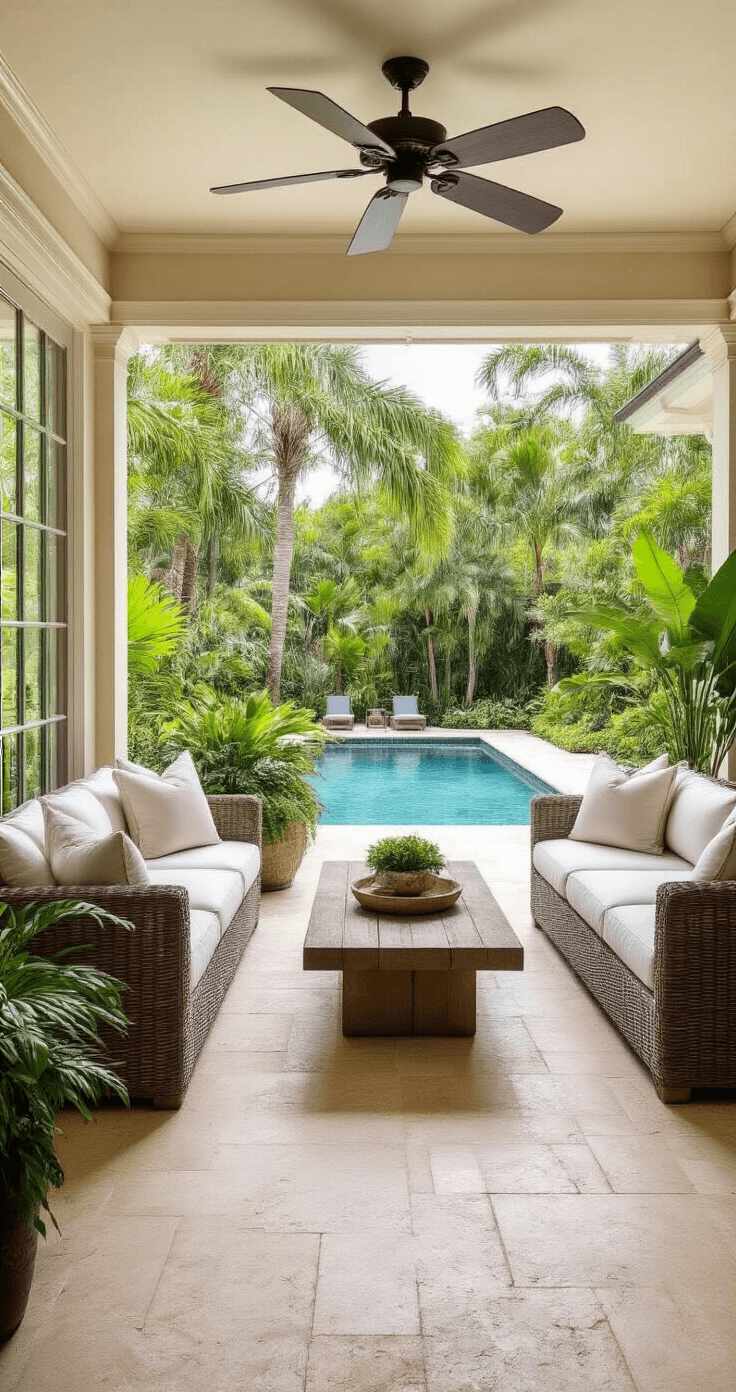
Open Floor Plans That Actually Function
Every Florida home builder loves an open floor plan. And in theory, so do I.
But here’s what nobody tells you: open floor plans can feel like living in a cafeteria if you don’t zone them properly.
I created distinct areas without walls using:
- Different flooring materials (travertine in the kitchen, area rugs in the living room)
- Strategic furniture placement (the back of my sofa defines the living room edge)
- Lighting zones (overhead in kitchen, floor and table lamps in living areas)
- Subtle level changes (my living room is two steps down from the kitchen)
The goal is letting light and air flow freely while still creating cozy pockets where you can actually live.
Nobody wants to watch TV while staring at someone doing dishes.
This post may contain affiliate links. Please see my disclosure policy for details.