A Victorian terrace front garden is rarely big, but that works in its favour. The period details are already there: the tiled path, the cast-iron railings, the brick or render facade, the slightly oversized front door. The job is to tidy and accent those, not to fill the space. Most terraces have only a few metres between gate and door, so a handful of well-chosen moves, a painted door, clipped greenery, a couple of terracotta pots, do more than a crowded border ever will. Below are 27 ideas that suit the typical Victorian terrace, from heritage tile paths and boxwood edges to lavender, climbing roses, and a properly painted front door, each with shoppable pieces so you can copy the look or just borrow the idea.
1. Victorian Tile Path Charm
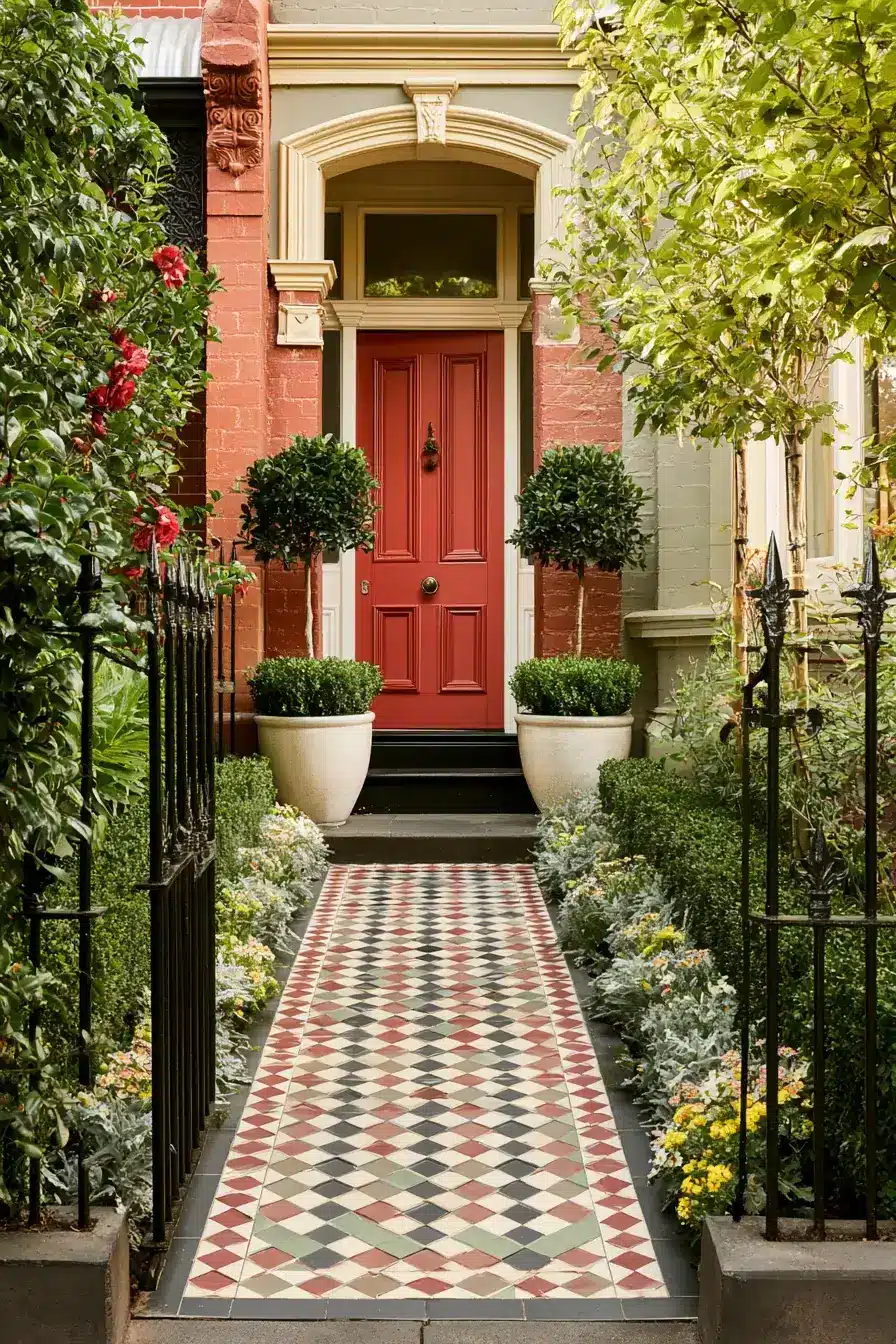
A patterned tile path sets the tone for the whole entrance, so it is worth getting right. Black-and-white encaustic or geometric tiles read as authentic Victorian, while a single burgundy or deep-green border tones things down if the facade is already busy. Lay them from gate to door and keep the surrounding beds tight so the pattern stays the focus. Real encaustic tiles are porous and need sealing; if you would rather not, good-quality porcelain replicas look similar and survive British frost. Pair the path with clipped box or low lavender rather than loose planting that crowds the edges.
2. Boxwood Border Garden Beauty
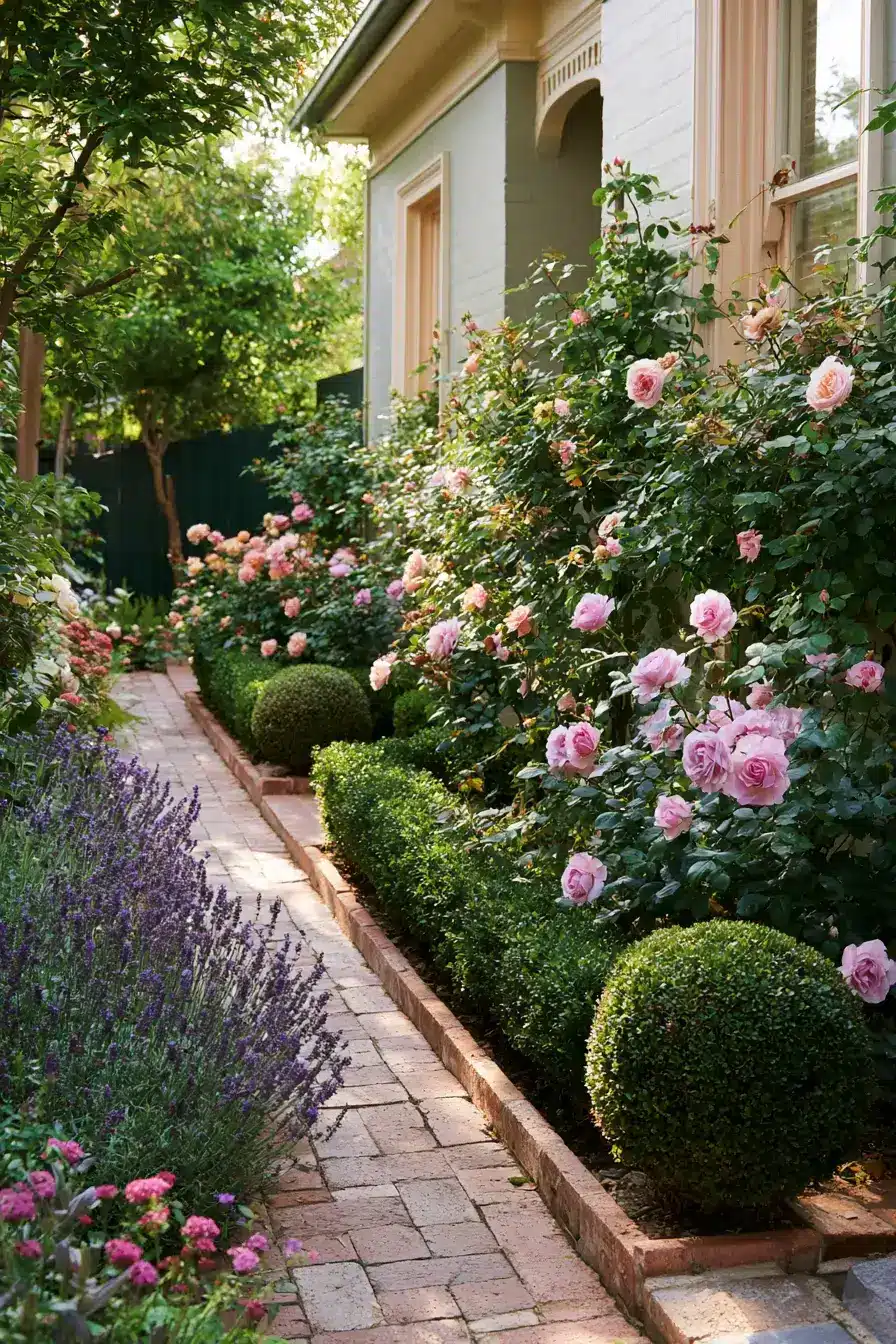
Boxwood borders give a small front garden its structure, which is exactly what a terrace lacks once the railings are gone. Low hedging along the path, beds, or either side of the door adds the crisp, evergreen outline that makes everything else look intentional. Soften it with roses, lavender, or seasonal bedding planted in front. The catch is box blight and box tree caterpillar, both common now, so consider alternatives like Euonymus ‘Emerald ‘n’ Gold’ or rounded lavender if box struggles in your area.
3. Iron Gate Entrance Grace
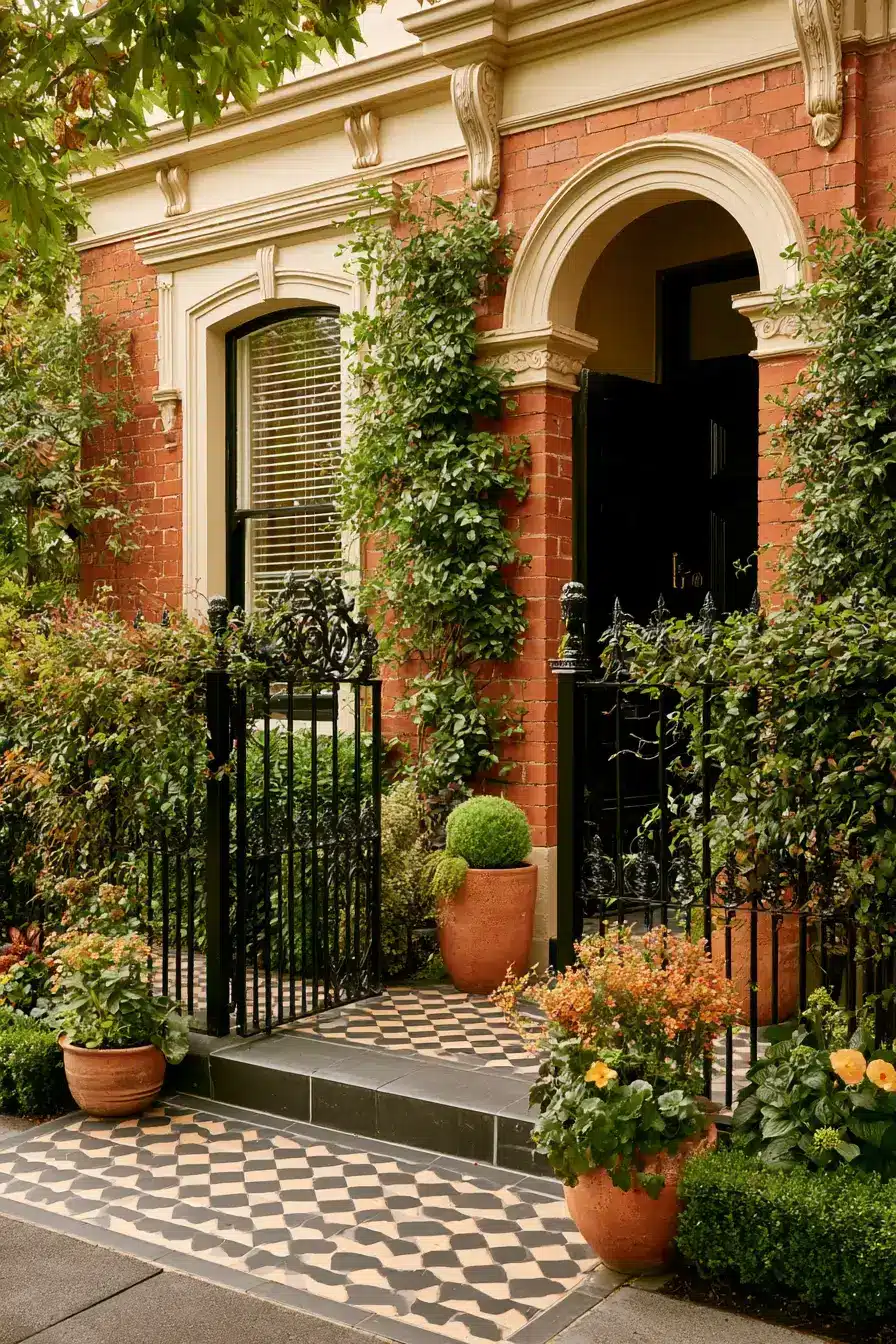
An iron gate is one of the few period features worth restoring rather than replacing. Black wrought iron with simple scrollwork suits most Victorian terraces, and a restored original usually looks better than a new off-the-shelf version. Frame it with a climber trained to the side walls or a pair of pots so it reads as welcoming, not forbidding. If you are in a conservation area, check whether the gate is covered by the Article 4 direction before changing its design or colour.
4. Lavender Pathway Cozy Glow
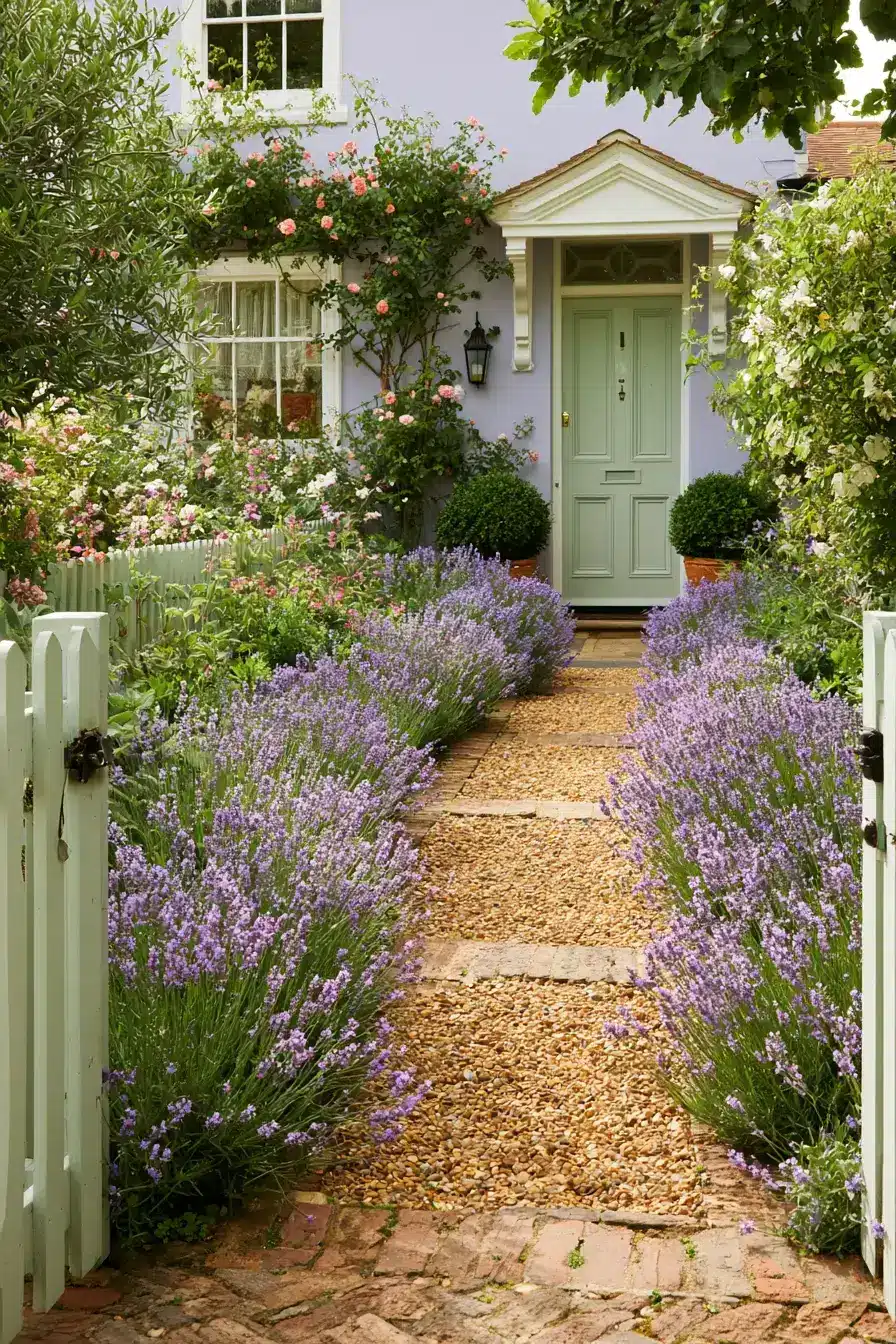
Lavender along the path earns its place twice: scent at head height as you pass, and soft grey-green colour that flatters brick and paint alike. Hidcote and Munstead are the go-to English varieties because they stay compact and shrug off most weather, unlike the leggier French types. Plant it with gravel or brick edging and let the railings behind do the structural work. Lavender hates wet feet, so raise the soil slightly or mix in grit if your terrace stays damp.
5. Rose Arch Entrance Magic
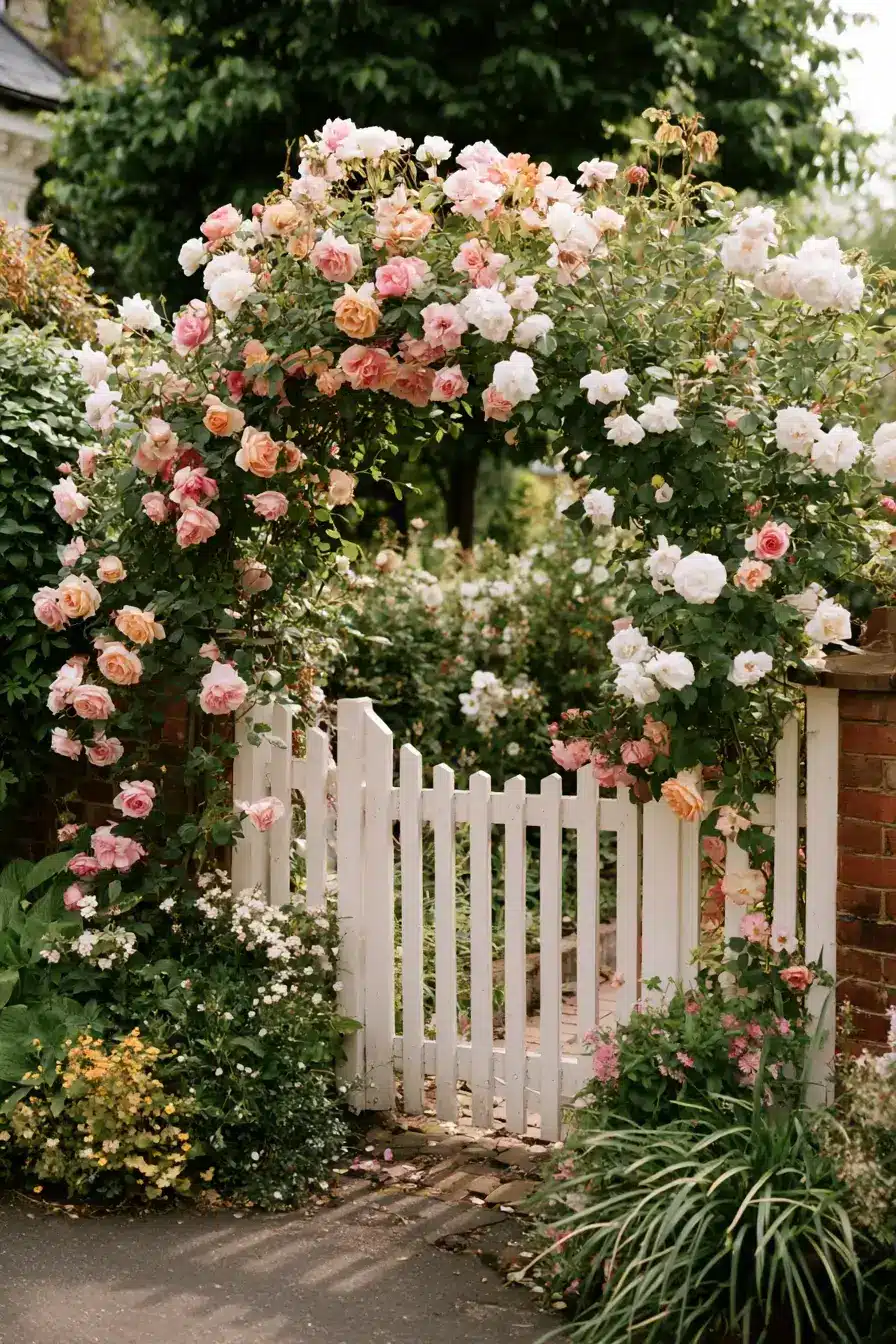
A rose arch over the path is the classic storybook move, but it only works if you commit to the upkeep. David Austin climbers in soft pink, white, or peach give scent and repeat flowering, though they need tying in and a winter prune. Keep the base planted simply, with low perennials rather than clutter, so the arch stays the feature. Metal arches outlast painted wood by years outdoors, so spend on the frame and save on the plants.
6. Farrow Ball Door Beauty
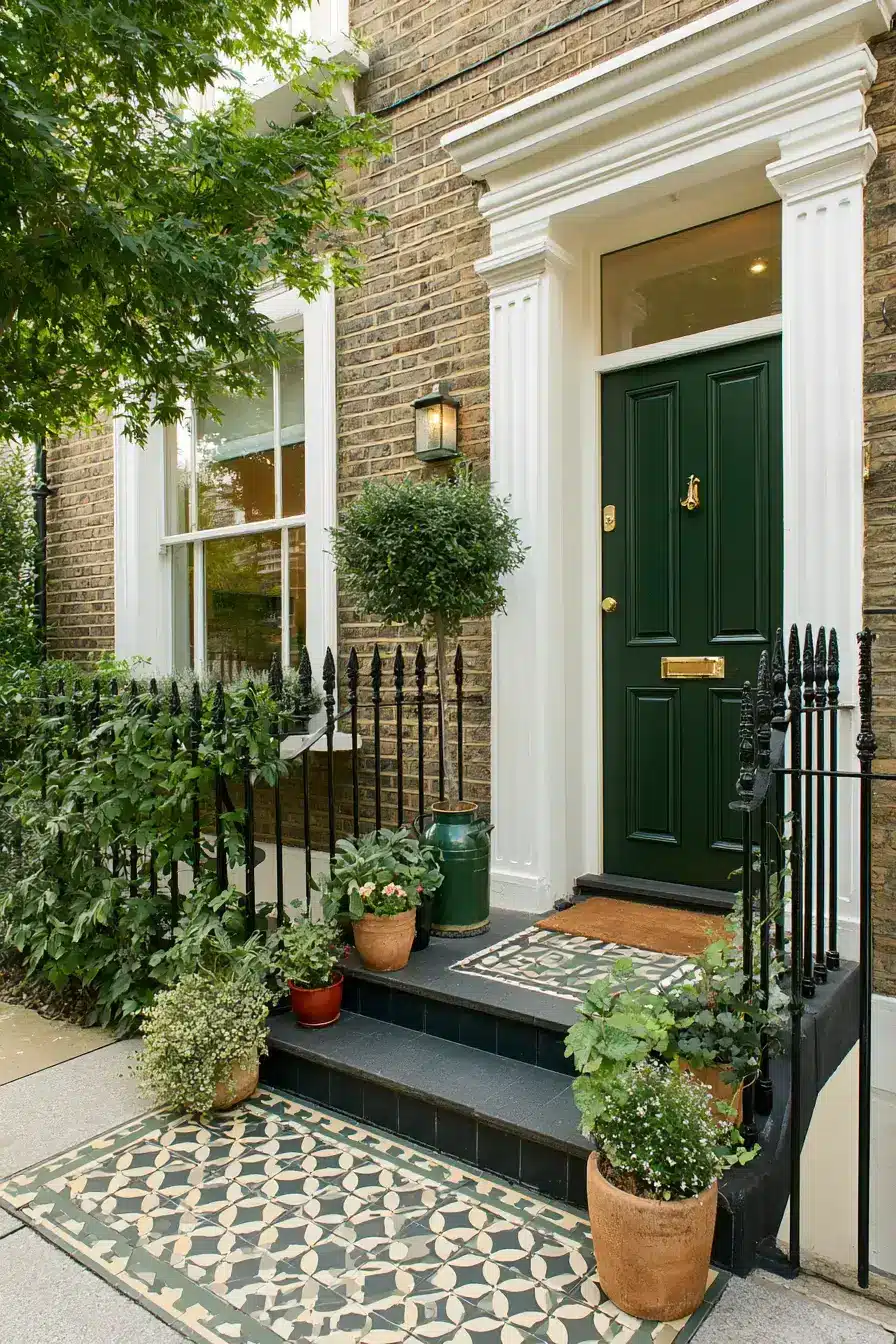
Painting the front door is the cheapest big win on a Victorian terrace. Deep green, soft blue, rich red, or near-black all sit well against typical brick and render, and a heritage range like Farrow & Ball’s exterior line gives you period-accurate shades. Do the prep properly: remove flaking paint, prime bare wood, and use a dedicated exterior gloss, because a door takes more weather than any other surface. Finish with brass hardware and a neat tiled or planted step and the whole entrance lifts.
7. Bay Window Planter Charm
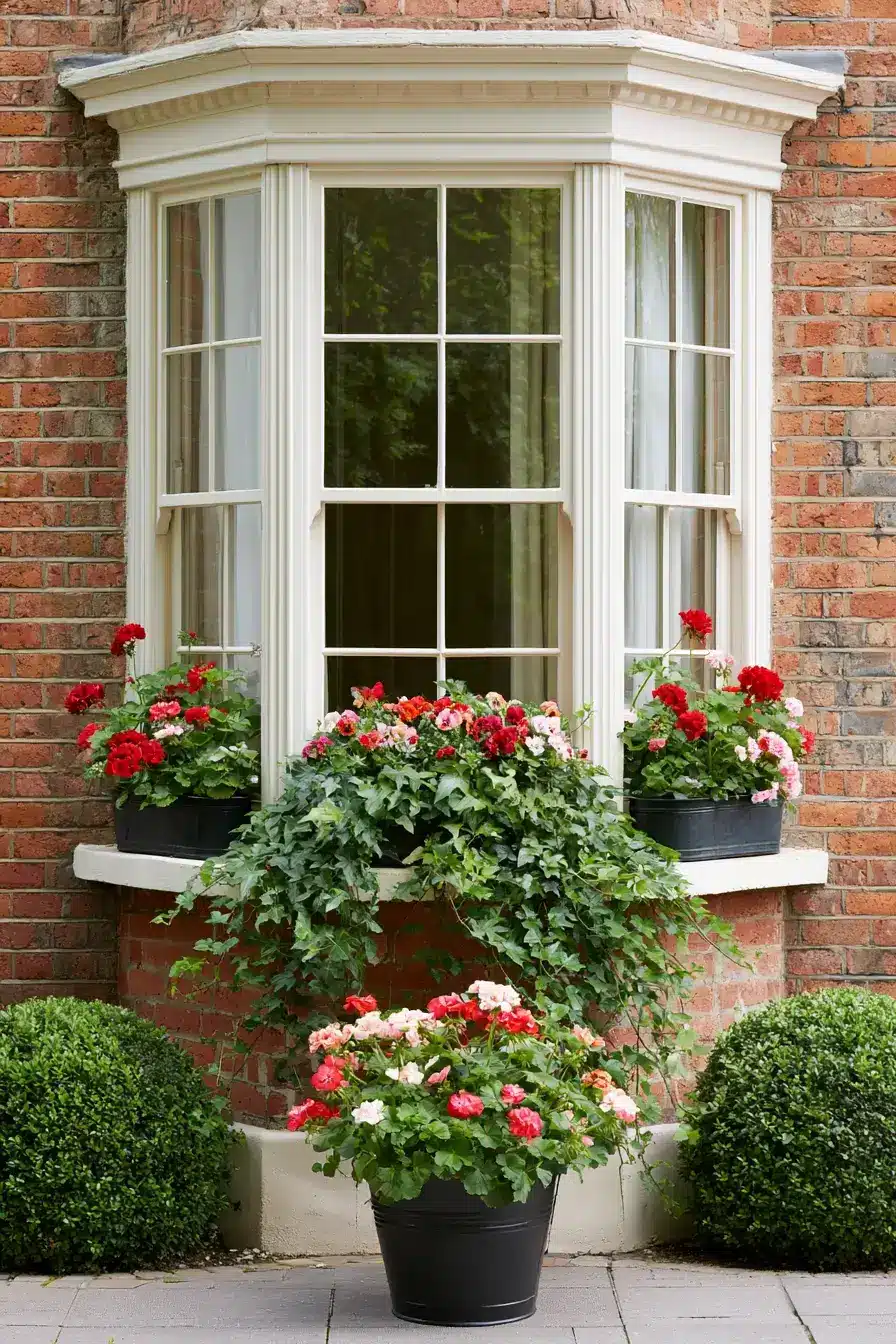
Bay window planters add colour at eye level without eating floor space, which is useful when the front garden is a narrow strip. Trailing ivy, pansies, and geraniums all cope with the dry, sheltered microclimate under a bay; swap them seasonally so the facade never looks tired. Zinc, painted wood, or black metal boxes suit the period better than bright plastic. Water them often in summer, bays trap heat and containers dry out fast.
8. Fern Porch Fresh Style
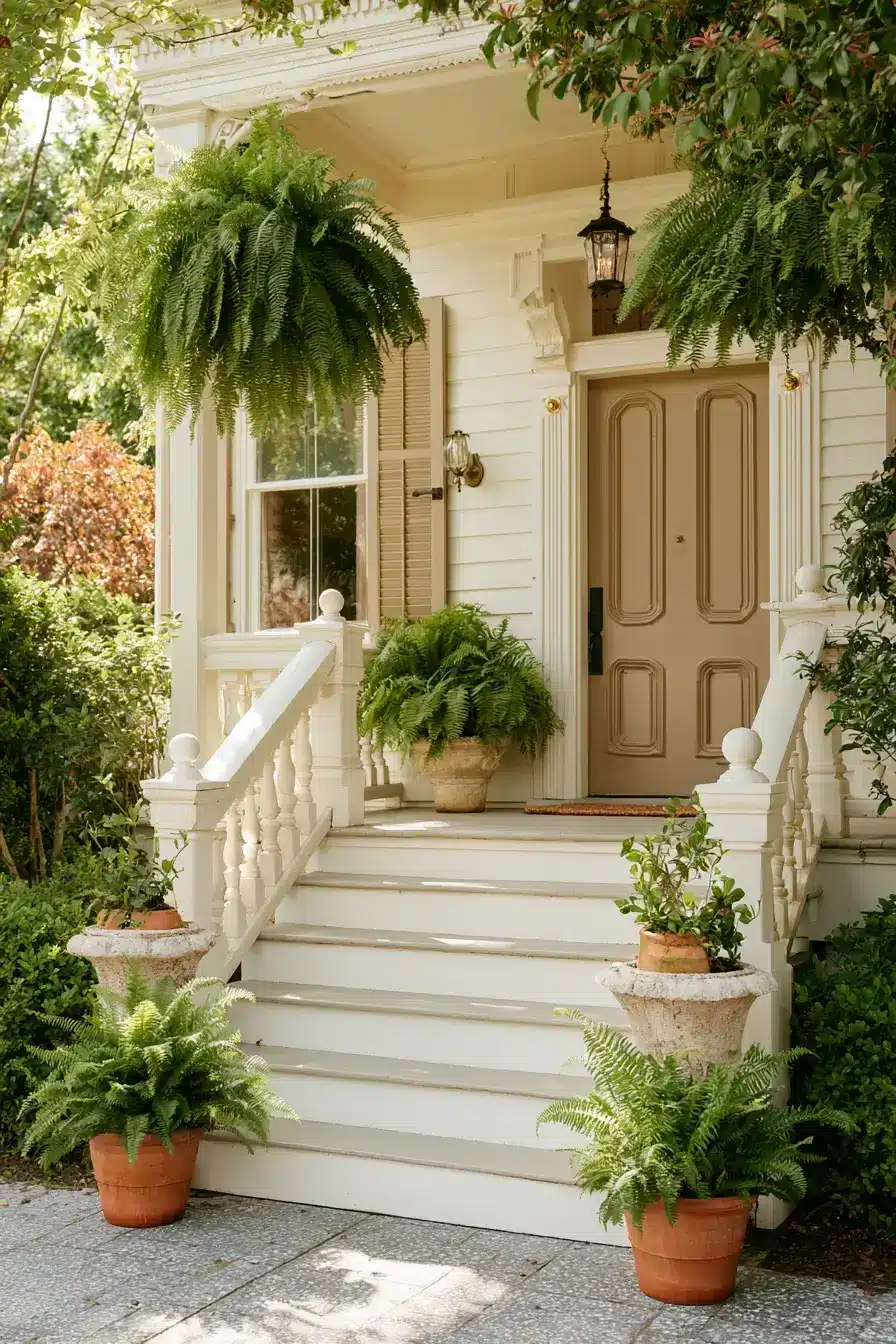
Ferns suit the shaded, north-facing steps and porches that many terraces have, where sun-loving bedding would sulk. Boston fern or dryopteris in terracotta, stone, or an antique-style urn gives a cool, collected look that pairs with painted railings and a dark door. They are hardy in pots if you keep them out of full midday sun and not waterlogged in winter. For a low-maintenance version, good artificial trailing ivy reads fine from the pavement.
9. Wrought Iron Railings Romance
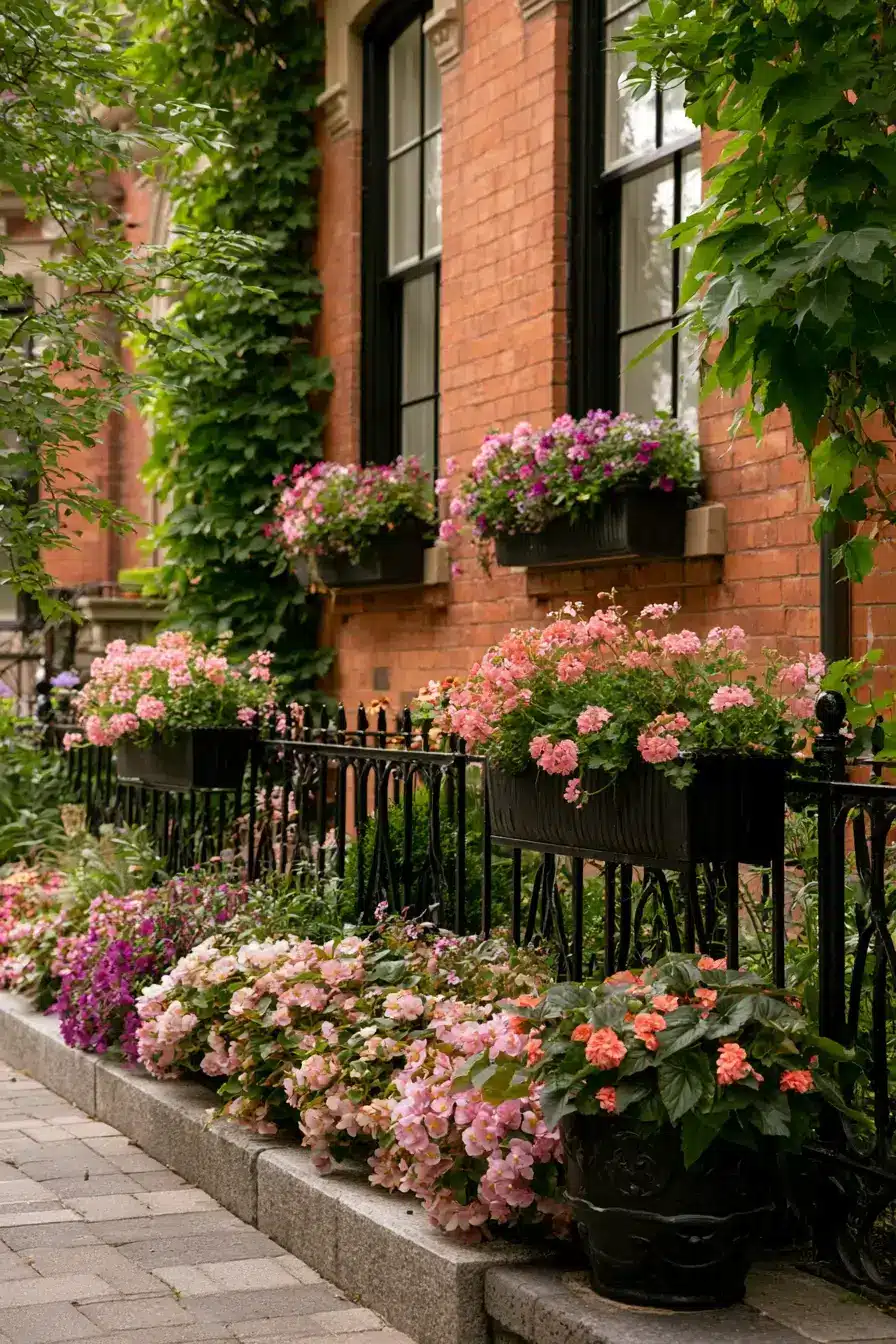
Original railings are a defining Victorian feature, and where they survive they are worth keeping and repainting rather than removing. Black or deep-green metal paint protects the iron and keeps the look traditional; prep is everything, wire-brush back to bare metal and use a rust-inhibiting primer first. Soften the base with low flowers or a window box so the railings feel part of a garden, not a fence. In many conservation areas railings are protected, so confirm before altering them.
10. Brick Wall Garden Warmth
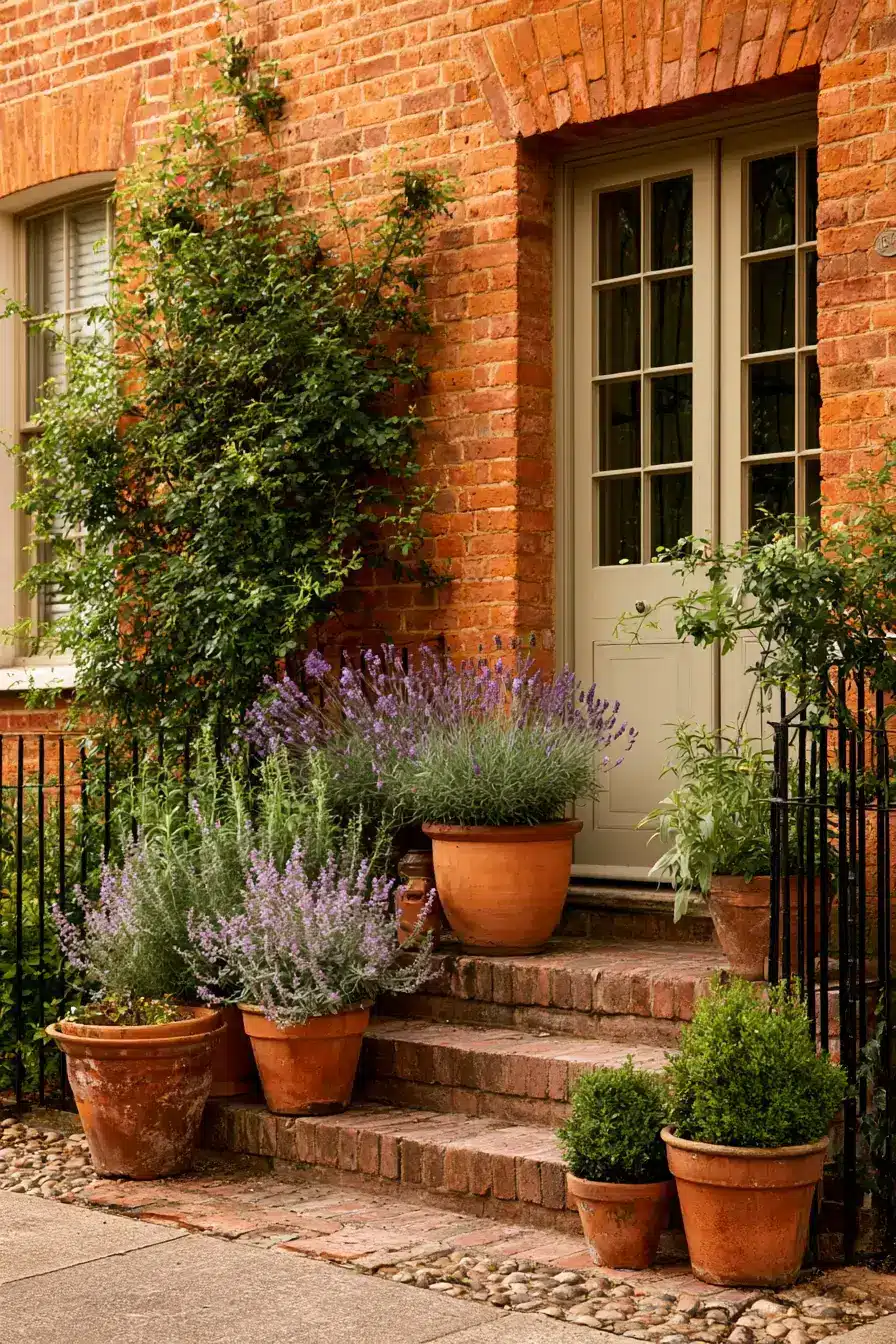
A brick wall, whether original boundary or the house facade itself, gives a front garden instant warmth and a ready-made backdrop for planting. Leave the brick natural where it is sound, or soften a plain wall with a climber trained on wires rather than drilling fixings everywhere. Terracotta pots, lavender, and a compact shrub at the base ground the scheme and stop the wall feeling like a dead end. If the brick is painted, a refresh in a muted heritage shade can modernise without losing character.
11. Window Box Bloom Joy
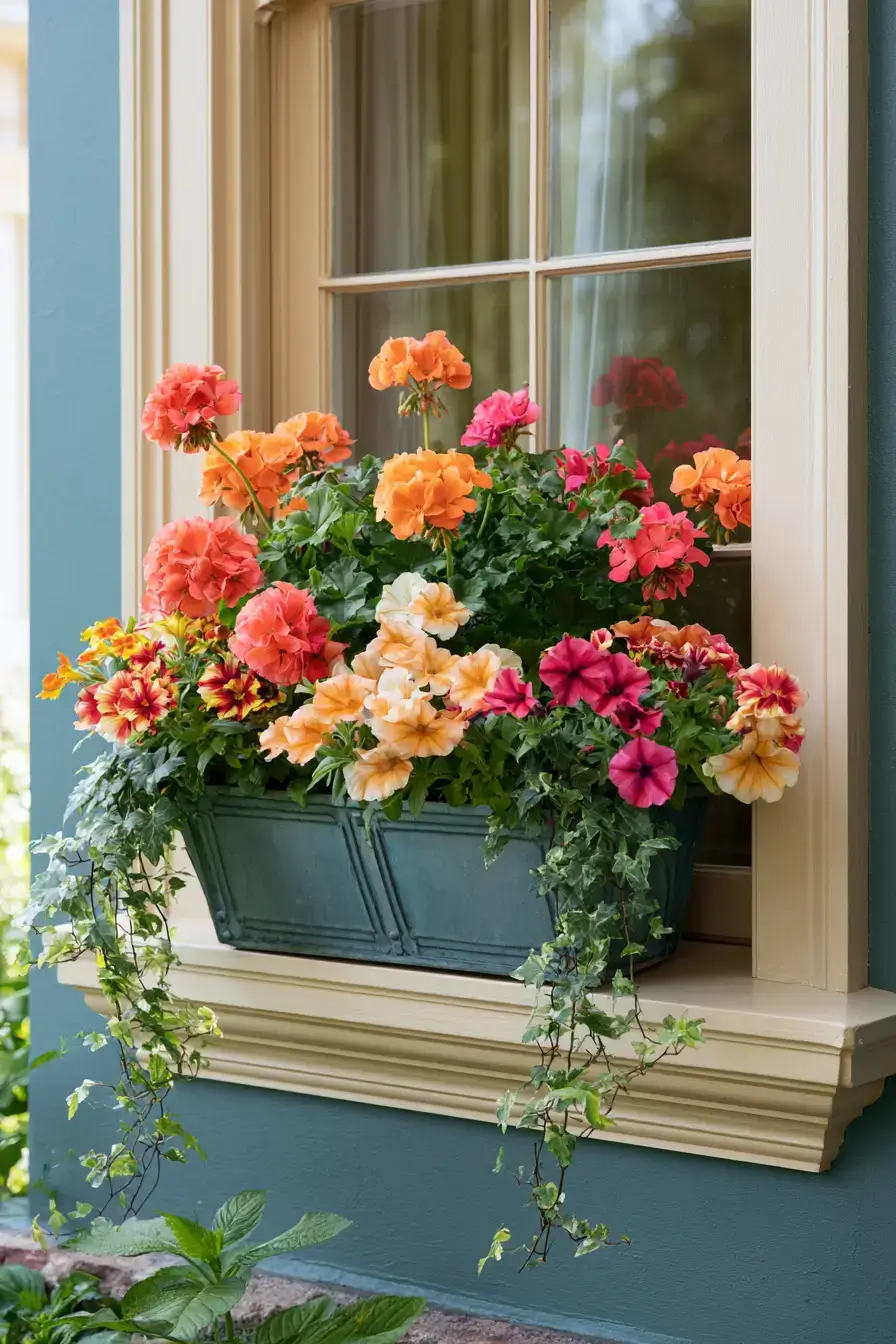
Window boxes are the fastest colour fix on a terrace, sitting right at eye level as you approach. Geraniums, trailing ivy, petunias, and pansies give a full display through the warmer months; deadhead regularly or they stop flowering. Garden Trading and Elho both make clean, period-friendly boxes that fit standard sills. Check the box is secured and has drainage, a poorly fixed window box is a nuisance and a leak risk against the wall.
12. Cottage Flower Border Beauty
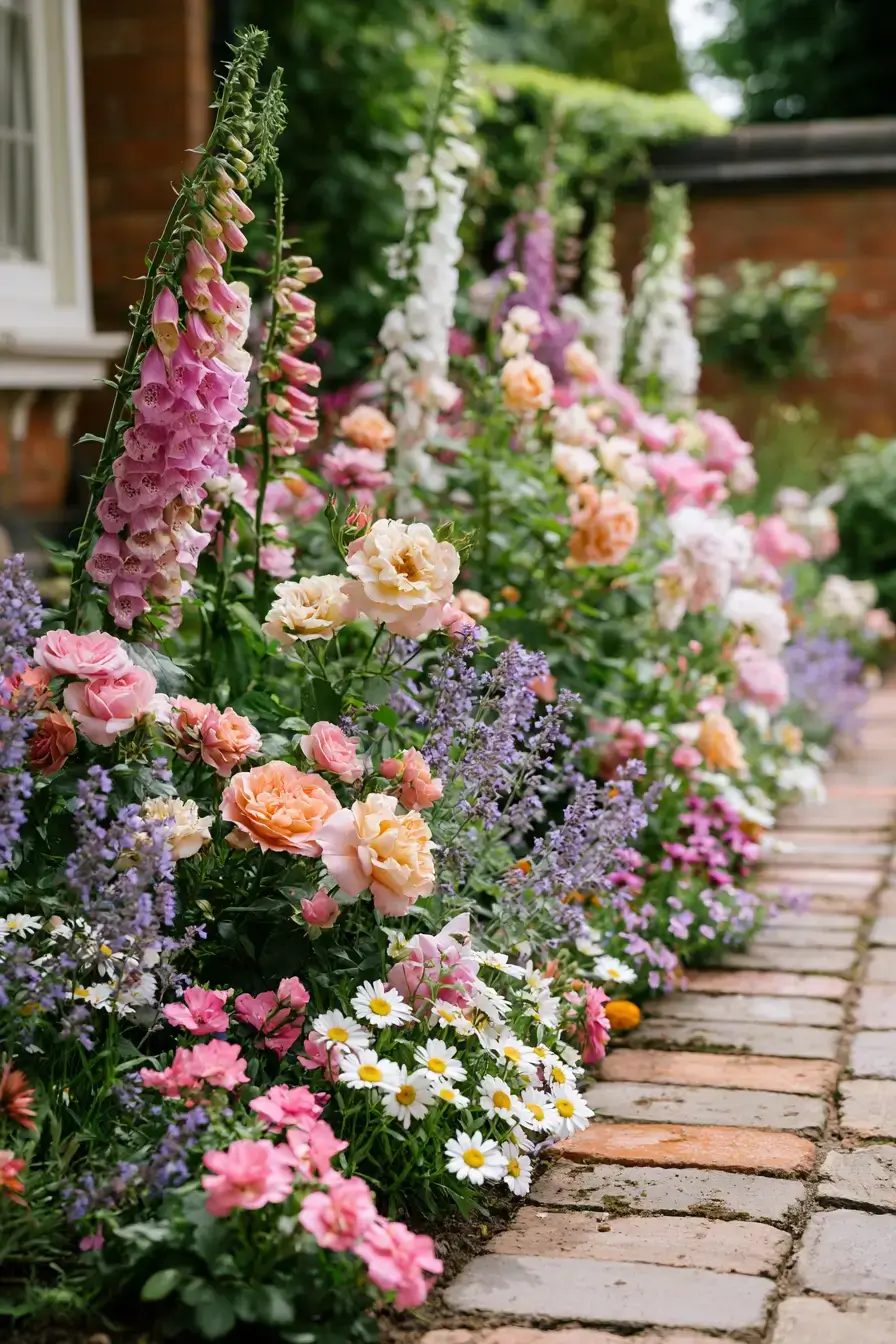
A cottage border leans on layers rather than any single plant, which is how it avoids looking flat in a small space. Foxgloves, roses, lavender, nepeta, and daisies in soft pinks, creams, and purples give that loose English look, but keep it to one or two heights or a terrace border turns chaotic. Most of these are sun-lovers, so a north-facing strip will need shade-tolerant swaps like hellebores or ferns at the back. A cottage border wants edging, otherwise it sprawls onto the path.
13. Stone Step Garden Charm
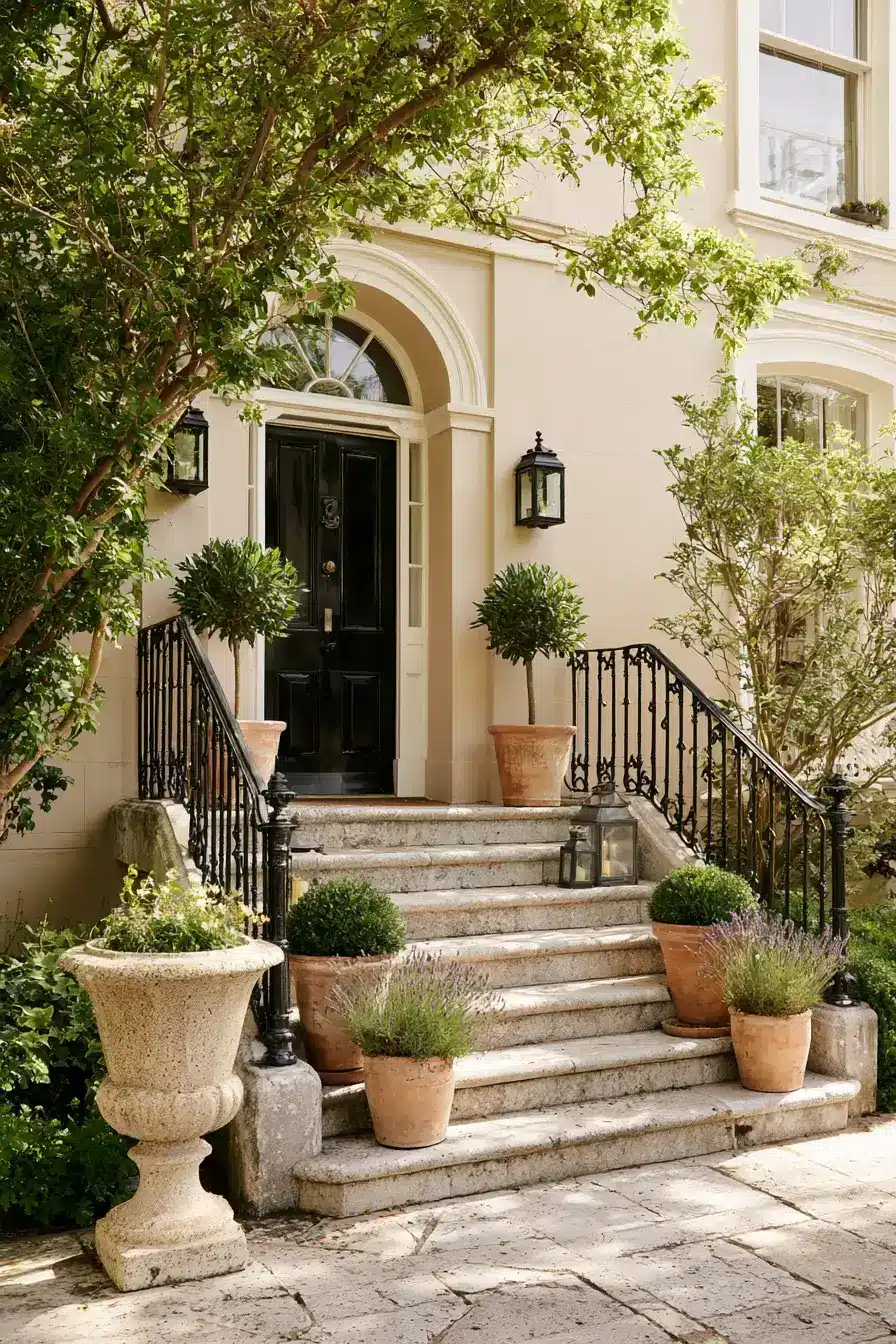
Stone steps benefit from restraint: a pot on each side and maybe a lantern, not a jungle. Terracotta or stone urns match the Victorian character better than glazed ceramics, and a single topiary ball or lavender standard keeps it smart. Add a wall lantern so the step reads safely at night, not just by day. Keep planting low enough that you are not tripping over it on the way to the door.
14. Climbing Rose Facade Magic
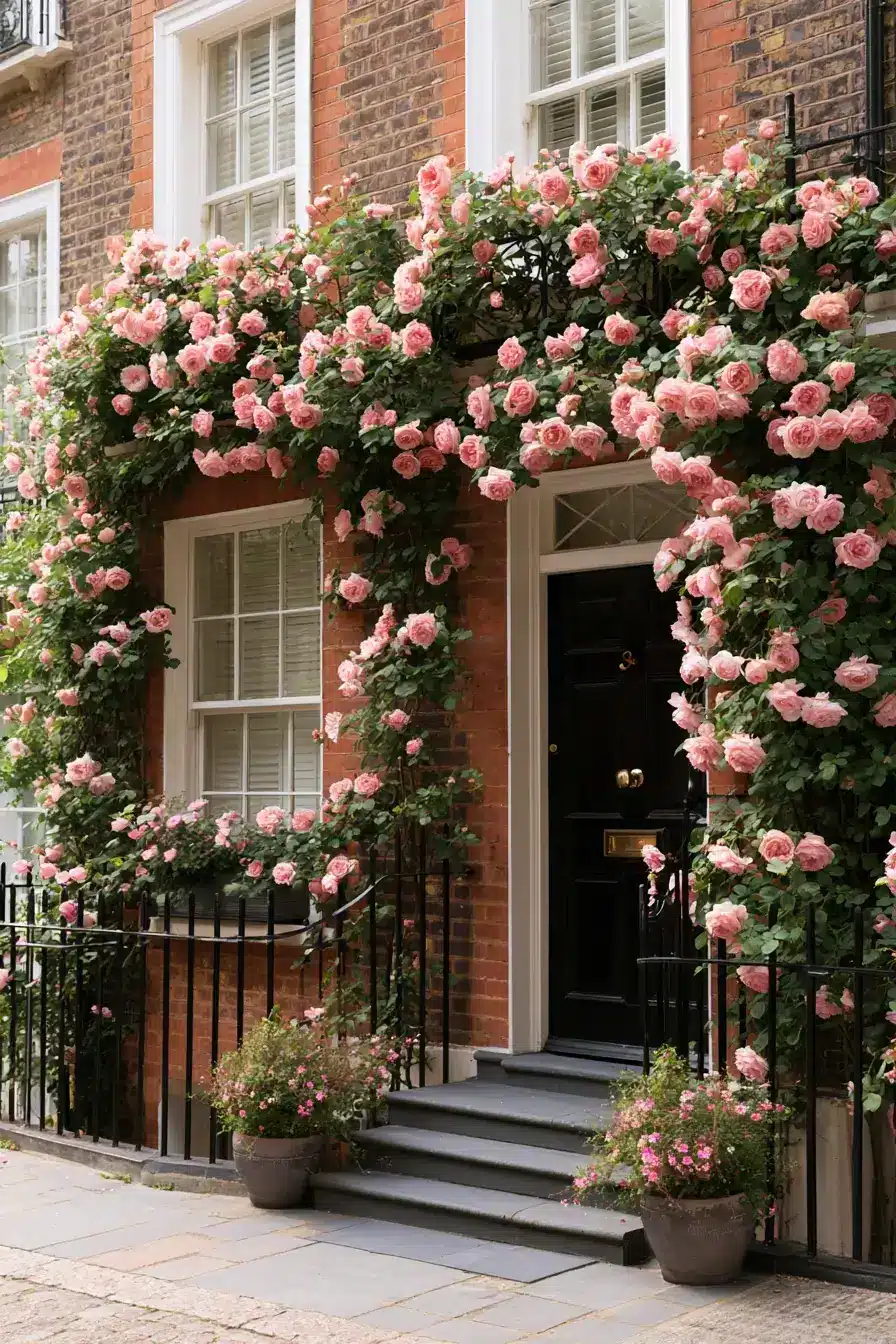
Climbing roses over the facade are the signature Victorian look, but they need a wall that gets enough sun and a framework to train on. David Austin and Jackson & Perkins both sell fragrant, repeat-flowering climbers; fix horizontal wires or a trellis first so you can tie them in flat against the brick. Train around a window or doorway for the classic effect, and prune after the main flush. East or south walls work best; a shaded north wall will give you leaves and few blooms.
15. Geranium Pot Bright Beauty
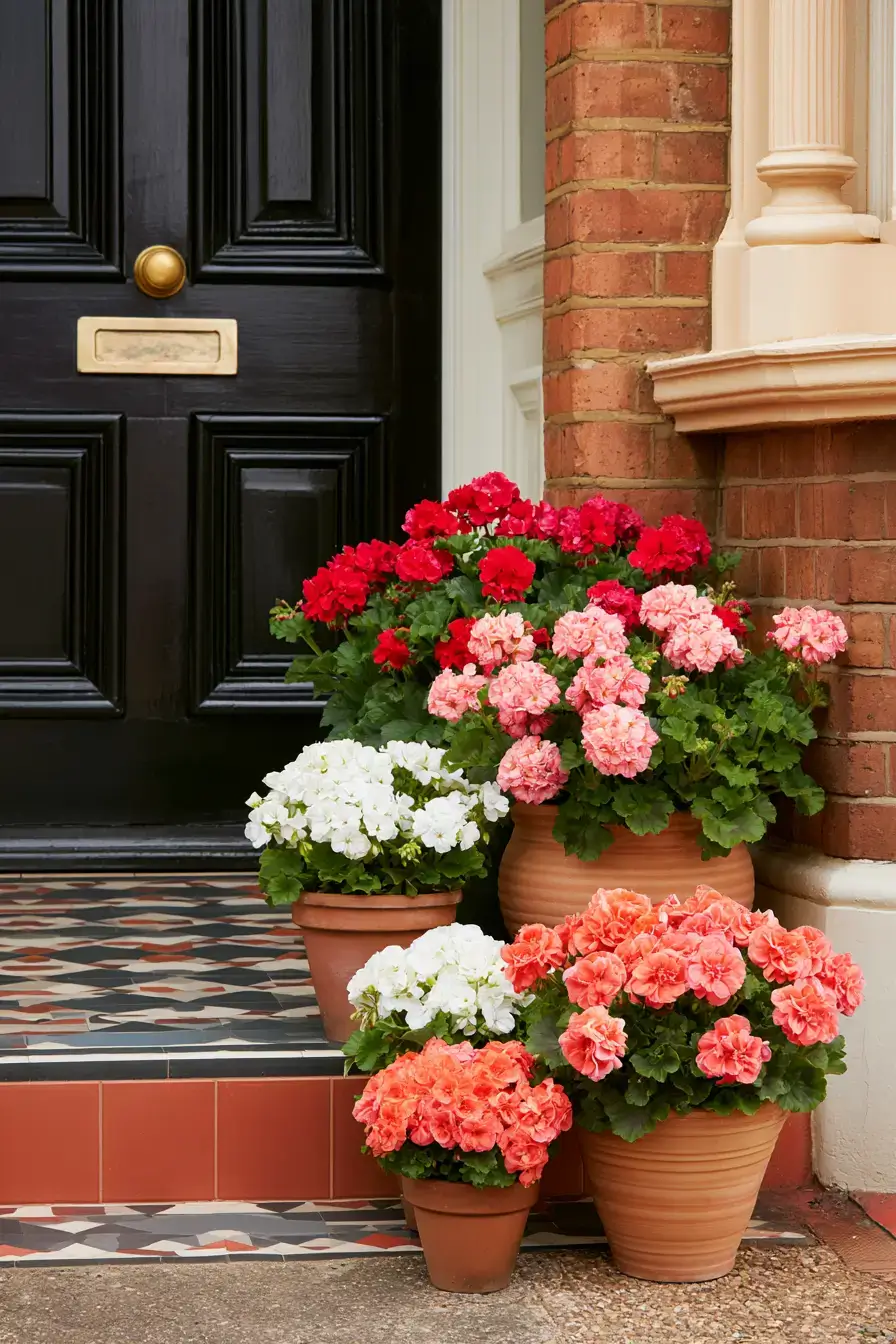
A geranium pot by the door is the easiest hit of colour and one of the most forgiving plants going. Red, pink, white, or coral geraniums in terracotta read as classic rather than trendy, and grouping two or three pot sizes makes the display look considered. They shrug off drought and bounce back from a missed watering, ideal for a hot, exposed step. Lift them in hard frosts or treat as annuals, they are not reliably hardy in UK winters.
Save this article
Enter your email and we'll send it straight to your inbox.
16. Terracotta Planter Cozy Charm
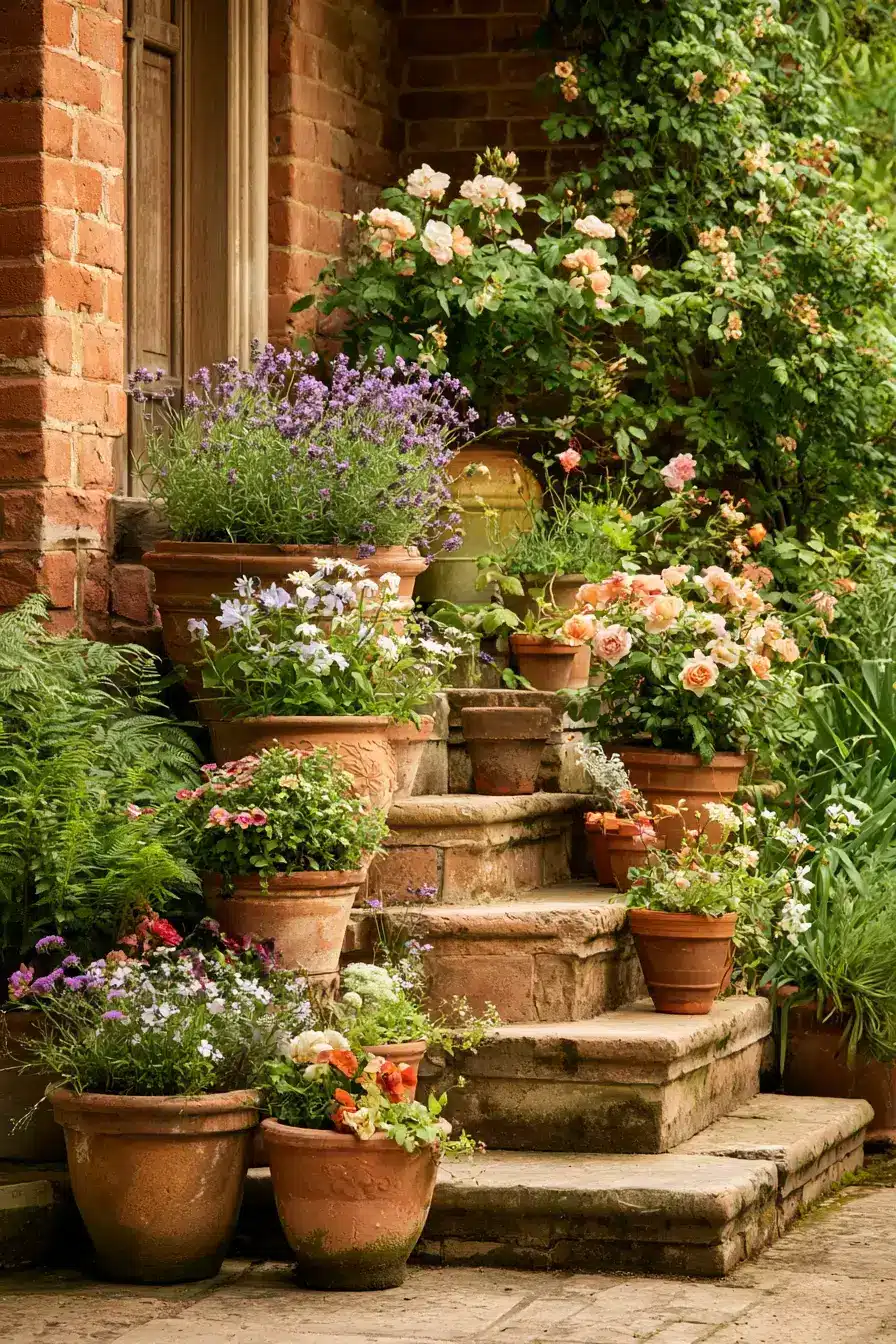
Terracotta is the default front-garden pot for good reason: the warm tone flatters every period facade and every plant in it. Use a mix of heights near the step, tall at the back, low trailing at the front, to build a layered group rather than a row of singles. Frost is the enemy, cheap terracotta cracks, so buy frost-proof grade and lift or wrap pots in a cold snap. Fill them with lavender, herbs, roses, or ferns depending on your light.
17. Topiary Doorway Elegant Frame
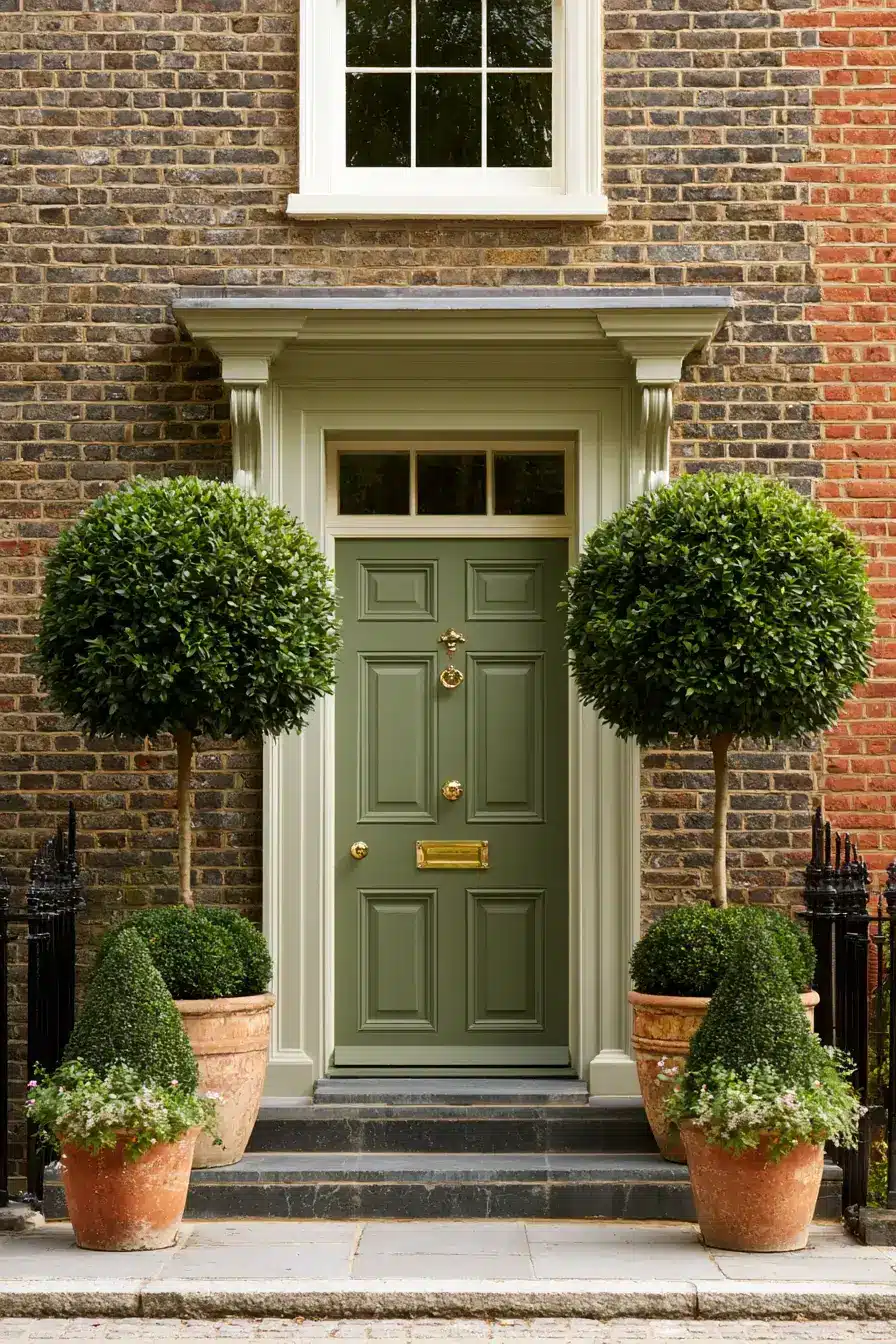
Matching topiary either side of the door gives a terrace entrance its formal, balanced finish without much effort. Box balls, bay trees, or clipped cones in identical planters read as deliberately designed rather than assembled. The White Company and Garden Trading sell clean, symmetrical pots that suit the look, though any matching pair will do. Bay and box both need shaping a couple of times a year; let them go and the symmetry, and the effect, disappears.
18. Hydrangea Front Garden Glow
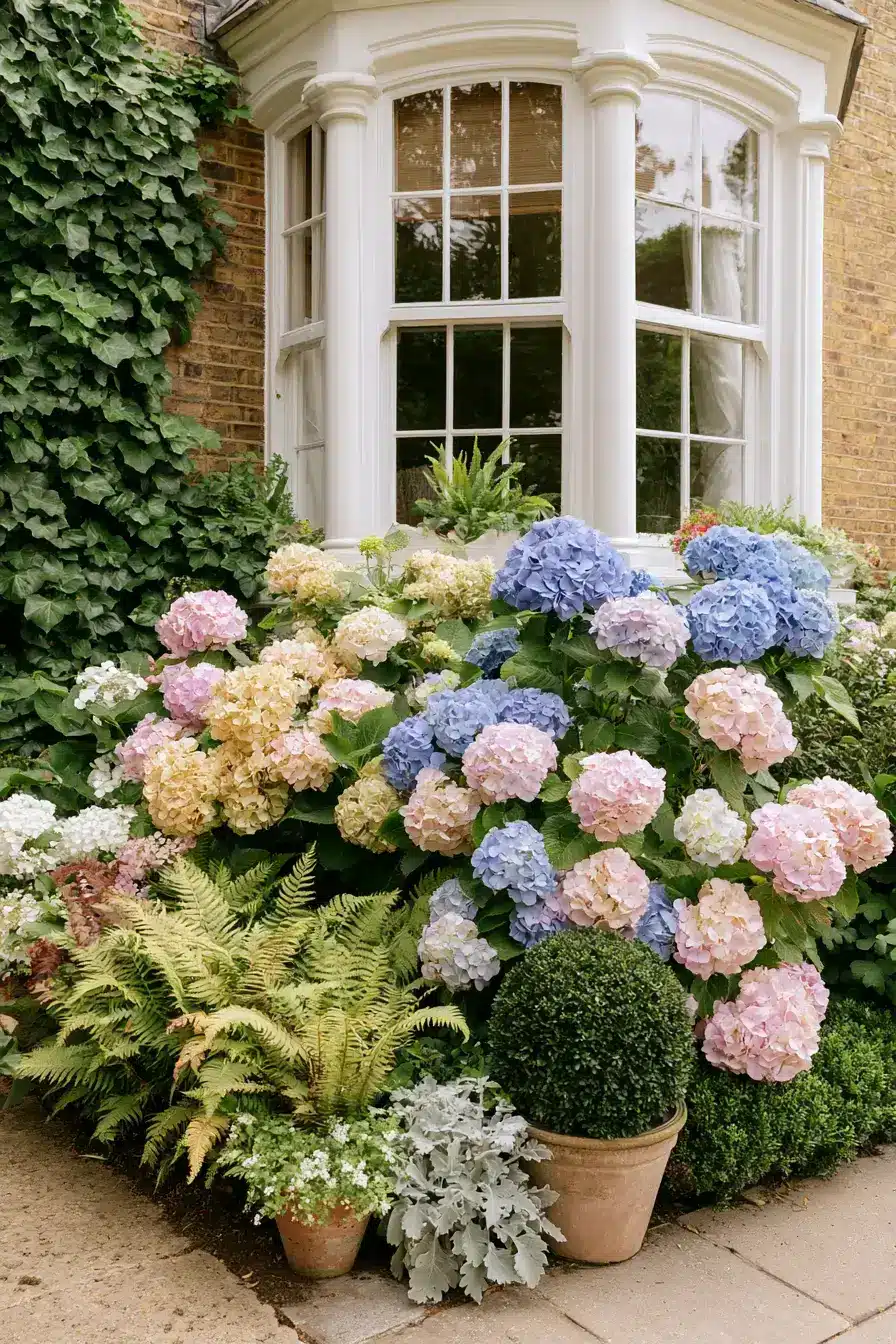
Hydrangeas near a front wall or under a bay window give that lush, full look through summer, but they are thirsty and shade-preferring, so they suit the north side better than a baked south step. Blue, pink, cream, or white all sit well against brick and paint, though the bloom colour follows your soil pH, blue in acid, pink in alkaline. Pair with ferns, ivy, or box at the base so the bed looks full rather than a single blob. Water consistently or the leaves wilt dramatically by midday.
19. Mosaic Tile Heritage Beauty
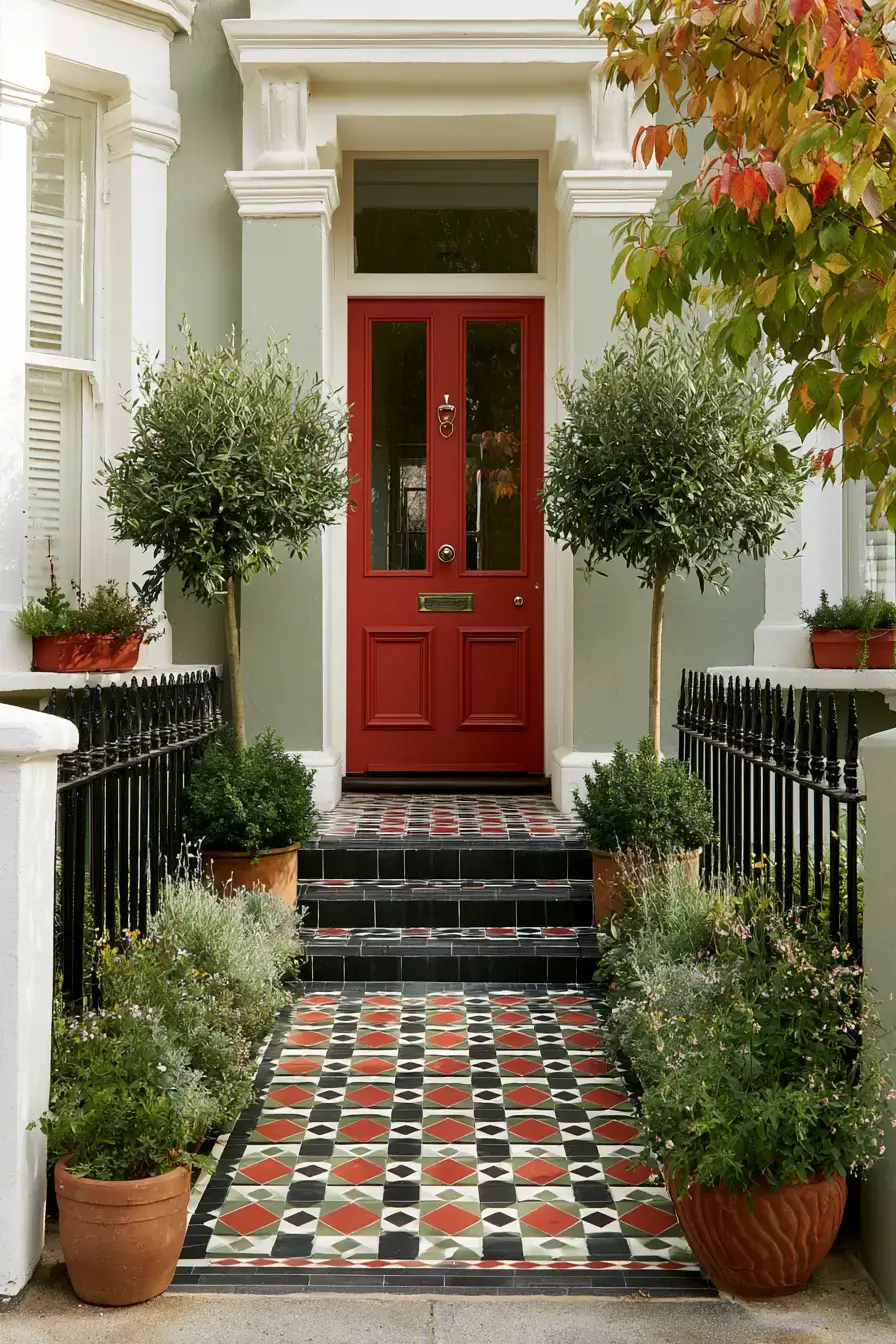
Mosaic or geometric tiles at the threshold are about as period-correct as it gets, and even a small panel reads as a deliberate heritage detail. Black-and-white, or red-and-green traditional patterns, set into the path or a porch floor anchors the whole scheme. Keep surrounding planting simple so the tilework is the star, not competing with it. Salvaged original tiles are lovely but uneven; new reproductions lay flatter and cost far less if you are doing a whole path.
20. Bench Garden Corner Charm
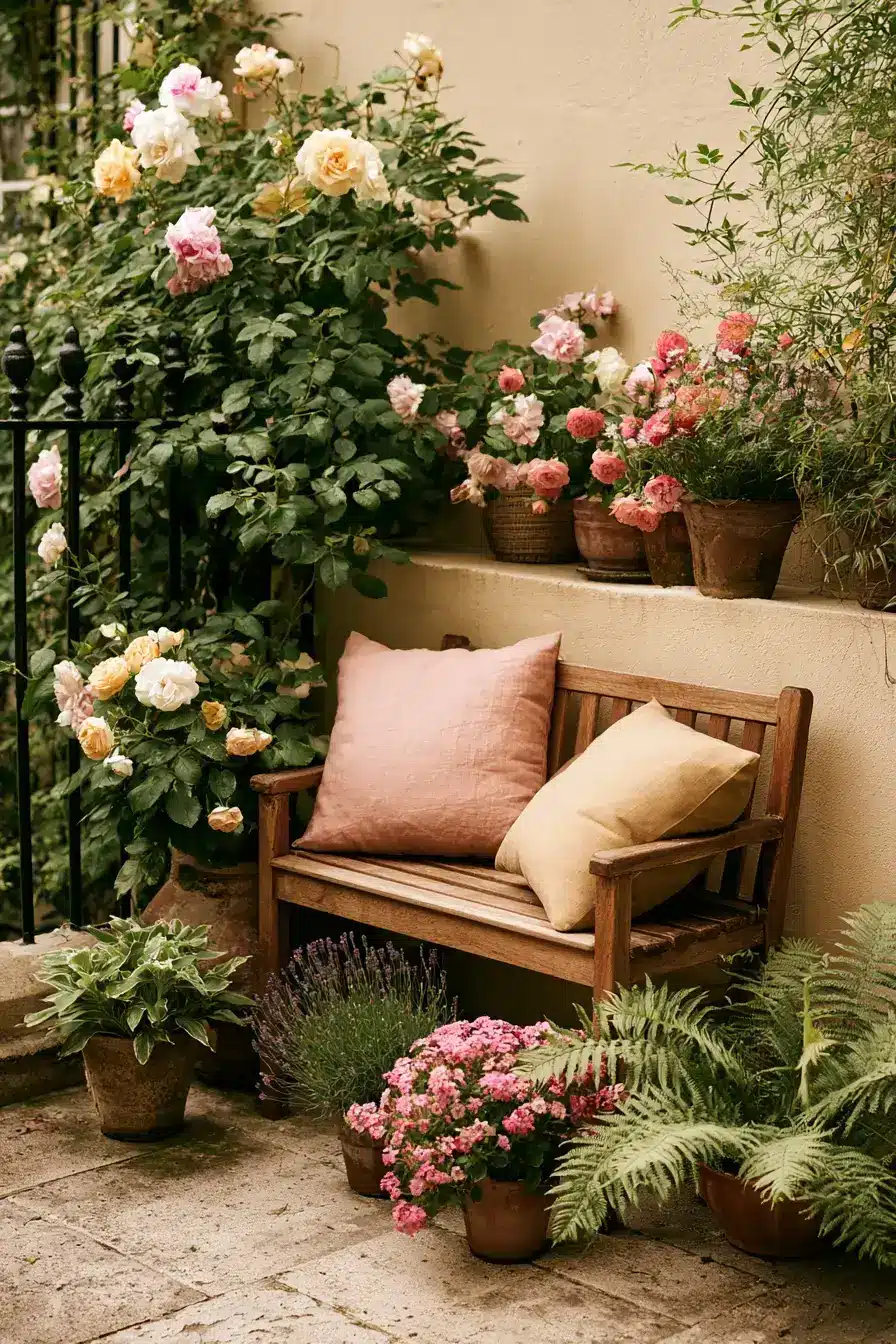
A bench only works on a terrace if there is genuine width at the front, so measure before you fall for one. A slim wooden or metal seat tucked against a wall or railing gives a morning-coffee spot without blocking the path. Surround it with potted roses, lavender, or ferns so it feels like part of a garden, not a stray piece of street furniture. If the space is a narrow passage, skip the bench entirely and put the money into pots instead.
21. Evergreen Privacy Border Calm
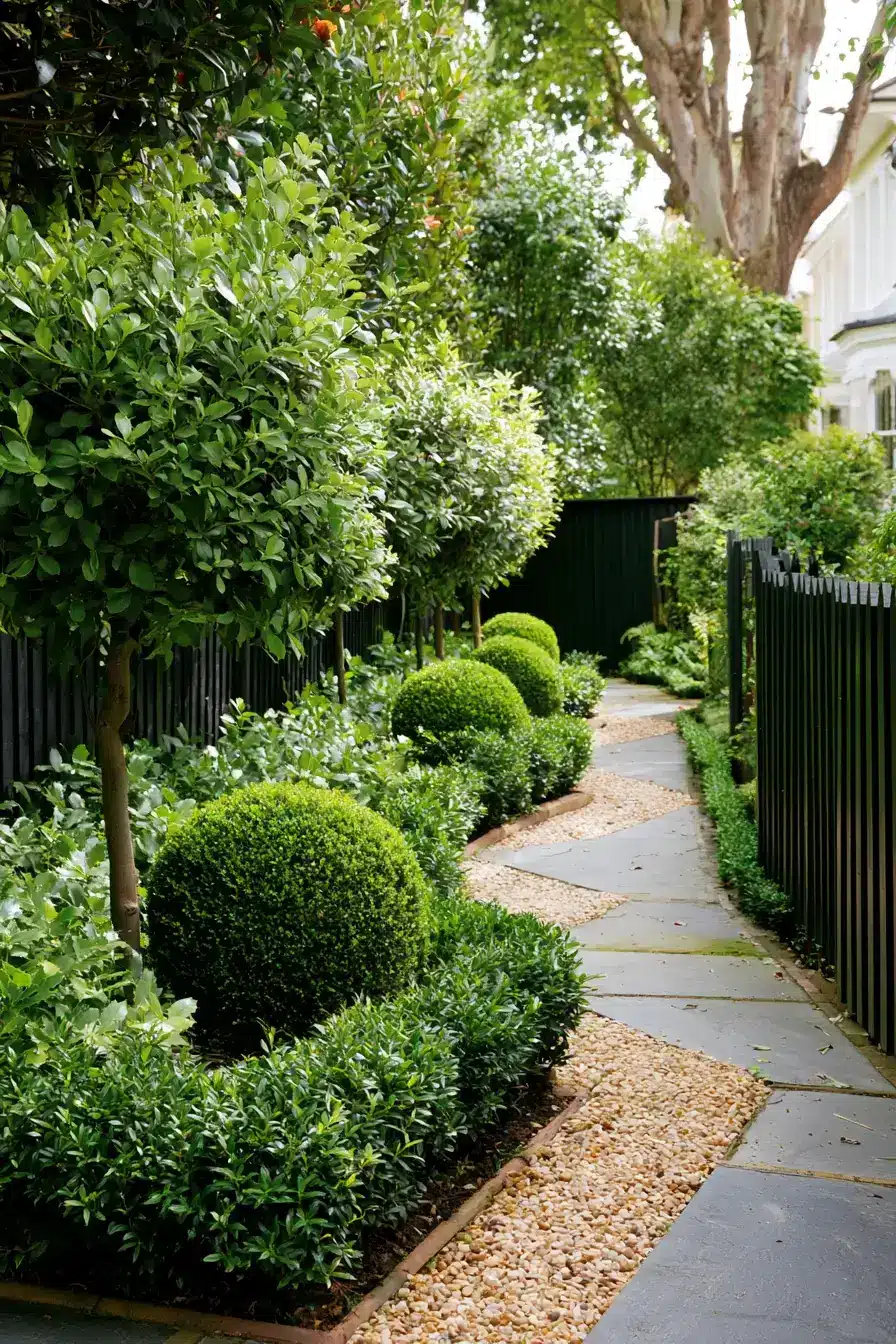
Evergreen structure is what keeps a terrace front garden looking right in winter when everything else dies back. Boxwood, yew, holly, or compact laurel give that year-round tucked-away feel and a backdrop that makes summer flowers pop. Keep them clipped into simple shapes so they suit the formal Victorian line rather than drifting into a blob. Yew and laurel are tougher than box if blight is around your area; just site laurel away from where kids or dogs might nibble it.
22. Garden Trading Pot Style
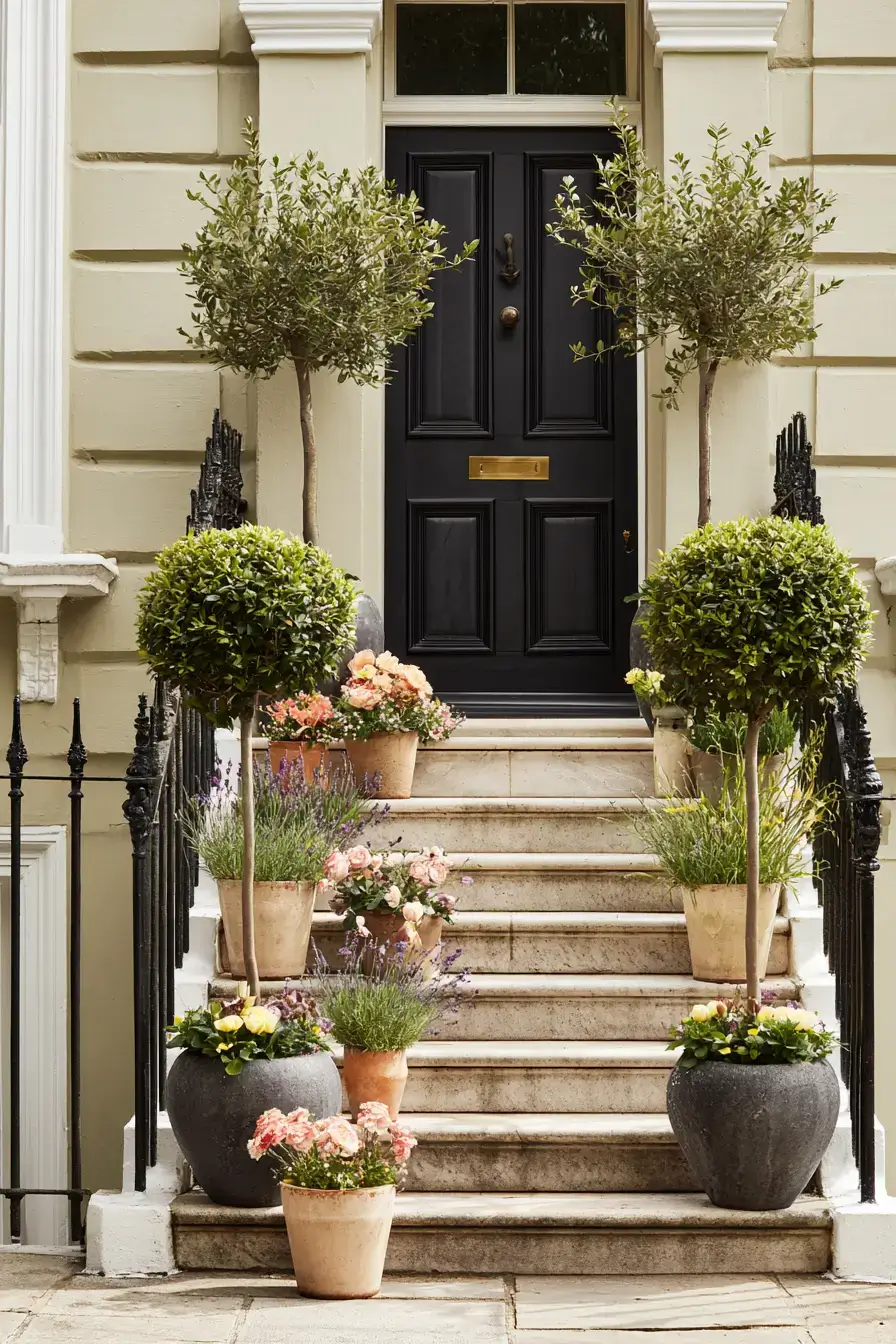
Garden Trading pots are a safe bet when you want a clean, classic look without hunting for antiques. Their bay trees, lavender, or seasonal bulbs in matching planters read as intentional whether grouped by the door, on the step, or along the railings. The brand’s finishes, zinc, stone, aged terracotta, flatter a Victorian facade better than glossy modern plastic. Buy one good pair rather than a mismatched set; symmetry does most of the work at the front of a terrace.
23. Paved Courtyard Garden Beauty
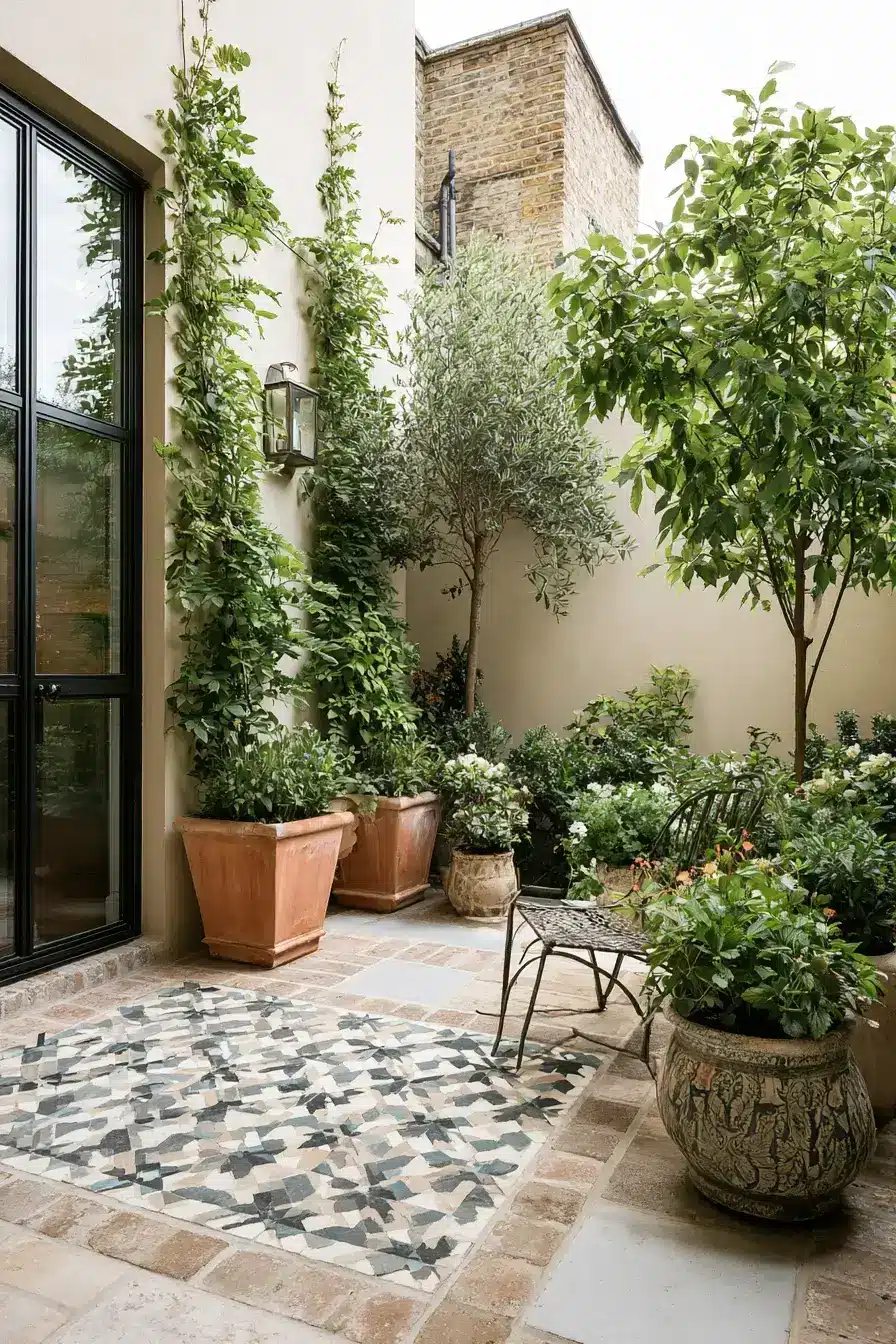
A paved courtyard suits a terrace with a wider front garden and anyone who wants low upkeep. Brick, stone, or patterned paving brings warmth and heritage detail underfoot, and you can soften it with planters, a climber, and one small seat so it is not all hard surface. Permeable paving is worth checking if your area has drainage rules, front gardens over a certain size may need it to avoid runoff. Keep the planting to the edges so the paving stays usable.
24. Jasmine Doorway Fresh Romance
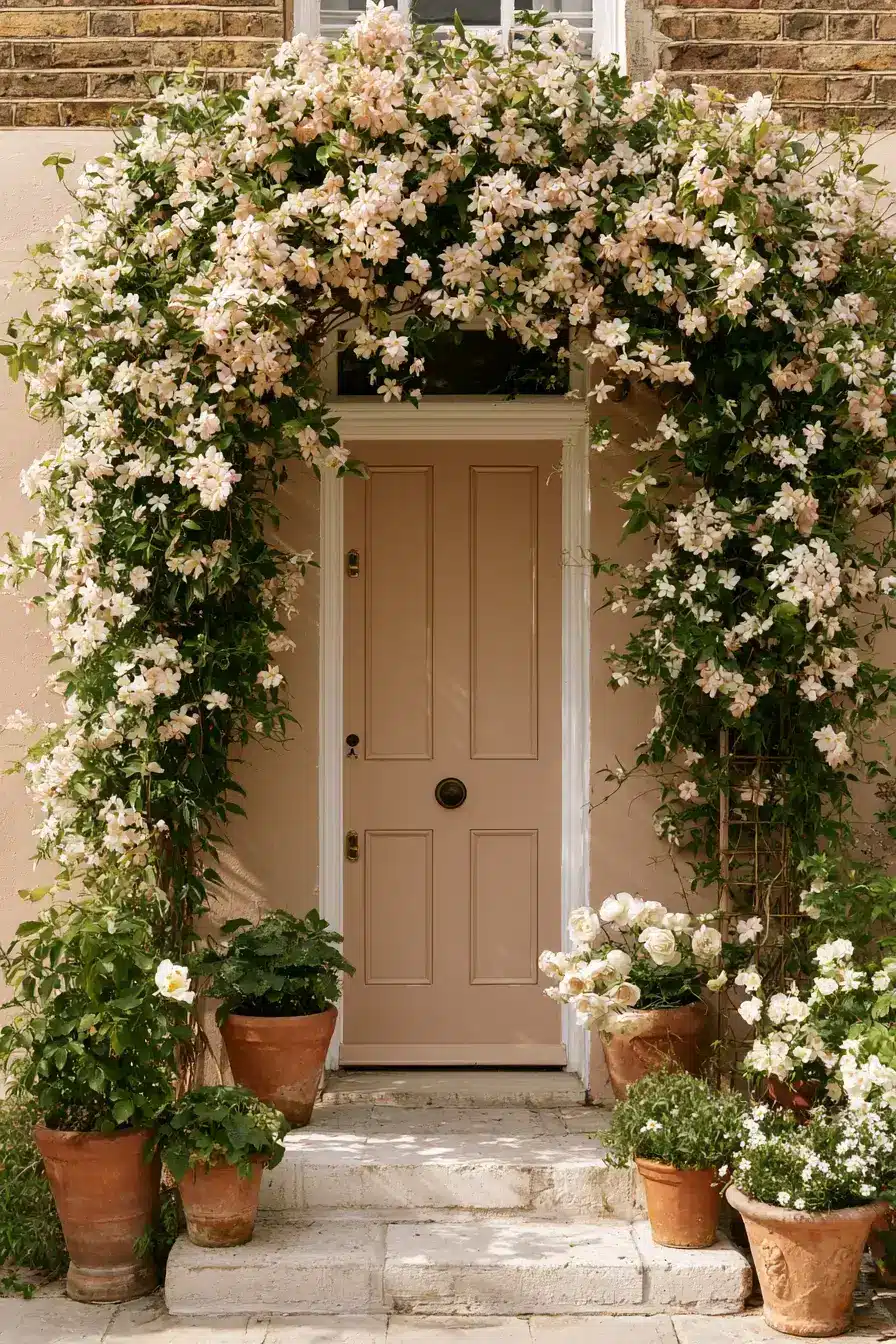
Jasmine at the door trades visual drama for scent, which is its real selling point on a terrace. Train it over a small arch, trellis, or porch frame so the fragrance hits you at the threshold in summer evenings. Pair with terracotta pots and a painted door and the entrance feels complete without much colour. Summer jasmine likes sun and a bit of support; if your doorway is shaded, honeysuckle or clematis may flower better there.
25. Neptune Planter Elegant Charm
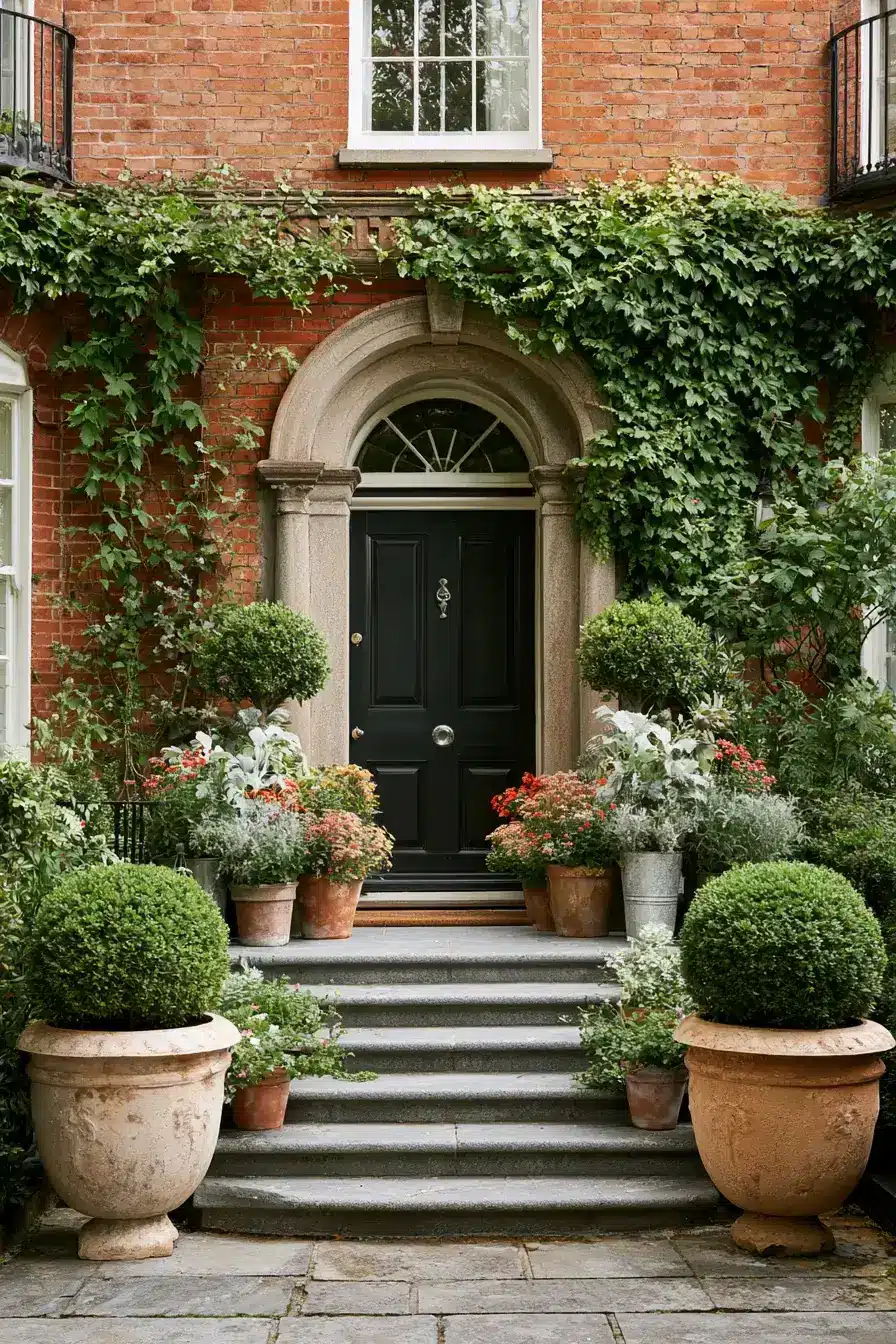
Neptune-style planters give a terrace entrance that refined, curated finish without going full period-pastice. Stone, zinc, or dark aged finishes flatter a Victorian facade, and they look right filled with clipped topiary, herbs, or trailing ivy. They are priced as design pieces, so a pair either side of the door does more than several scattered singles. If the budget does not stretch, plain stone-effect pots in the same shape read similarly from the pavement.
26. Painted Door Garden Magic
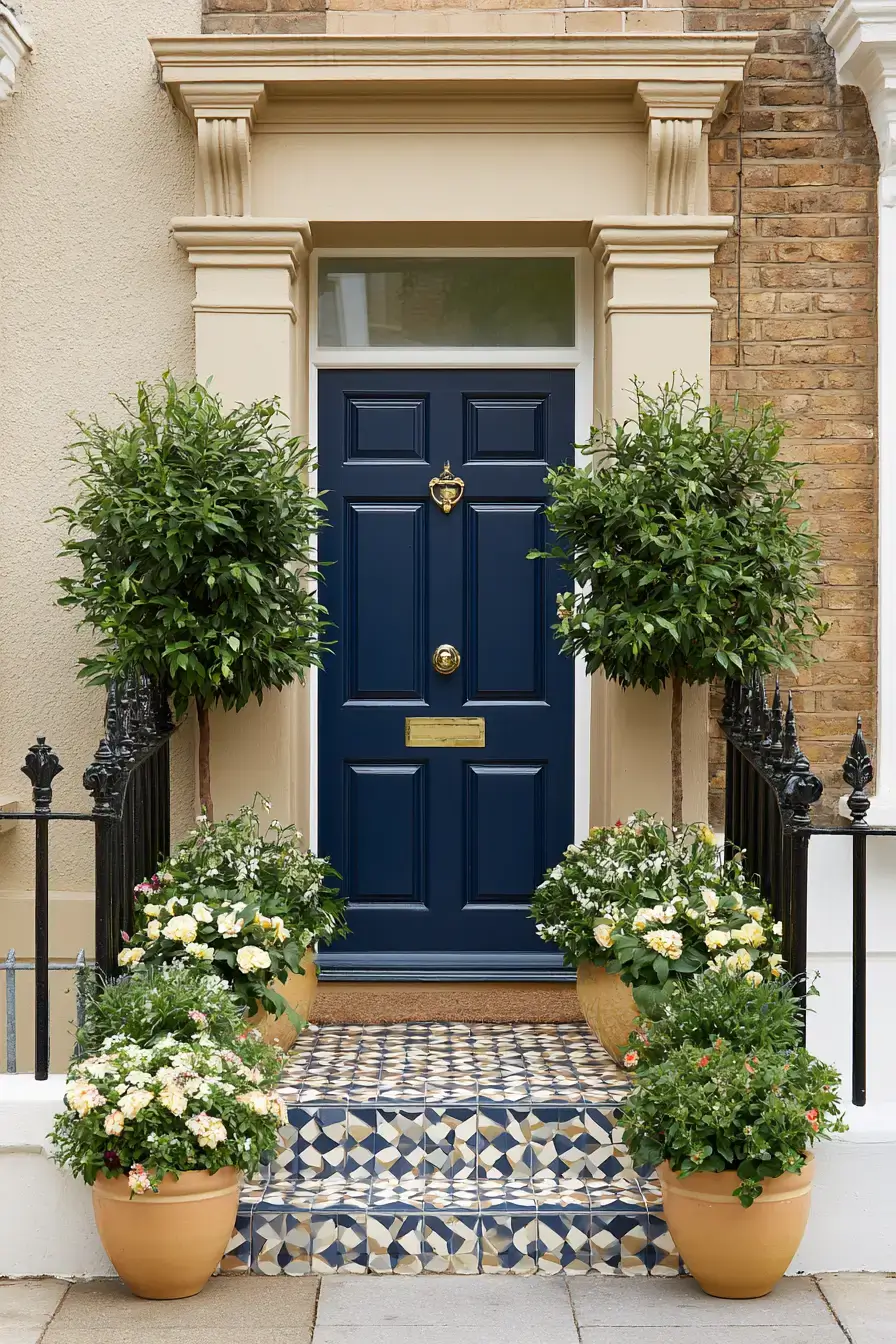
A painted door in a strong heritage shade is the single most photographed move on a Victorian terrace, so it pays to choose well. Hague Blue, Green Smoke, or Calke Green all read as period-correct and make brass hardware and planting pop against them. Match the colour to your pots and railings rather than clashing, and use proper exterior paint so it does not chalk after one winter. If you are in a conservation area, the approved colour list may be restricted, so check first.
27. Heritage Front Entrance Beauty
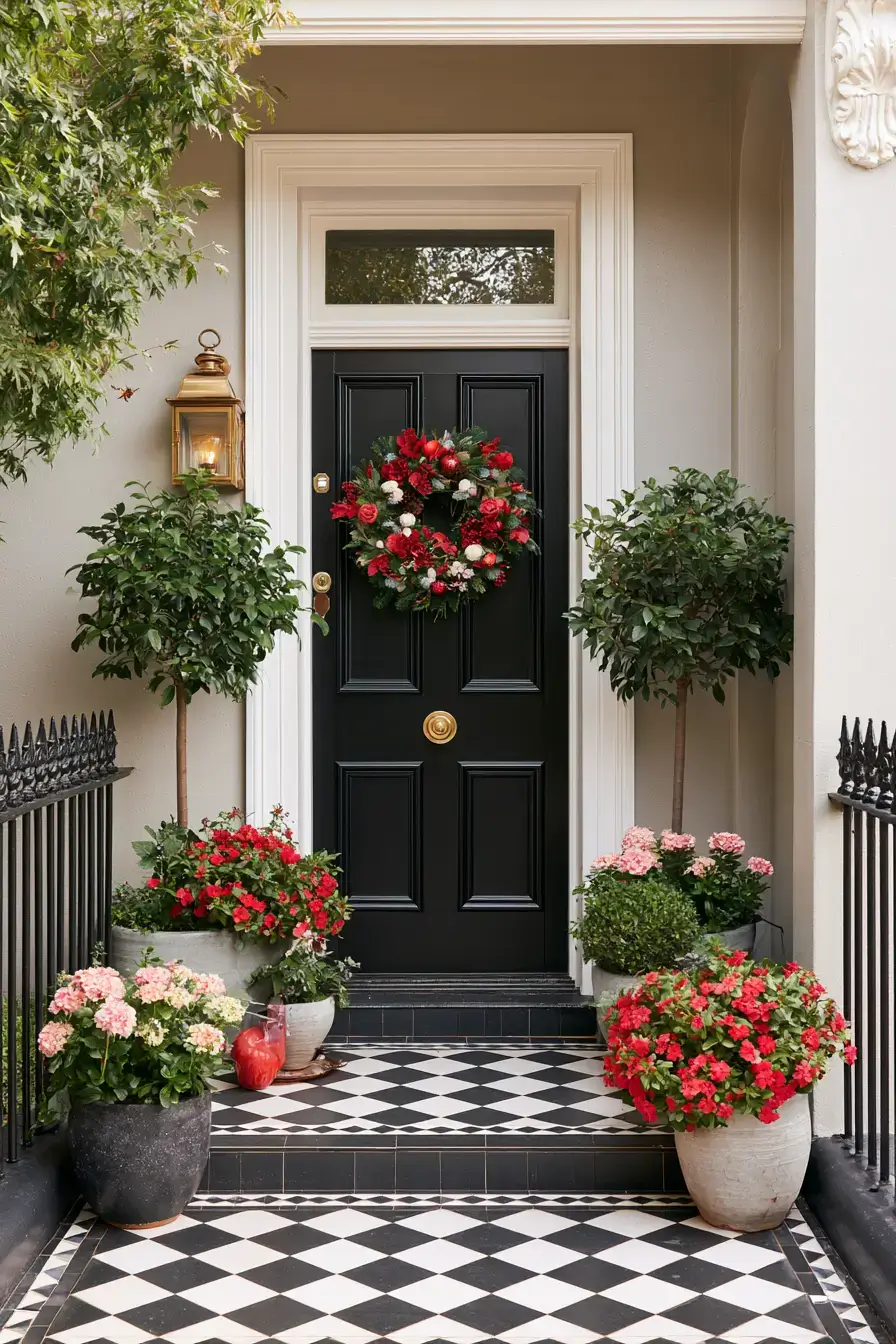
A heritage entrance is really the sum of the small period details done consistently: tiles, railings, potted greenery, and flowers that suit the era rather than fight it. Keep the palette soft and traditional, brick, off-white, deep green, so the original features stay the star. A brass knocker, a wall lantern, or a seasonal wreath are the cheap finishing touches that make it feel looked-after. Do the structure first, paint, railings, pots, then let the planting fill in around it.
You do not need all 27 to change how the house reads from the pavement. Start with the things that cost the least and show the most: paint the front door, clip or replace tired railings, and add two or three matching terracotta or stone pots by the step. Those three alone fix most Victorian terrace entrances. Layer in planting once the hard structure looks right, and check your local conservation area rules before touching railings, tiles, or paint colours, since many terraces sit in protected zones. Pick the ideas that fit your actual strip of space and light, do them properly, then live with it before adding more.
This post may contain affiliate links. Please see my disclosure policy for details.
Want to keep this one?
We'll email you the link so you can find it again later.